How did the three of you find each other?
In 2005, Ruth Anderwald and Leonhard Grond had their first museum exhibition at the Herzliya Museum in Israel. They showed their photo series Notes On A Coast, which confronted the media image with photographs taken from the Mediterranean Sea onto the shore of Israel, following the Western gaze from the West to the East. From this exhibition, the work on a book started, comprising the photographs and juxtaposing them with poems from Israeli and Palestinian writers. This work allowed them to travel to Israel and meet the art scene, including Sergio, who at the time was director of the Center for Contemporary Art in Tel Aviv.
You’ve been researching dizziness for years before this exhibition. What kept pulling you back to it?
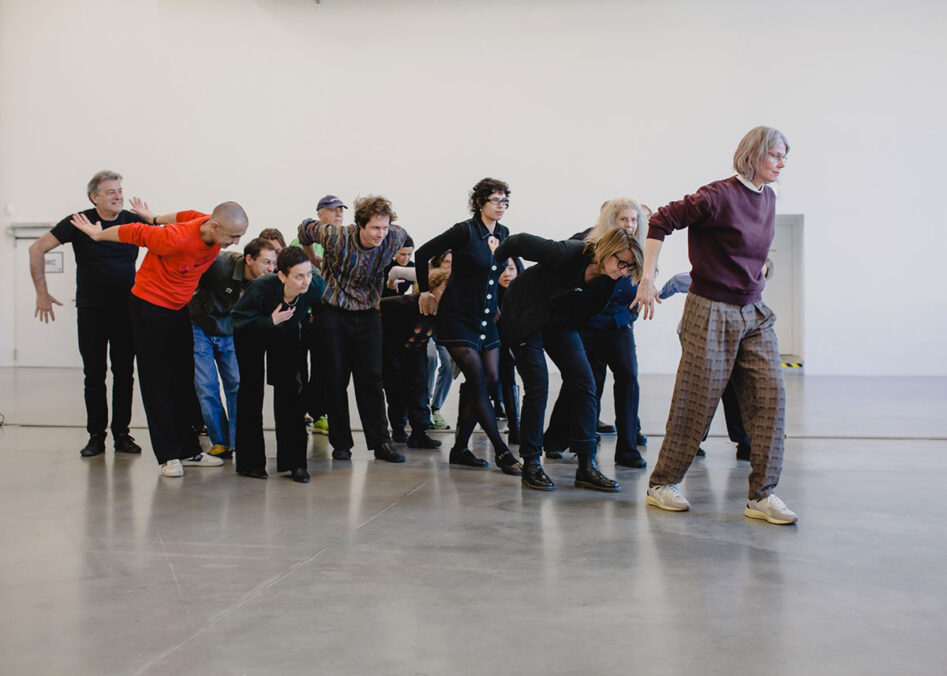
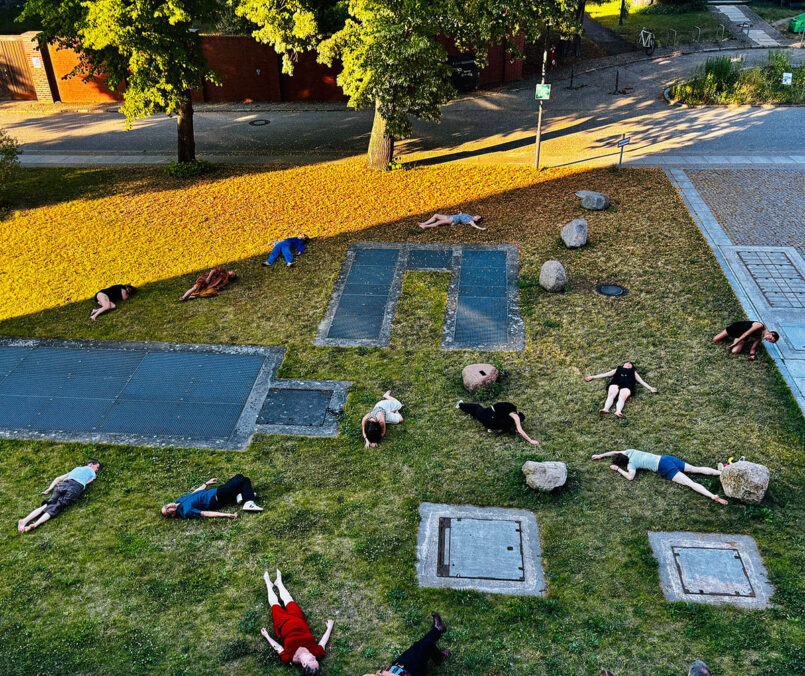
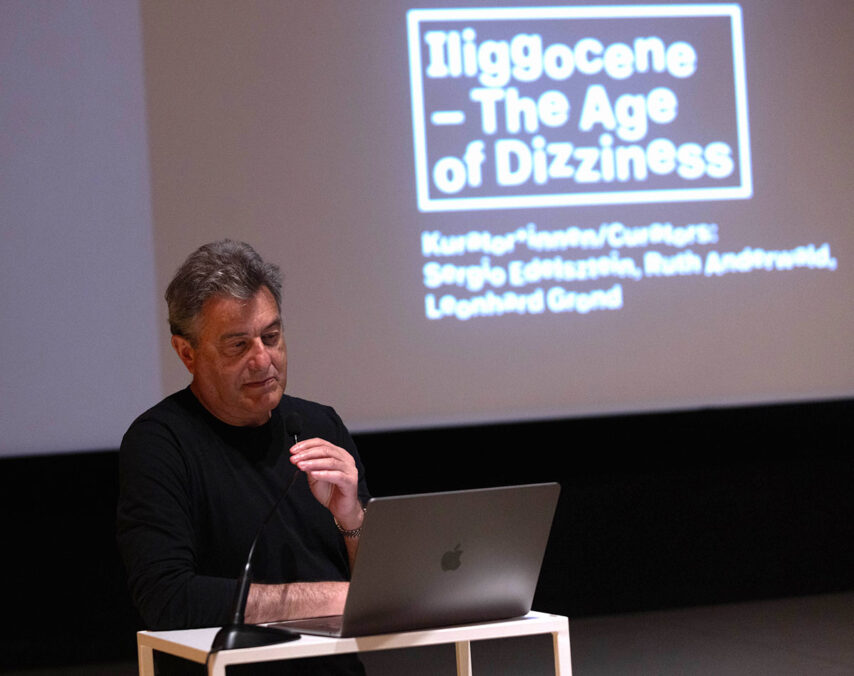
In the above-mentioned photo series, Ruth + Leo were interested in destabilisation, disorientation, and the factors associated with dizziness. To this day, it still surprises the three of us how rich a material the notion of dizziness offers, both in a disciplinary setting as well as in terms of conceptual capacity. We started with exploring dizziness as a potential resource, and our first collaboration was a three-day symposium with artists, philosophers, and natural scientists staging lectures, screenings, artists’ talks and performances at Sergio’s institutions in Tel Aviv. Not only was it well attended, but we also learnt a lot about dizziness in these few days. After the termination of the first research grant for Dizziness—A Resource, Ruth + Leo received another grant to look at the social and interpersonal aspects of dizziness, Navigating Dizziness Together, in late 2020, and we all came together again for a new cooperation. We initially planned for a string of in-person meetings, but then the pandemic hit. So, we moved our interactions into the digital space and created a podcast, On Certain Groundlessness, that not only lends voice to artists, curators and theorists in different thematic conversations but also introduces artworks as a voice of their own. The podcast served as the basis for our curatorial and research collaboration for Iliggocene–The Age of Dizziness.
The word Iliggocene doesn’t exist in any dictionary. Where did it come from?
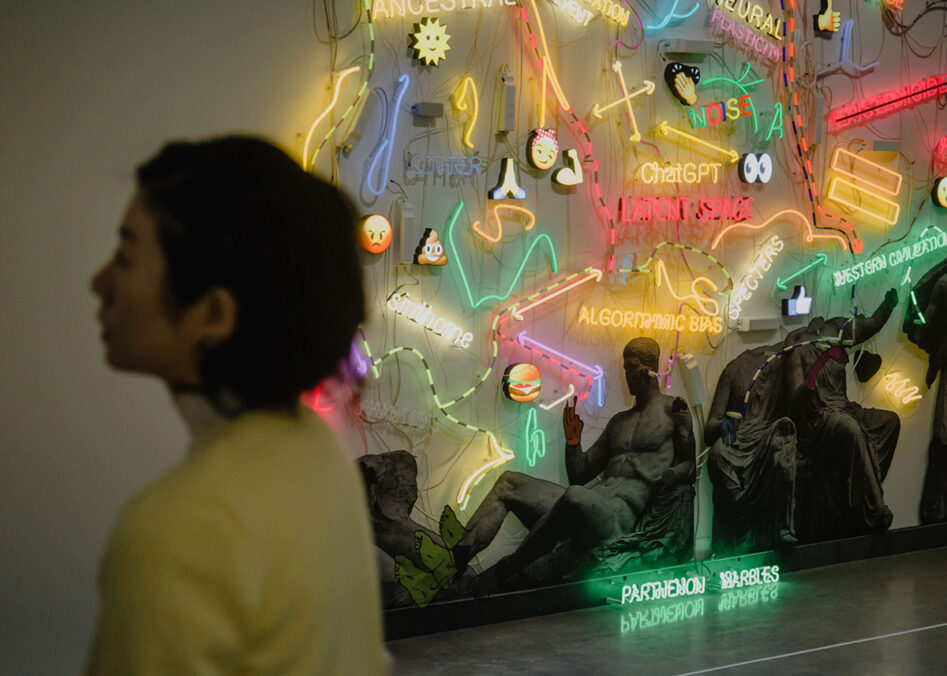
The way we do artistic research is deeply rooted in conceptual art. It all starts with art, in the way that an idea, through our questions, comes up and requires artistic, philosophical and theoretical engagement. After Covid, and with the sudden breakout of the war in Ukraine, and towards the new presidency of Trump, with all the conspiracy theories, “alternative facts” and disinformation, we thought that “dizziness” is in fact what best describes the human condition these days, we sought a term that would sound real and serious – that had to be in Greek, we found iliggos (meaning dizziness, vertigo). That’s how we coined the term Iliggocene, as a “tongue-in-cheek” term referring to the Anthropocene and all the other “-cenes”. However, we further specify this with a subtitle: The Age of Dizziness. The term is not intended as a unifying argument; rather, it addresses dizziness as the symptom characteristic of our contemporary era.
You’ve been working on this for years across different formats — research, podcast, now a major exhibition in Berlin. What does a physical space give you that the other formats couldn’t?
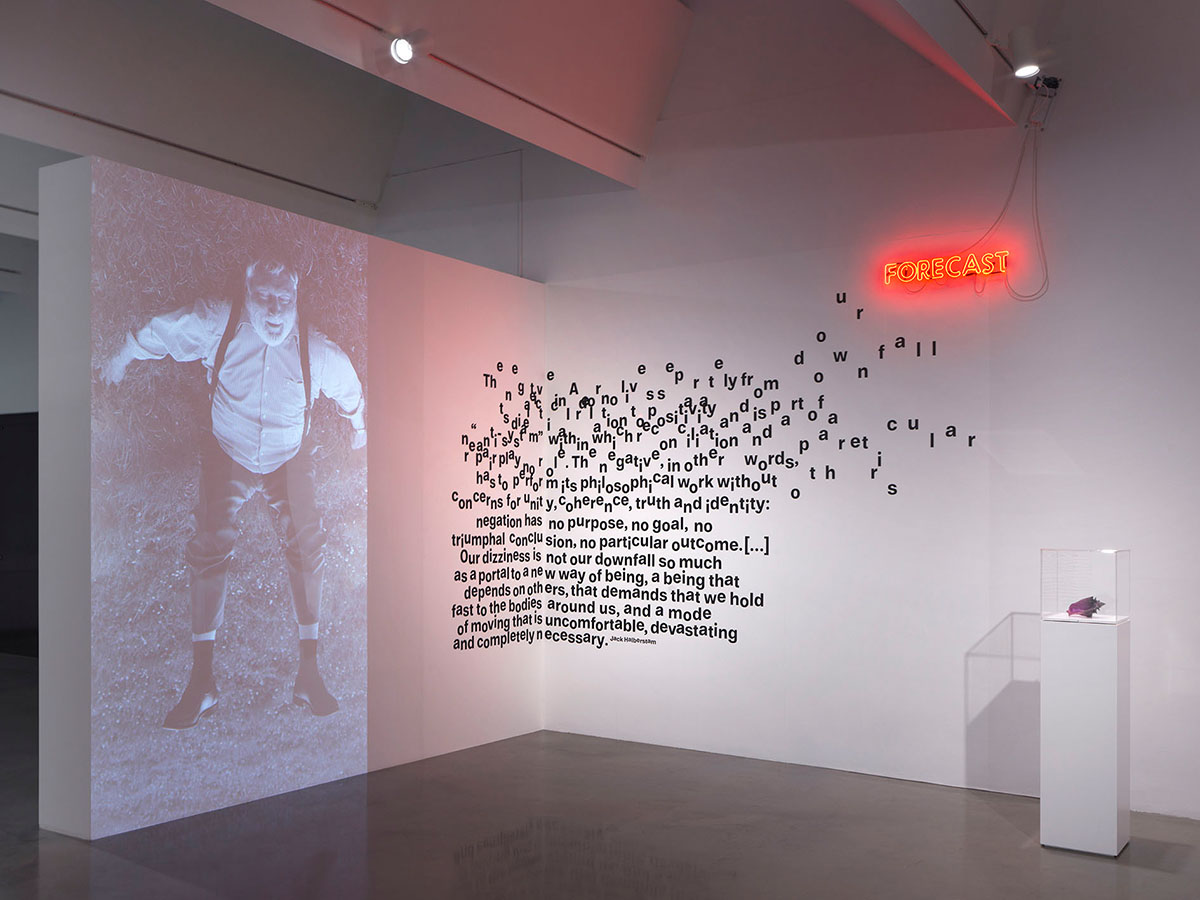
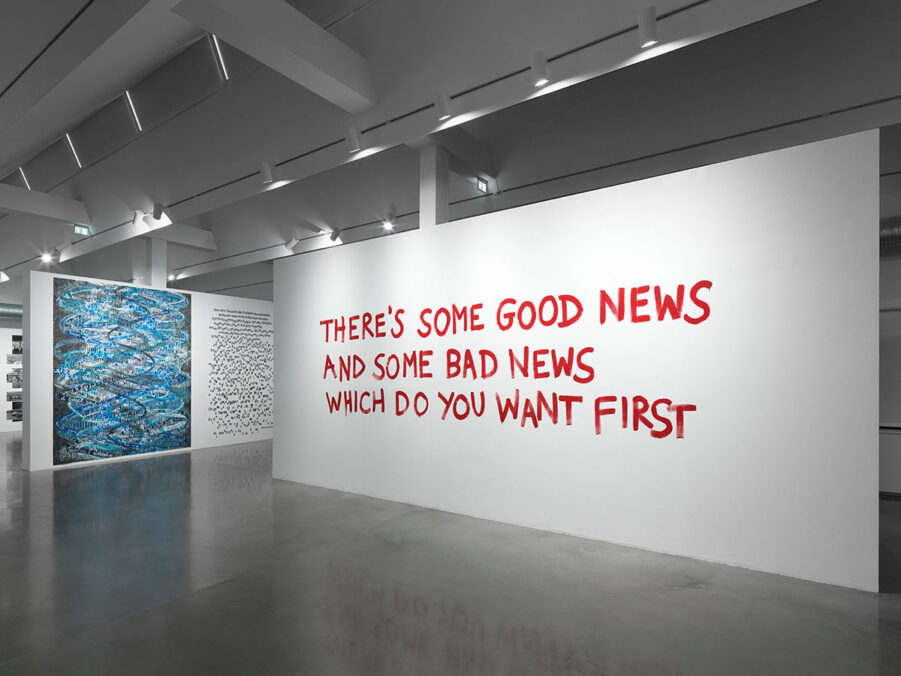
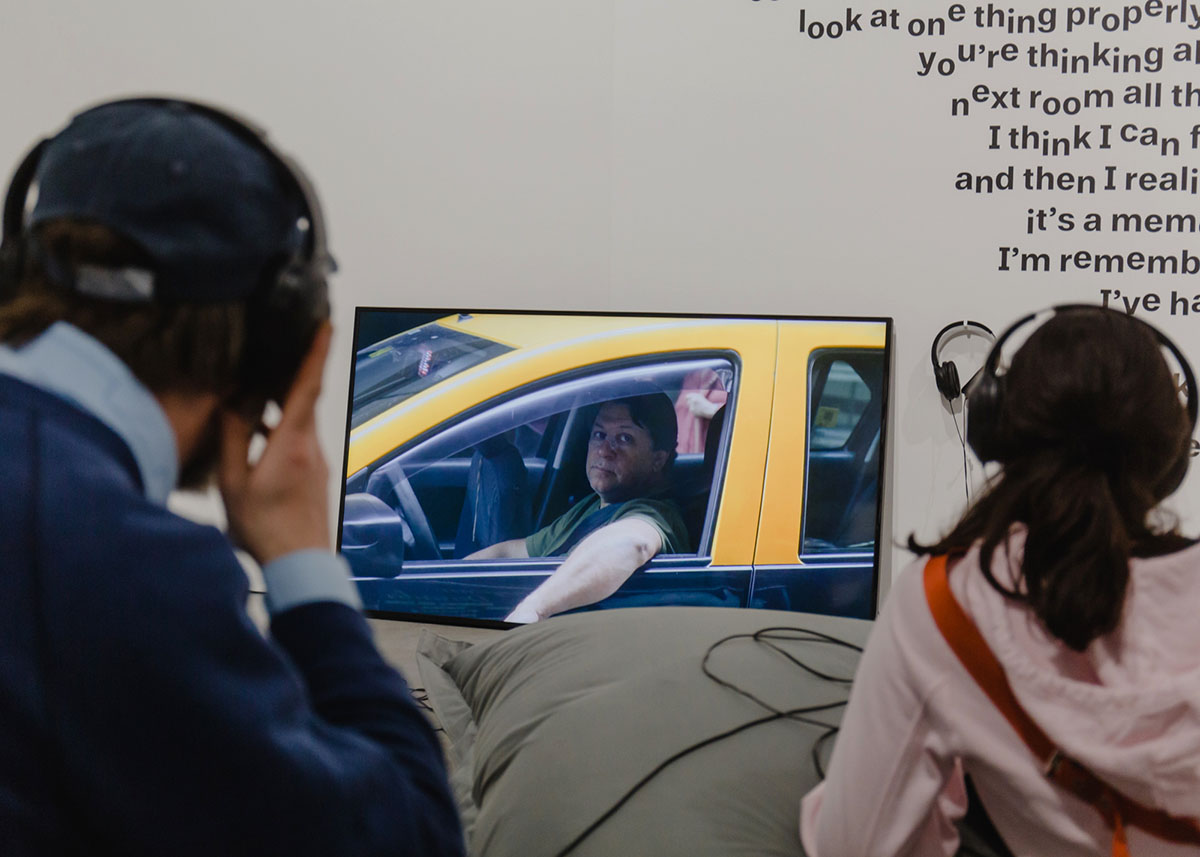
In our curatorial collaboration, we address exhibition-making as an instantiation of the compossible space. We treat the exhibition space as an experimental, exploratory space of metastability, where different aspects can come together, confront or conflate with each other. We prefer that to a pedagogical or purely presentation-oriented format designed to showcase outcomes of a completed process, especially since the exhibition was not made with that in mind but rather aims to insist that we need to think about dizziness and our ways of mitigating it. In this way, the individual works and text fragments are present in their individuality and distinctiveness, but their proximity to other works grants them a certain metastability, or rather, their interpretation and perception become inherently uncertain, as their nearness to each other engenders a confluence. When you enter the exhibition space, the first thing that you will notice are the sound design and the text design. The sounds of various artworks are designed to merge, creating a very specific feeling of entering an in-between space. The text design oscillates between readability and unreadability; depending on how much effort you would like to put into reading the texts, you will be able to read more or less of them, or you could look at them as visual artworks. All possibilities are present in this compossible space, and you can decide every time you enter how you would like to approach the exhibition.
Why Berlin, why KINDL?
That’s what worked: Sergio met Kathrin Becker, the director of KINDL, whom he knew already for a few years, since she was working at the Neuer Berliner Kunstverein (nbk) and told her about the podcast and the idea of addressing these issues in an exhibition format. Kathrin was immediately enthusiastic, and we decided to apply for funding with the German KSB scheme (Kulturstiftung des Bundes). Moreover, Sergio has been living there now for a while and part of the project was to involve artists living in Berlin – also for reasons of sustainability. Doing the exhibition Iliggocene – The Age of Dizziness, and involving shipping from all over the world would be an oxymoron. If there are artists everywhere dealing with this topic – as we suggest – then why exacerbate the climate crisis by pumping CO2 into the atmosphere through flights and shipping? So, it is not only about exploring dizziness, but also about exploring it with local artists who work in Berlin and thereby shape the city into this cultural hub. Its history of a divided and now reunited city shaped by different ideologies of the 20th century, with many different ethnicities and political opinions residing there, adds to the interest in a topic like the Iliggocene. KINDL is a great location, with its industrial architecture. But we were not programmatically looking for a former brewery space; however, it fits quite well with the topic.
There’s no hierarchy in how you credit people here — artists, designers, writers, all on the same footing. What does that say about how you understand authorship?
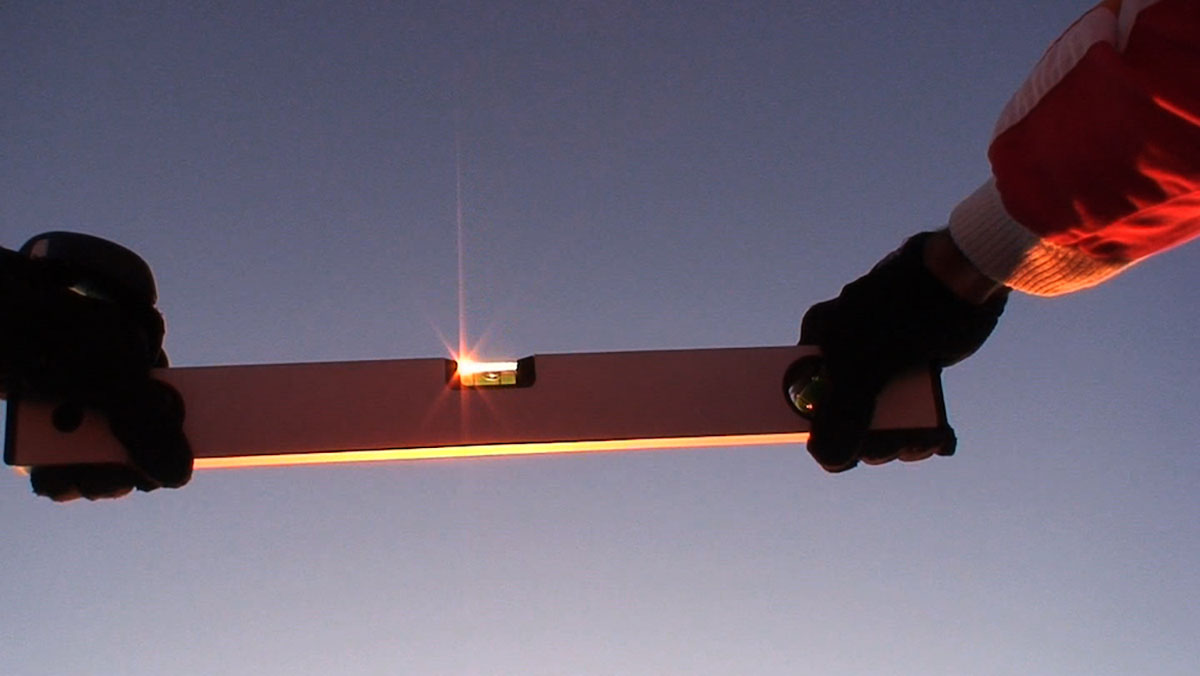
The destabilisation of authorship has been a topic for a long time in the arts and art theory. Nowadays, it is mostly addressed with regard to AI. What we aim to do is find a way to present artistic research in an exhibition space without a deluge of texts or theoretical quotations, while still showing that the work of certain people is significant to our conceptualisation and realisation of the exhibition. As we treated the Iliggocene more like a project and less like an exhibition with a framework of accompanying programs, it was very quickly clear to us that we should mention everyone involved in any part of the program. Moreover, the use of text and its transformation into wall text-images allowed us to draw on and build upon the aesthetic qualities of theoretical texts.
What’s still to come before the exhibition closes?
There is the anniversary of KINDL coming up, where an exhibition tour and a live performance of Daniel Meir will be offered. In September, a public event with Ruhrtriennale and theatre director Christopher Rüping will highlight our collaboration with him. His piece Deutscher Herbst (German Autumn) will be premiered there and deals with political and psychological aspects of dizziness. Later, a screening in Paris, at the community-run cinema La Cléf, together with Cinédoc Paris Films Coop and their collection, is scheduled, and in 2027, a series of workshops with Kunsthaus Graz.
Exhibition: Iliggocene – The Age of Dizziness
Curated by: Sergio Edelsztein, Ruth Anderwald, Leonhard Grond
Artists: Amanda Beech, Dominique Savitri Bonarjee, Colectivo Los Ingrávidos, Davide Deriu, Cao Fei, Tim Etchells, Christian Falsnaes, Julia Fiedorczuk, Dani Gal, María Auxiliadora Gálvez Pérez, William Gibson, Alexandra Grant, Eiko Grimberg, Jack Halberstam, Anna Kim, Daniel Meir, Ari Benjamin Meyers, Warren Neidich, João Onofre, Ana Prvački, Lucy Railton, Saas-Fee Summer Institute of Art, John Smith, Liv Schulman, Stefanie Schwarz & Dirk Wachowiak, Alexander Stahn, Marcus Steinweg, Dimitri Venkov, Catherine Yass, Ruth Anderwald + Leonhard Grond
Editorial note: Readers can follow the project further via the podcast on Spotify and on-dizziness.com
Address and contact:
KINDL – Centre for Contemporary Art
Am Sudhaus 3 12053 Berlin
www.kindl-berlin.de
Sergio Edelsztein – www.wikipedia.org/wiki/Sergio_Edelsztein
Ruth Anderwald and Leonhard Grond – www.anderwald-grond.at, www.instagram.com/anderwaldgrond/
Lital Megidish – www.instagram.com/litalmegidish