What method do you employ to interpret conventional motifs?
I approach tradition not as something preserved in a museum but as a living language that can respond to what is happening now. I draw on authentic sources, such as archives, folk ornaments, textiles, wall paintings, and Hutsul icons painted on glass, and bring these techniques into a contemporary context.
What interests me most is teasing the viewer a little. I want to surprise them, to slip something unexpected into a familiar image and create that moment when something suddenly shifts—when a single detail changes the way you perceive the whole thing. I grew up surrounded by these images and became so used to them that they almost turned into background noise. Then a familiar form returns, slightly altered, and suddenly you see it differently.
What materials do you like working with most?
Currently, it’s mostly cardboard and paint. So, working with materials physically has become an important part of my practice. At the same time, I’m interested in traditional Ukrainian crafts such as weaving, woodcarving, metal embossing, wickerwork, and others. I want to revive these crafts and reinterpret them in a contemporary way while preserving their connection to the original traditions.
What color palette is typical of your work?
I still feel like I’m constantly searching. But I’m planning to focus more on monochromatic, earthy, and complex green tones with bright accents.
Since the Russian invasion in 2022, you’ve also come to see your work as a tool for making significant issues visible.
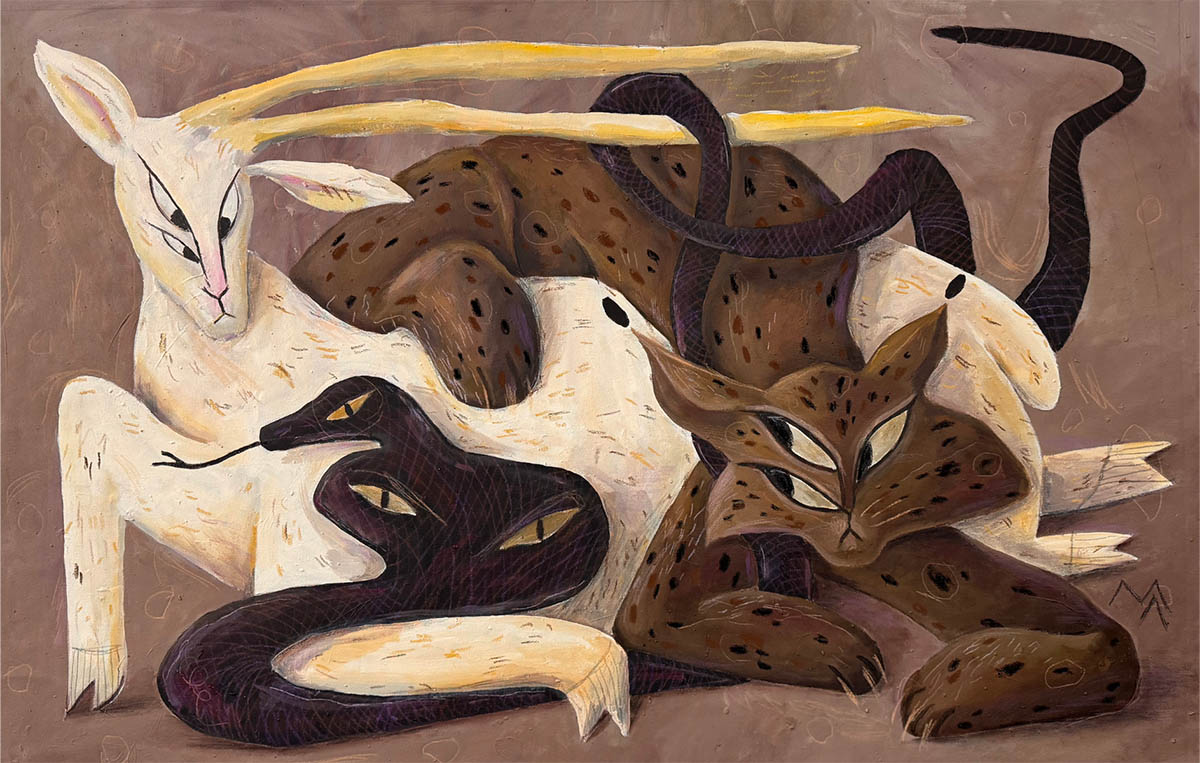
War became part of a reality you cannot step outside when you live in Ukraine, so naturally it entered my work as well. During the first months of the full-scale invasion, when the world had turned upside down, it was difficult to speak about anything else. Those works became my way of reflecting on this new reality through a visual language that was very familiar to me.
Traditional Ukrainian crafts are a vivid manifestation of the Ukrainian culture whose right to exist we are now fighting for. I wanted to reproduce and spread it so that we could value and love it even more.
The imagery in these works is assembled from traditional ornaments, using them to aestheticize the everyday reality of war. I became interested in how ordinary daily life changes. For example, electricity blackout schedules literally created new biological and everyday rhythms for Ukrainians. I began combining the familiar, domestic aesthetics of embroidered towels, ornaments, and embroidery with images of war, destruction, anxiety, and adaptation. For me, bringing tradition into the present can have a strong perceptual effect.
How has your artistic outlook changed since then?
I’ve started seeing art as something that can do more than express my personal experiences. It can preserve and strengthen cultural identity, draw attention to important issues, and become a way to participate in the events happening around me. I became much more conscious of the visual language I use and where it comes from.
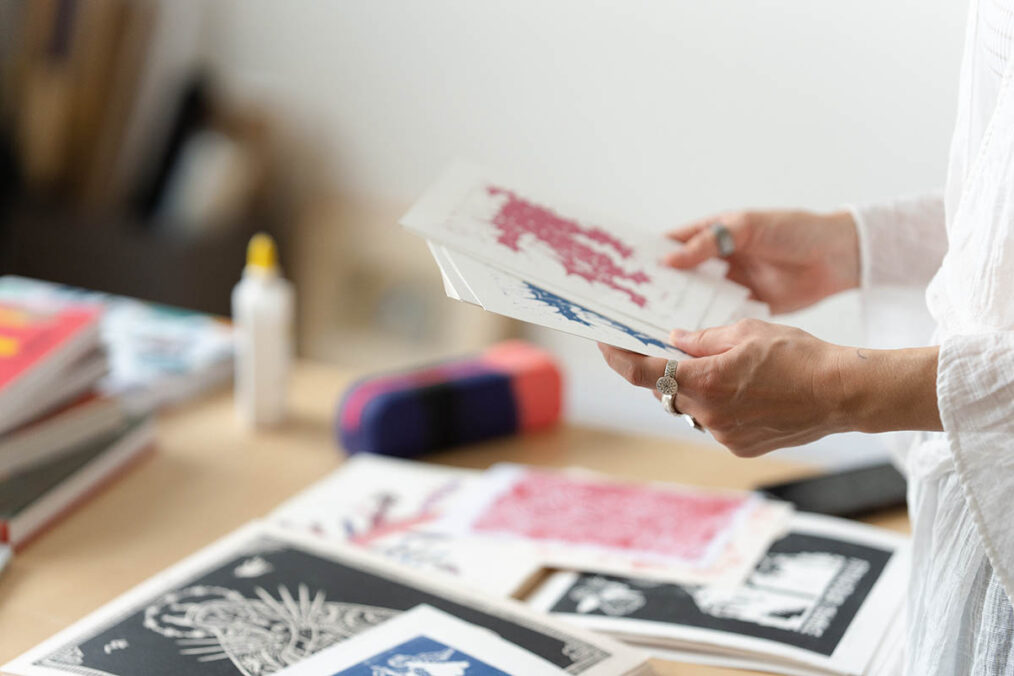
How do you deal with the emotional weight of this?
My spontaneous reaction, like that of many Ukrainians, was an inner desire to fight and to help those who are defending us with weapons in hand. That gives you a sense of purpose, and having a purpose in life helps immensely in keeping you from sinking into despair and helplessness. My two brothers joined the army on the first day of the large-scale invasion. I didn’t join the military, so I wanted to fight with the tool I know best—my work. Being able to create something useful through art eases some of the tension.
It gives me a sense of belonging and the feeling that I’m making my own contribution to our victory.
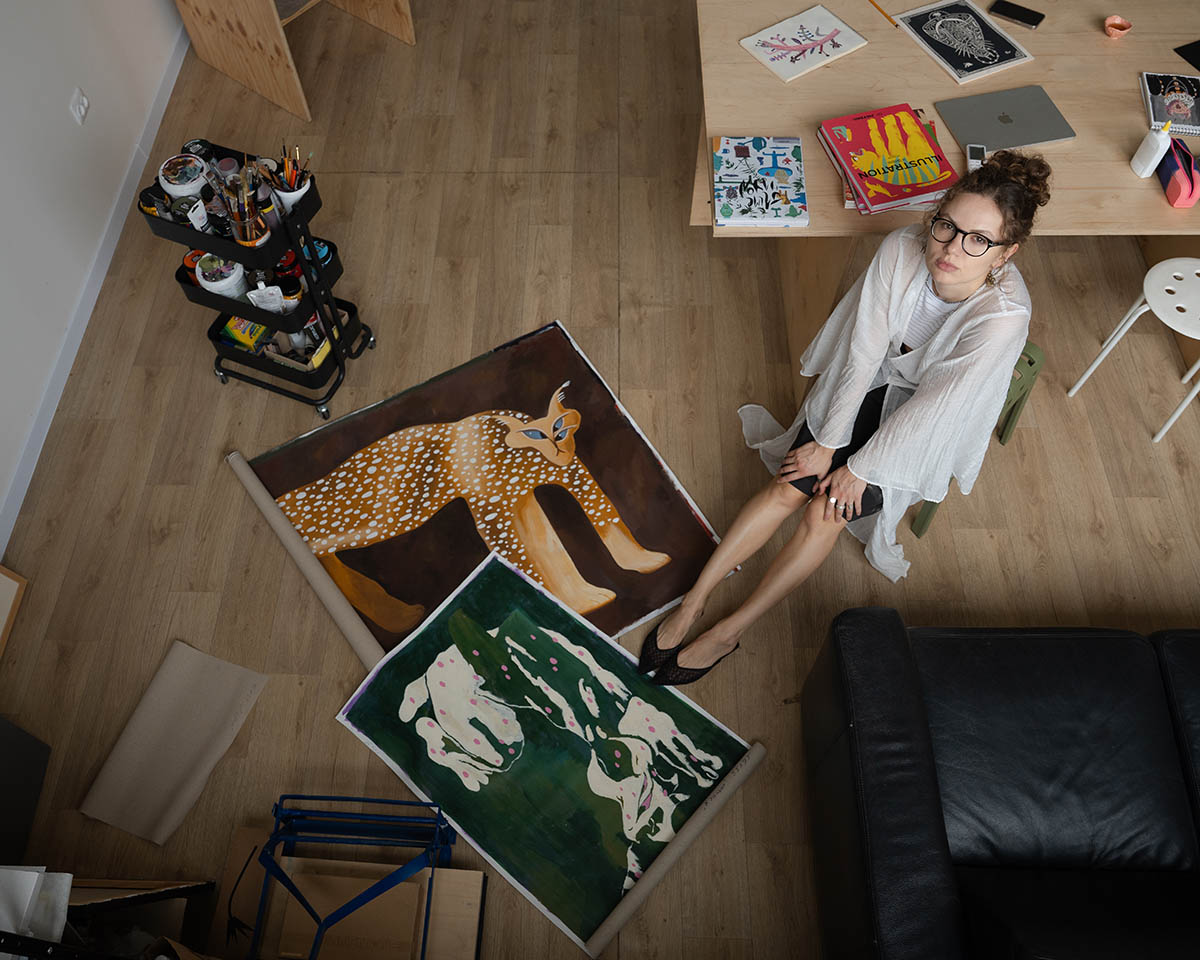
Is there a project that has become especially meaningful to you during this time?
Probably my embroidery works, where I use the traditional form of the rushnyk—a Ukrainian ritual embroidered cloth—to speak about the experience of war. I’m interested in the contrast: historically, the rushnyk is connected with wishes for happiness, protection, home, and important joyful moments in a person’s life. I bring into this form an experience that could never have existed in traditional ornamentation. Furthermore, I also work with folklore texts, sayings, and phrases passed down orally, translating them into embroidery. I’m interested in how a form associated with protection and good wishes can suddenly become a carrier of complex, contradictory, or even aggressive emotions.
On bryslandia.com, you sell T-shirts, posters, and other products. What sparked the idea to launch „brys’“?
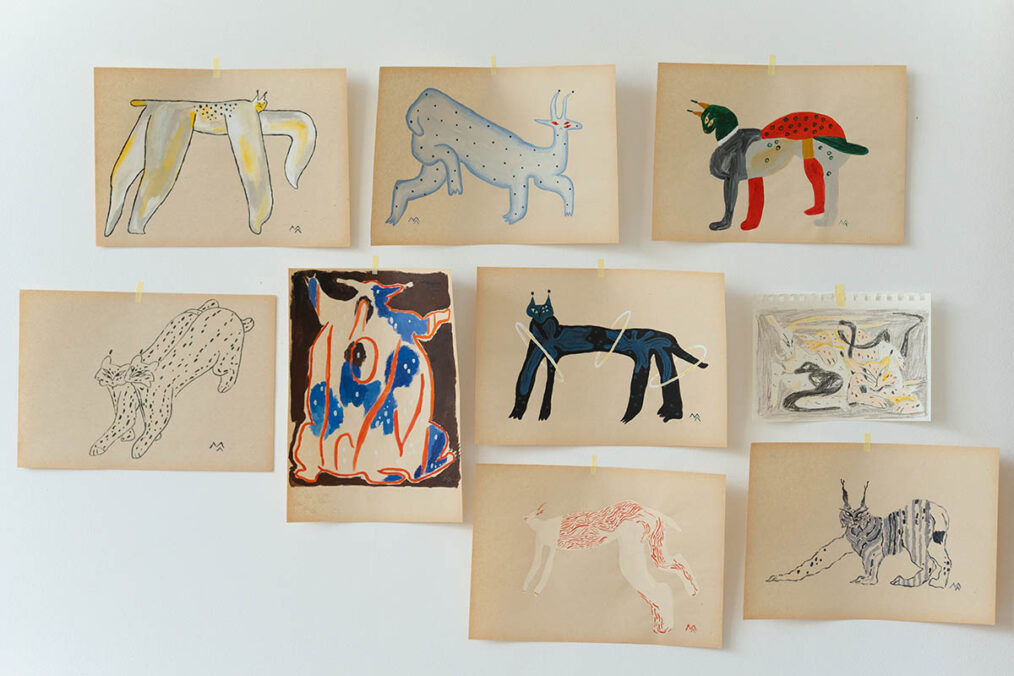
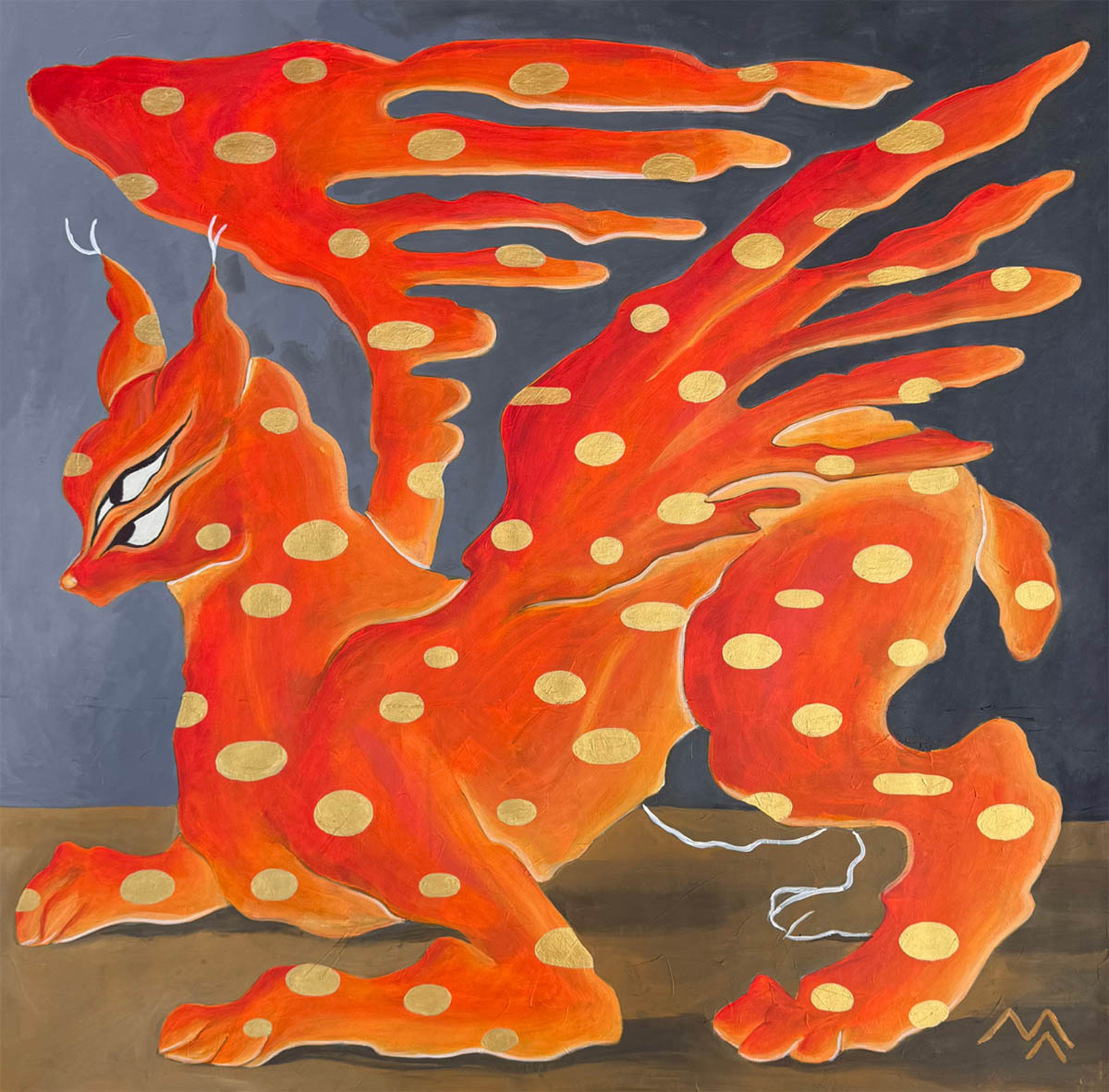
„brys'“ grew out of my three-eyed lynxes. At first, drawing the lynx was simply an exercise in overcoming my fear of drawing. I was afraid of imperfection, of the blank page, of disappointing myself. I allowed myself to give a cat three eyes and strange, distorted proportions—and at some point the exercise got out of control. The lynxes started living their lives as they eventually escaped the paintings and became a separate project.
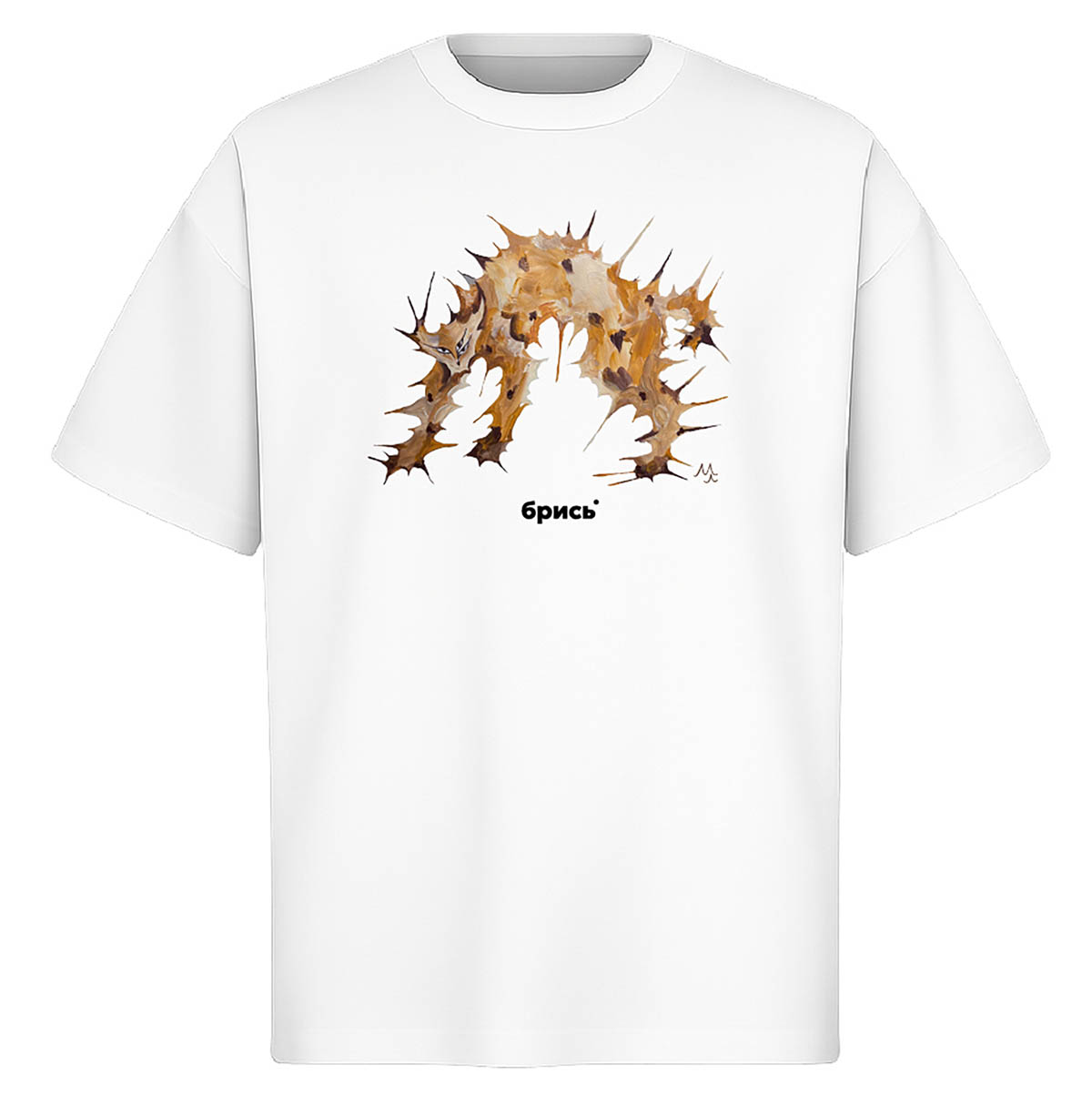
In Ukrainian, „rys'“ means „lynx,“ while „brys!“ is what you’d say to shoo a cat away, so the word literally contains „lynx“ inside it. I liked that it points to the project’s main character while still sounding familiar, like something you’d have heard since childhood.
What’s your absolute favorite shirt? Which one do you wear the most?
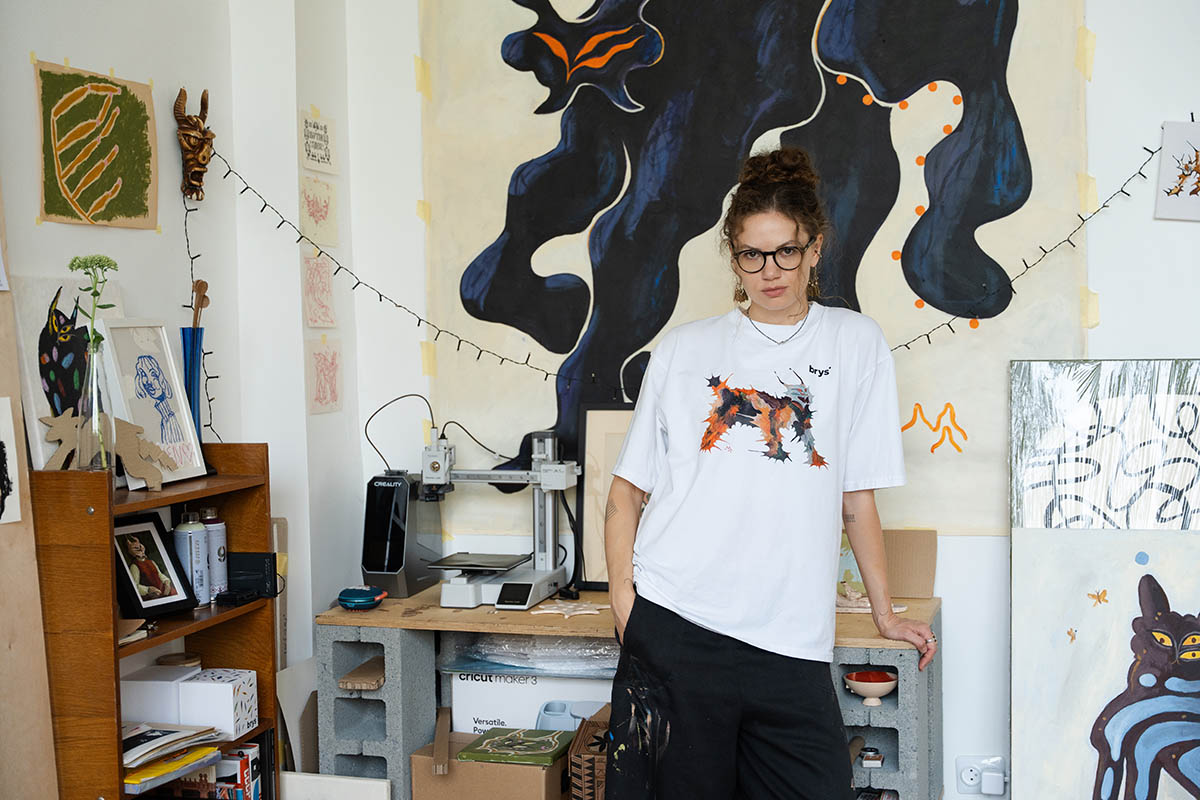
From the latest collection, it’s the “Shiporis” one. The spikes on it remind me a little of my character, so I guess it suits me best. [Editor’s note: She is wearing the T-shirt in the photo above.]
Are you currently experimenting with any new techniques or materials?
Yes. I’ve always had a soft spot for paper and cardboard. Lately, I’ve been experimenting a lot with cardboard through my project „bloomatics“. These are modular flowers made from unique flat pieces that are assembled into large three-dimensional forms. They can be used as part of a personal ritual or spiritual practice and later burned or otherwise disposed of without harming the environment.
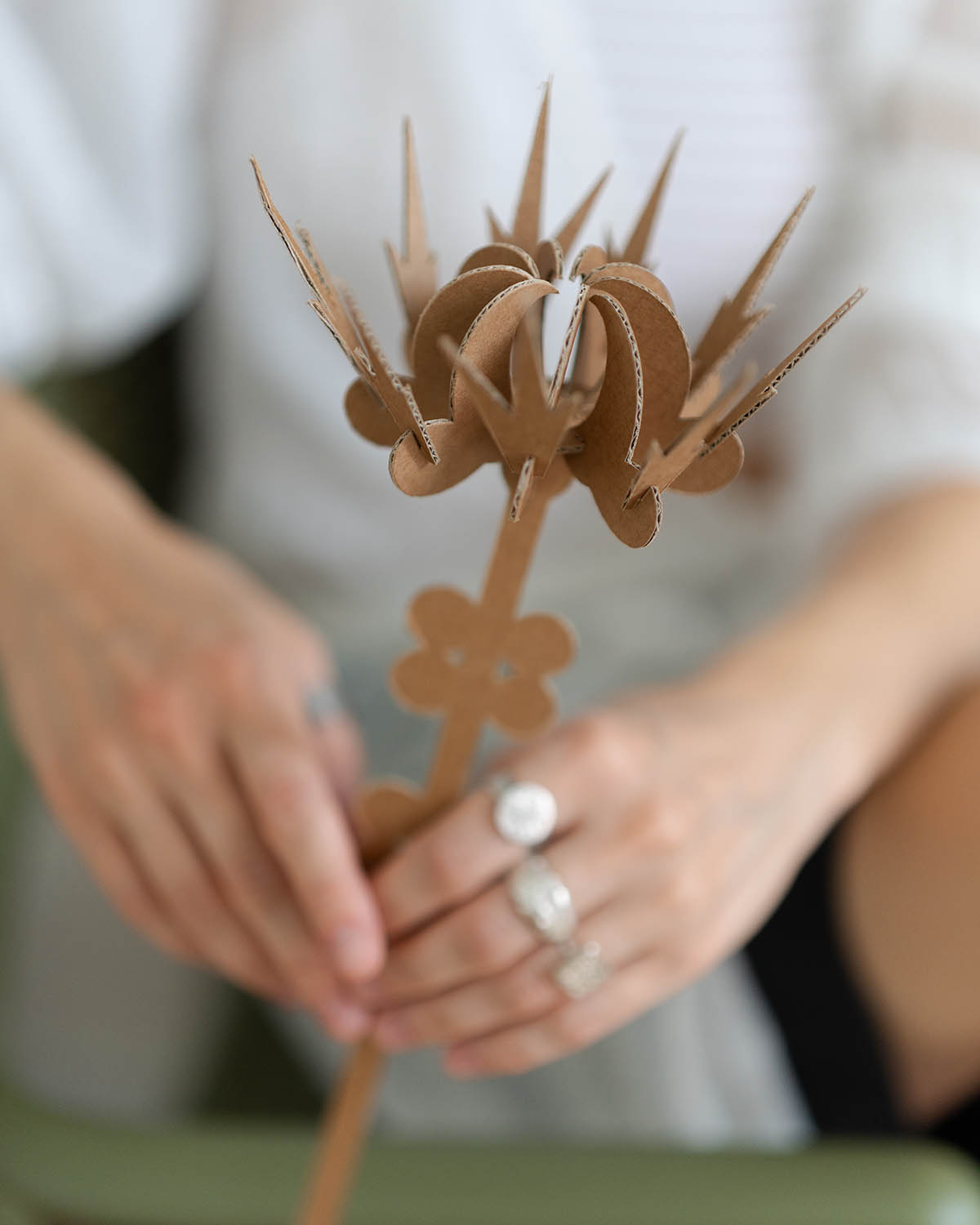
Cardboard became a way for me to resolve an internal conflict between my need to create new things and my reluctance to produce even more objects that could eventually become waste. I like the idea that at the end of its life, the object becomes an artwork that disappears. For me, this is also a metaphor for emotions and psychological baggage that sometimes need to be released to move forward. This idea is central to the ascetic line of bloomatics: a flower is connected to a particular intention, and once that intention has been fulfilled or is no longer relevant, the flower can be burned. The object isn’t meant to stay with you forever. It exists for as long as you need it, and destroying it transforms into the conclusion of a small personal ritual. Another Bloomatics line, Metaforms, explores 3D printing with recycled plastic. I want to turn used plastic into flowers and give waste a new life. Even if it is only a small contribution, I want my work to help protect the environment. We are all responsible for what is happening to our planet.
Marta Leshak – www.instagram.com/martaleshak/
Marta Leshak is an artist, illustrator, and graphic designer from Kolomyia, currently living and working in Lviv, Ukraine. She holds a master’s degree in graphic design from Lviv Polytechnic National University.