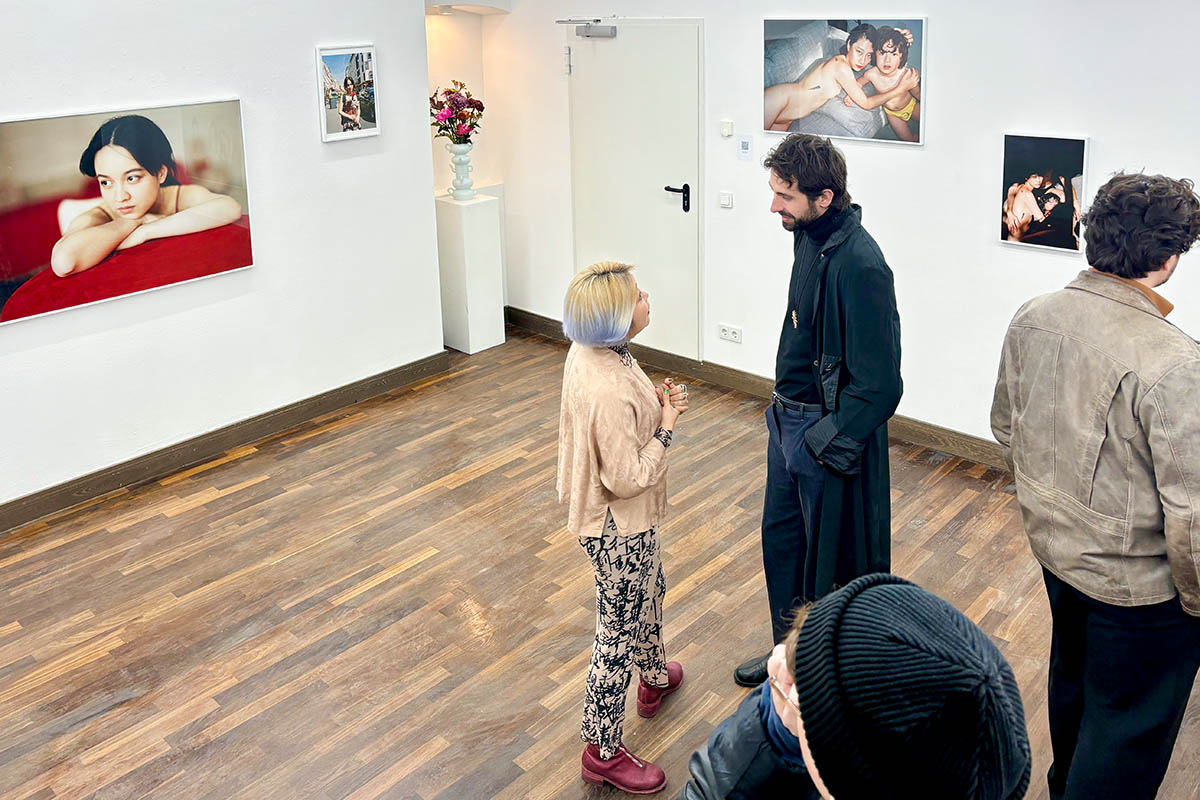
In the interview, she talks about redefining identity and intimacy through art and about her gallery’s upcoming exhibition „Overlay — Worlds Within Worlds“, bringing together Gonkar Gyatso and Fu Xiaodong, opening during Berlin Art Week on September 10, 2026.
Migrant Bird Space has been bridging the Chinese and European art worlds for nearly a decade. How did the idea first come about?
Migrant Bird Space has been bridging the Chinese and European art worlds for over a decade. The initial idea was to create a platform for artists living between two worlds, artists whose work, because of cultural gaps and differences, is often difficult to fully understand or embrace within a single context. I studied art history and cultural history myself, and because of my family background, I’ve always lived within the art world. Most of the people around me are artists, gallerists, or curators, so doing this work has always felt very natural to me. I’ve also always believed that living like a migrant bird, moving freely between different cultures and geographies, is a genuinely free and comfortable way to exist.
The name „Migrant Bird Space“ is a reflection of exactly that state.
Does the gallery bring more work from China to Europe, or the other way around? Has this exchange become bidirectional?
Our work has always been bidirectional. On the one hand, we bring Chinese artists‘ work to Europe; on the other, we bring German and European artists‘ work to China. The two markets and two cultural contexts constantly feed us different information and different ways of seeing. We’ve also consistently recommended outstanding German artists to Chinese galleries that had never previously worked with Western artists, and the market response has been very positive. Olaf Hajek’s solo exhibitions in Shanghai and Shenzhen, for instance, both came about through our recommendation and collaboration. For me, this bidirectionality is essential. Cultural exchange shouldn’t mean „introducing“ one place’s culture to another in a one-way direction; it should be a process of mutual entry and mutual transformation.
Tell us about your space at Koppenplatz, Berlin, and your space in China. How are they different or similar?
Our Berlin gallery is located right at Koppenplatz 5, in Berlin-Mitte. We’ve shown work by Chinese artists who rarely have the opportunity to exhibit in China, including body photography, political pop, and work by Chinese artists living and working in different parts of the world. While our physical space in China is no longer operating, we continue our work, now in the form of an art development company — with museums, major galleries, and various art projects across China — and we continue to participate in Chinese art fairs—sometimes independently, sometimes in collaboration with the right gallery partner.
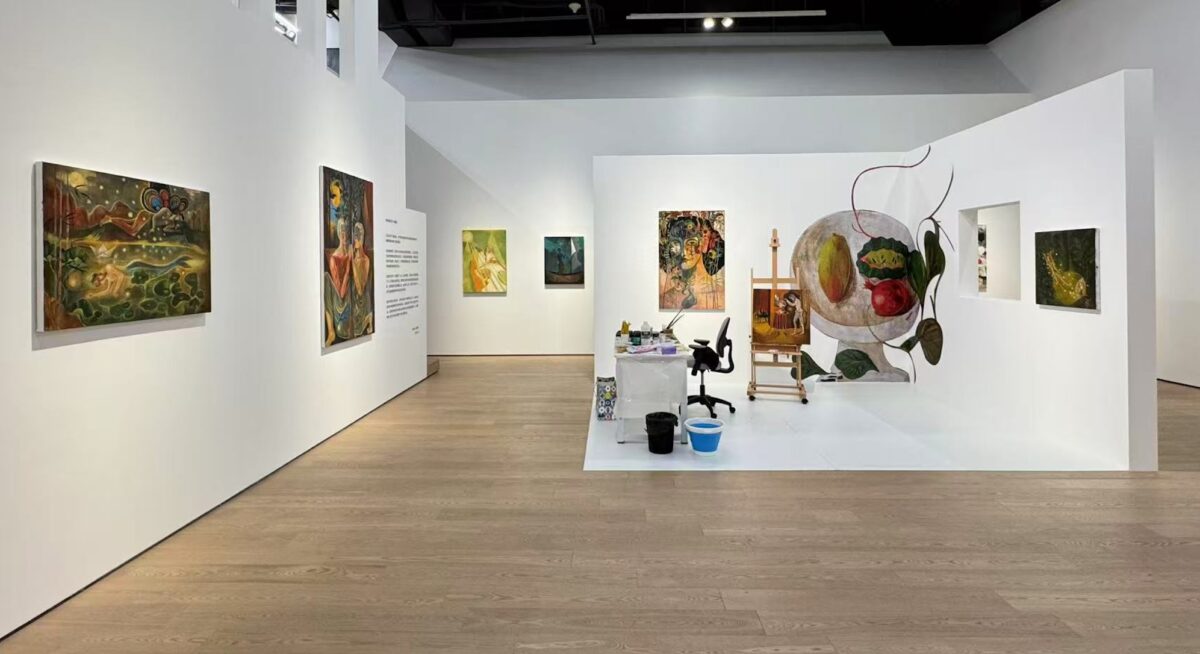
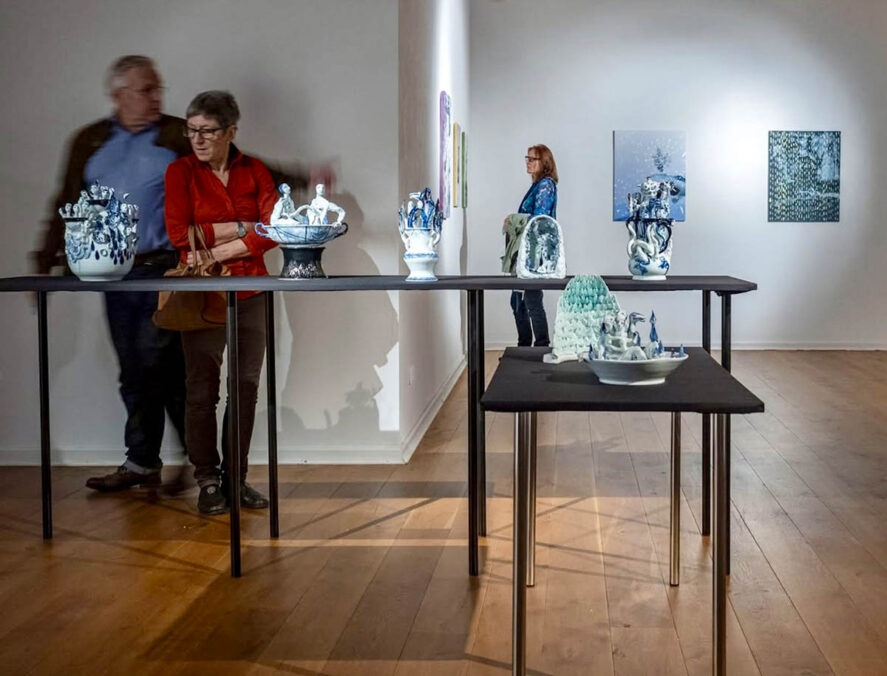
So for me, Migrant Bird Space has never been fully defined by a fixed physical location. It’s more of a platform that keeps moving and keeps building relationships.
Your projects span photography, ceramics, painting, and mixed media, with artists spanning several generations. Who are you currently working with and representing?
We currently work with and represent more than 40 artists, spanning photography, painting, ink art, ceramics, sculpture, and mixed media, across different generations and cultural backgrounds. One of our most important projects this September, during Berlin Art Week, is Overlay — Worlds Within Worlds, a two-person exhibition featuring Gonkar Gyatso and Fu Xiaodong.
What do you look for when selecting artists to join the Migrant Bird Space program?
What we’ve always been focused on, at its core, is a simple question: How does an artist understand the world, and how do they help us understand reality anew? We value artists who have a deep grasp of their own cultural and art-historical experience while also being able to offer ways of seeing that go beyond the surface of reality. They don’t need to work in similar media or belong to the same generation. What really matters is whether they have an independent capacity for perception and whether they can turn inherited cultural resources into a language that still functions today. This is also why we pay particular attention to artists with cross-cultural experience. Being cross-cultural isn’t just „having lived in a few countries“ — it’s whether a person truly grasps that the reality we take for granted is only one of many possible ways of seeing.
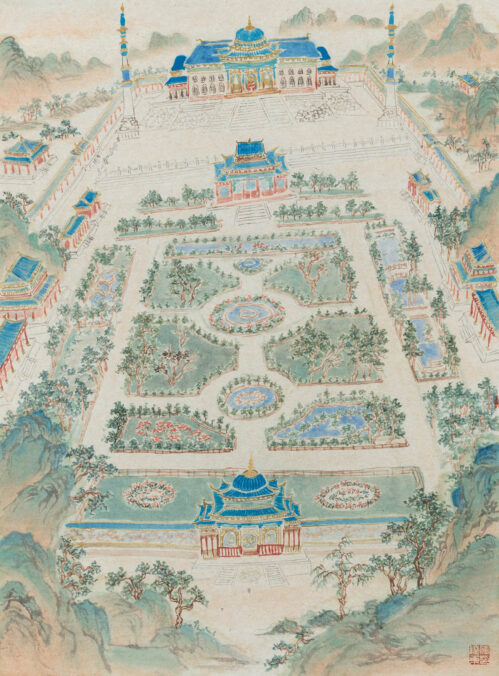
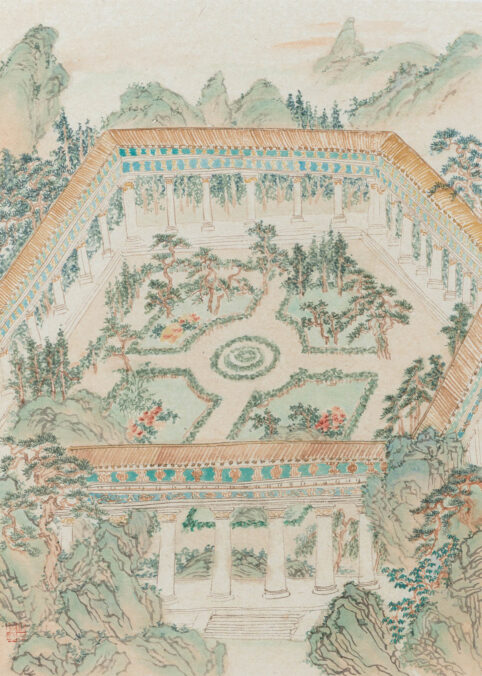
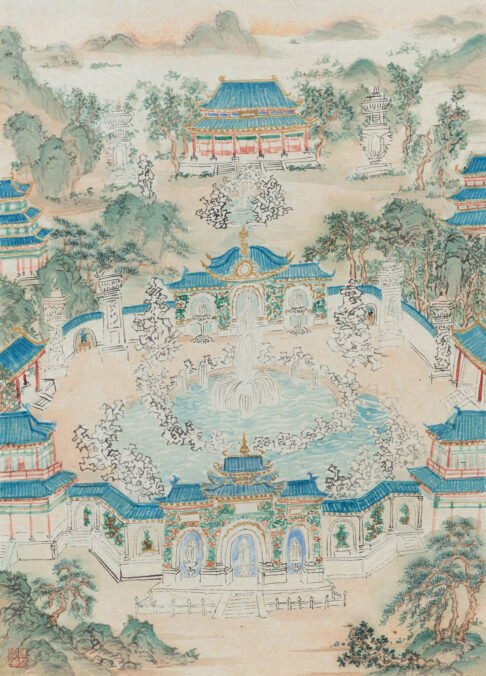
Where did the initial idea for Overlay – Worlds Within Worlds come from?
This exhibition began with a sense of unease about the world today. We are more interconnected than ever, yet increasingly fragmented by algorithms, political divisions, identity, culture, and the overwhelming circulation of images and information. We have access to more knowledge, but that does not necessarily mean we understand reality more fully. Perhaps what we are losing is our ability to perceive the relationships between things. What interested me was the realization that some ways of thinking through this condition were already present in the cultural traditions around us. In Huayan Buddhist thought, Indra’s Net imagines a universe in which every part reflects and participates in the whole. With a little contemporary cultural imagination, we might consider it to be a decentralized field of relations and information, where nothing exists entirely on its own. But the structure of a network alone does not explain how it moves.
What gives it life, for me, is the Chinese understanding of yin and yang: forces continually flowing, waxing and waning, and transforming into one another, together with the idea of sheng sheng bu xi, or ceaseless generation. The world is not a finished reality waiting to be understood but something continuously generated through relation.
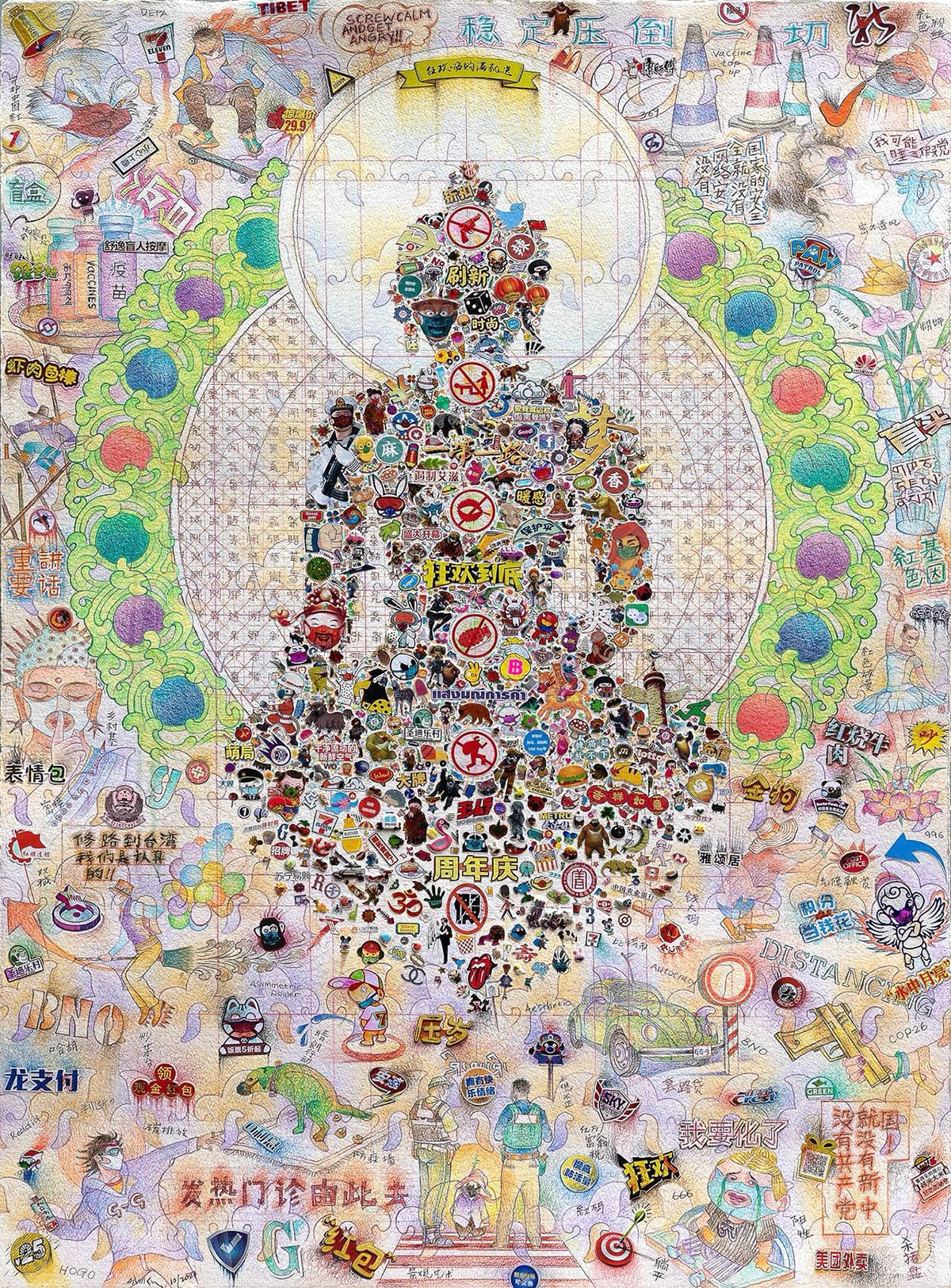
Indra’s Net gives us the structure of relation; yin and yang its movement; and ceaseless generation its vitality.
This became the starting point of the exhibition. It is not an exhibition that tries to explain Buddhism or Daoism but one that asks whether these cultural resources can still help us understand the deeply interconnected yet increasingly divided world we inhabit.
What made you want to bring these two very different artists together under this idea? And please tell us more about the individual works.
Visually, Gonkar Gyatso and Fu Xiaodong take very different paths, but both are internationally recognized artists whose practices have developed through sustained engagement with museums, biennials, and institutional exhibitions beyond China. This is important to the exhibition: neither artist approaches tradition as a closed cultural inheritance, but from within a contemporary practice already shaped by encounters across different cultural and intellectual contexts.
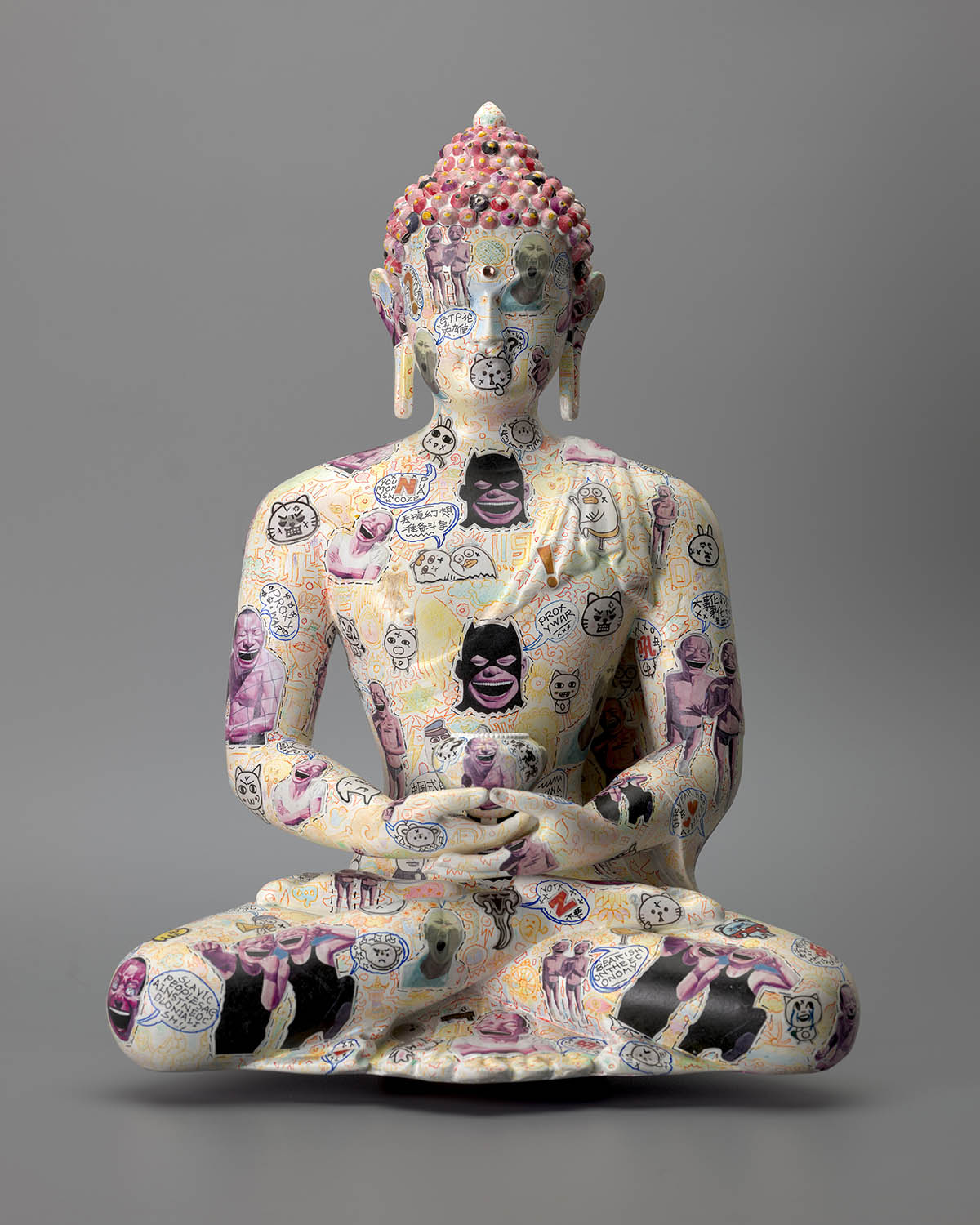
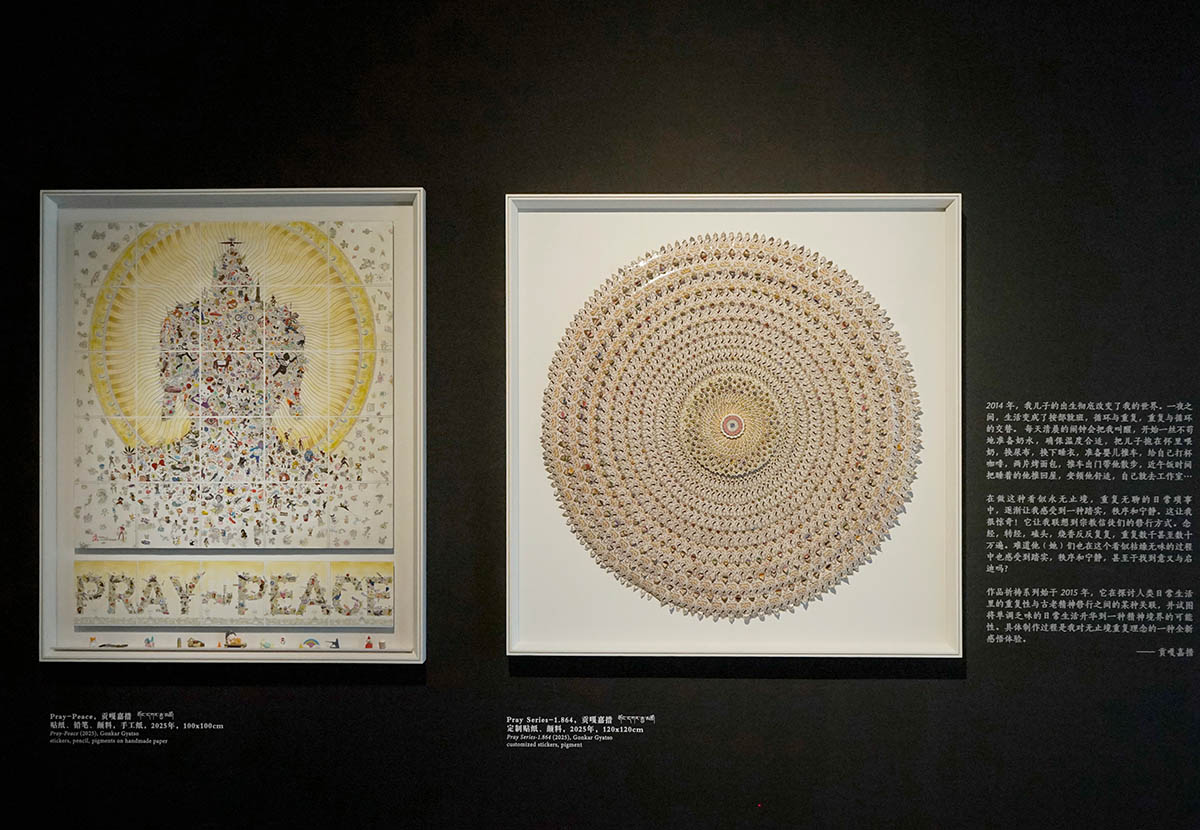
Gonkar Gyatso has long examined what happens when Buddhist imagery enters the visual systems of contemporary global culture. His Buddha figures become open structures that absorb consumer symbols, political history, ecological concerns, popular culture, and the incessant circulation of images through global media. The density of these surfaces is not simply a collision between “tradition” and “modernity.” It reflects the reality we now live in: different belief systems, histories, commodities, and information coexist and continuously alter one another. Rather than parodying Buddhist tradition, Gonkar asks how an inherited spiritual structure survives, transforms, and acquires new meanings as it passes through radically different realities.
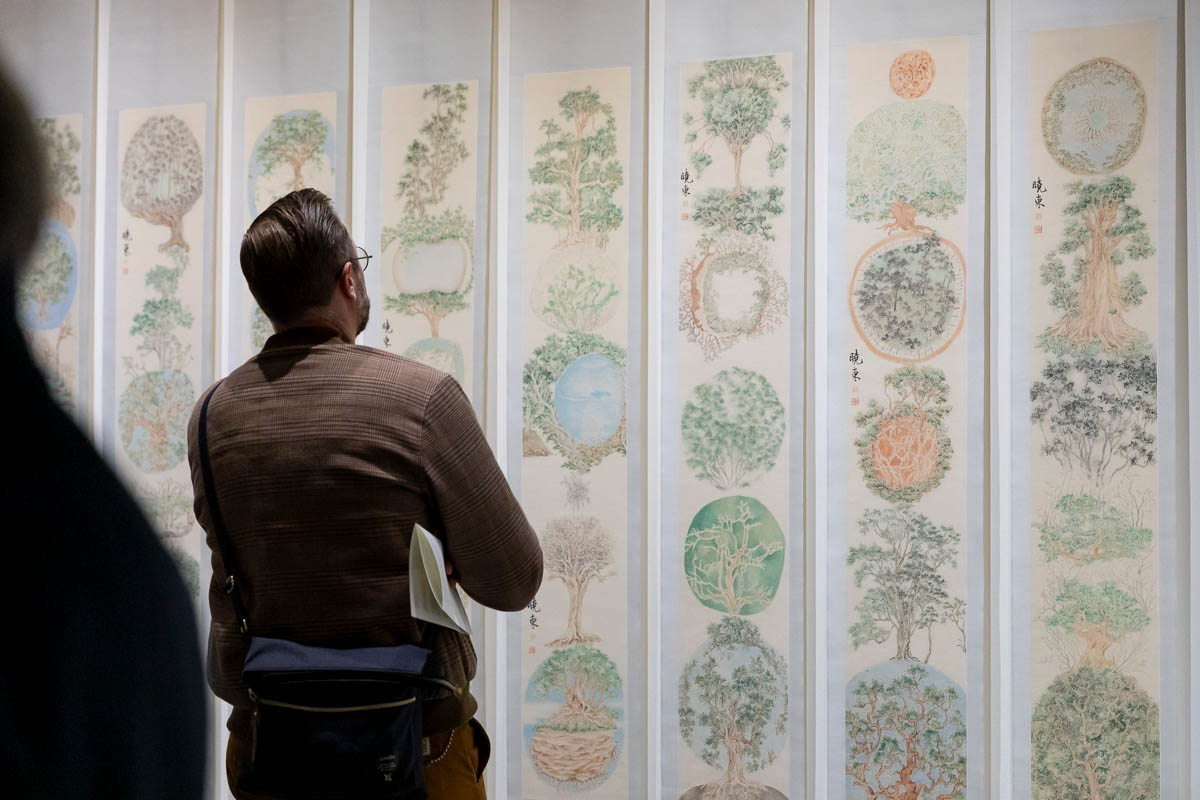
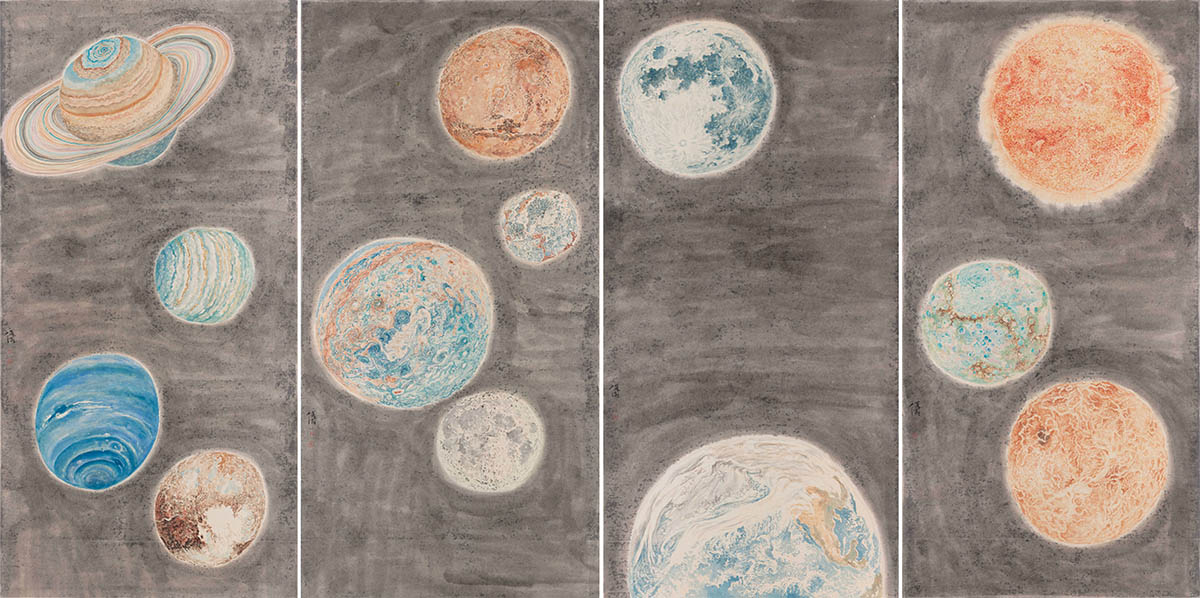
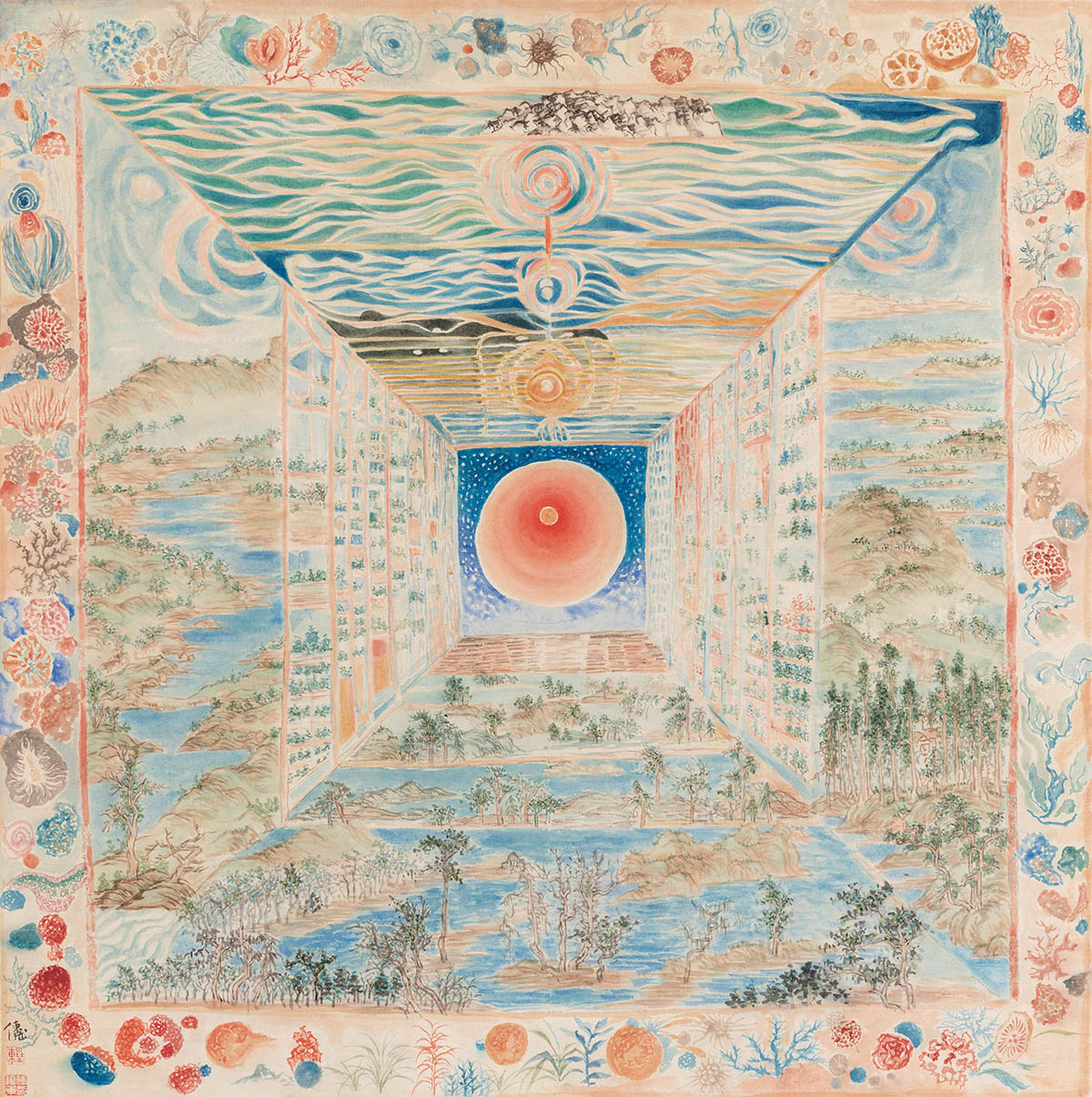
Fu Xiaodong approaches this question from another direction. Deeply trained in classical Chinese painting and calligraphy, Fu Xiaodong’s work has also been presented within international biennial and institutional contexts. She repeatedly returns to Chinese landscape painting and Daoist cosmology, not to preserve an ancient visual language, but to examine whether the way of seeing and understanding the world embedded within it remains active today. This becomes visible in the construction of the paintings themselves. Fu does not treat landscape primarily as a collection of solid objects. Mountains, clouds, water, vegetation, and human presence emerge through lines, intervals, movement, and changing relationships. Transformation, circulation, and ceaseless generation are therefore not merely subjects of the paintings; they become its underlying logic. Landscape is not simply represented but seems to be continually coming into being. What connects these two practices is therefore not a shared iconography, nor simply the fact that one draws upon Buddhism and the other upon Daoism. It is a shared understanding of tradition as something still in the process of becoming. Tradition remains alive not because it stays unchanged, but because it continues to generate new relationships with the world around it.
The exhibition’s core premise is Buddhist iconography meeting Daoist cosmology, meeting the present moment. Both traditions‘ core principles are in dialogue with digitalization and contemporary society. Could you expand on that?
I think what these traditions offer us today is fundamentally a relational way of seeing. The world is not made up of isolated entities but is formed through relationships in which things continually affect, reflect, and transform one another. For me, three qualities are essential to keeping such a relational world alive: vitality, reciprocity, and openness. These qualities are also central to both artists. Fu Xiaodong activates the generative vitality within tradition, while Gonkar Gyatso keeps tradition open to other images, cultures, and realities. This also relates to what I call „awareness.“ We live with an unprecedented amount of information, but information alone does not necessarily produce understanding. Perhaps what we need is not simply more knowledge, but a greater awareness of the relationships through which things acquire meaning. This is where art becomes important. Art can momentarily widen our field of perception, allowing us to sense connections that everyday reality tends to separate. That is ultimately what Worlds Within Worlds means to me: every world already carries traces of other worlds within it. We are not standing outside this web looking in; we are already part of it.
The exhibition will be part of Berlin Art Week, reaching a broader audience. What are your hopes or expectations?
I don’t want visitors to leave feeling that they have „learned“ Buddhism or Daoism. I hope the exhibition encourages them to suspend judgment for a moment and become more aware of the relationships in which images, cultures, people, and ourselves exist.
Perhaps what civilisation needs to protect is not any fixed relation, but the vitality, reciprocity, and openness of relation itself.
These ancient cultural resources don’t offer us a simple „Eastern answer.“ Rather, they remind us that while the problems we face may appear distinctly contemporary, some ways of understanding them have been around us for centuries.
After Overlay — Worlds Within Worlds. Is there already a next chapter in the works — a related exhibition, or an artist from this show you expect to give a solo exhibition soon?
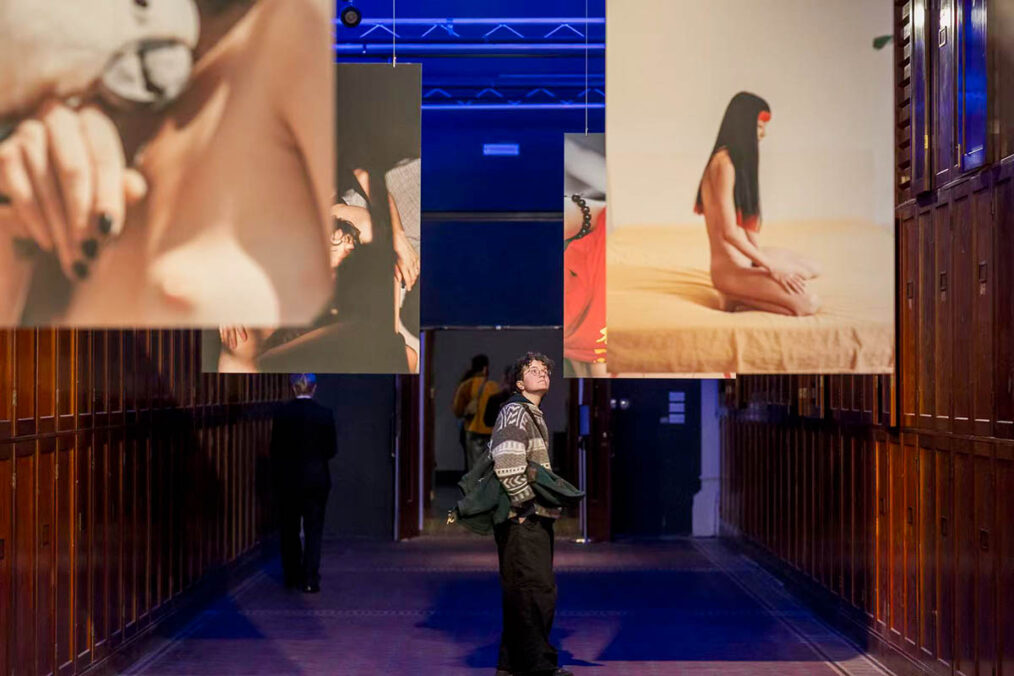
Yes. A next chapter is already beginning to take shape, although it moves into a very different visual and psychological territory. We are developing a group exhibition provisionally titled Eve → Helen → Mary → Sophia, bringing together several generations of Chinese women artists working across photography, painting, ink, ceramics, and moving image. The exhibition begins with female archetypes and the ways in which ideas of womanhood have been constructed through mythology, religion, history, and collective imagination. The movement from Eve to Helen, Mary, and finally Sophia is not intended as a linear history of women, but as a psychological trajectory, from desire, projection, and prescribed roles toward greater self-awareness and an integrated sense of the self. Jung’s writings on archetypes and the collective unconscious provide one point of departure, but we are also interested in what happens when these ideas encounter the very different cultural and philosophical experiences carried by Chinese women artists. In that sense, there is a connection with Overlay — Worlds Within Worlds.
The subject changes, but the underlying question remains: How can inherited systems of thought continue to help us understand contemporary experience without simply repeating the forms or values of the past? For us, this is increasingly becoming an important direction for Migrant Bird Space, creating exhibitions in which contemporary art can reopen older cultural and philosophical resources and allow them to speak differently in the present.
Upcoming Exhibition during the Berlin Art Week 2026:
Exhibition: Gonkar Gyatso and Fu Xiaodong. Overlay — Worlds Within Worlds
Exhibition duration: September 10 – November 6, 2026
Opening: September 10, 2026, 7–9 PM.
Address and contact:
Migrant Bird Space
Koppenplatz 5, 10115 Berlin
www.migrantbirdspace.com
www.artsy.net/partner/migrant-bird-space
www.instagram.com/migrant_bird_space/