
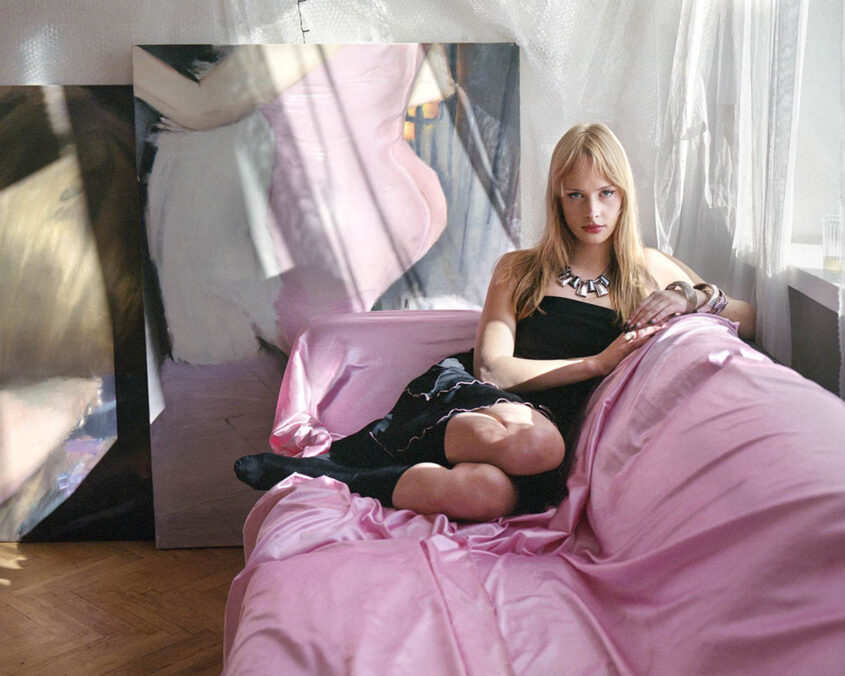
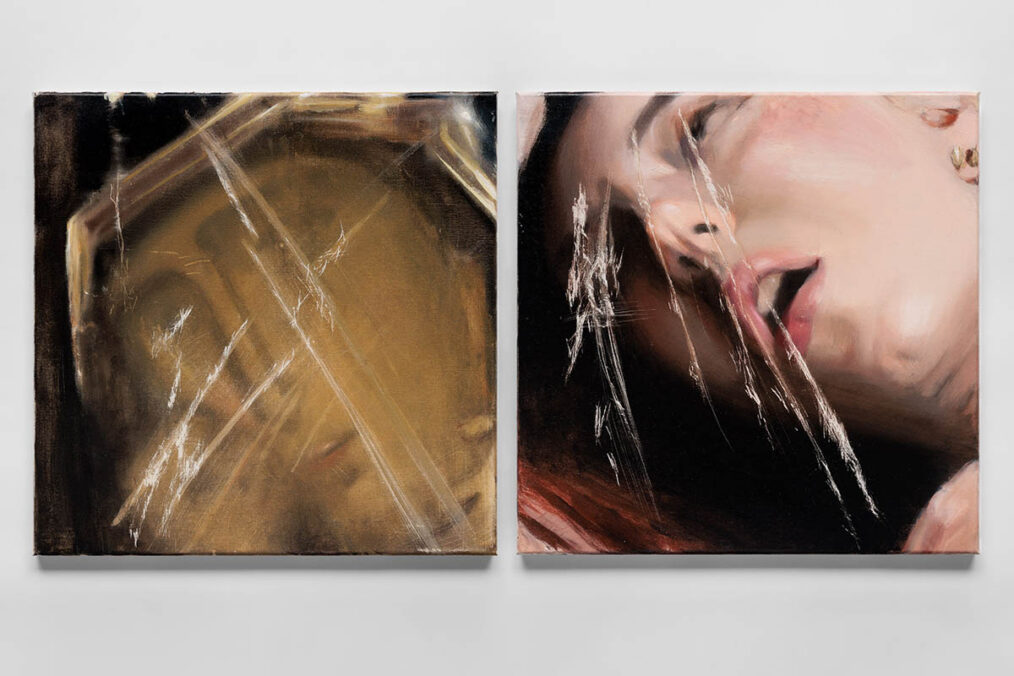
Edyta Olszewska is a Warsaw-based artist whose work explores eroticism and the experience of being a woman. Edyta explores eroticism in a religious context. The main theme of her paintings revolves around the Madonna-whore complex, presenting portraits of porn actresses alongside religious figures. She recreates the vision of a woman trapped in the male gaze and the perception of the observer. Currently, she is working on a prayer book for Studio Voltaire 2027.
How do you typically begin a new artwork?
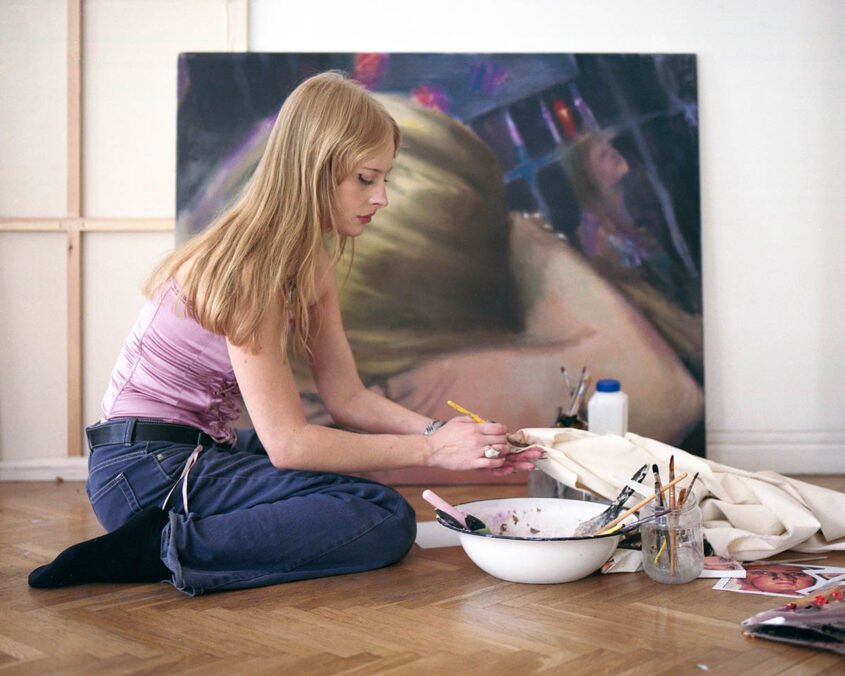
Every painting builds on the one before it, making it difficult to identify the start of a new work. Working from my home studio also tends to distort my sense of time, making it difficult to distinguish between beginnings and endings. But when I do start a new painting, I need to quiet my mind first. What helps me most is cleaning and organizing my studio, washing my brushes, and preparing a fresh, clean palette. I also need to be free from distractions. I have to calm down emotionally, because the excitement of starting something new can easily turn into a mania. I’m learning to approach the beginning of each painting with as much composure as possible, allowing the work to develop on a solid foundation. Later on, I let myself loosen up, welcoming enthusiasm and impulsiveness.
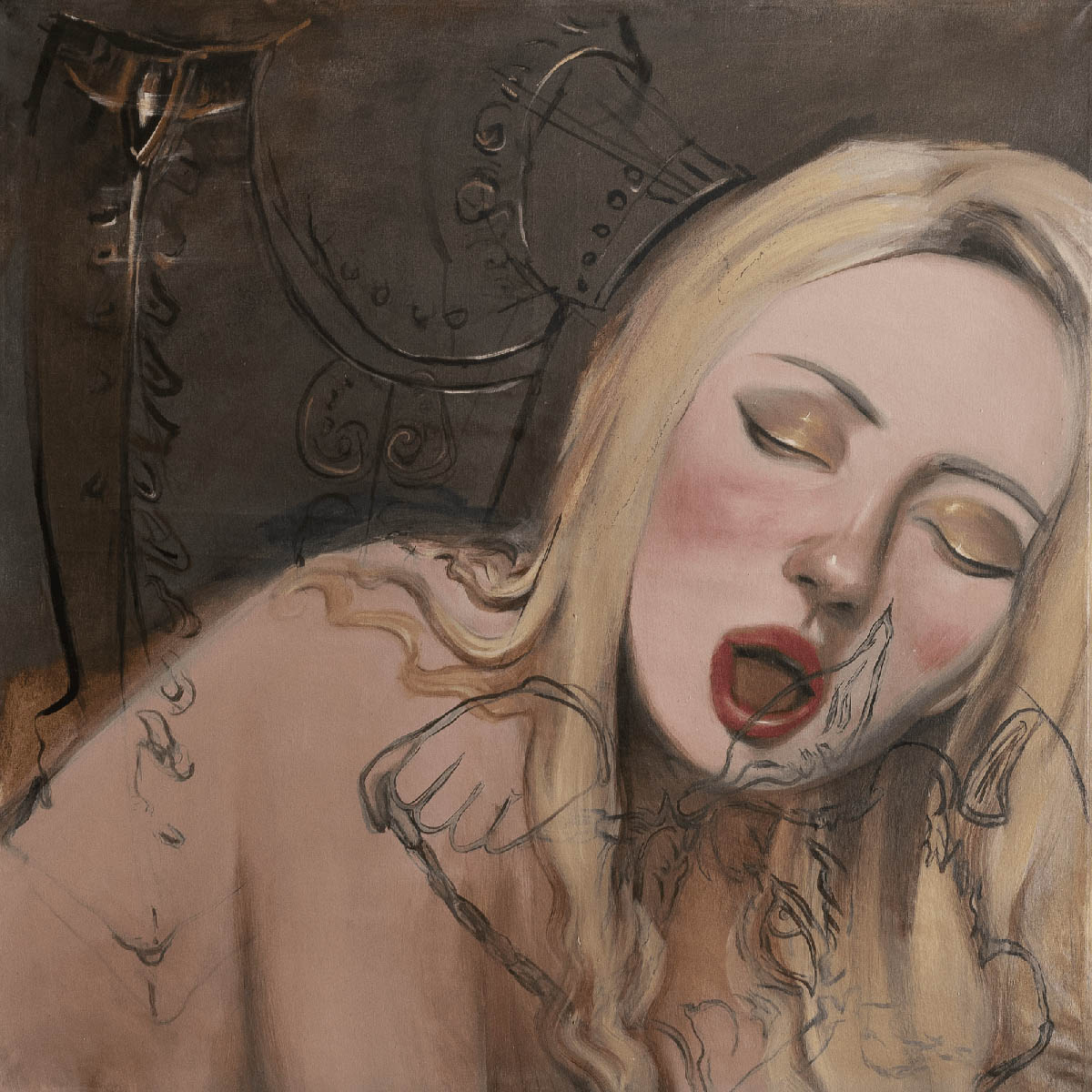
What fascinates you most about the Baroque period: deep shadows, opulence, or theatricality?
I think it’s the mystery and the almost magical quality of the symbolism. And all of it is wrapped in dramatic contrasts between light and shadow, tenebrism and raw materiality. I’m also fascinated by the depth of the subjects themselves. I love sacred art, its mystery, and a certain depth that I find in Baroque paintings.
Whenever I visit a museum, I feel a particular sense of nostalgia and exaltation in the Baroque galleries and temples.
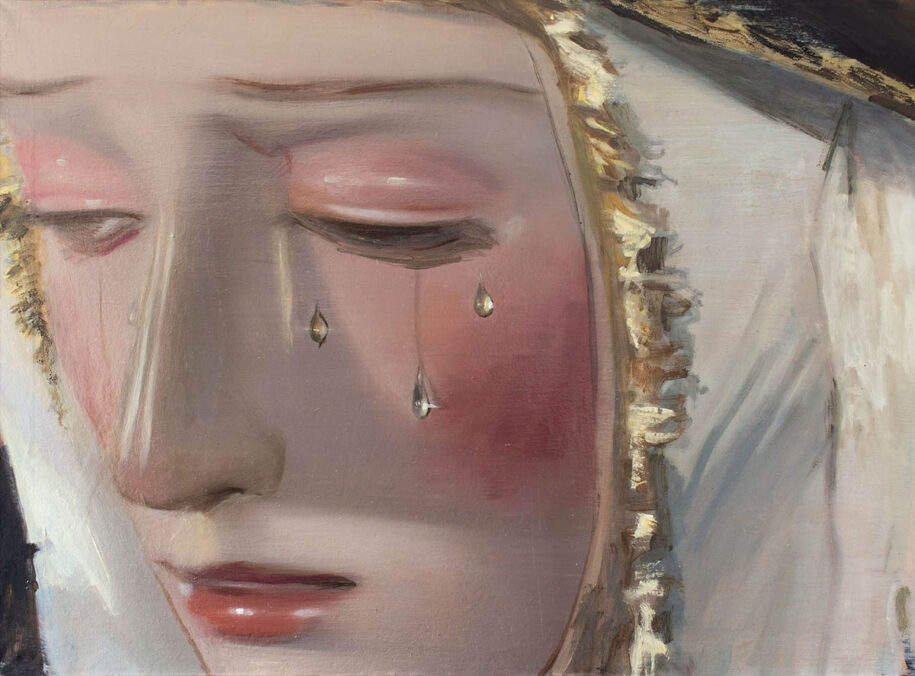
Do you see parallels between the imagery of Baroque religious art and today’s visual culture on social media?
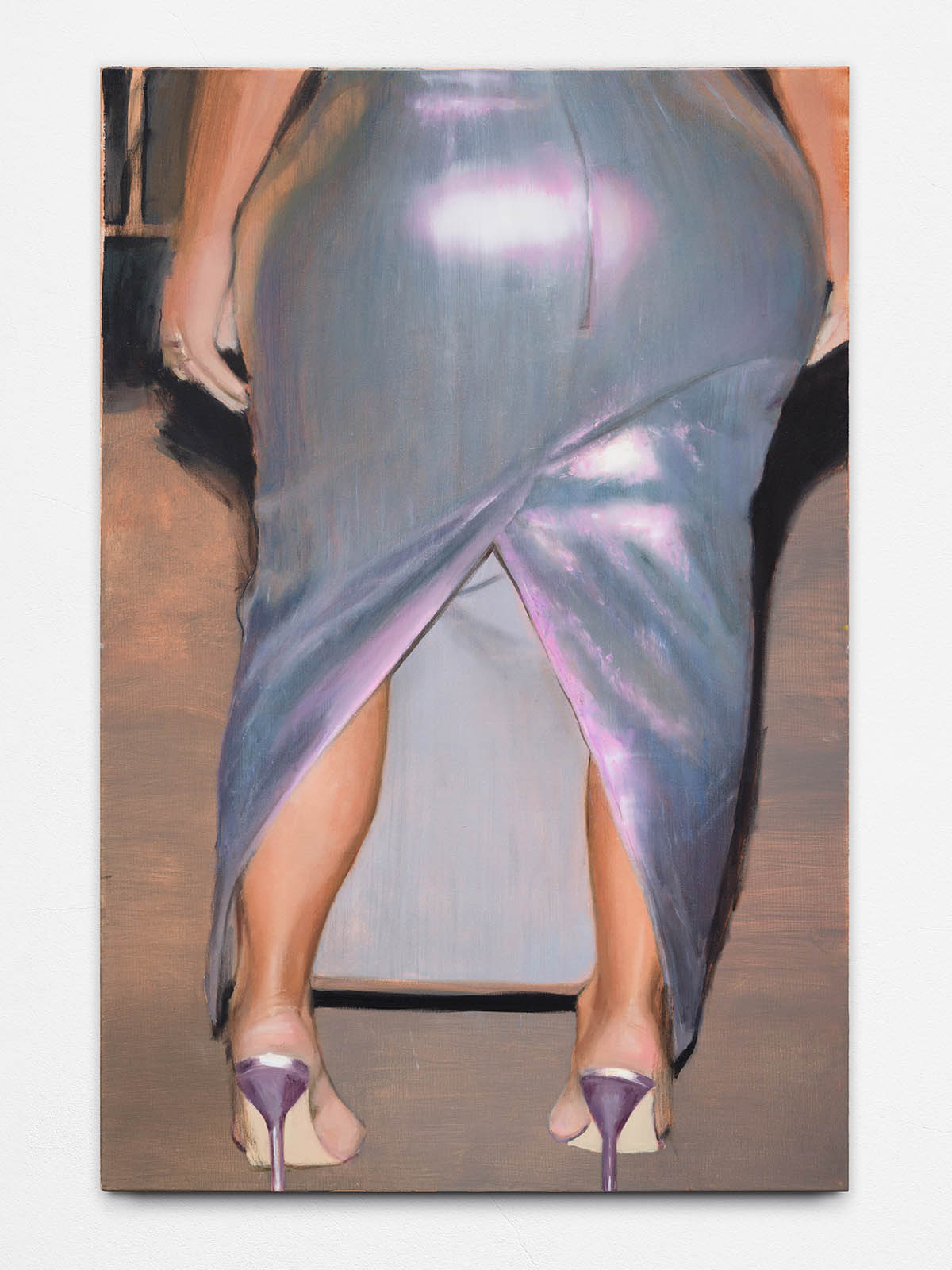
The strongest and most obvious parallel is opulence. Images of wealth, jewelry sparkling across Instagram feeds, and photographs of lavishly arranged dinner tables immediately bring Baroque still lifes to mind. I also see a strong resemblance between the extravagance of Baroque churches and the carefully curated images on Instagram fashion accounts. There is something almost bodily about this kind of visuality. It feels sensual, even seductive. It also makes me think of the Counter-Reformation, when churches were built and decorated with richness and ornamentation. Vast golden altarpieces were created to draw the faithful back to the Church, primarily through the power of visual spectacle—like modern advertising. That is why I see a similar power of attraction in the glittering sequins of contemporary fashion imagery and the polychrome decorations adorning the reliquaries of saints.
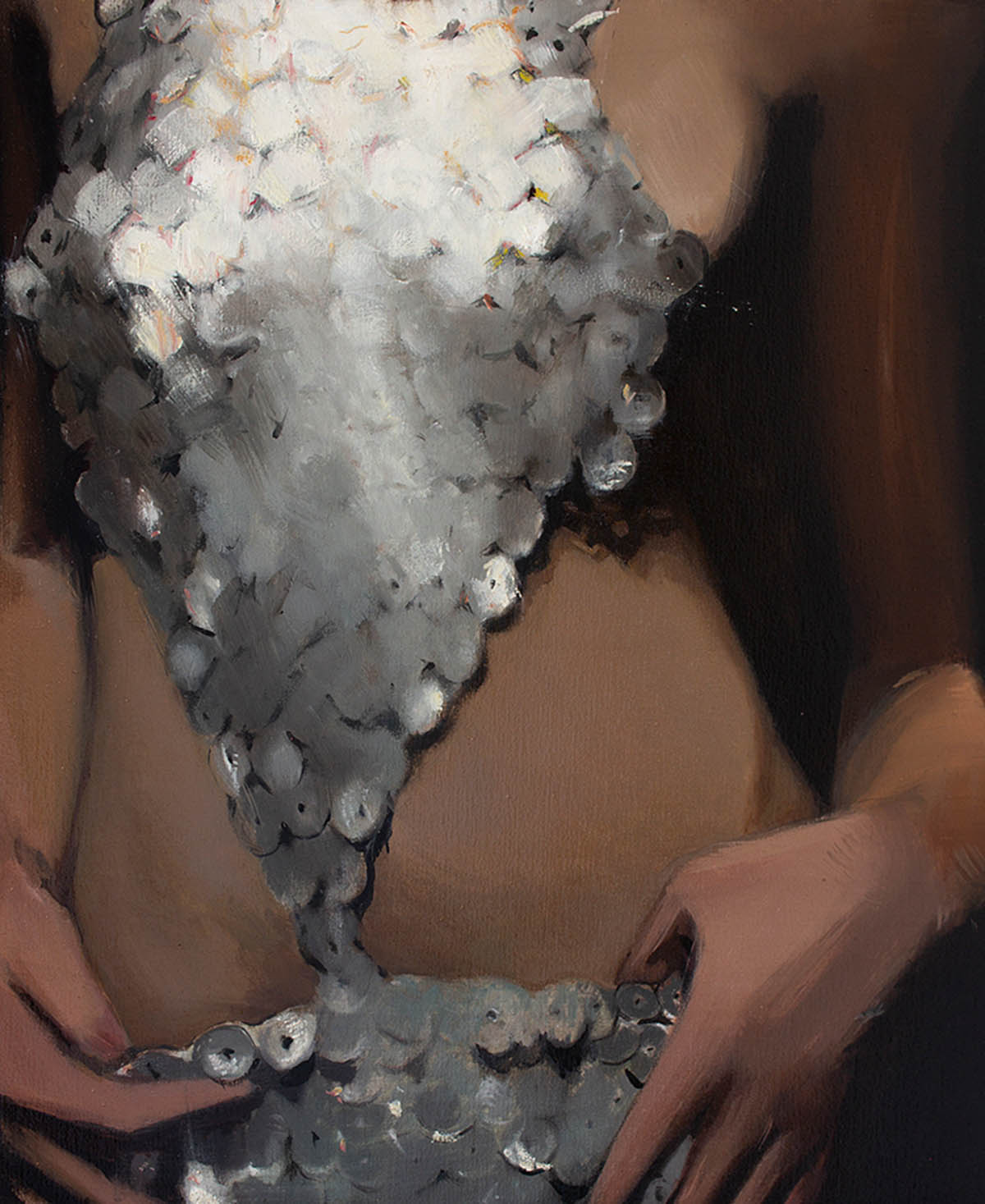
Has your relationship with religious symbols changed over time?
Not really. I use these elements in my own way, adapting them to my contemporary understanding of the world. I tend to approach them archetypically, rather than through their strictly religious meanings.
What role do beauty and seduction play?
It attracts and draws you in, yet it remains silent. Beauty exists on the surface. It’s there to be looked at, evaluated, and criticized. I explore this in my paintings, particularly through the female body. The one that is constantly observed, examined, and categorized. It can be glorified or mocked, idealized or reduced to an object.
I’m interested in this tension between the power of being visually captivating and the vulnerability of being looked at.
How does a typical day look when you’re not working? Are there any places you find particularly interesting?
Lately, I’ve found myself in a constant state of anxiety, and painting helps me postpone dealing with that feeling, at least for a little while. When I do manage to leave the studio, I usually feel the need to go somewhere far away and put my phone down. I also enjoy visiting churches and museums, and I particularly like being surprised by the smallest, most unusual exhibition rooms, the ones you might otherwise overlook.
Edyta Olszewska – www.instagram.com/olszewskaxedyta/