How did you get into photography? What made sensor-based approaches, rather than the traditional camera-and-frame method, the center of your practice?
It all started with a dream I had between the ages of 8 and 10, which I couldn’t recall until much later. In the dream, I walked through a white gallery with large-format images hanging on the walls, and then I realized that these photographs were mine. These images never quite left me and kept drawing me back to photography, eventually leading me to my first digital camera in the late ’90s and, in 2006, to the catalogue of the Siemens Photo Collection, Jede Fotografie ein Bild (Every Photograph an Image).
Turning to the sensor was a clear decision. Today, images in almost every situation are created by a sensor. Or, increasingly, without any sensor at all. At the same time, the digital has always been familiar to me. I got my first PC in 1990 and grew up with it, with games, my first own programs and the first internet connection. Working with the sensor means working with the material that today’s images are made of.
What are you exploring in your practice?
I frequently ask myself what photography actually is, because for me, it’s more than just producing images. I’m interested in how true the things we see are, and what images do to us.
I examine when we can still trust an image. How do images override our memories? How does each of us see them differently?
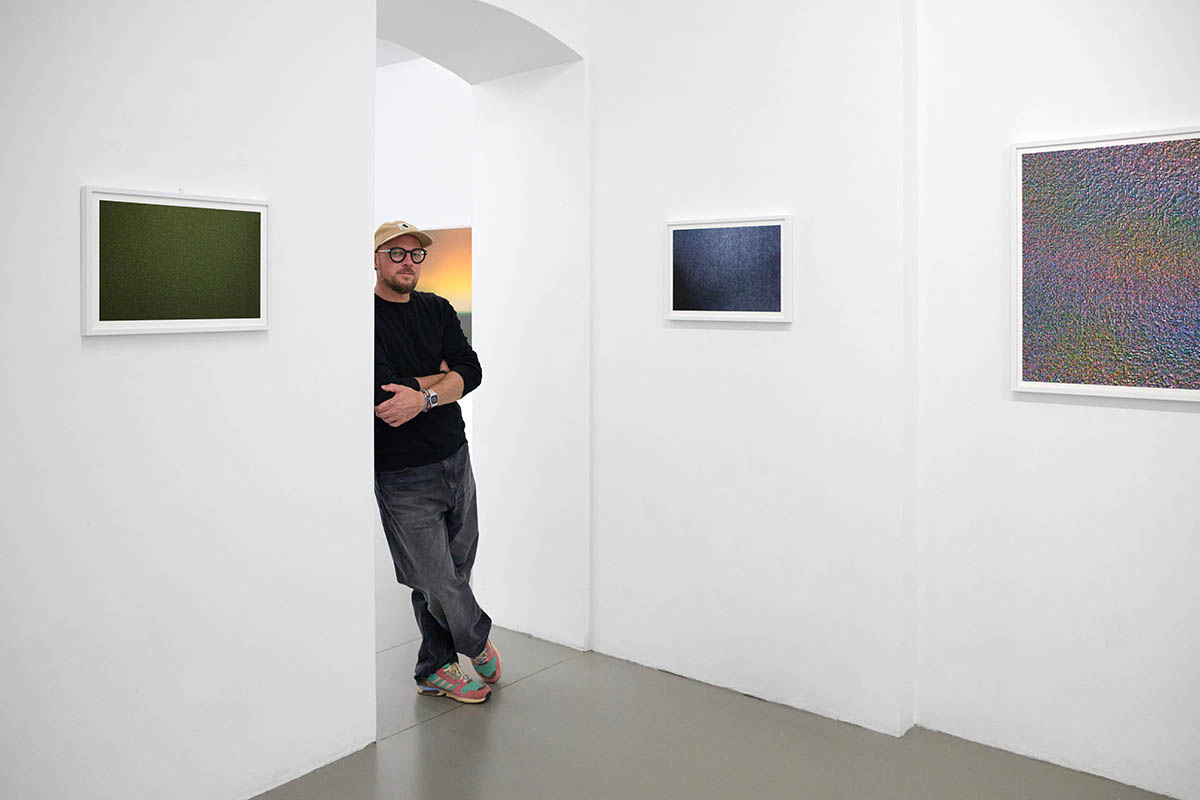
What was the starting point for your current exhibition “Grundrauschen” at PAFE in Vienna?
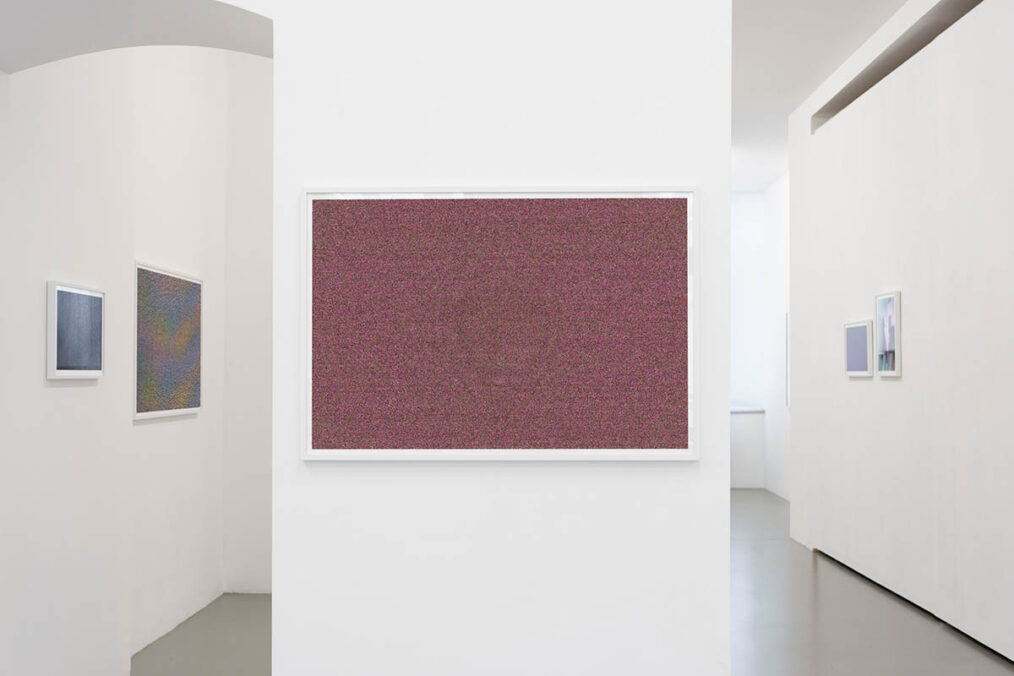
The turning point for my current work was an observation I made in 2019 at the Garibaldi metro station in Milan. I was riding an escalator and watched as people stared at a large monitor above the tracks. At first, it was showing news of disasters, images of war and the refugee crisis. Then, suddenly, advertisements with beautiful images appeared.
In public, people are constantly overwhelmed by images of crisis reports and catastrophes, while the advertisements in between idealize a supposedly perfect world. The people seemed almost frozen, as if in suspended animation. This led me to the series, Rauschen.
How important have curiosity and the technical process been to your photographic practice?
Curiosity and the question of what an image can ultimately be reduced to, its essence, are central to me. Today, that essence is the digital camera sensor, which produces images in vast quantities and floods us with them.
Technically speaking, the sensor’s noise is the image before an image is created. This noise is considered a flaw in photography and is normally never shown.
Does your attention to detail come from your previous career?
Yes. I trained as a toolmaker. When you build precision tools, you learn that every measuring instrument has a tolerance. No measurement is ever exact. I look at images the same way, and I explore technical processes step by step.
Do you use the same sensor in your work?
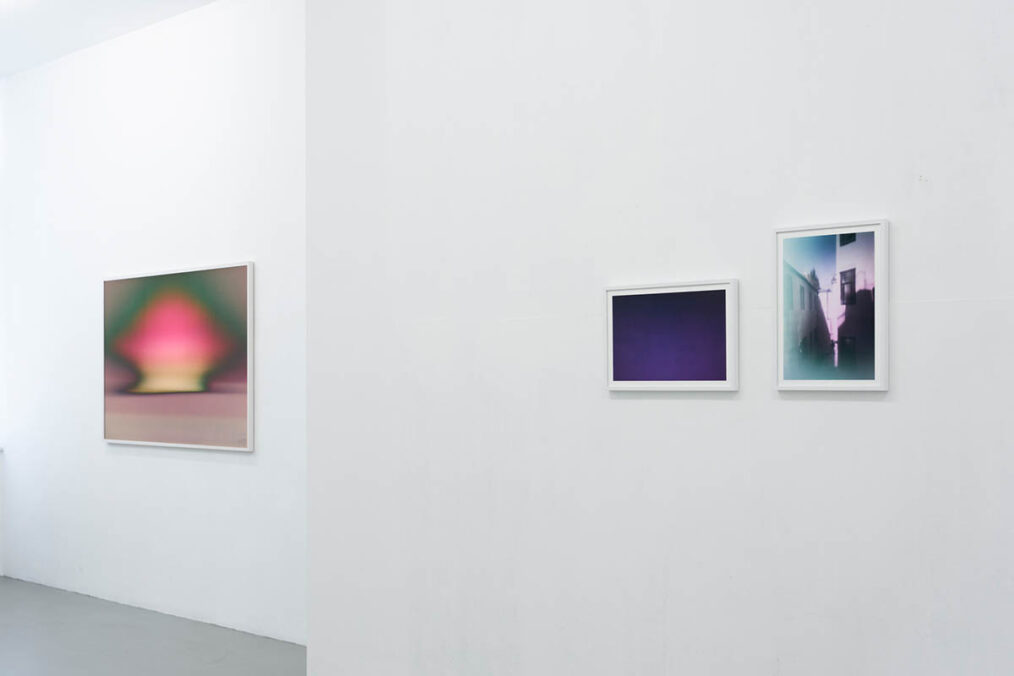
From 2013 onwards, I worked with the same sensor, including for the series Entfaltung (Unfolding), whose negatives I made in 2019. The sensor broke when I tried to push the process further. Another sensor from the same manufacturer did not produce comparable results. The series is closed. What exists is all that will ever exist. Today, I work with other sensors.
Do you notice any differences between the two sensors? How has the technology evolved, and what advantages or disadvantages does this have for your work?
With newer sensors, it’s much harder to create visible noise; the technology largely filters out image artifacts. Older sensors, on the other hand, are more prone to producing them. Still, I deliberately work with current sensors. I am interested in how the technology develops, because it changes how today’s images come into being. Every new generation of sensors filters, corrects, and smooths differently. That is a chance for my work to develop further.
Let’s talk about Werk 0339 (Work 0339) from the Oberflächen (Surfaces) series. Can you describe your process using this work as an example?
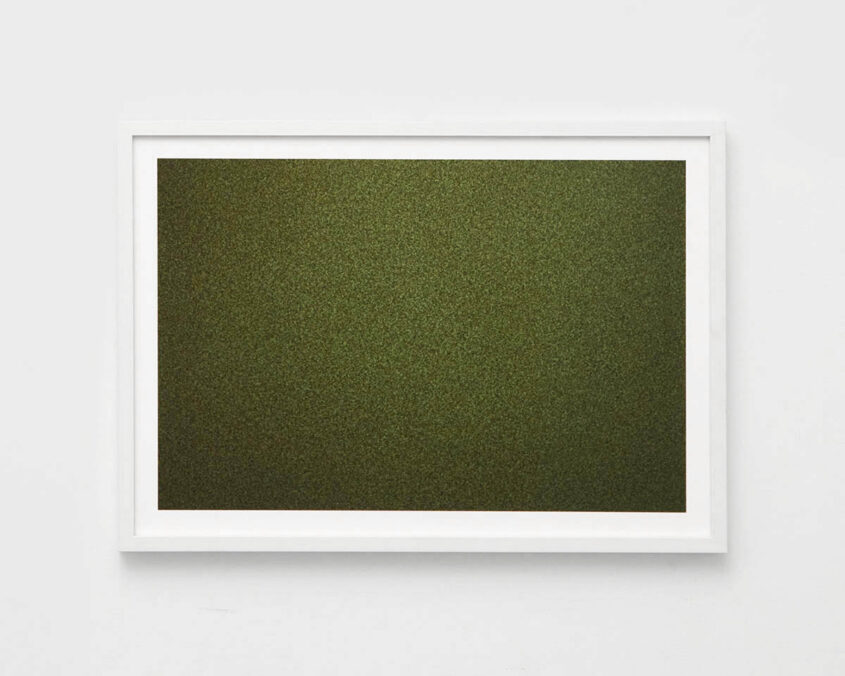
At first glance, the image looks like sensor noise, full of fine pixel structures and dots. In fact, it shows the wall beside the seats in a metro carriage in Vienna. If you sit in the metro and look closely, the wall holding the window is slightly dotted, almost pixelated. To the naked eye, the wall appears gray. But when I photograph it with a daylight setting, the artificial light becomes visible, and this green color appears.
How did you choose the subject for your work?
In this case, I regularly see it because I often take the metro. It was a familiar view that I saw again and again, and eventually it stuck with me. At some point, I decided to take my camera and capture the moment. I’m very selective about what I photograph; it always takes me a long time to decide to capture something.
What was the starting point for Werk 1715 (Work 1715)?
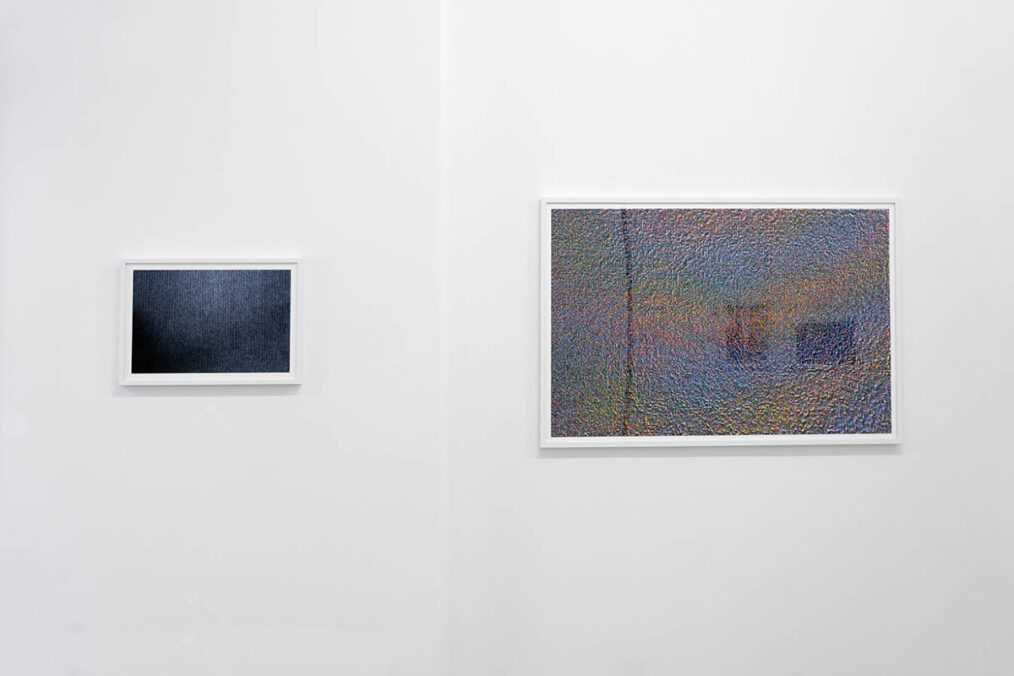
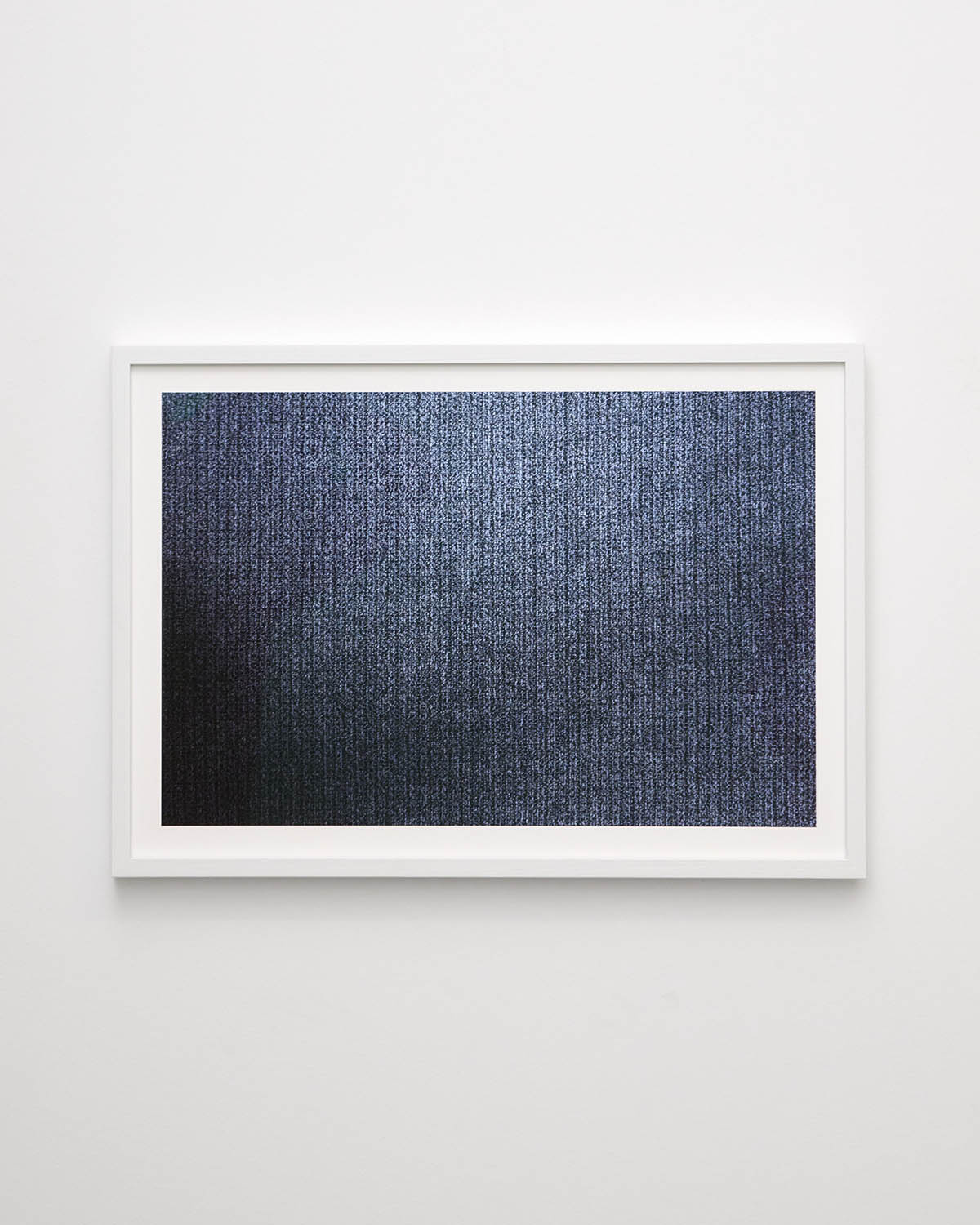
Werk 1715 belongs to the series Oberflächen (Surfaces), 2024. It shows the surface of a defective LCD monitor, photographed on a train journey. The defect reveals a pattern that is normally covered by the image. This work led to the series Rauschfläche and Nachbild.
I was fascinated by the structure that remains visible despite the defect, by what a monitor can still display even after it has lost its actual function.
What does it mean to see, and how does a machine see differently from a human? How does this difference influence your work?
A machine does not interpret, but it is not neutral. It filters, corrects, and decides according to how it was built. We interpret on top of that, through our experiences and memories. This line of inquiry also led me to the series Entfaltung (Unfolding). Although the sensor creates the images, everyone interprets them differently.
Their life experiences, events, and memories play a major role. Everyone sees something different in the image and brings their meaning to it.
How exactly are the images in the series Entfaltung (Unfolding) created?
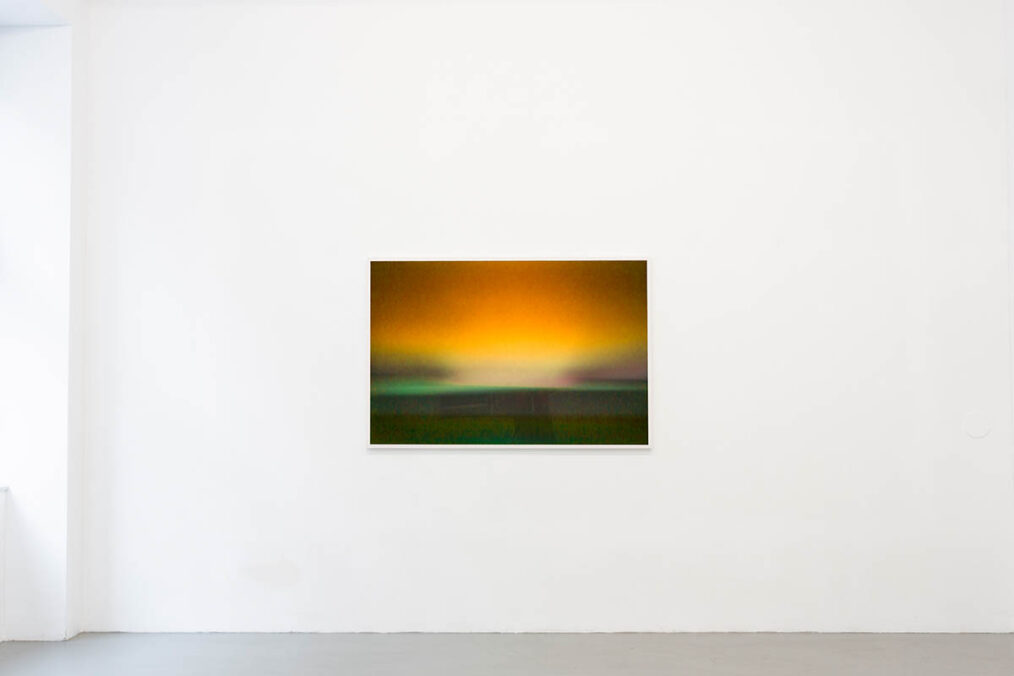
The images in Entfaltung (Unfolding) are created exclusively by the sensor itself, in a completely darkened environment, without any external visual or light influences. What becomes visible is what the sensor produces on its own. I develop the images directly from the original negative.
Which kinds of photo paper do you use?
I use very smooth Hahnemühle paper, so that no texture enters the image that is not part of it.
Let’s talk a bit about the Nachbild (Afterimage) series.
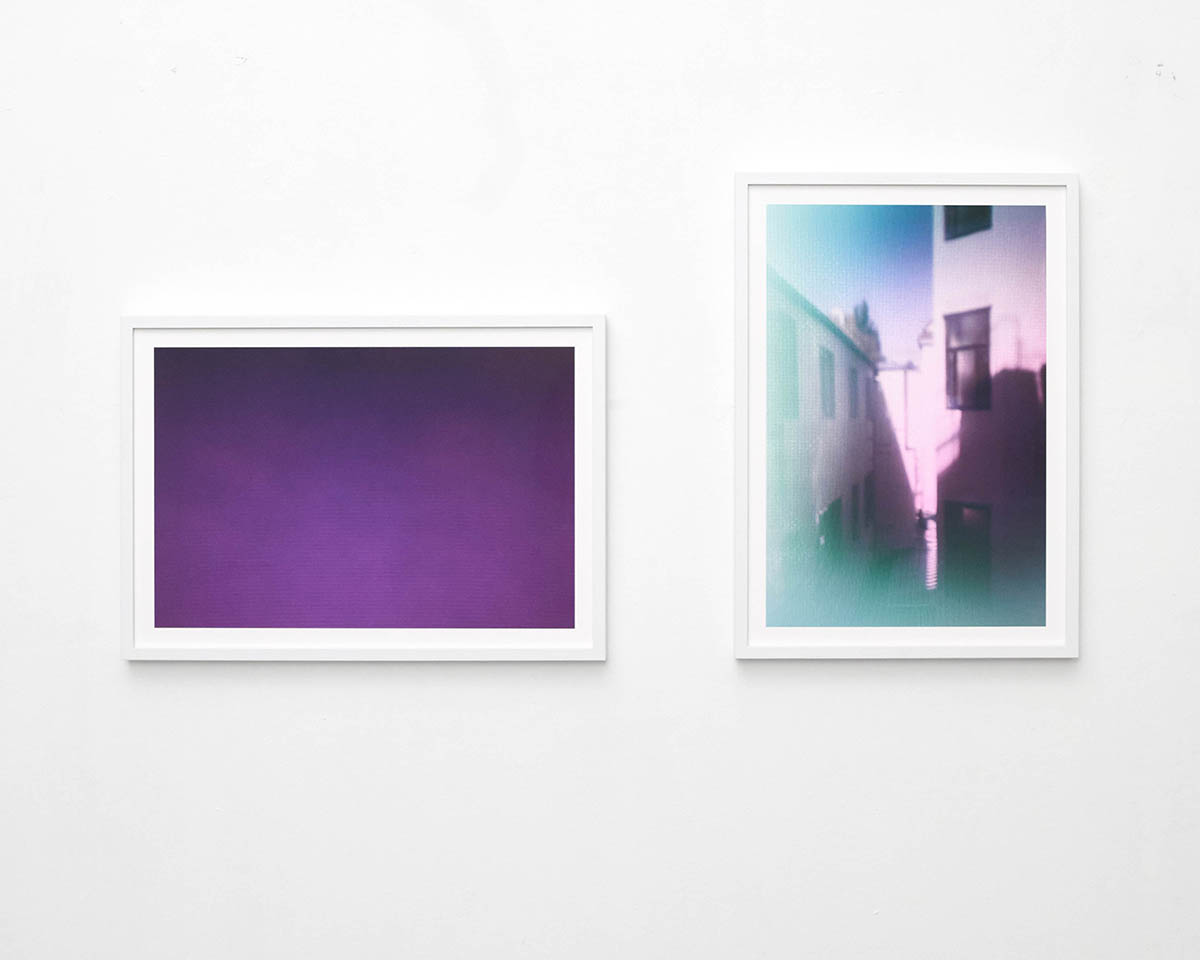
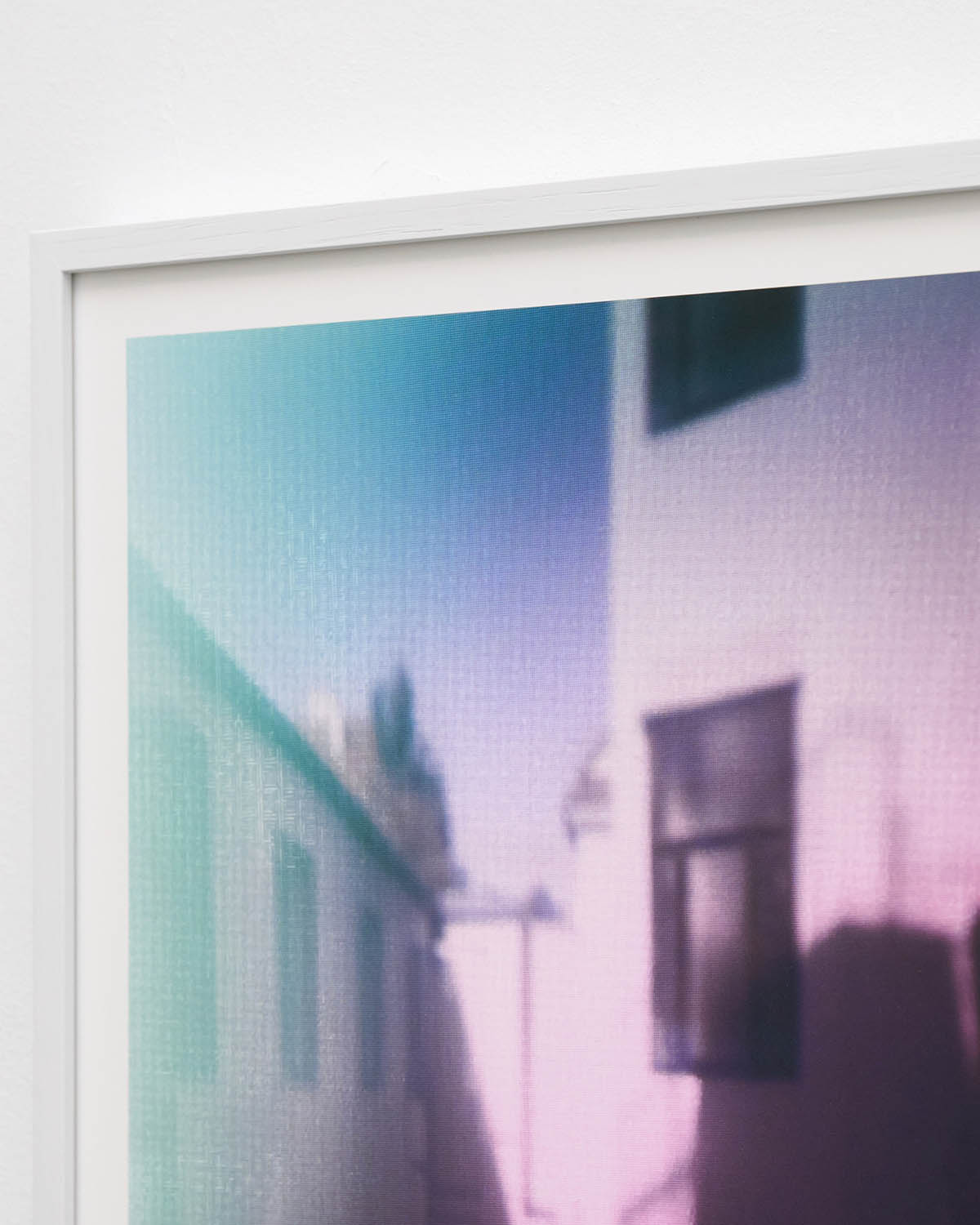
This series draws on images from my archive. I run each image through the layers of its image carrier; the original image changes along the way, though not through compression. In the end, what you can still see is the carrier’s own layers.
Light and color play a central role in your work. Do you tend to work intuitively, or do you already know from the start which direction you want to take?
I am intuitive in what I choose and precise in how I work. When photographing surfaces, I use daylight-balanced lighting; the colors shift from their original state. In the series Rauschen and Entfaltung (Unfolding), I have no control over how the forms emerge. In Nachbild (Afterimage), I can only influence the result to a limited extent.
And how do you decide which image you want to produce and exhibit next?
I look at the images for a long time and experiment with them. Some keep holding my attention; others fade. The ones that hold are the ones I produce.
What does this poetic dimension, the interplay between text and physical work, mean to you?
I write texts to capture my thoughts. In 2019, I began researching the series Rauschen and wrote the first accompanying text, titled Rauschen. In early 2026, I wrote a second text, New Realities: An Ongoing Update, while I was deeply researching the question of the image. In addition, texts by Anne Avramut and Marko Zink contextualize and situate my work.
Texts open a space; they are not instructions for use.
What are you trying to understand through your work?
Whether I can trust my own inner image.
Exhibition: Hubert Kaufmann: Grundrauschen
Duration: November 10–17, 2026
Venue: PAFE Vienna, Hütteldorferstraße 95/1C (entry by: Nobilegasse 58, Mezzanin), 1150 Vienna
Opening hours: Monday–Friday: 3:00 pm – 6:00 pm and Saturday: 2:00 pm – 6:00 pm
Hubert Kaufmann – www.hubertkaufmann.com, www.instagram.com/hubert__kaufmann
Hubert Kaufmann was born in Zell am See and grew up in Saalfelden, both south of Salzburg. By training, he is a toolmaker, a profession that requires precision, technical expertise, and an eye for detail. Alongside his work, he developed a growing fascination with the digital world of computers and with photography. He has been working artistically with photography since 2012. In 2022, his path led him to Vienna, where he now lives and works. Hubert Kaufmann works with digital camera sensors. In his series Rauschen and Entfaltung, the images emerge in complete darkness, without light reaching the sensor. Rather than depicting a specific external subject, they reveal visual structures generated directly within the camera sensor itself. Digital noise, image artifacts, and other technical processes that normally remain invisible or are considered errors become the actual content of the image. His works make visible what underlies every digital image, namely electronic processes, statistical fluctuations, and the sensor’s own logic. This gives rise to color fields, layering, and subtle transitions that shape the image surface. Kaufmann draws attention to the typically hidden conditions of digital image production. His work asks when we can still trust an image.