
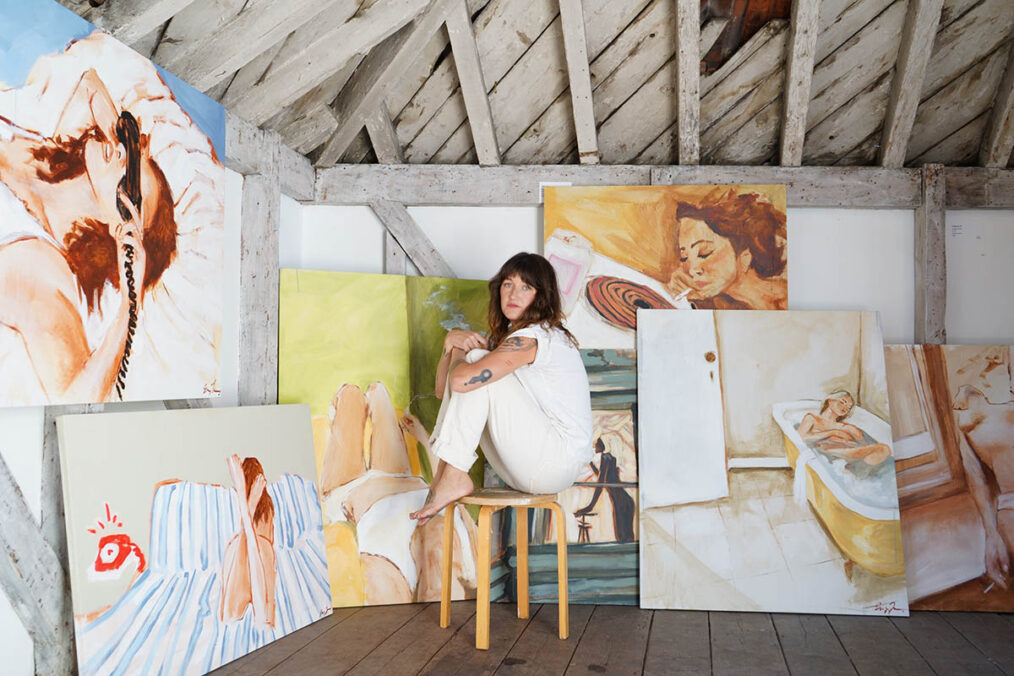
Her work has appeared in multiple exhibitions, often exploring themes of memory and identity through the female figure. Earlier in her artistic career, Emily focused on murals and worked in the United States and Mexico. Her recent series, Reveries of the Muse, was shown in her solo exhibition at Art Room Gallery in Lisbon.
What led you to painting?
I have been painting as long as I can remember. I grew up in a rural area and spent my days running through fields, playing with the cows, riding horses, and drawing what was around me. It wasn’t until my teenage years that painting became a daily practice. Painting felt like a way to express myself that didn’t have boundaries. I am a very visual person, so it engaged with expressive language and was able to be a tool to help present my imagination.
Do real people inspire the figures in the painting, or do they spring from your imagination?
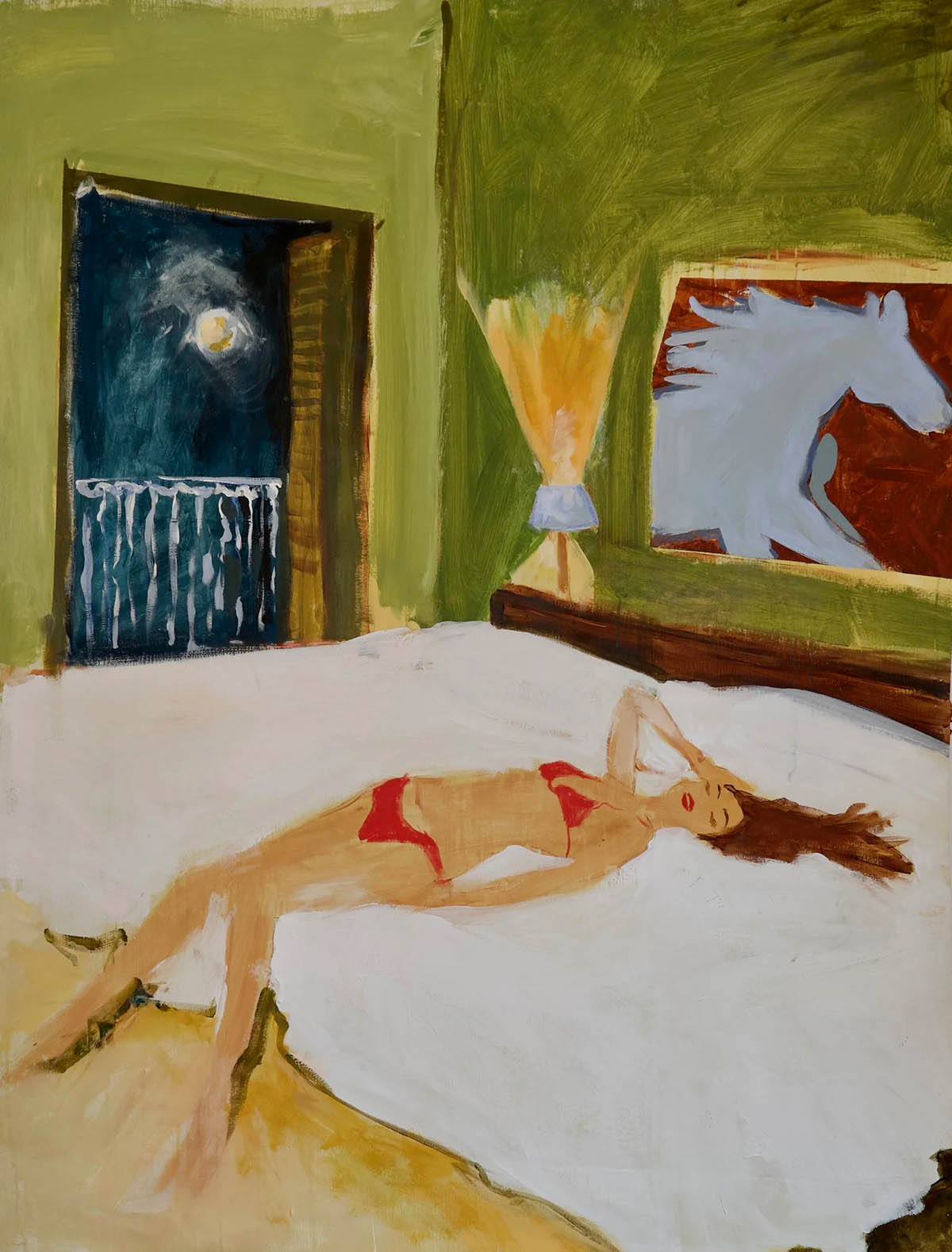
The figures in my work are women of all sorts. Some are from my mind, others are friends, and some are inspired by fashion editorials from the 1960s-70s. I am not limited to a single source of inspiration for these works. That can happen when I see a woman on the street, hear a song, or find an old postcard. It is invigorating and spontaneous.
How do the scenes you bring to the canvas come about?
It is another big interest of mine. I love the mix of textiles and color stories from the 70s and the stories that old treasures hold. As a child, I’d push all the furniture around in my room and paint murals on the walls to fit the theme of my interests at that time.
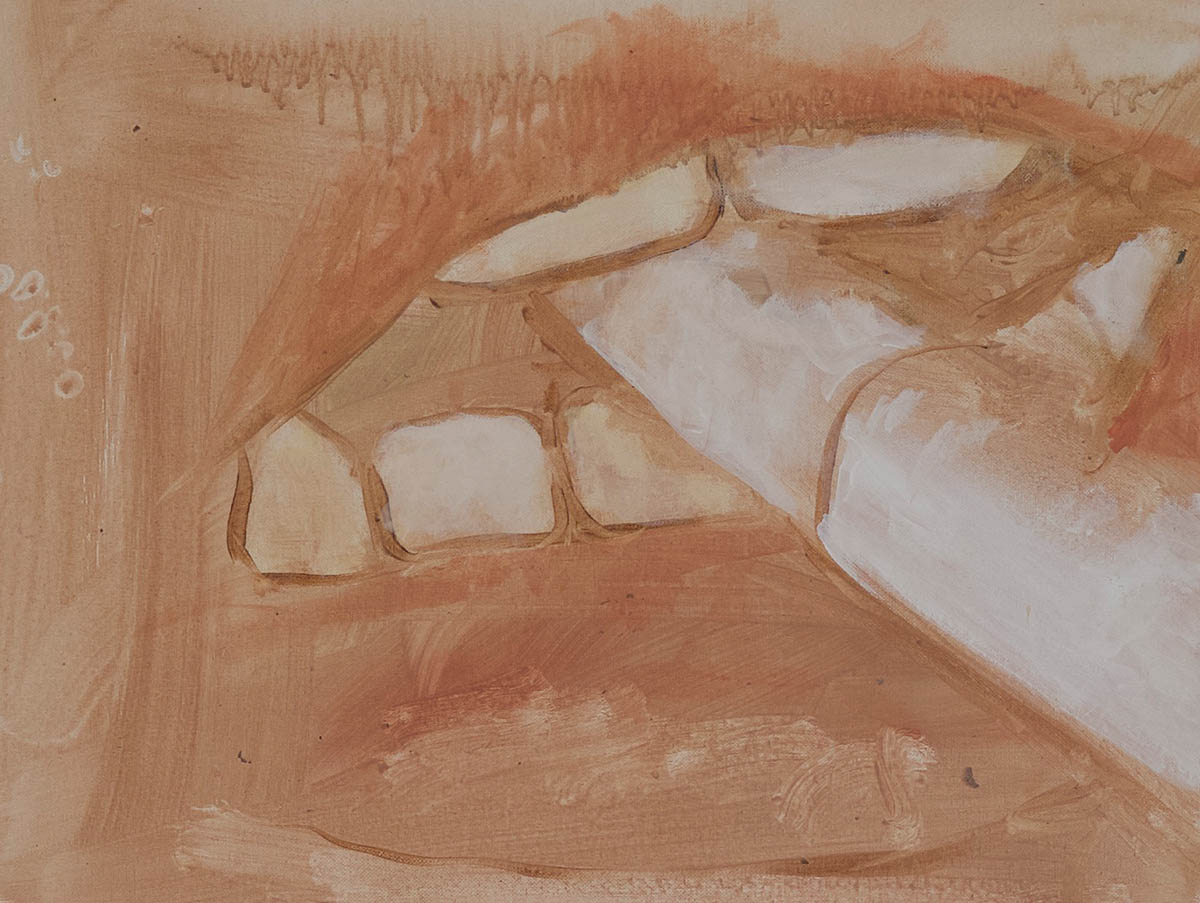
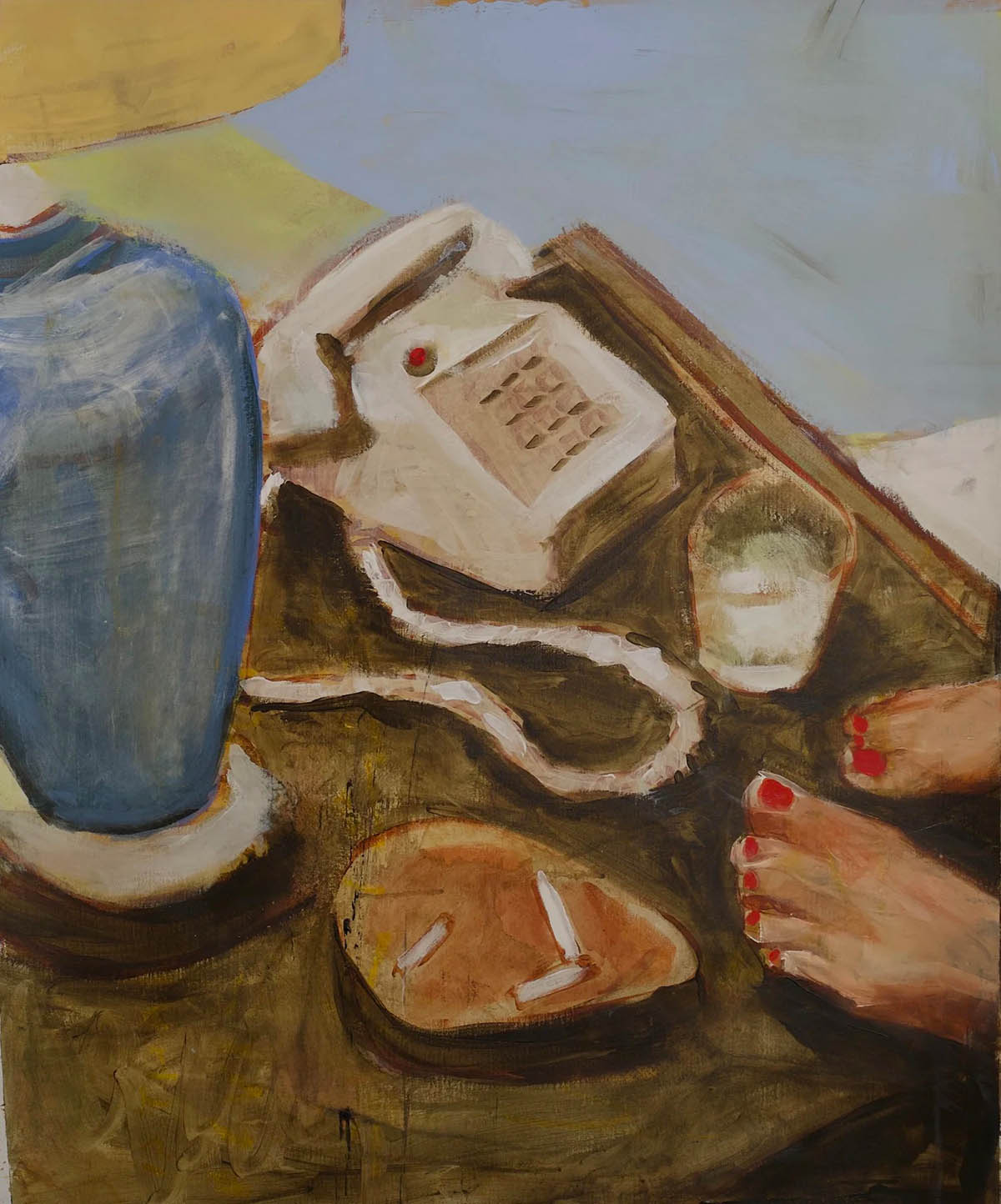
For me, especially in the space I work in, intention in an environment is quite crucial. Several of my works have been influenced by my studio, with references to the view out my window, my vintage chartreuse couch, and antique Kilim rugs. I love maximalism, comfort, and storytelling within a space. Artifacts and textiles fill a space with soul. The same motivation within my pieces; the lamps, rugs, and ashtrays play a role just as much as the character. Each element helps tell the story.
How much of the story behind a painting do you leave up to the viewers? Is it important to you to leave room for their personal interpretations?
In my opinion, art is a form of expression for the artist and an opportunity for connection for the viewer. I would rather not impose a ready-made story on the viewer for every work or project. I hope each painting invokes a moment, feeling, or familiarity from their timelines and experiences. Of course, while I am in the process with each piece, there is an inner story for myself. But the story only grows more with outer perspectives. Giving the viewer space to interpret is important to me. People indulge in art to feel something, and if we answer every question being asked, then we are constricting the experience of what can be felt.
What role do passion, desire, and sensuality play?
These elements are very much present in my collections: solitude, body positions, late nights, and cigarettes. They evoke yearning, infatuation, loss, and everything in between.
What does the title Reveries of Muse mean to you?
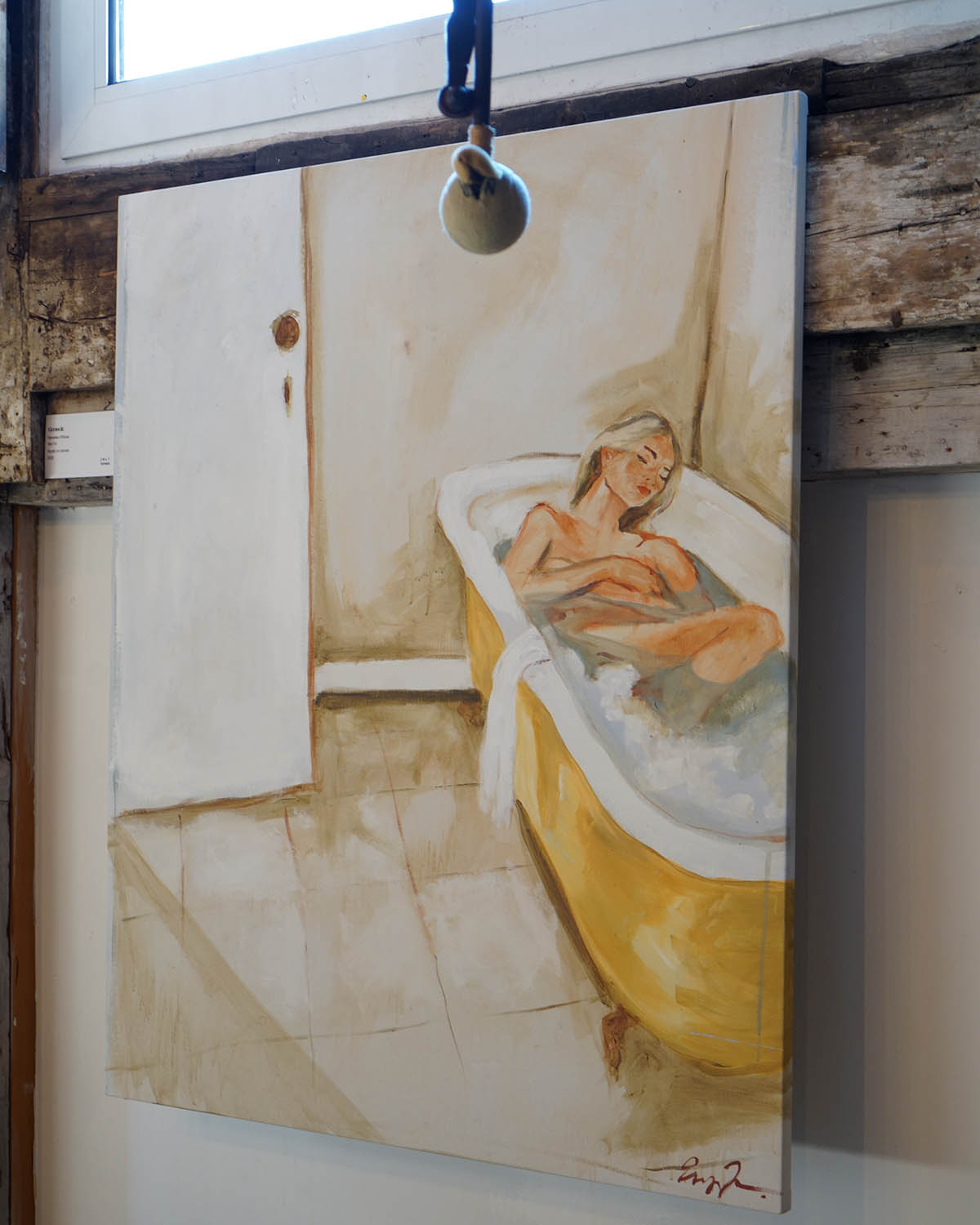
The title Reveries of Muse came to me in the middle of the collection. By piece ten, the evolution of the series really showed itself to me. I was so inspired by my progress and by the women that I was creating. I remember being amused by the muses, and it activated in me a powerful sensation: that all the people we admire have their own internal dialogue and moments. They have their moments of yearning, isolation, and grief. To me, it means watching, from a distance, the sexy, sensual, mysterious curiosity, isolation, and fantasizing of a woman. All emotions become amusing in the muse.
Reveries of Muse portrays women in intimate interiors and sultry environments, revealing a plethora of human emotions we can all relate to.
How do you spend your days outside the studio? What do you like to do when you’re not painting?
I spend so much time in the studio, but I do not become totally crazy and go out for wine at my local kiosk weekly. There are so many good vintage shops and antique stores to explore. Finding old postcards and different treasures really sparks inspiration. I also love hiking out in Sintra and, in summer, going to the beach. On my nights out, I love long walks around Lisbon, saying hello to shop owners I know and locals down the cobblestone streets, and sometimes bringing my harmonica along to play on my adventures.
What are you currently working on?
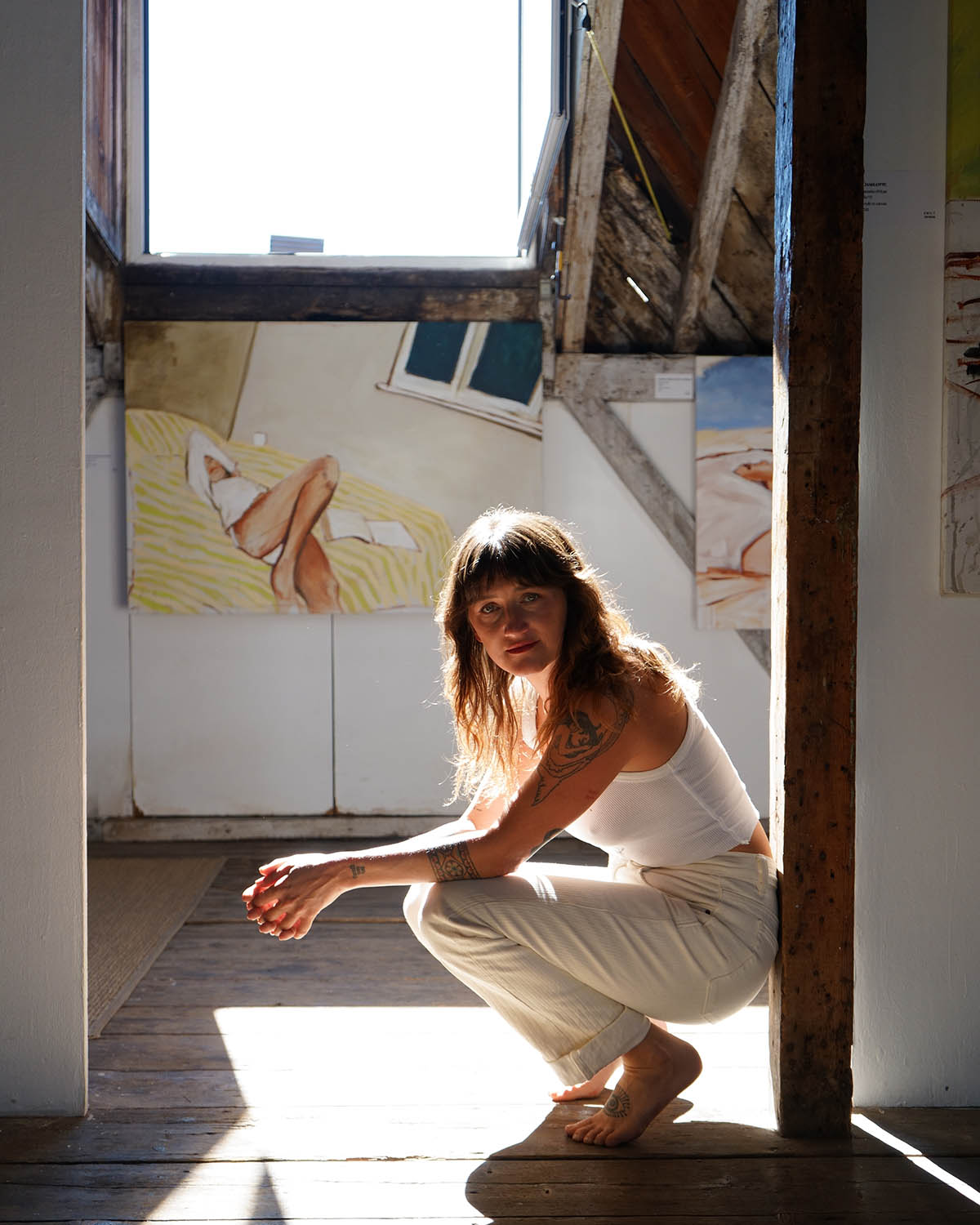
I am immersed in my next series, called Watch Out World. It is essentially the next chapter of Reveries of Muse, but with more grit and spite. These ladies have vengeance, and simultaneously, some collections show women in complete harmony with nature, as though their deeds are done and they are at peace. Who knows what triggered them? Who knows what they did? But maybe we’ve been there before. Not physically, but emotionally.
Emily Tayman – www.emilytaymanstudios.com, www.instagram.com/emilytaymanstudios/