

Your work engages with the biological phenomenon of stress granules. What sparked your interest in this subject?
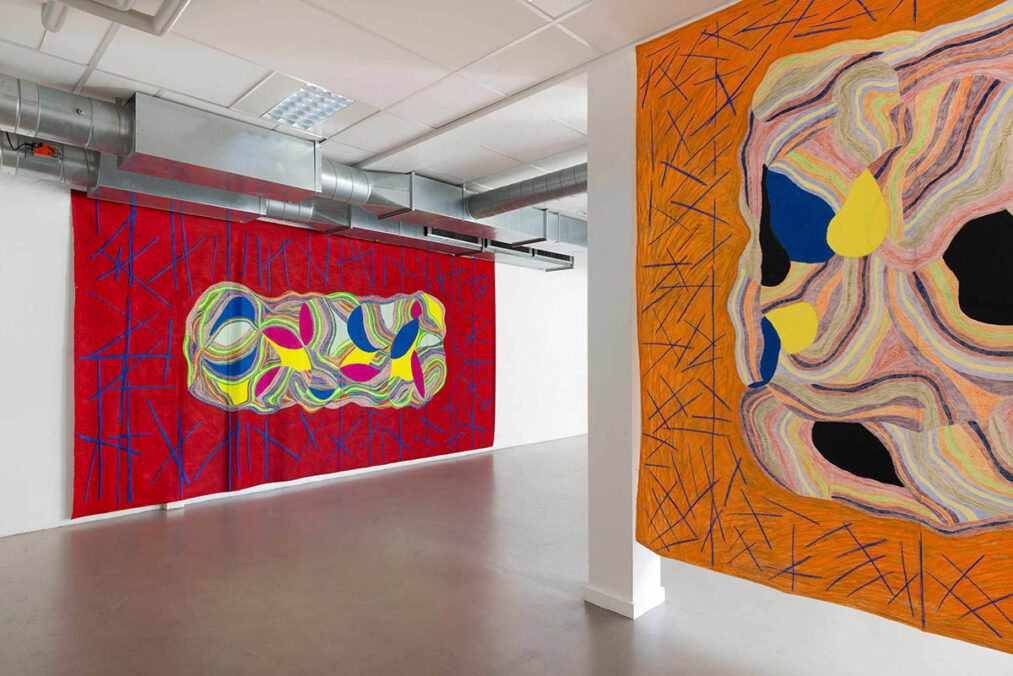
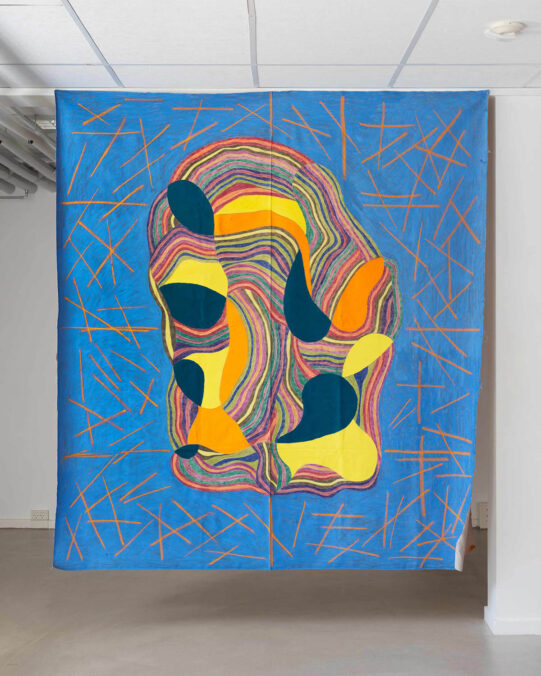
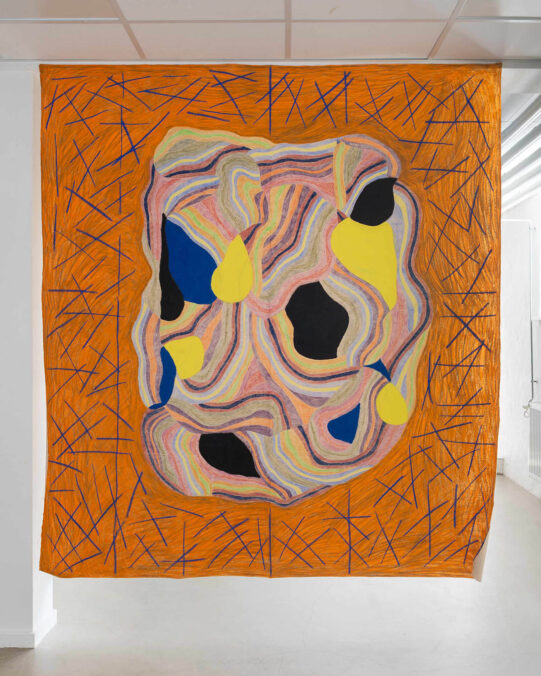
In recent years, biology has taken on an increasingly central role in my artistic practice. It serves as a kind of deeper, micro-level accompaniment to all the psychological processes that occupy my mind. There’s an analogy between the two domains that I find intriguing. In the spring of 2025, I began developing a new series of works which, to me, related to the building blocks of life. By now, I have produced a total of 20 paintings for it, not counting the small-format pieces. It was only through my exchange with Dr. Urte Laukaityte in the winter of 2026 that the concept of stress granules took shape. She had come across the phenomenon while researching the brain energy theory — the hypothesis that all psychiatric and some neurological disorders stem from metabolic dysfunction. Looking into the science of stress granules, we realised the work I had created aligns well with it. The phenomenon is a defence mechanism in stressed cells. Important components huddle together in these microscopic granules for protection, and they dissolve when the situation goes back to normal. If it doesn’t, though, stress granules can harden and become unhealthy. This tension between flexibility and rigidity struck me as the perfect theme for the series. Dr. Urte Laukaityte wrote a text that explores how the paintings relate to the processes underlying stress granules in greater detail. It can be found on my website.
How important is your interaction with scientists to your practice?
I process my internal life through my work, but my way of doing so is more effective than calculated. Nonetheless, once I’m done with a piece, I enjoy thinking through what it is I’ve produced more explicitly. Constantly questioning my work has made dialogue with researchers essential for me. I find it fascinating to discover and connect with concepts that go far beyond my previous understanding. I am strongly driven to learn new things about myself and everything around me. Since my creative focus has been on the inner self, I’ve been especially interested in contrasting my emotional world with the world of science and playing with this duality. In my artistic practice, I want to address themes that are relevant to other people and the broader society. It feels enriching to extend it beyond my individual concerns, engaging with the more surprising natural phenomena.
What parallels do you see between art and science?
I think there are many parallels between art and science in terms of their motivation and ambition. There are different approaches to exploring the big questions that have always puzzled us. Both disciplines involve research, experimentation, discovery, and hopefully, in the end, lead to some kind of insight. At the same time, of course, the actual working process looks quite different, as does the outcome. But these differences are precisely why I find bringing them together in an art-science collaboration so productive. It’s a unity that is also a juxtaposition.
What role does the exhibition space play? Were the works created specifically for it?
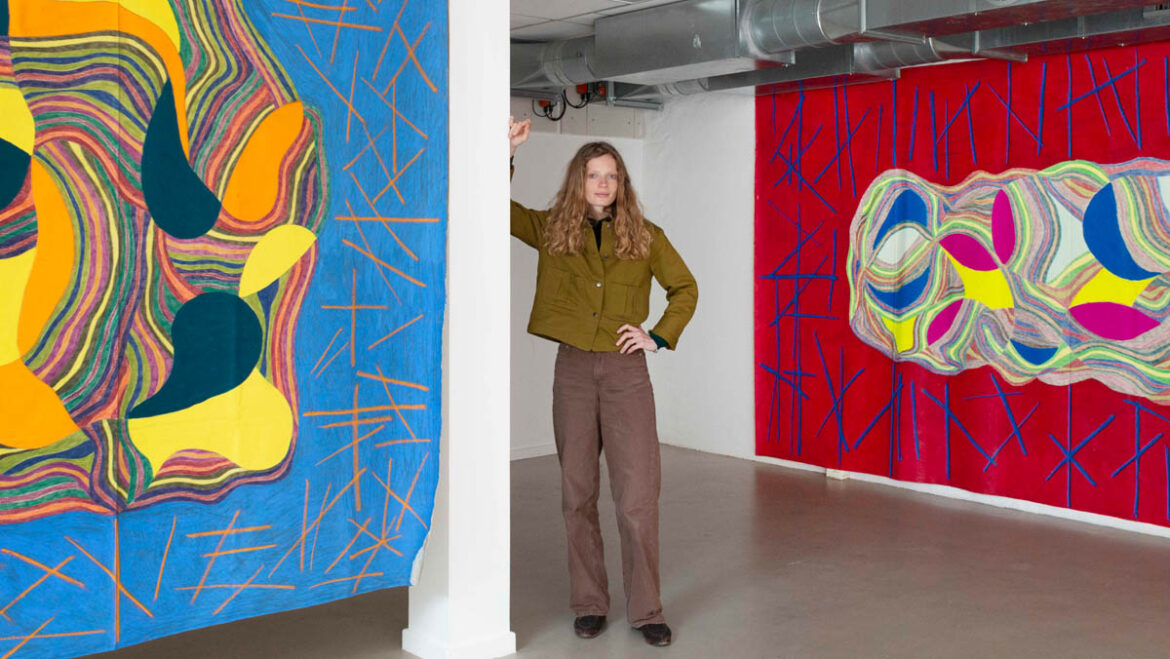
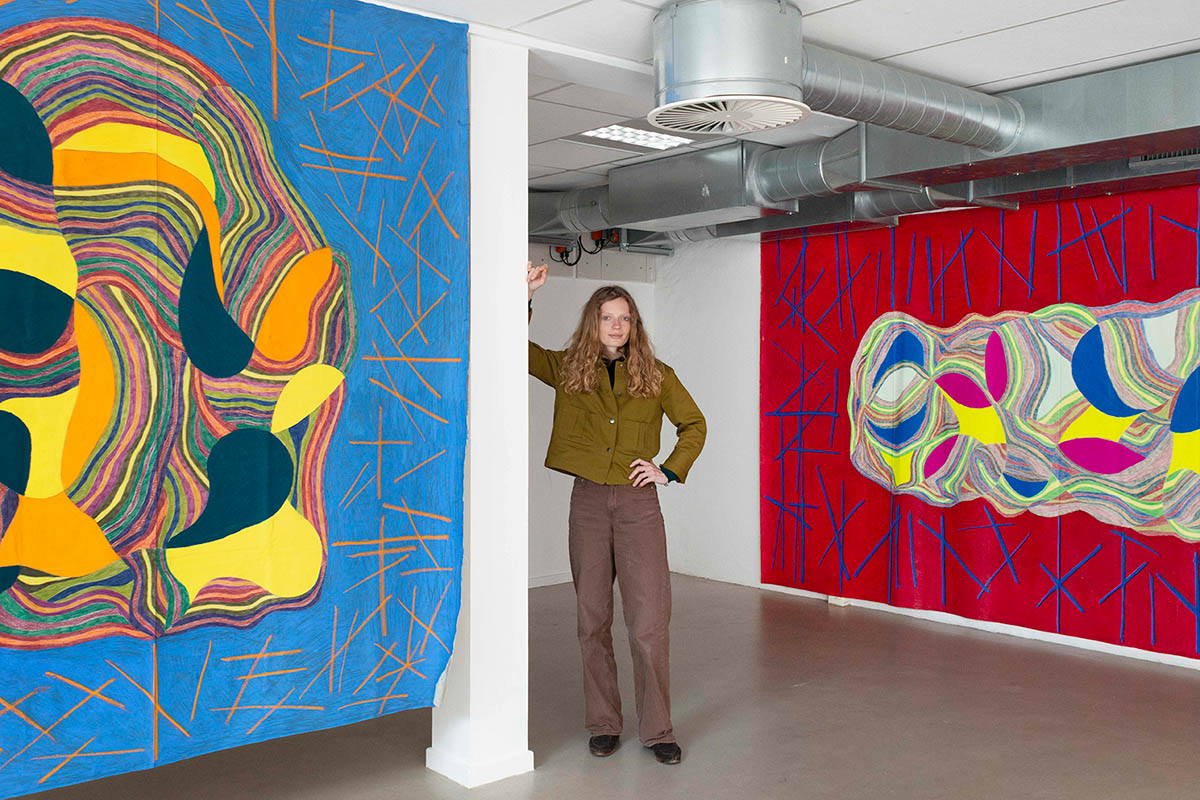
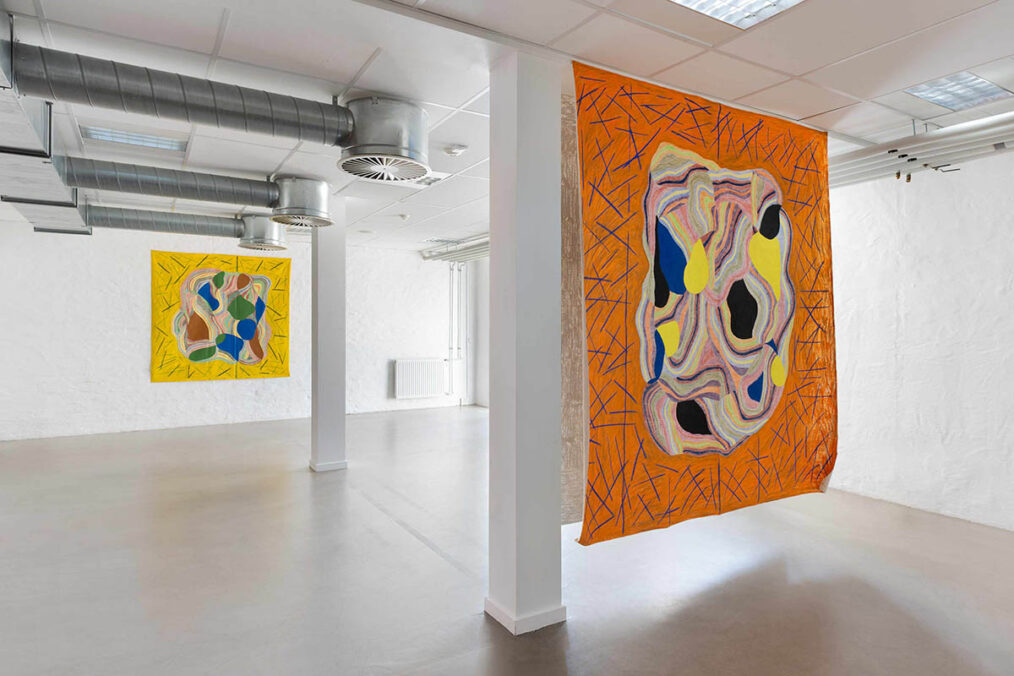
Although ‘A Granule of Stress’ is an ongoing series, the paintings currently on view at the exhibition space CANTINA were made for this specific venue. I had to work with precision, from tearing the fabric to composing the pieces themselves. The space is imposing; it has a unique interior design, including a ventilation system with oversized metal shafts. My first thought was a laboratory. But there are also two columns in the middle of the room that support the ceiling. So it was very important to consider from which perspectives I could interestingly view the works, taking the architecture into account. This is the first time I’ve intentionally presented a large work undulating along a wall like a theatrical curtain or two works floating in space, facing away from each other. My goal was to transform the industrial laboratory-like atmosphere into a scene, a kind of stage set that envelops and transports the audience someplace new. What isn’t visible in the exhibition photos is the scent in the room. Oil pigments have a distinctive smell that can last for a couple of weeks, so it was actually an experience for all the senses. I’m curious to see how the project’s presentation will unfold over the next few months. In June, I’ll be showing new works from the series in a solo exhibition at the Billedkunstcenter in Aarhus and a group exhibition at Galerie Crone in Berlin. I’m looking forward to encountering the visuals in new contexts.
What role does colour choice play in your work?
While the specific choices I make in my paintings are intuitive, different colours do hold specific meanings for me. These probably come from both my sociocultural background and personal experiences. One way to read my works is through the prism of colour. I think of its role as its own type of narrative, a kind of colour alphabet. For example, to me, violet and pink represent resistance, questioning, and queerness. The colour yellow represents death to me, no matter what shade of yellow. I have had this association since childhood, watching my father fight and lose his battle with cancer. Red and blue represent the inner self to me, like veins and blood flow. Green is my favourite colour and classically stands for growth.
When was the last time you were stressed out?
It’s a little ironic, but putting together this exhibition has been pretty stressful.
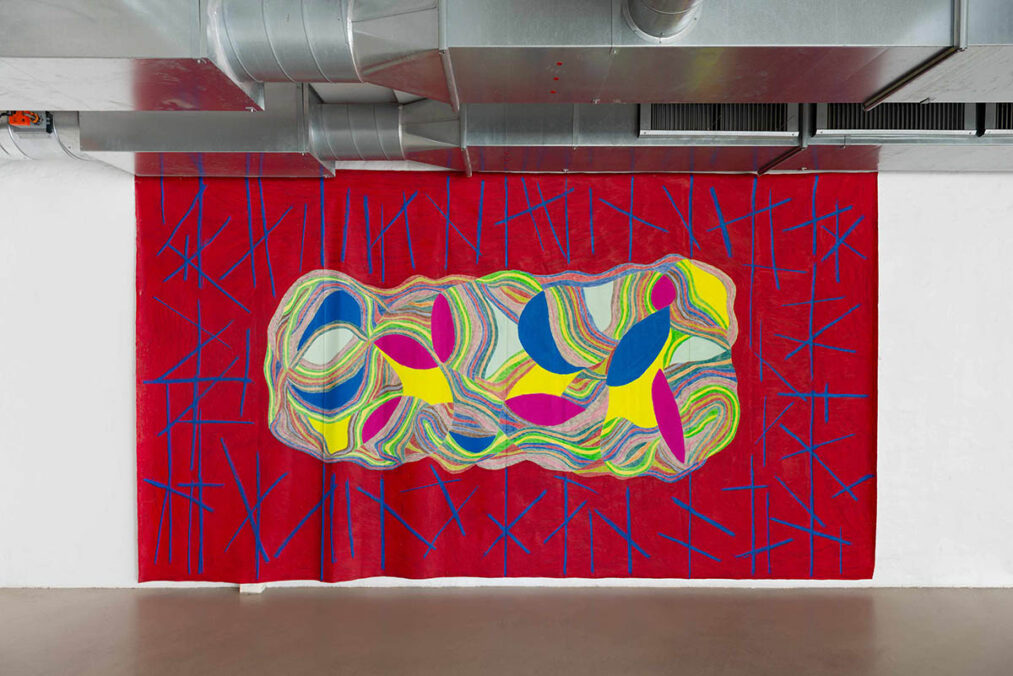
What do you want to draw attention to? What should visitors leave the exhibition with?
We’re all intimately familiar with psychological stress, especially the negative kind. But fewer of us are aware of how stress actually works in our bodies and the various forms it can take. Stress isn’t automatically good or bad. Its effects depend on how we, as organisms, cope with it. It is possible to deal with stress adaptively and build up a certain degree of resilience, or else give in to the strain and allow it to become persistent. The biological phenomenon of stress granules gets at this deep ambivalence. And so, I’d say the aim of the exhibition is for people to rethink maybe their conception of and relationship to stress.
Exhibition: Sophie-Luise Passow – A Granule of Stress
Exhibition duration: April 17, 2026 – May 17, 2026
Venue: CANTINA, Skovgaardsgade 3, 8000 Aarhus, Denmark
Sophie-Luise Passow – www.sophie-luise-passow.neocities.org, www.instagram.com/sophielou_passow/
Sophie-Luise Passow, born 1994 in Vienna, studied at the University of Applied Arts Vienna, Austria & ENSAPC Paris-Cergy, France. Her artworks have been exhibited internationally, including Denmark, Germany, Austria, Japan, Belgium, France, and Georgia.