What emerges is a tension: between intimacy and visibility, pleasure and constraint, self-determination and projection. Evelina Reiter and Julie Legouez shared details about the exhibition.
Can you introduce GRUPPE GORGONE for our readers?
GRUPPE GORGONE e. V. is an art association dedicated to feminist practice and the promotion of FINTA* (Female, Intersex, Non-binary, Trans, and Agender) artists. We see it as a platform for artistic production, curatorial research and the development of sustainable networks within the contemporary art scene. Since 2022, we have organised exhibitions and public programmes in changing locations, which allows us to respond to different spatial, social and institutional contexts.
The name refers to the Gorgons as figures of feminist self-empowerment. For us, they represent autonomy, resistance, solidarity and collective strength. These ideas also shape our working methods and curatorial approach. A large part of our programme is developed through open calls, which help us reach artists beyond established networks and bring a wider range of perspectives into our exhibitions. Workshops, discussions, performances and collaborative formats are equally important to us. We want our projects not only to present artistic positions, but also to create spaces for exchange, learning and collective reflection on contemporary social and political issues.
After “fight or flight: FEAR” and “fight or flight: MONEY”, the exhibition and program series continues with “fight or flight: SEX”. Can you tell us more about this chapter?
The idea behind “fight or flight” is to present ourselves in a relevant and direct way. Themes emerge organically during the development of each exhibition, making the process highly responsive to conversations, social issues, and political realities. These themes emerge from our exchanges with artists, our wider network and the social and political realities around us. This enables the series to remain responsive to the topics shaping our present moment.
Sex is deeply political, layered and still highly provocative for many people. It intersects with questions of power, identity, autonomy, labour, violence, pleasure and representation. Yet, in the arts, dominant narratives about sex continue to be shaped by patriarchal stereotypes. This is why we felt it was important to approach the subject through a feminist lens. We wanted to create space for historically marginalised perspectives and challenge the narratives that have long defined how sex is represented. We personally feel that the cis male viewpoint has dominated this discourse for far too long, and we are far more interested in amplifying voices that have too often been overlooked.
Could you give us examples of specific works and artists in the show, and talk about which aspects of the exhibition they represent?
We select works across a variety of media, a practice that has become one of our signatures. As two exhibiting artists with our own perspectives on the topic, we find it interesting to see each topic from as many viewpoints and media as possible.
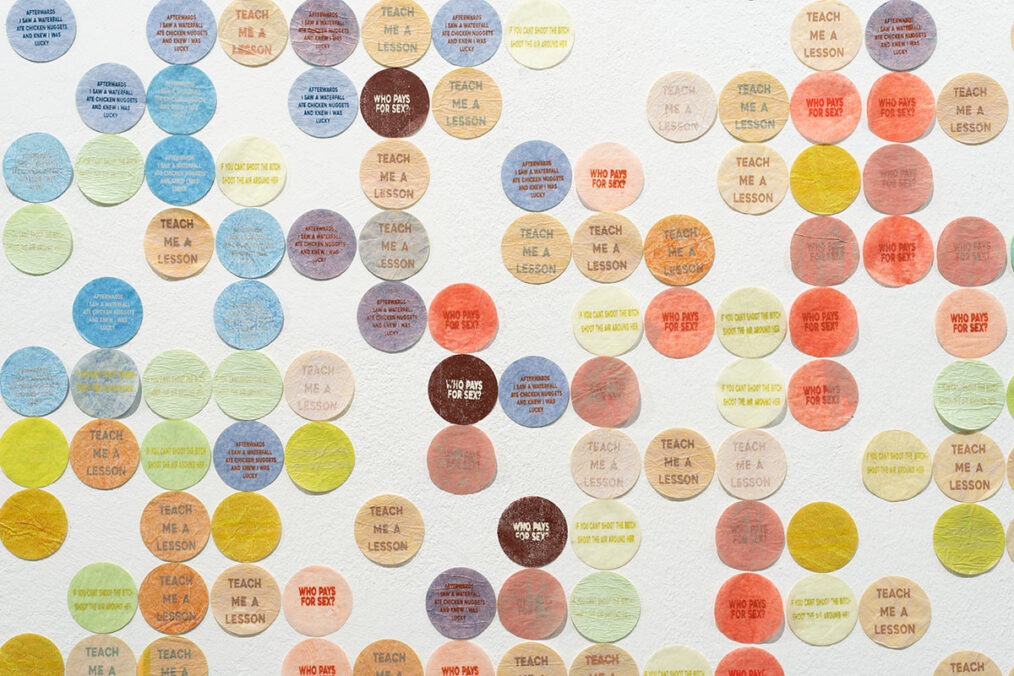
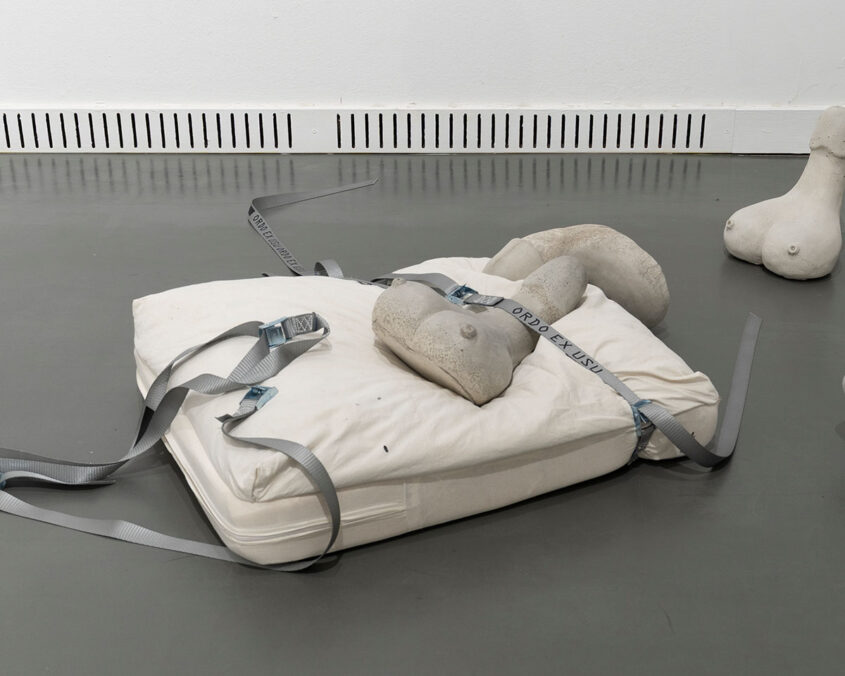
Ella Brew’s Sloganizing (Abortion Stickers) received mixed reactions. When discussing those reactions with the exhibition team, we said that we couldn’t believe abortion rights were still such a significant topic of debate in 2026. For us, it was important to include this work because it asks who ultimately deals with the physical and psychological consequences of sex, and who gets to decide what rights people have over their own bodies.
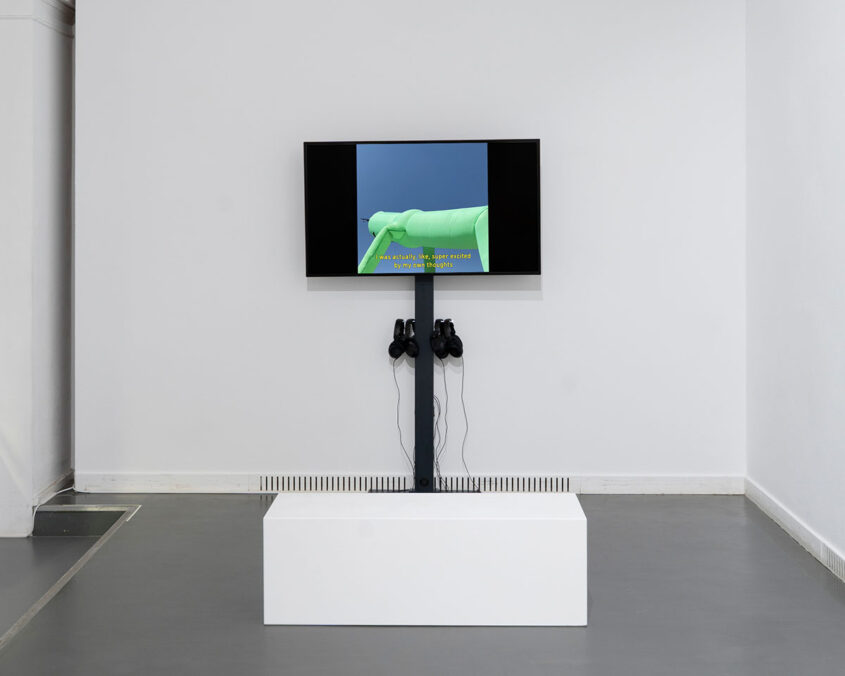
Galina Belkova, Tanya Chekhova, and Masha Plavinskaya’s video work 7 Years of Bad Sex explores the psychological aftermath of negative sexual experiences and how they shape our self-esteem and the way we interact with the world. Most of the participants chose to remain anonymous, reflecting the stigma and shame that still surround these experiences.
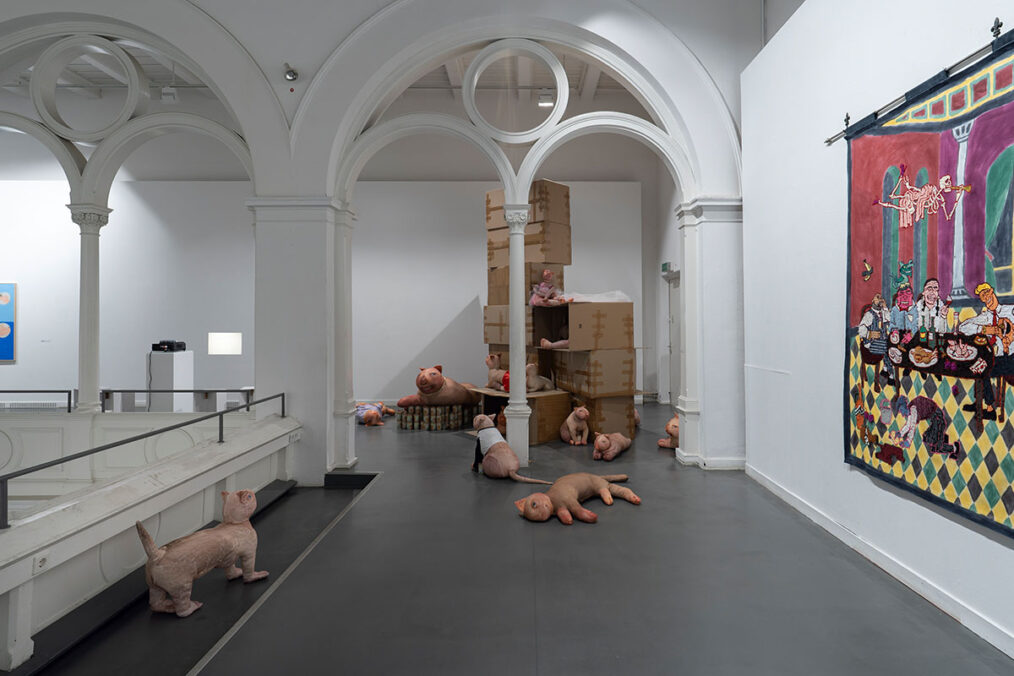
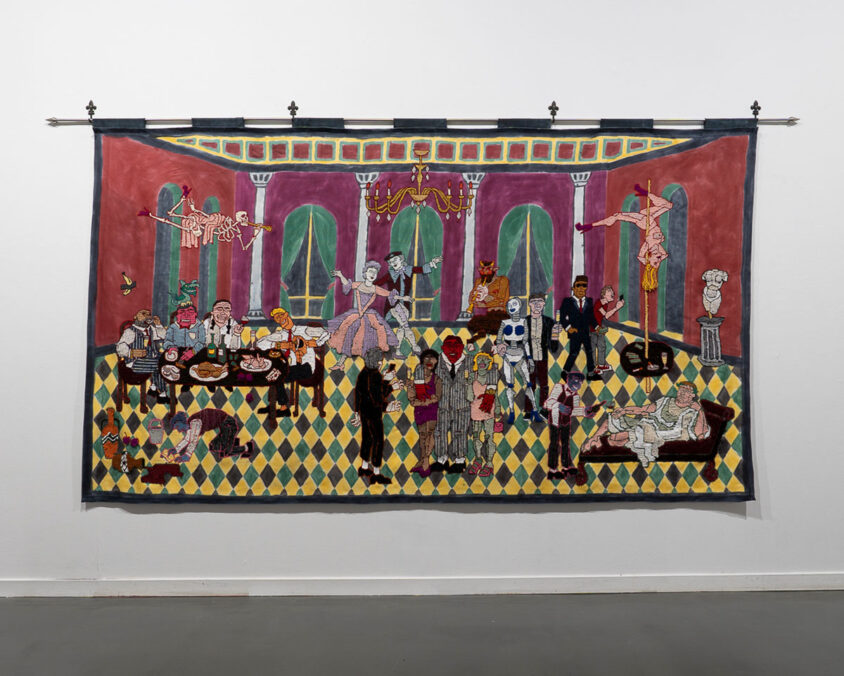
Lillian Morrissey’s tapestry Gala depicts the ultra-rich and their use of sex as a tool of power. Drawing a line from French ruling class just before the Second Revolution to the Epstein Island scandal, it critiques the enduring narrative of extreme wealth, privilege, and the apparent immunity of elites from accountability. The work offers a sharp commentary on modern global society and the failures of the justice system. Created specifically for this exhibition, we received very positive feedback from visitors.
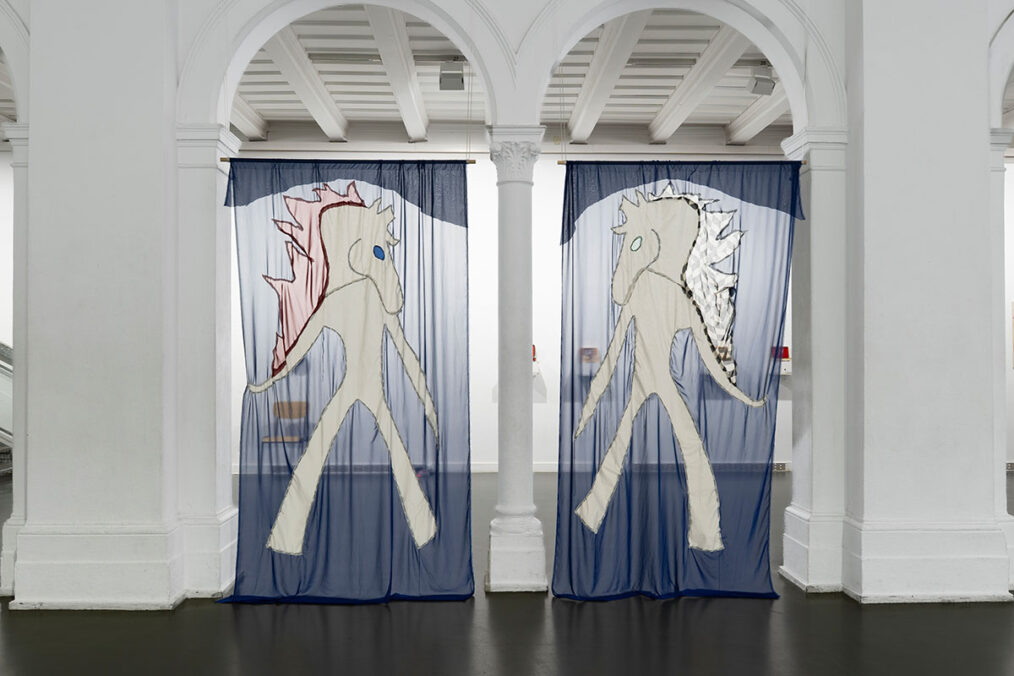
What was it like curating a group show at STUDIO1 | Kunstquartier Bethanien? How did the space itself shape the exhibition?
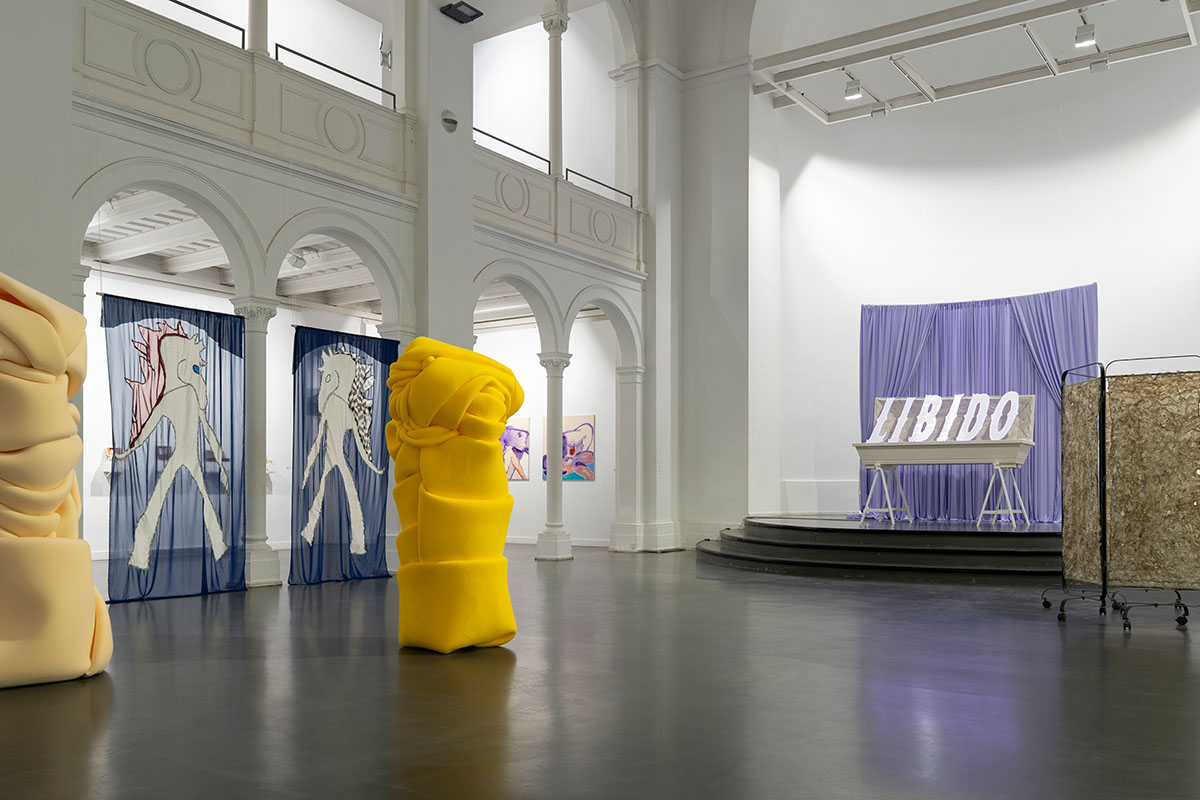
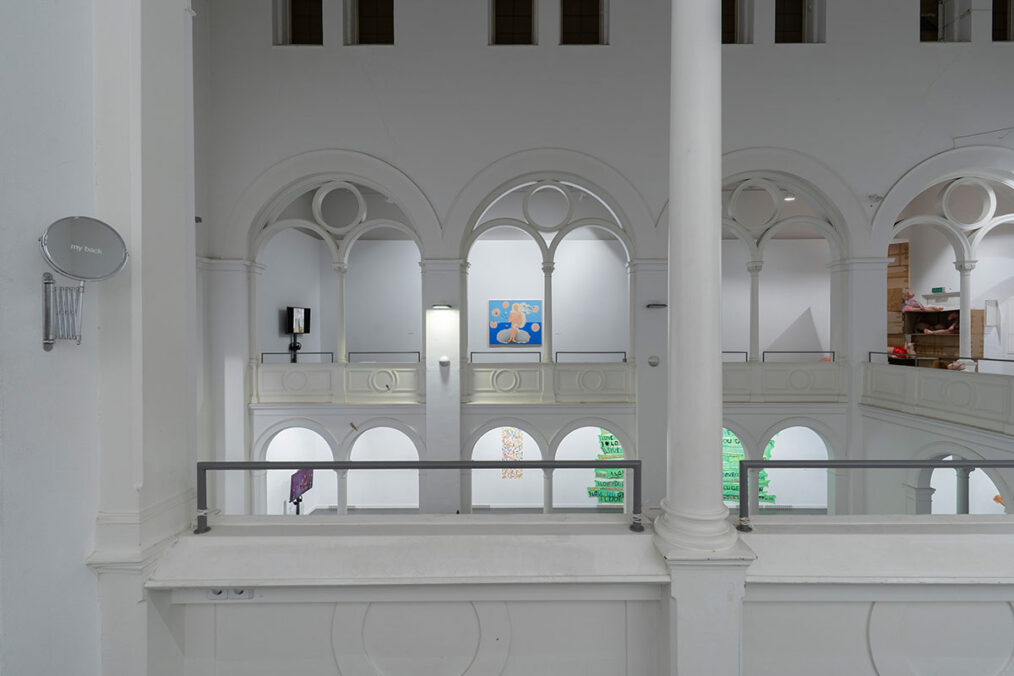
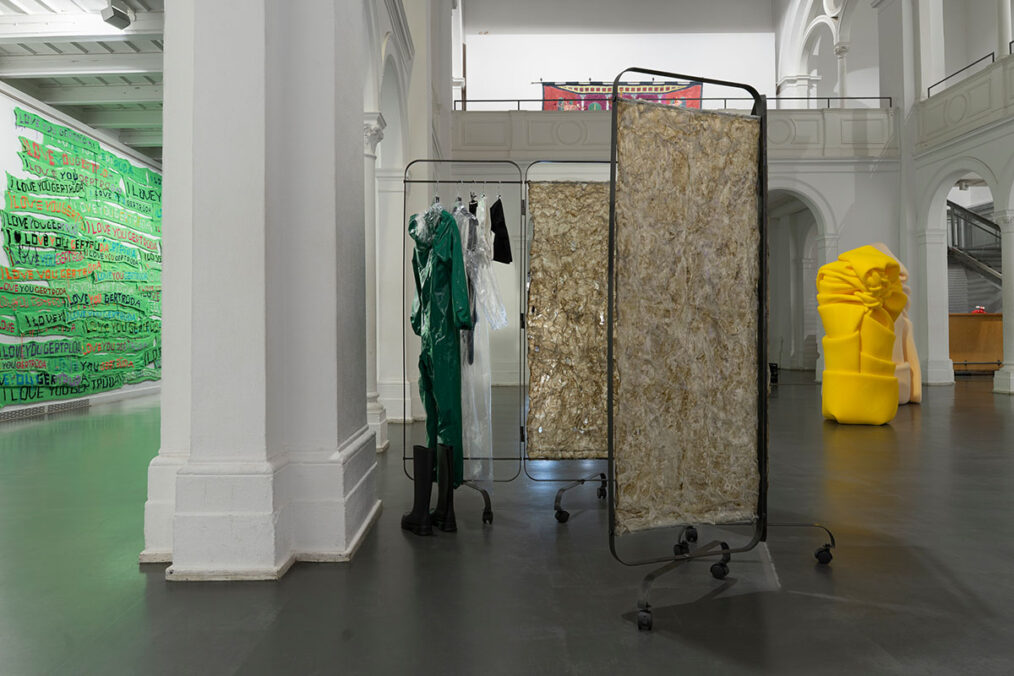
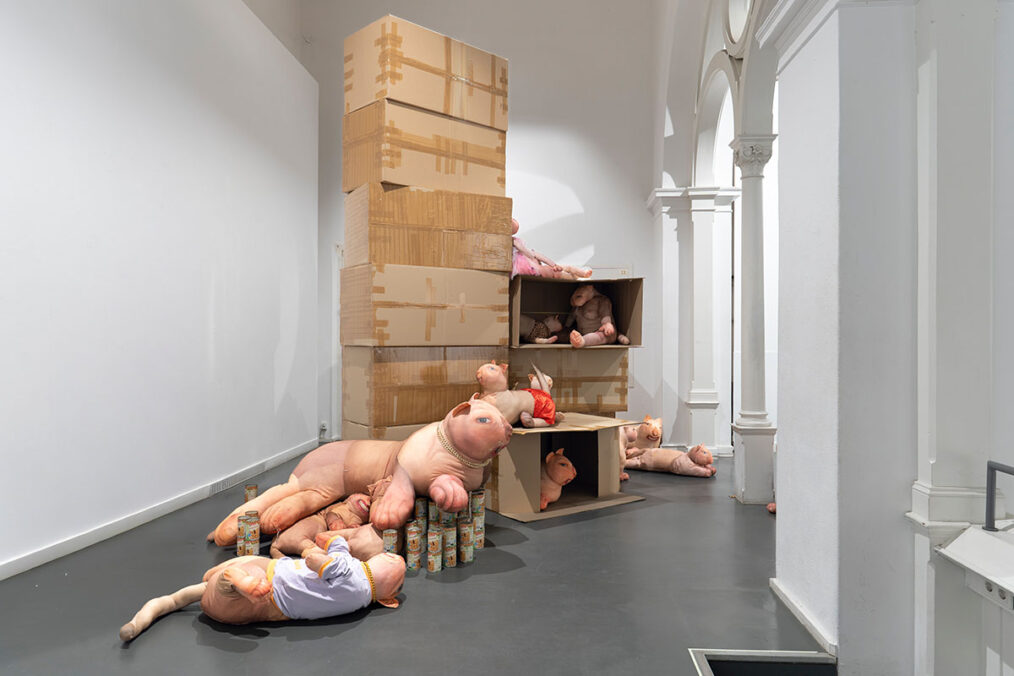
STUDIO1 is an extraordinary and very imposing space. As the former chapel of a historic hospital in Berlin-Kreuzberg, it created an interesting contrast with the subject of sex. Bringing such a direct and complex theme into a space with this history and atmosphere added another layer to the exhibition. At the same time, it was not an easy space to curate. The architecture is very dominant, with numerous columns dividing the room and shaping the way visitors move through it. We therefore paid particular attention to how the individual works were positioned in relation to one another. We wanted them to enter into a dialogue without competing with each other, while ensuring that the architecture supported the works rather than overshadowing them.
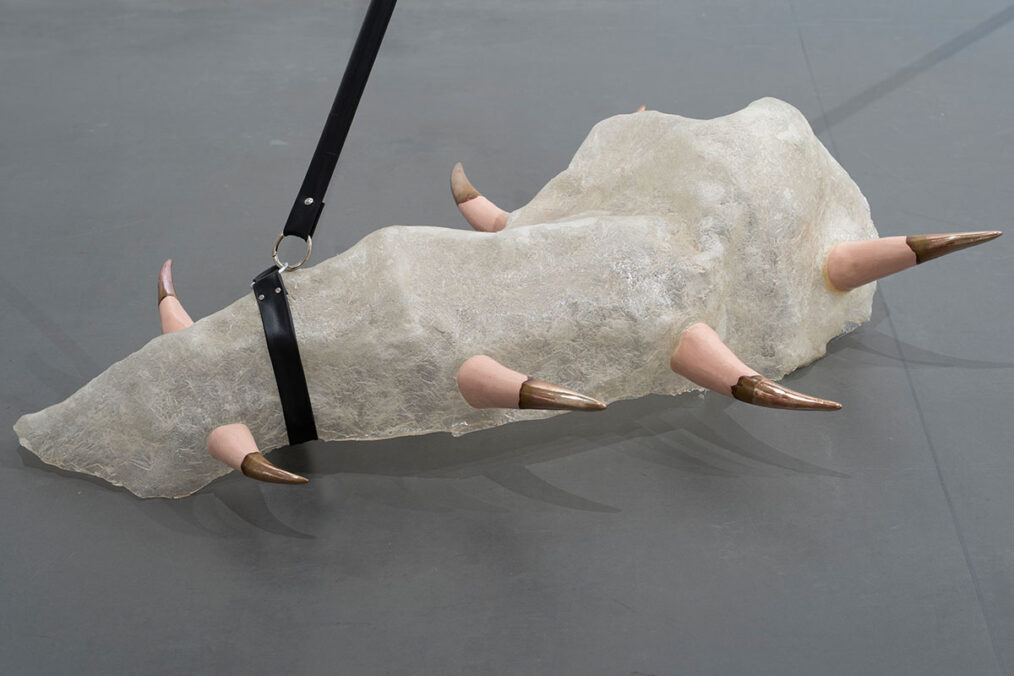
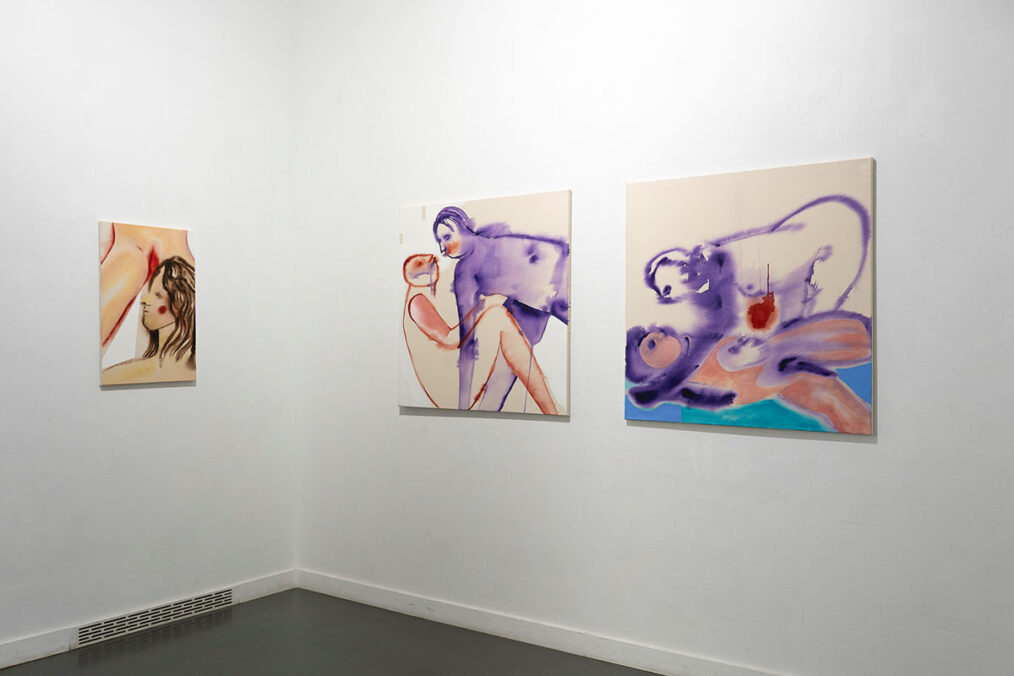
We deliberately left much of the large central area relatively open. This allowed the room’s scale and character to remain visible while ensuring that the artworks stayed in the foreground. The central space also became the location for the accompanying programme, including performances, workshops and other events. In the end, we think we succeeded in using the architecture as a strong framework for the exhibition without allowing it to become the main attraction.
The accompanying program spans everything from karaoke nights and workshops to performances. What did this program add to the exhibition as a whole?
The accompanying programme has always been an essential part of our curatorial practice. We have been developing exhibition projects together for years, and we do not see an exhibition as something that should only be viewed. We also want to create spaces for exchange, participation and practical engagement with the subjects we address.
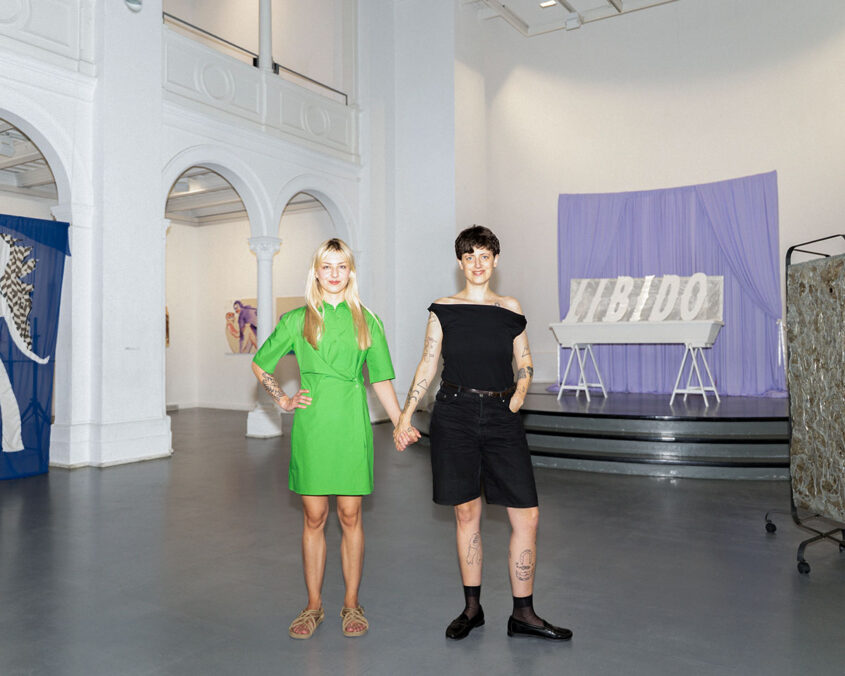
For “fight or flight: SEX”, the programme included a burlesque and sensual dance workshop, a bondage workshop, performances and karaoke. These formats opened up different ways of approaching the topic through movement, learning, conversation and collective experience. They also attracted audiences who may not usually visit a contemporary art exhibition. Accessibility is very important to us; for example, our artist talk will also be translated into German Sign Language and all workshops were free of charge.
We develop the programme specifically around each exhibition theme. Among other formats, our exhibition on fear included a self-defence workshop, while the exhibition on money offered practical support for artists on funding applications and financial opportunities. The programme is therefore not an addition to the exhibition, but an extension of its questions into social and practical contexts.
Exhibition: fight or flight: SEX
Curated by: Evelina Reiter and Julie Legouez
Artists: ABA NAIA, Alexandra Gaul & Alice Münch, Christine Börsch-Supan, Clara Vivian Stang, Ella Brew, Emily Kelly, Evelina Reiter, Florence Andoka, Galina Belkova & Masha Plavinskaya & Tanya Chekhova, Gertrūda Gilytė, Krumme Wode Spatz, Julia Funk & Mel, Julie Legouez, Justina Los, Lea Gocht, Lillian Morrissey, Lioba Schmidt, Mara Kirchberg, Marlen Tennigkeit, Melanie Jame Wolf, Ollie Gandul, Silvia Sarsano, Soline Krug, Valentina Cadena Renza und Yoongyung Kang
Exhibition duration: 10.07. – 19.07.2026
Venue: STUDIO1, Kunstquartier Bethanien, Mariannenplatz 2, 10967 Berlin
GRUPPE GORGONE – www.gruppegorgone.de, www.instagram.com/gruppe_gorgone/
Evelina Reiter and Julie Legouez are the artistic directors of GRUPPE GORGONE e. V. Both work as visual artists and curators and have been developing exhibition projects together since 2022, a collaboration from which the art association emerged. Their work brings together two distinct but complementary artistic perspectives, both of which engage with feminist, social, and contemporary issues.