Between reality and fantasy: surreal elements, unusual spaces, and familiar everyday situations recur throughout your work. Where do you draw inspiration for these motifs and visual worlds?
My motifs come largely from my own working world as an artist. It all begins with the moment I pick up my sketchbook and put down a first, rough idea. These initial sketches are often very simple drafts, almost childlike. What interests me is not only the drawing itself but also the thoughts that arise during sketching—the moment when the final image has not yet taken shape. I find this entire process fascinating, which is why self-observation is an essential part of my subject matter and artistic inspiration.
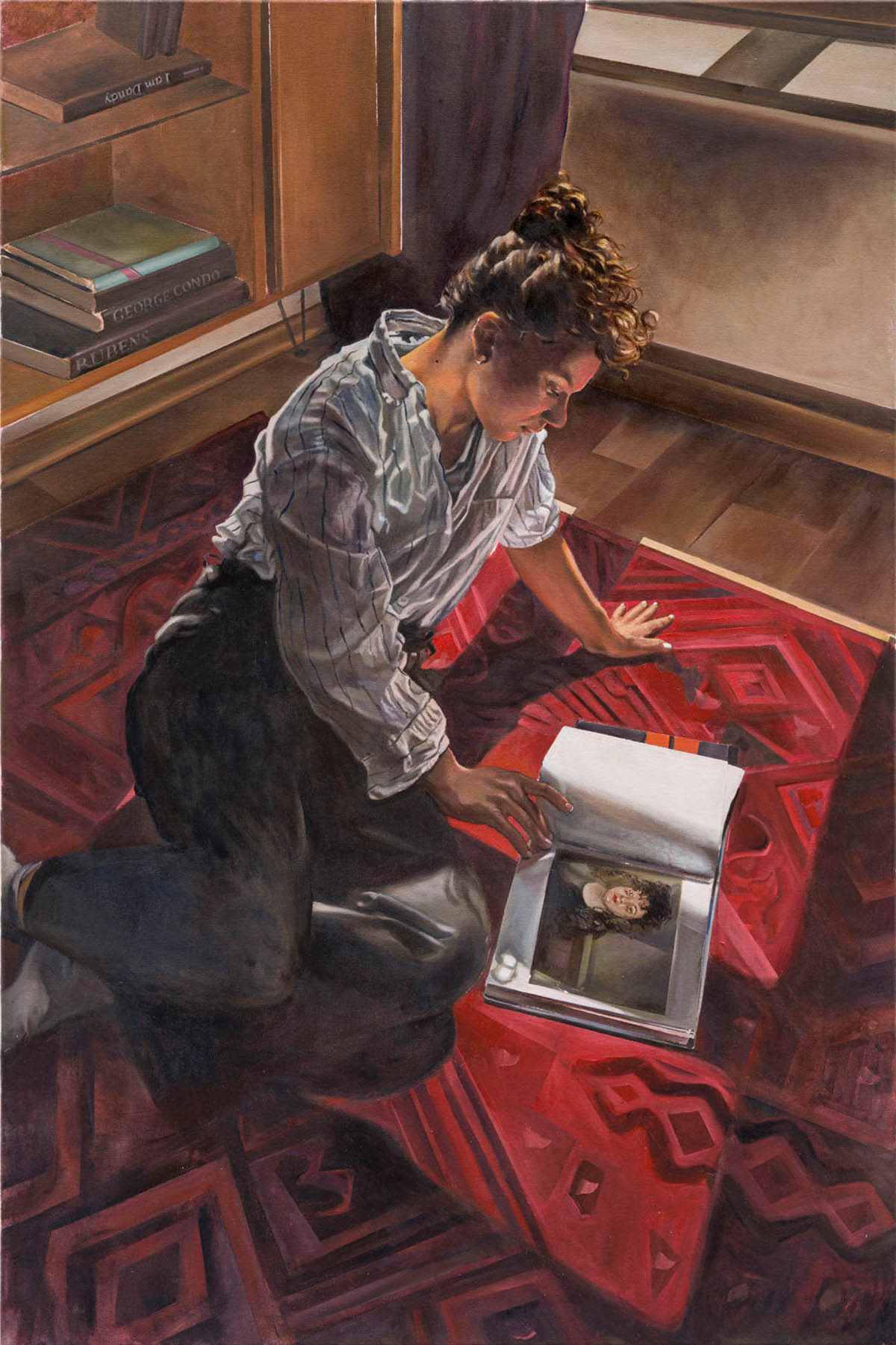
What role do friendships and interpersonal relationships play in this?
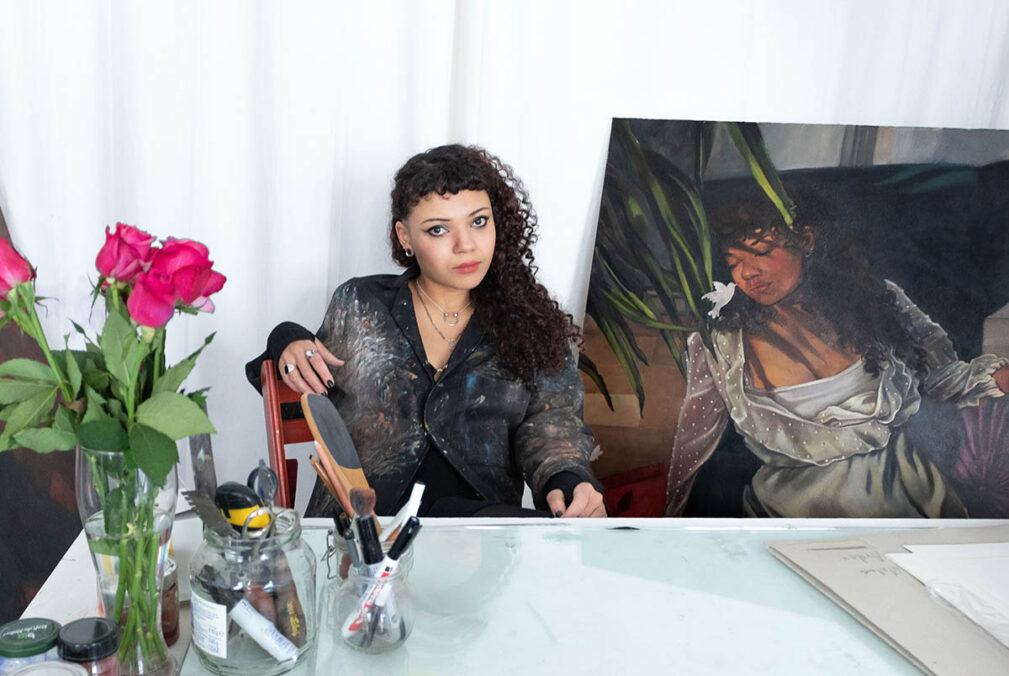
An important one, as others’ perceptions and feedback shape how I see myself and my practice. Since I am currently painting many self-portraits, these shifts in self-perception also show up in my paintings and influence my painted self. It becomes a constant interplay between my self-perception and how others see me. We can never fully escape the perceptions or opinions of others. They inevitably shape how we understand ourselves. Rather than trying to exclude this influence, I consciously incorporate it into my work. Similarly, when people give me objects as gifts, these might eventually appear in my paintings, as my apartment and its interior serve as a fundamental setting within my pictorial worlds. The people who occupy my thoughts and play a part in my life find their subtle way into my paintings as well.
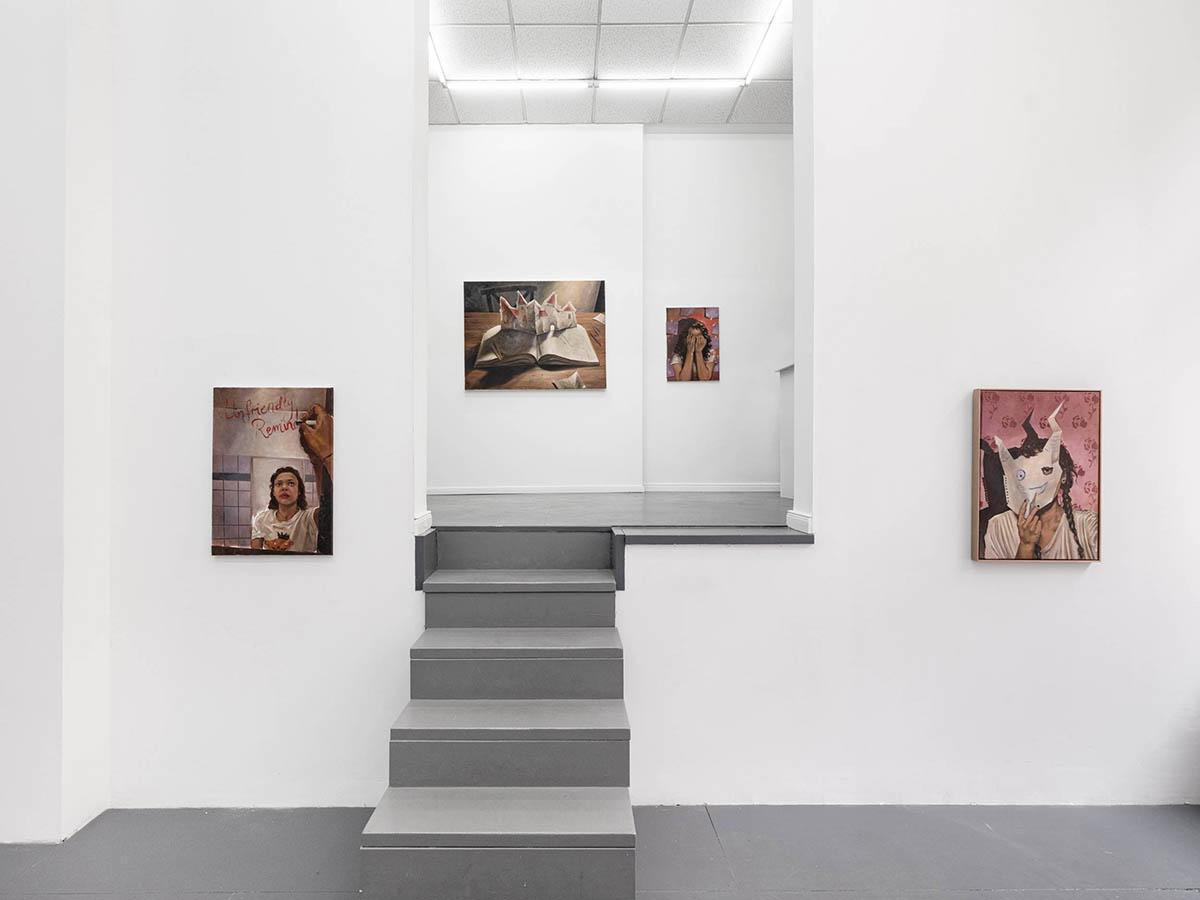
What do your characters’ outfits reveal? What significance do clothing and styling hold for the characters and the stories you tell in your pictures?
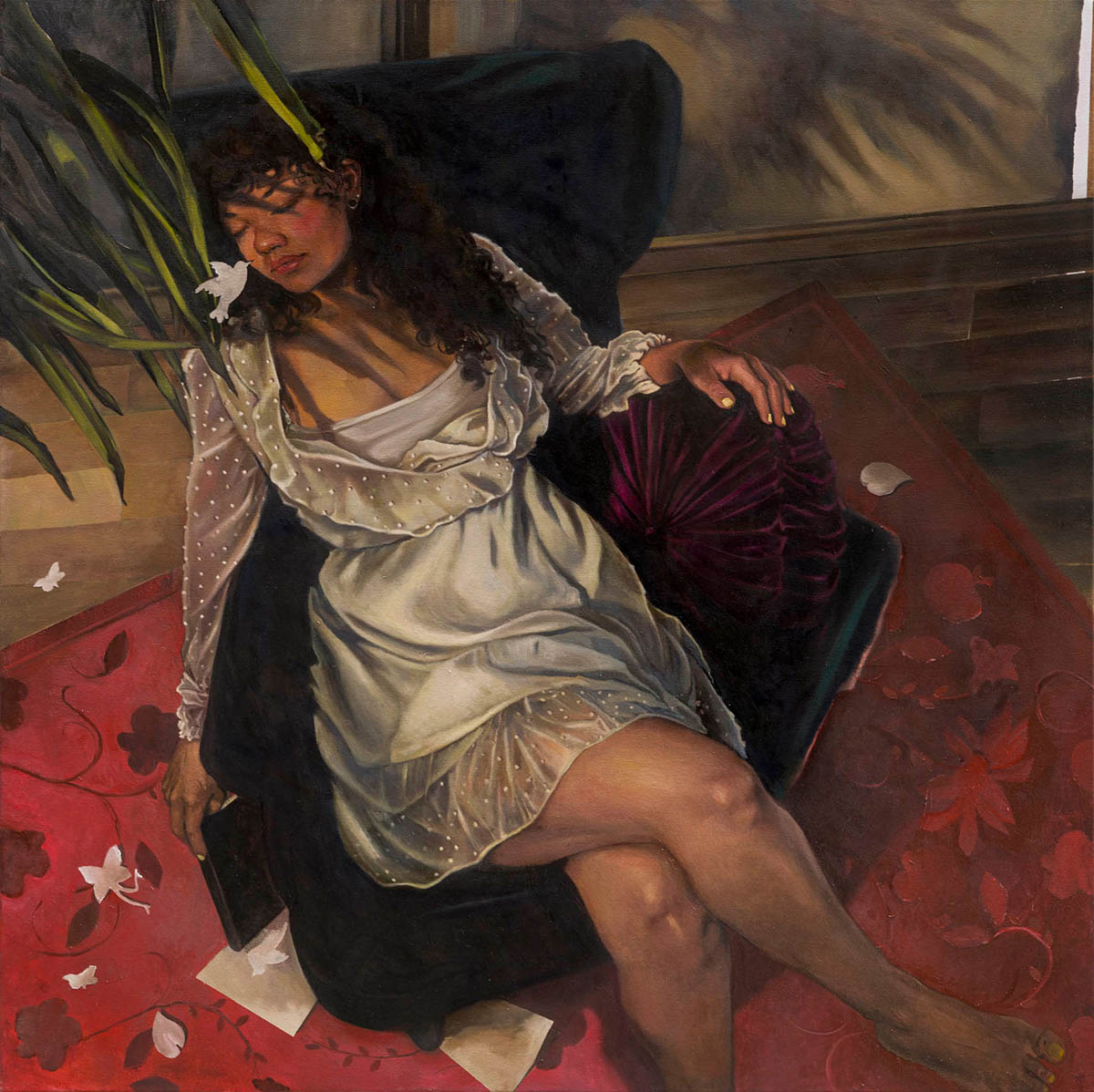
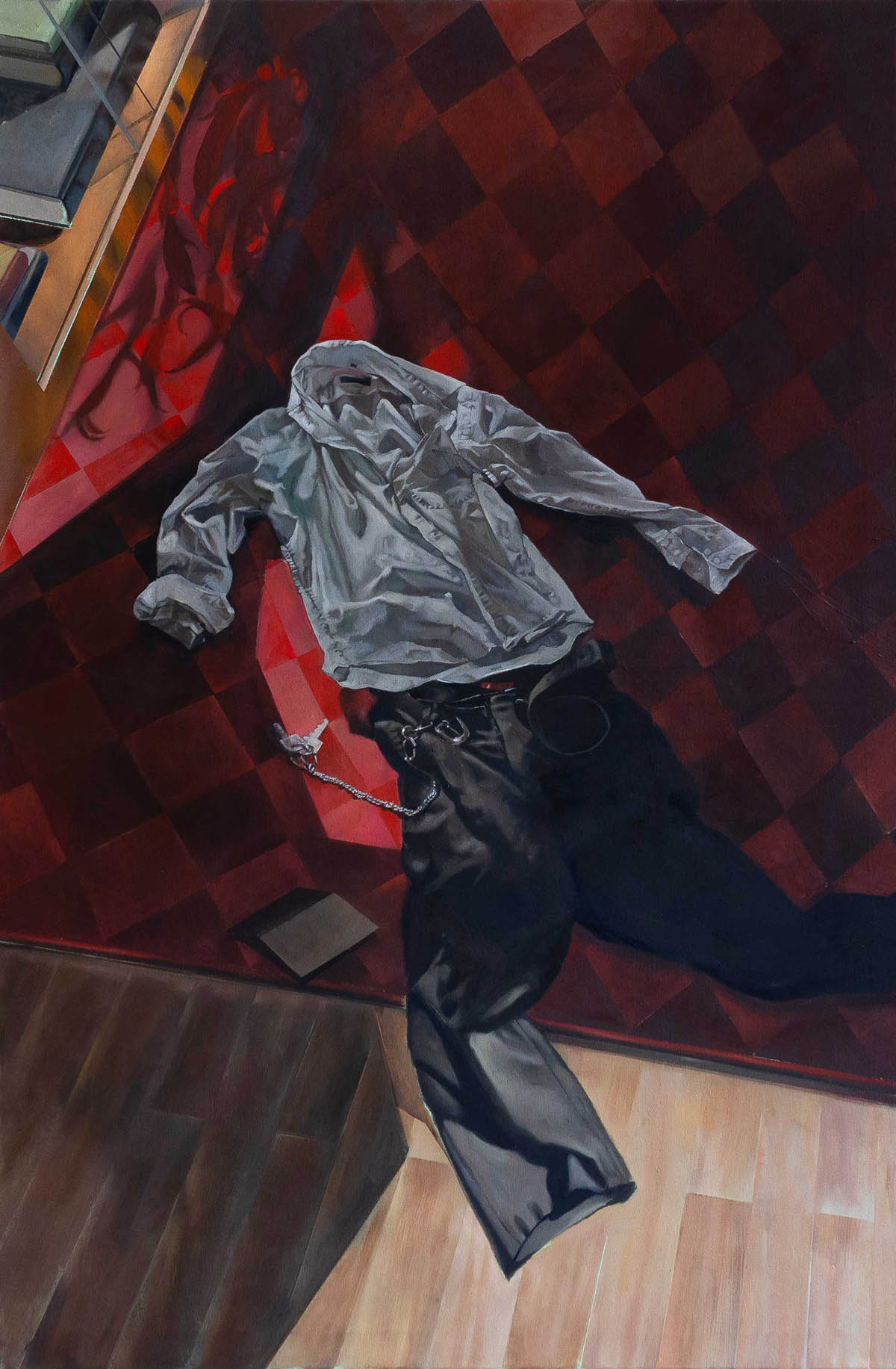
That’s an interesting question; I’ve been asked it many times, and at first I never really knew how to answer it. Over time, however, I’ve realized that my paintings know more than I do. The clothing worn by the figures in my paintings is usually my workwear—the outfits I wear when painting or drawing at home. It is a pared-down version of myself, dressed in something comfortable to work in. At times, the figures are dressed in clothes I wear in my everyday life, but they always come from my wardrobe.
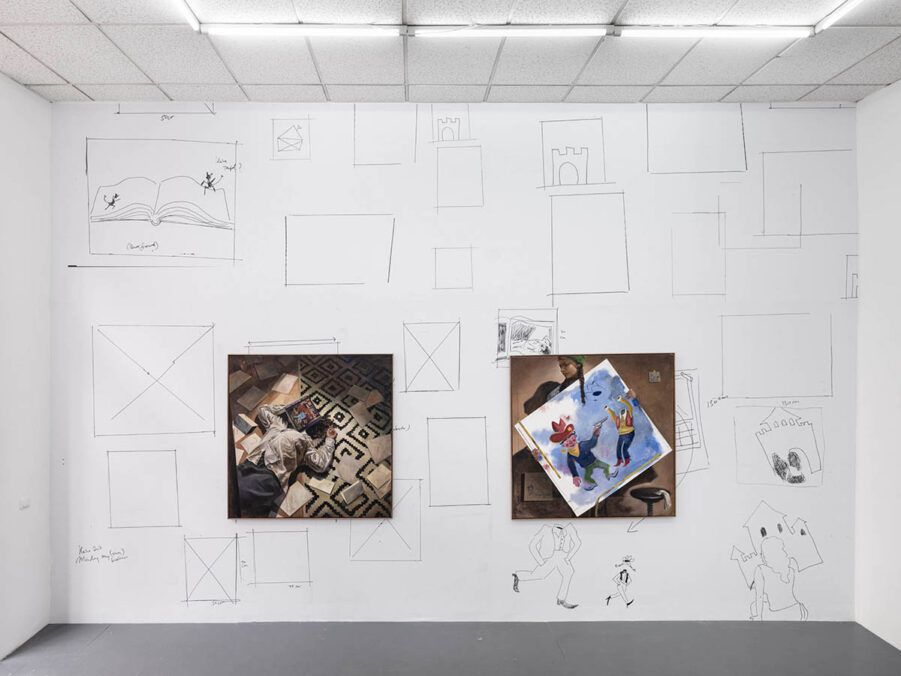
At the same time, my paintings have a fairy-tale-like quality. This aspect tends to emerge later in the process, creating a contrast with the everyday clothing of the figures. It is almost as if the pictorial world were a manifestation of the realm of possibilities in which I move while developing my ideas.
You live and work in Leipzig. What role does the city and its creative scene play in your artistic development and your work?
I moved here six years ago, and Leipzig was a good choice for me. I particularly enjoy the vibrant art scene. It offers a wide range of independent art spaces, open studios, exhibitions, and a vibrant scene for figurative painting. This is not necessarily something to be taken for granted. The Academy of Fine Arts Leipzig is one of the few art schools in Germany where traditional painting fundamentals, such as anatomy and observational drawing from life, are still taught. This was very valuable for my own artistic development.
With an art academy and galleries, many people here are pursuing a similar path and engaging with comparable questions and challenges. This exchange, along with the feeling of being part of a community, is incredibly important for staying engaged and finding your way in the art world.
What are you currently focusing on artistically?
I am currently exploring ways to convey human presence without depicting the human figure directly. I am interested in the traces people leave behind through their actions and how they inhabit a space. In particular, I want to investigate how artistic processes and gestures can become visible through their remnants.
What are your plans for the near future?
Looking ahead, I have several exhibitions coming up next year, so I’m planning to spend the coming weeks focusing on my studio practice and developing new work. I wish to continue exploring the relationship between how we perceive ourselves and how others perceive us. I see our sense of self as collectively shaped, and I want to further deconstruct the influences that contribute to it. Painting offers me a way to temporarily step outside my body and examine these different perspectives. I’m curious to see how these ideas will continue to shape my pictorial world.
Eliane Diur – www.elianediur.com, www.instagram.com/elianediur/