
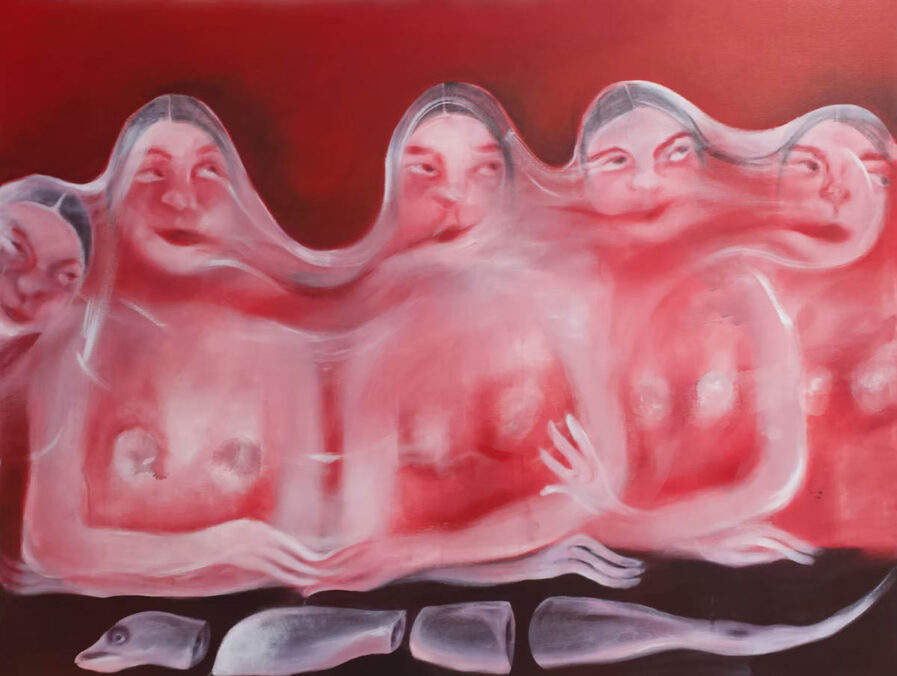
In her work, she obsessively depicts the reinvention of the self, shaped by an identity dysmorphia stemming from a multicultural upbringing between China and the UK. She builds a cast of characters who are always slightly at odds with one another, lounging, posing, crawling, watching, and performing—part seduction, part grotesque.
How have your self-portraits evolved since your early work?
The figures in my earlier works were much more animalistic, absurd, and sometimes violent, closer to fantastical, beastly creatures than to my actual appearance. I was taking my internal conflict and psychological state out on the figures in my earlier work. My portraits are more subdued, more an observation of the self and my surroundings rather than an expulsion. However, I haven’t abandoned the beastly quality in my earlier work; I think my portraits are always fluctuating between the two states.
What kinds of questions emerge through your artistic practice?
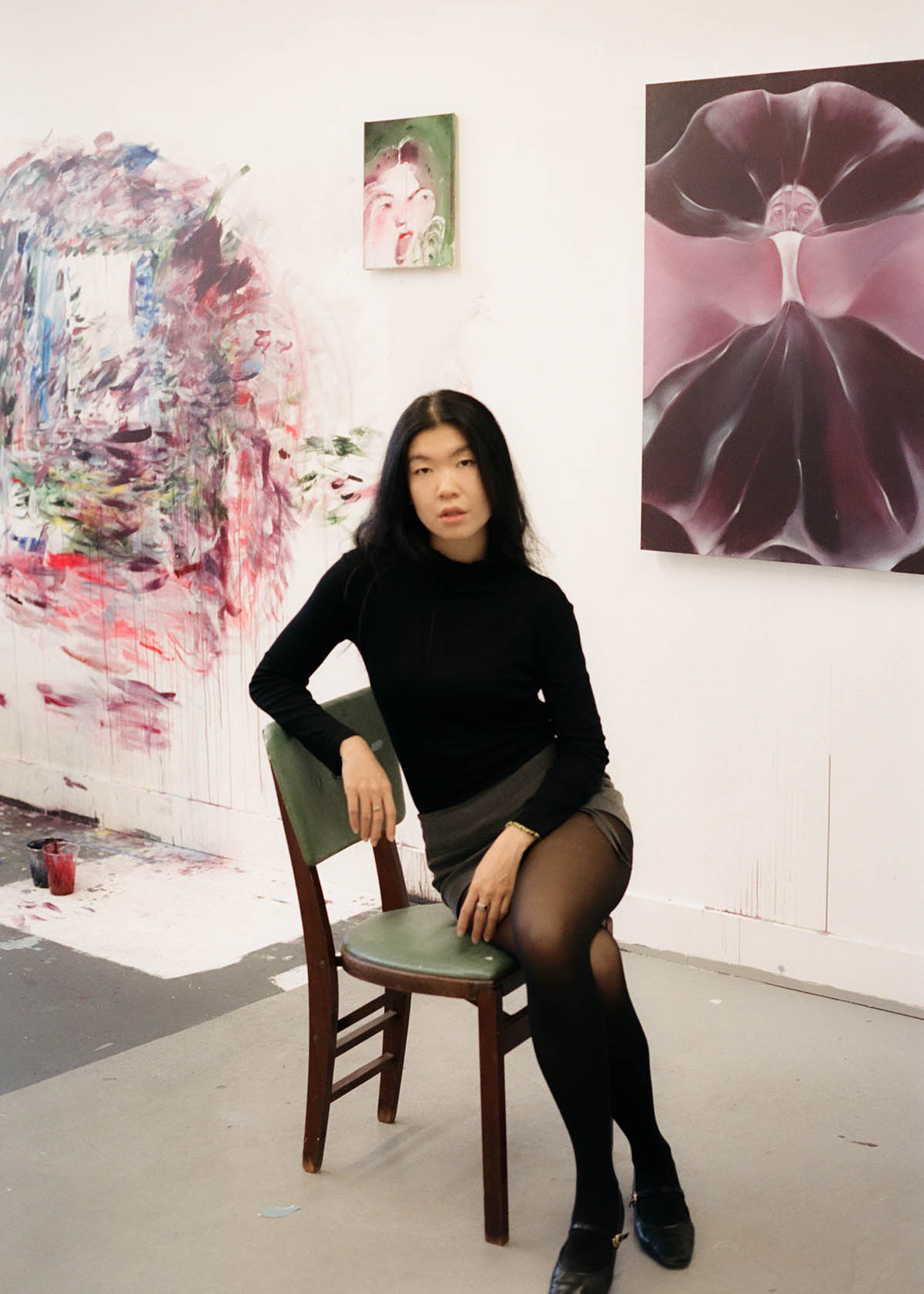
For me personally, I would say self-discovery and perhaps vanity. Painting self-portraits obsessively is a compulsive attempt to see myself from the outside, but never really succeeding because the more I paint, the more foreign the figures become. My work leaves me asking how well we ever get to know ourselves. And then I wonder why I’m so eager to know every angle of myself; that’s where the vanity comes in. But it’s a slightly perverse kind of vanity. I’m not looking for beauty. I’m drawn to the awkward, contorted angles.
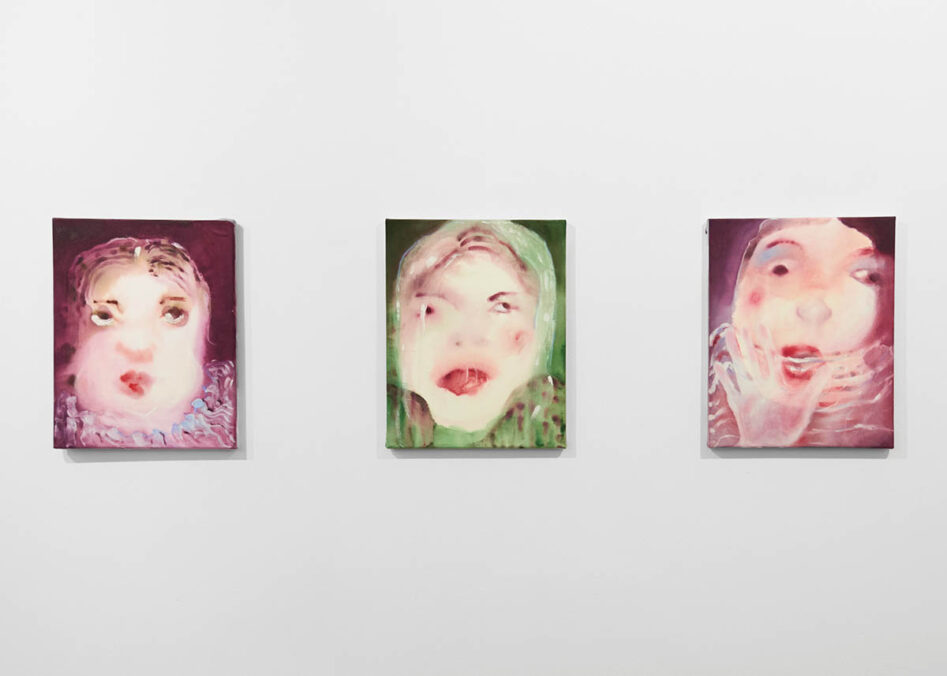
Do your figures have stories of their own—stories that you choose to keep to yourself?
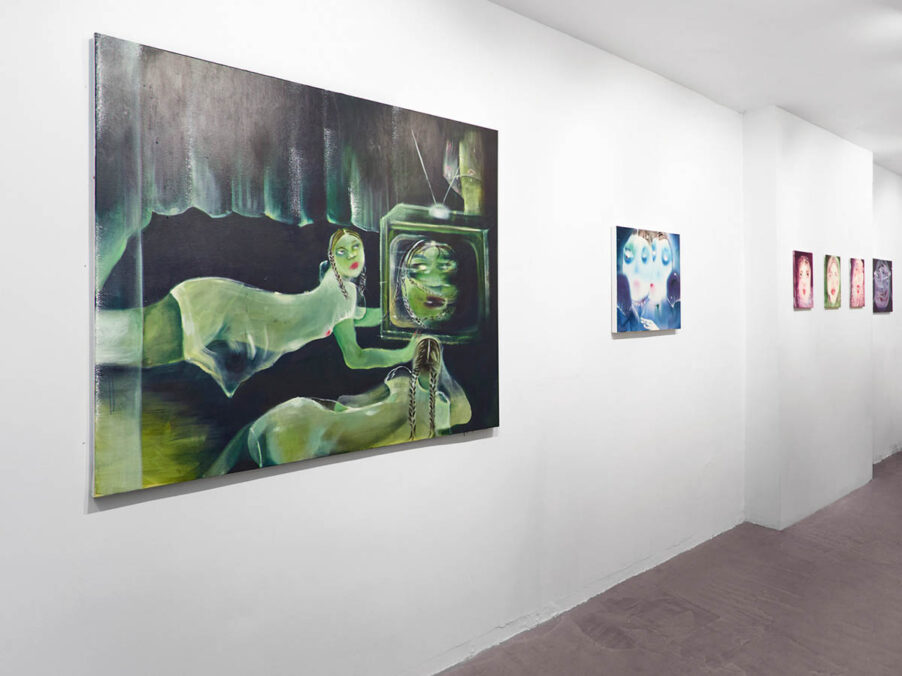
The figures in my work are a hybrid of fiction and reality, and the line between the two is very blurred. A lot of the scenes start off as memories, but some are so faded that my imagination takes over. What really happened becomes theatrical; autobiography becomes a myth. Though I never try to separate what’s real from what’s invented in my painting.
Are your paintings created simultaneously, and how do they relate to one another?
I work on two pieces at a time at most, and they’re usually quite different from each other in terms of atmosphere and palette. Despite their differences, the figures are always in dialogue through exchanging gazes from one painting to the next. Motifs travel between them too. It’s like they’re the same characters, just in a different season.
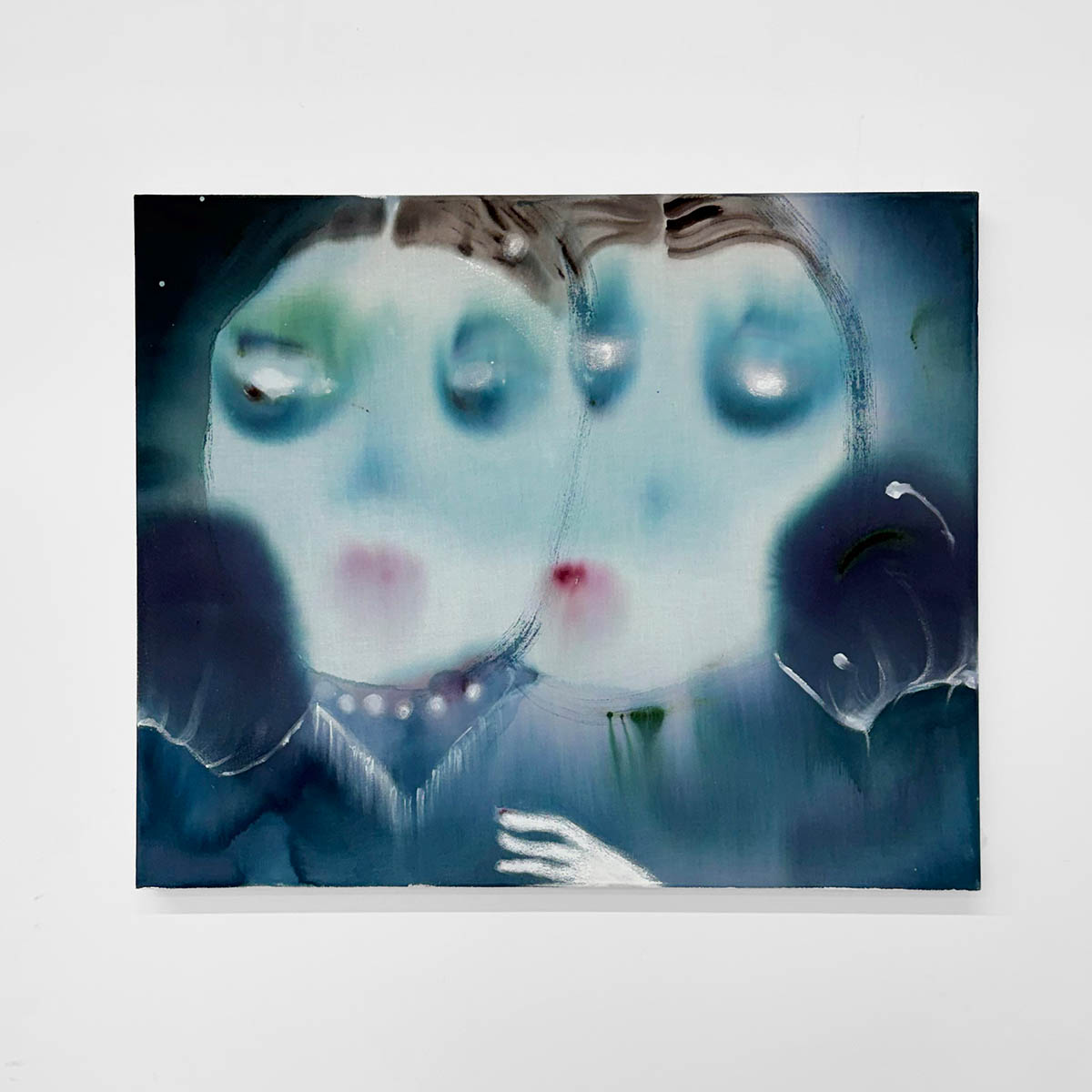
You have spoken about the contradictions between two cultures. What ideas or expectations about femininity did you bring with you from Shanghai, and which ones did you begin to question for the first time after moving to London?
When I moved to the UK, I was put in an all-girls school. I found that there are so many archetypes of femininity, and that the word „feminine“ is far from a singular description. What really shocked me, though, was how openly the girls discussed things that were kept completely private back home in China. I basically spent my first six months there as a very shocked twelve-year-old. That tension between public and private, between restraint and expression, is still a lingering conflict for me, and I definitely bring it into my paintings.
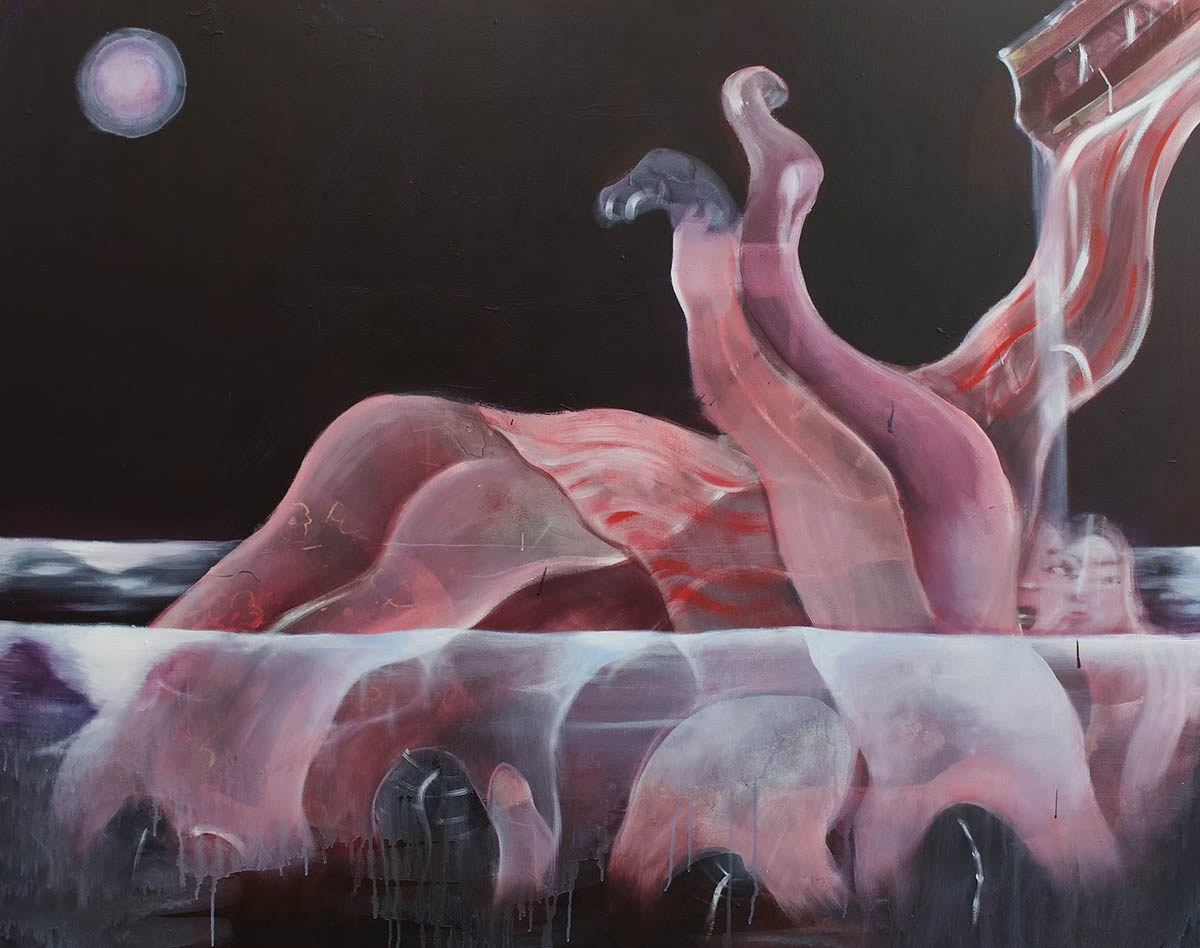
I find your titles particularly intriguing. How do they come about? Do they emerge during the process, or do you title your works once they are finished?
I don’t overthink them; they usually come after the painting is done. I don’t use the title to explain what’s happening in the picture; they tend to reflect what went into making it: the influences and the decisions I made along the way. I have a habit of writing random words down when I paint, and I often use them as my title.
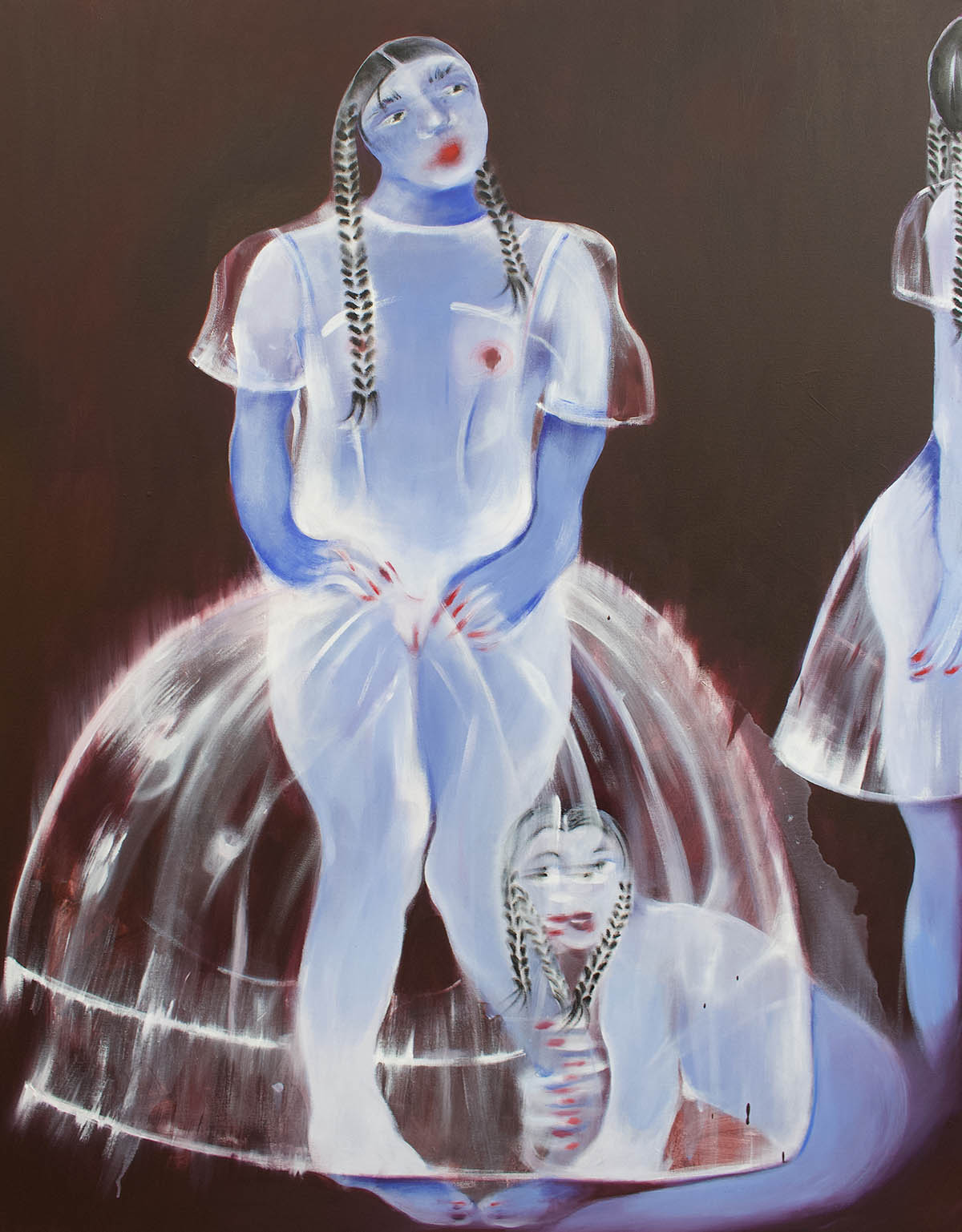
Parasitic particularly caught my attention. Please tell me more about this painting and the ideas behind it.
That was a fun one because it started with indecision. I couldn’t decide whether to paint the figures nude or clothed. Then I came across this completely see-through dress by Simone Rocha with these big puffy sleeves, so I painted them wearing that and got the best of both worlds. What’s interesting is that the figures actually look more exposed in the dress than they would naked, especially the figure hiding underneath it. There’s something really vulnerable about that in-between state. I think it’s a good reflection of the conflict between hiding and exposing that echoes through all my work.
Katinka Huang – www.katinkahuang.com, www.instagram.com/katinkaworkplace/