
Your artist statement states that you are interested in the things we choose to keep, collect, and throw away. Why is that, and are you personally connecting something?
I have been interested in objects, materials, and the things people collect for a long time. I grew up spending a lot of time in second-hand shops around Sydney and fell in love with all the pre-owned things that seemed so full of life and history. I became interested in how people attribute value to objects, with some things seeming so significant, often beyond all reason, while other matters are so carelessly brushed aside. For the past 15 years, I have been collecting small objects that I come across on the ground while walking. I am interested in things that I think call out to me, things with resonance. I have lately been considering these issues in line with the Christian perspective on relics. That is, perceiving the objects as numinous, containing within them a potency that is almost despite their materiality. We are so surrounded by material things, commodities, trash, stuff. I think it is important to see them as more than simply the sum of their parts.
How are you finding materials, especially fabrics, for your practice?
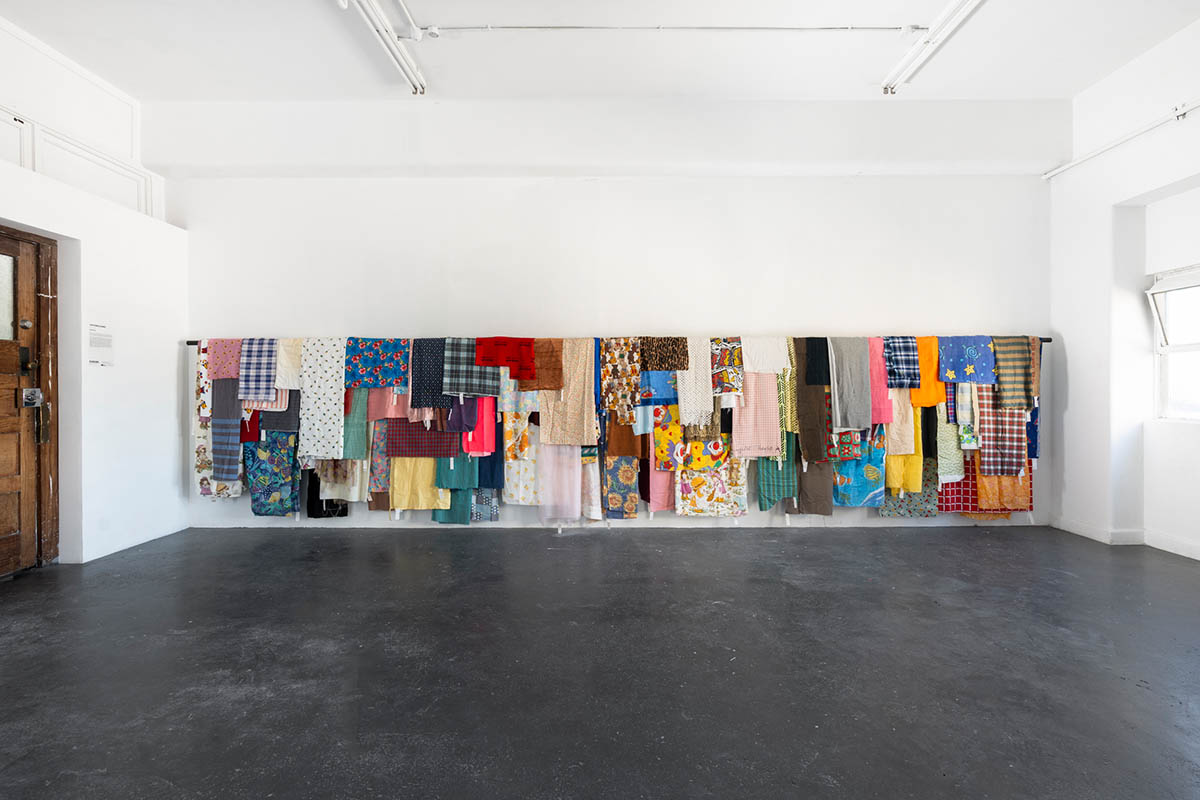
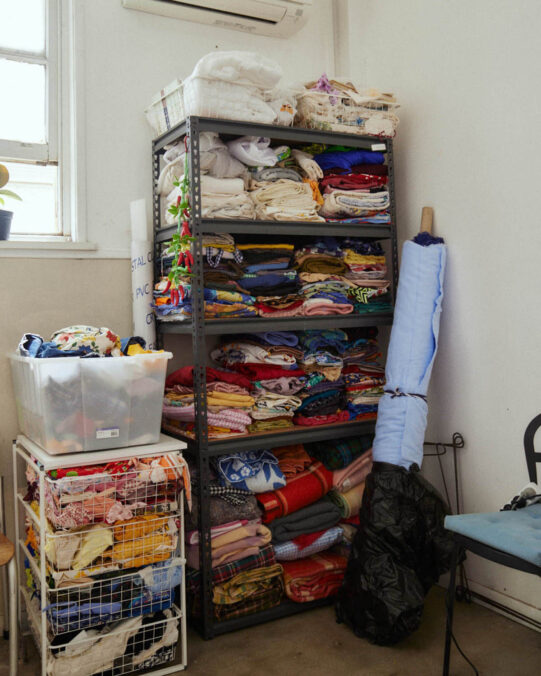
I find many little objects while walking around, small things that people have dropped or left behind. As far as fabrics are concerned, I realized quite early on in my artistic career that I was particularly interested in second-hand fabrics, which is why I decided to shop at second-hand shops. I also found that once people know you love old fabric, they tend to start offloading their collection to you. Many people seem to have fabric stashes they are trying to clear out but that they don’t want to throw away, so that became a really wonderful way for me to grow my collection.
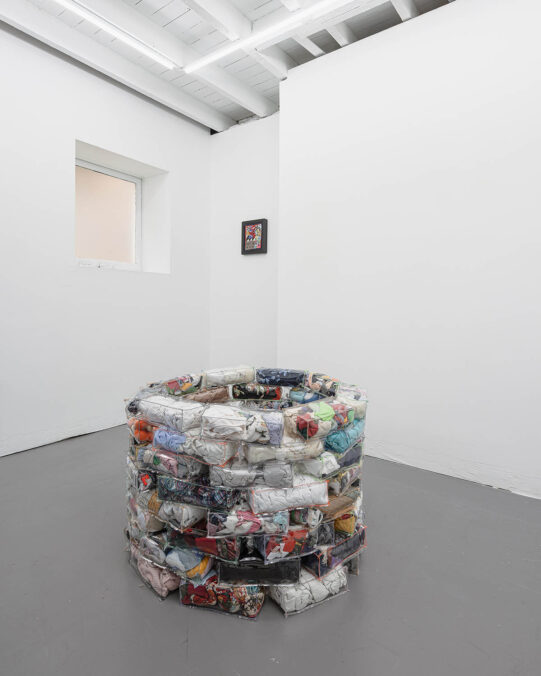
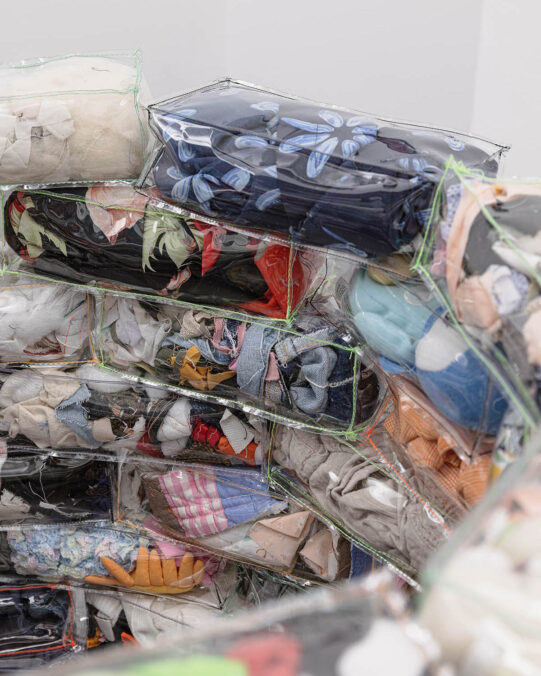
Some Things Last a Long Time (2023) is a brick wall made of plastic travel packages filled with pieces of clothing. Could you elaborate more on this work?
This work is made from discarded fabrics and other scraps from my studio that I couldn’t bring myself to throw in the bin. I encased all the materials in clear vinyl bricks that I sewed together, then assembled them into the shape of a well. At the time, I was interested in the overproduction and consumption of textile goods and the seriously destructive impact this has on the environment. I was thinking about speculative fossils, the material trace that this civilization will leave behind. A lot of my work is about shifting the way we relate to materials and exploring their potentiality. The well was a practice in imagining our trash as a kind of building material but was also, in a practical sense, a way for me to repurpose my studio waste.
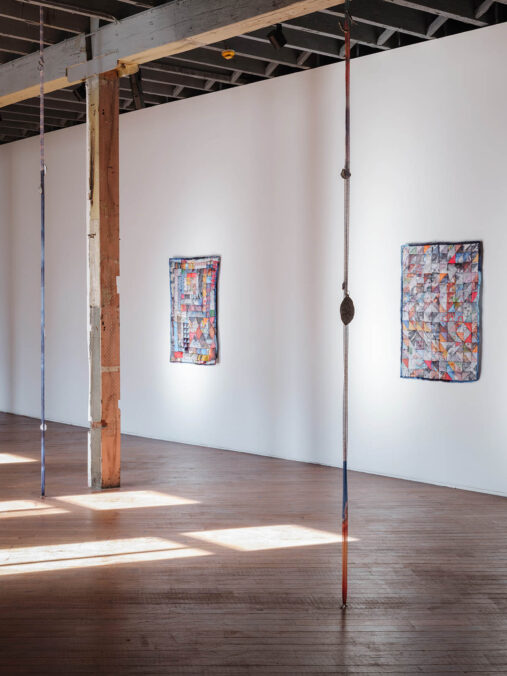
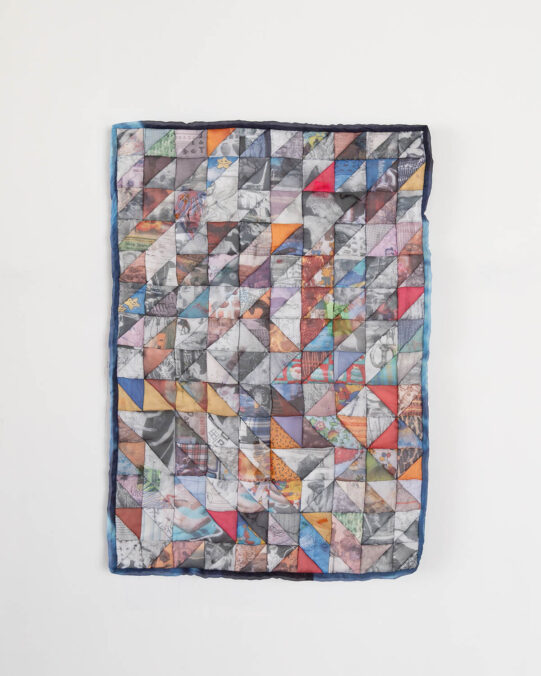
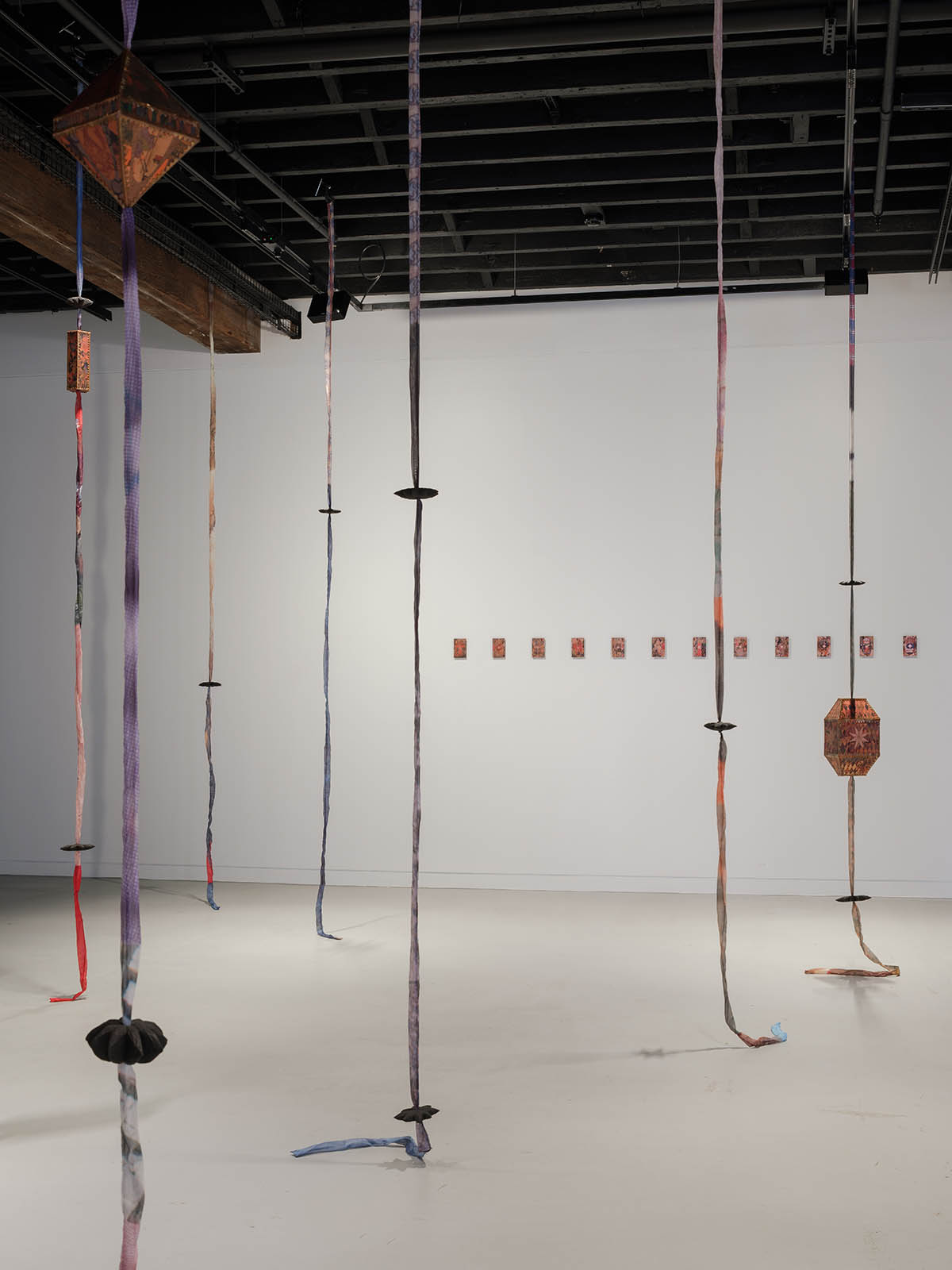
Amelia Skelton, Bedrock, 2025, Digital print on Chicago Voile, wadding, thread, found fabric, 112 x 79 cm. A thousand attics, Nasha Gallery, Sydney. Photo: Hamish McIntosh.
Collage is important in your work; why is that, and what does it represent for you?
Collage has really grown out of my quilt-making practice, cutting up, arranging, and patchworking different fabrics. Even when I collage digitally, which I have done quite a bit of in my most recent bodies of work, I see it as an extension of patchwork and quilt-making. I really resonate with collage, patchwork, and assemblage, as I feel they all allow for multiplicity and complexity to enter a work. I like to think about each piece in a collage as containing within it an entire world. Collage invites you in: you consider the whole, then focus on one part that unfolds before you.
Amelia Skelton – www.ameliaskelton.com, ww.instagram.com/milskelton/
Amelia Skelton has a Bachelor of Fine Arts in Sculpture (2016) and a Master of Fine Arts in Drawing (2022) from the National Art School, where she now works as a lecturer. Skelton has participated in group exhibitions both nationally and internationally and has presented several solo exhibitions throughout Australia. Skelton was the recipient of the 2026 Visual Arts Fellowship (Emerging) supported by Create NSW and Artspace, Sydney.