Your first solo exhibition in Austria is currently on view at TAXISPALAIS Kunsthalle Tirol. The whole process of filming Who is Afraid of Ideology? The series of five films took nine years to film and produce. Let’s start with the very first work you did in 2017 and how it all began. Did you know back then that it would be a long-term project?
It started even earlier; I was still living in Beirut then. The conversation with the Autonomous Women Movement and the other cooperatives and organizations started even before 2015–2016, during the crisis here in Lebanon. I started looking for models of organizing around land, questions of agriculture, and ecology, where an ecological politics, an ecological paradigm, is actually practiced. I had invited two members of the Autonomous Women’s Movement, who run a reading-group workshop, to give a presentation. And I ended up visiting them in Iraqi Kurdistan. Visiting them was a truly defining moment for me. Especially meeting Pelşîn Tolhildan, an ideologue of the party. I already knew her writings through other members of the movement, since they had translated some of her texts, and I think that was a shift. At that moment, many of the things I’d been thinking about, and many political threads, came together: the practice of ecology, but also the land struggle, the armed struggle, and feminist politics. It formed itself in the question of property, of land recuperation, of fighting for the land, of being in the mountains, and of speaking about the mountains from a grounded place. At the time, I didn’t yet have a full picture of how all these different struggles and politics were actually connected in practice.
Following my visit with members of the Autonomous Women’s Movement, I was accepted onto the PhD in Practice program at the Academy of Fine Arts Vienna. The program provided me with a framework for this new research process.
What was your connection to TAXISPALAIS Kunsthalle Tirol? How did the collaboration on this exhibition come about?
I worked with Nina Tabassomi, the director and curator of the TAXISPALAIS Kunsthalle Tirol; she’d seen Part Two previously when I’d sent her a dossier of an exhibition I did with the curator Agustin Pérez Rubio from Spain—an exhibition, The Land Shall Not Be Owned, curated by Agustin Pérez Rubio and Bernardo Follini at Fondazione Sandretto Re Rebaudengo in Torino, Italy. That exhibition was subsequently presented at the Museo de Arte Contemporáneo del País Vasco in the Basque Country. I had a dossier prepared for that exhibition, so I sent it to her as well. She liked the idea, and that’s how she invited me.
You mentioned the psychological dimension of your research and how this eco-feminist approach and framework of the Autonomous Women’s Movement you started working with back then later influenced the other locations and groups you filmed and worked with.
Before, I didn’t have a full picture of where this project was going. I learned as I went, through talking to people and becoming more involved in how they organized, thought, and wrote about things—all kinds of organizational matters, including knowledge production.
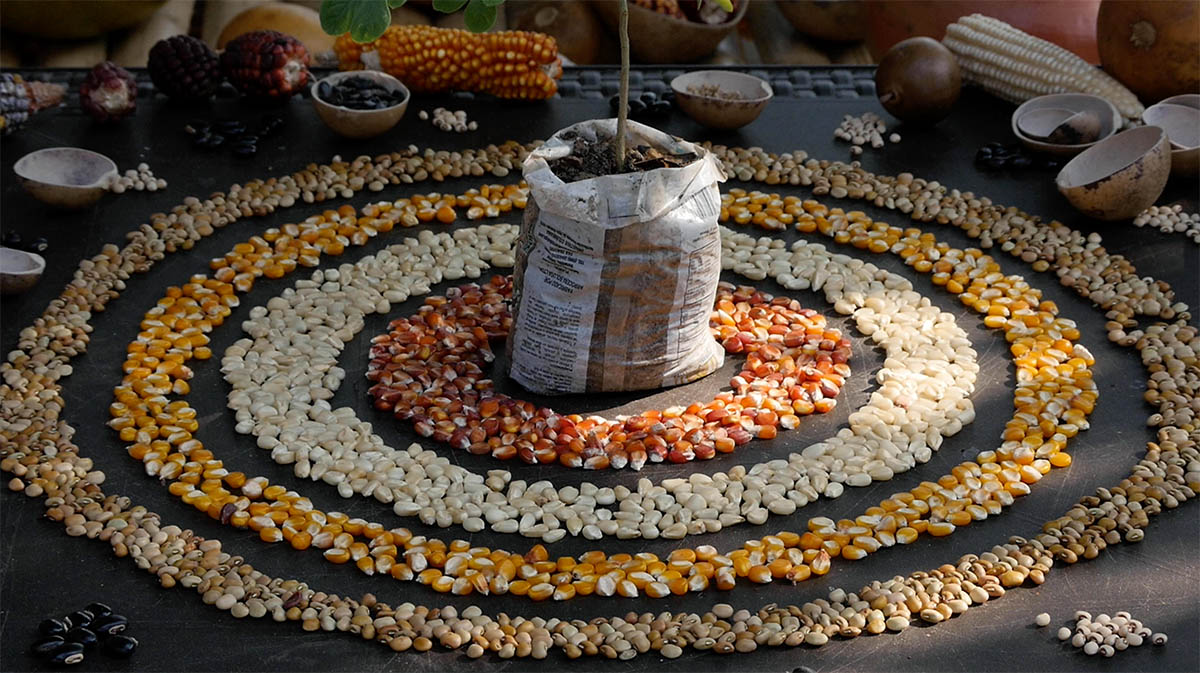
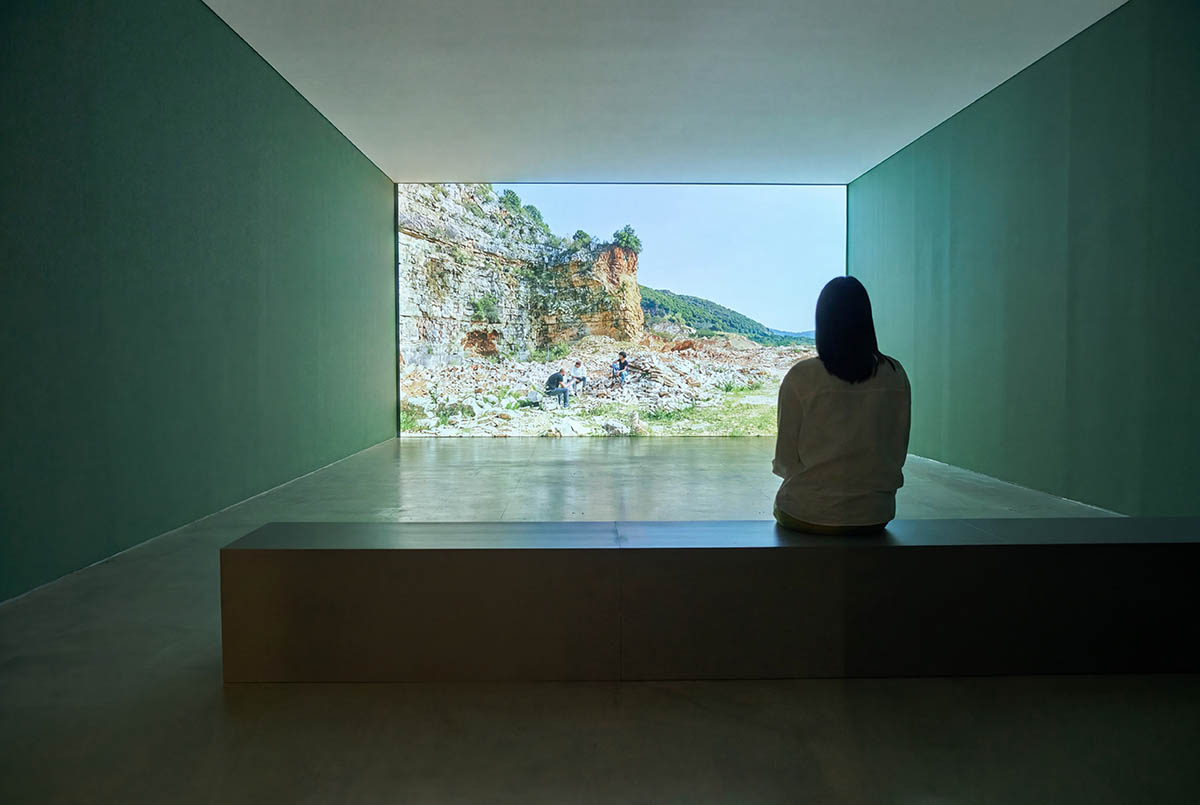
I went to what you see in Who is Afraid of Ideology? Part Two. This was filmed in Jinwar in northern Syria. Pelşîn Tolhildan suggested the location. She told me, “If you really want to see how these things are put into practice and what form they take, you have to go to Jinwar.” Who is Afraid of Ideology? Part Two is a portrait of the village of Jinwar and its organizational form. Tolhildan recommended it because I think she understood what I was trying to understand, what I was looking for, and what I wanted to be involved in. She understood that I needed to see how these things exist in space, how they’re put into practice, what kind of relations exist in reality—not only in theory.
I was co-organizing an assembly we called the Convention for Women Farmers and Ecological Feminists. It was an event held in Warsaw, Poland, as part of the 2019 Warsaw Biennale. I’d been invited to do a project at that Biennale, and I recommended we organize this assembly, inviting many members of cooperatives, organizations, and communes from Colombia, Mexico, Chiapas, Kurdistan, Lebanon, Poland, and a commune outside. We screened Part One and Part Two on that occasion. Farmers, theoreticians, and organizers took part. That’s when I invited the group you see in Who’s Afraid of Ideology, Part Three,
Now that you’re telling me more about it, the whole series was really based on one main impulse from your side, and then you were led, essentially guided by the people, by their recommendations.
Yes, it’s a process of building a discussion over the long term, over and over again with the same people, with additions. The final films you see are only one aspect of that complete journey.
All the films in the exhibition have a lot of underlying violence in them. Ideology is often “driven” by violence. How did you decide, in this film format, what makes it into the final cut?
That comes up in conversations, too; there was a lively back-and-forth. I worked with the same editor on all the films except Part Five, which had a different editor. We proposed together what we thought was important—not only in terms of information but also in terms of poetics and images. Then we sent the cut to several people for feedback, including those involved in the organizations. For example, the Autonomous Women’s Movement is a very solid political organization, and they know how to represent themselves: some people agree to appear on camera, and some don’t. That was obvious from the material: what’s okay and what isn’t.
In every part, what we’re able to film is shaped by the filming process itself because we have to ask permission; we always need to ask what we can film and why before filming. We were guided on what we can and cannot show, especially in the mountains, which are security and military zones. All of these conditions shape the final form, and that’s why the form is so different from film to film.
The restrictions, the locations, and the context around each scene you’re filming lead to different results. Following poetic threads I wanted to ask about, did your general definition of ideology, how you thought about it and explained it to yourself, change over the course of filming?
Yes. In fact, I started with the idea of trying to break down, or undo, a certain liberal feminist ideology I grew up with in the ’90s. I mean, as a teenager growing up in the post-’89 world. Back then, that was the dominant discourse and practice at the time. Having grown up in Beirut, it was a moment when every kind of political organizing was being displaced; not fully, but what became dominant was more the NGO world and that economy, which produced a lot of specific liberal discourses.
I was trying to undo that, which led me to reading more Marxist feminists, and to the women in the Autonomous Women’s Movement who are themselves Marxist feminists. The whole title, Who’s Afraid of Ideology, is a provocation. Liberal feminists consider themselves to be non-ideological, as in beyond ideology—and they accuse Marxist feminists, or women taking up arms and organizing armed struggle, of being violent, while thinking of themselves as beyond ideology. So for me, the entire process was really about looking at another way of being „ideological“—a different way of thinking about it.
In the exhibition at TAXISPALAIS Kunsthalle Tirol, you are showing all the videos simultaneously. How do you think that spatial way of designing the exhibition makes it easier or harder for an audience or viewer to follow the chronology or your way of thinking about the material?
It is quite interesting; we have Part Three facing Part Two, coming from wholly different geographies. There are so many connections when you think about it on a planetary level. But at the same time, it’s so hyperspecific. Like the village, for example, in the mountains of Lebanon, this is something governed by a law that applies to a small area in a small country at the end of the day. The law of the commons, whether it happened fifty years ago or three centuries ago, always has a kind of universality to the dispossession and the loss we live through. In relation to land, in relation to the changing forms of property, on many levels.
I am not trying to equate all these dispossessions, of course not, but gentrification, for example, is a kind of dispossession. Hypercapitalism, not only in the expanded sense in the Global South but also within Europe, is a form of dispossession: dispossessing the working class, the most vulnerable, migrants who aren’t papered, and so on. There is a whole range of impacts that these expropriations—which are taking place at a rapid pace—have on people. In that sense, I find it interesting to reflect on the connections and exchanges between the different regions. Not necessarily in a chronological way, but more in the specificity of a place that echoes and resonates with an entirely different geography.
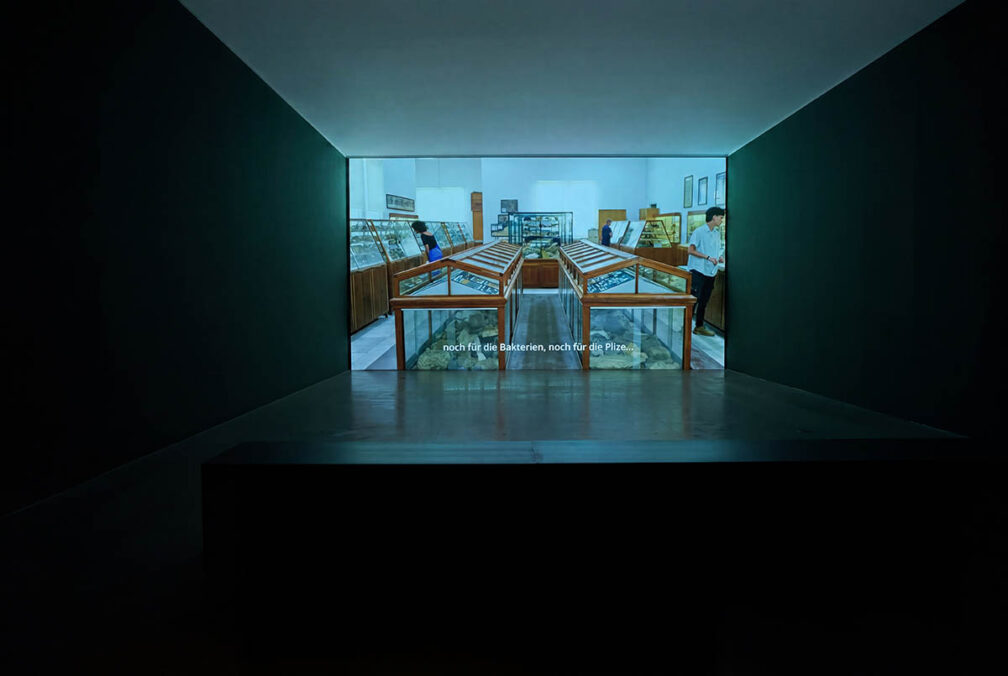
There is a notion of fiction running through your work, a notion of speculative fiction. When it comes to your drawing practice, I sense that there’s a strong connection to the imaginary, to thinking through other possibilities not necessarily based on facts but on emotions, on the moment you’re in.
I am almost obsessed with the fact that the documentary film format can be speculative because reality—or a political reality, a political imagination—is already doing the speculation itself.
It’s almost like a small village trying to propose a wholly different political imagination, and sometimes people tell me, “Yes, but you have to think on a bigger scale—is this actually going to be applied, or is it just something small, somewhere?” No—I don’t think it’s small, and it’s not some hippie utopia somewhere.
I was very conscious of the word “utopian” in relation to your work. I decided I wasn’t going to discuss it. It didn’t feel like the right word.
Right, utopia is the complete form of political resistance in practice. Who’s Afraid of Ideology is a full confrontation; there’s no escapism in it at all, only confrontation through small seeds or through building other infrastructures: cooperatives, communes, and taking over land. It can happen on a large scale when an organization can seize the political moment. And there are often setbacks; that’s the reality of struggle.
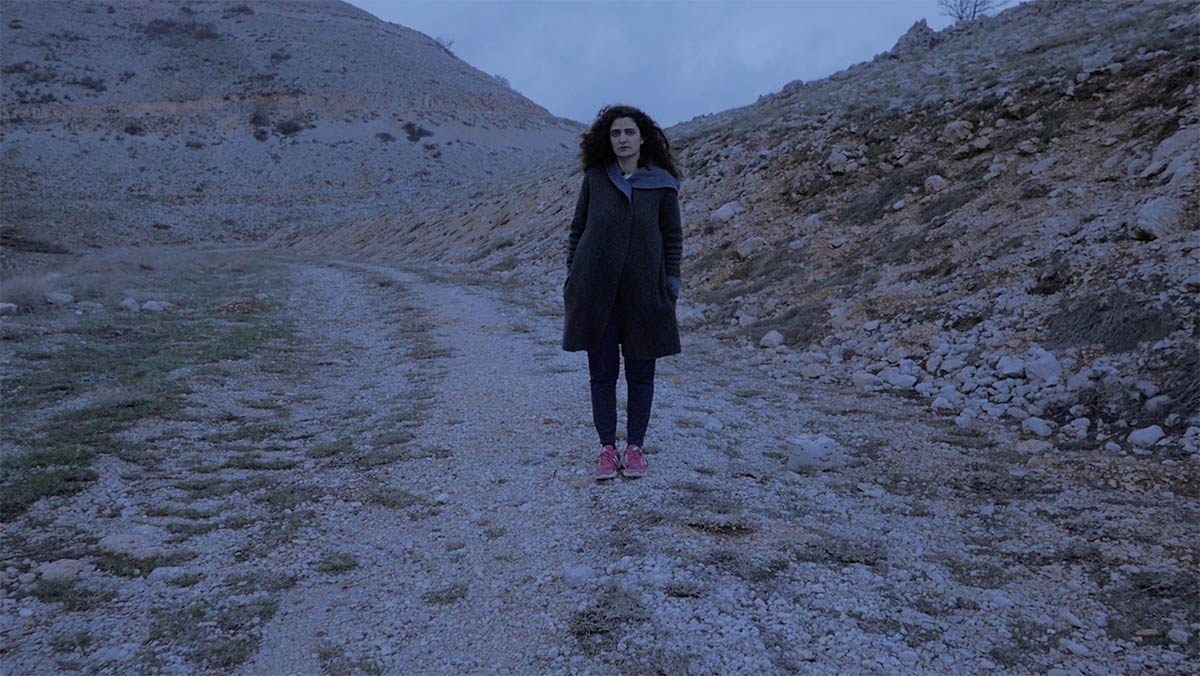
In Part Four, we didn’t want it to be just an experiment; what we tried to do legally was to reverse private property into common land. We actually wanted to set a legal precedent. And maybe it’s more complicated than that, because when you reverse land into a commons, you actually give the municipality a lot of power, and the municipality can be full of political corruption. The legal form we found to create the commons was fascinating, and we learned a lot about how these things can be done legally. In the north of Lebanon, the struggle can be a purely legal one. In Kurdistan, the struggle has had to be an armed struggle. I’m speaking about the period when I was there. In Colombia, the struggle is agricultural: taking over land through agriculture. In every situation, it’s different. This project isn’t speculation—it’s a real confrontation that proposes a new way of living, and then something happens: another political imagination is enacted. It writes history, for a moment.
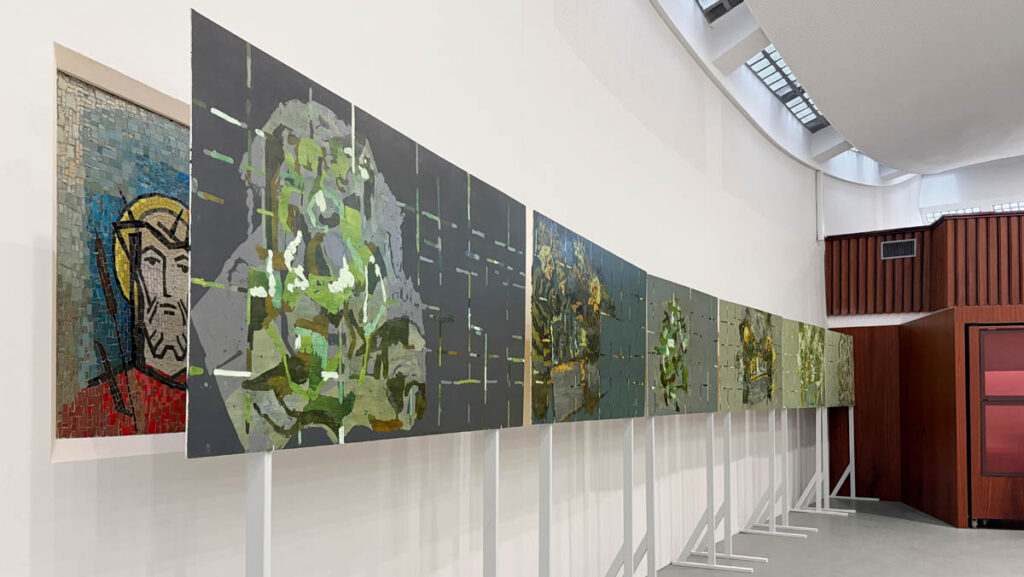
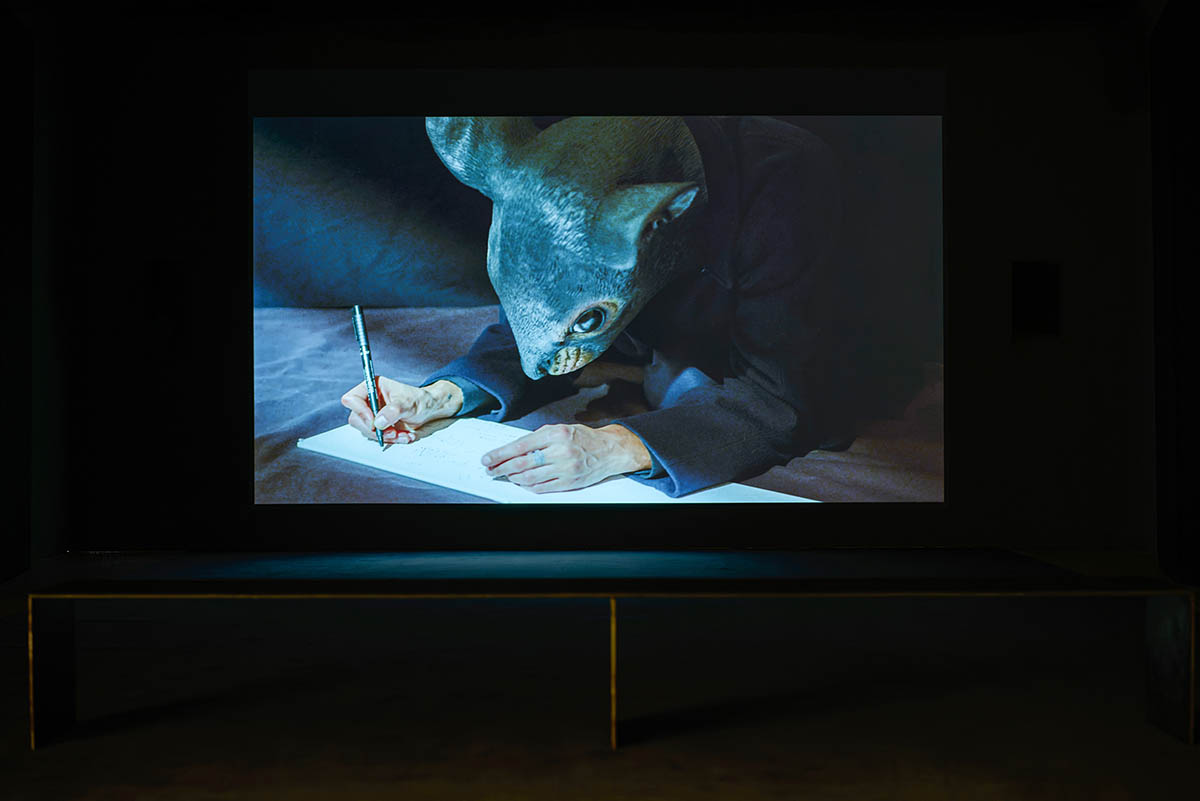
In terms of video form, it was my moment to reflect on form. That’s what you see in Part Five. It was a very particular moment—the war started here in Lebanon, and I wanted to film here in 2024, and then I couldn’t film anymore. And I thought, with everything happening, maybe this is also a moment to try a different form entirely.
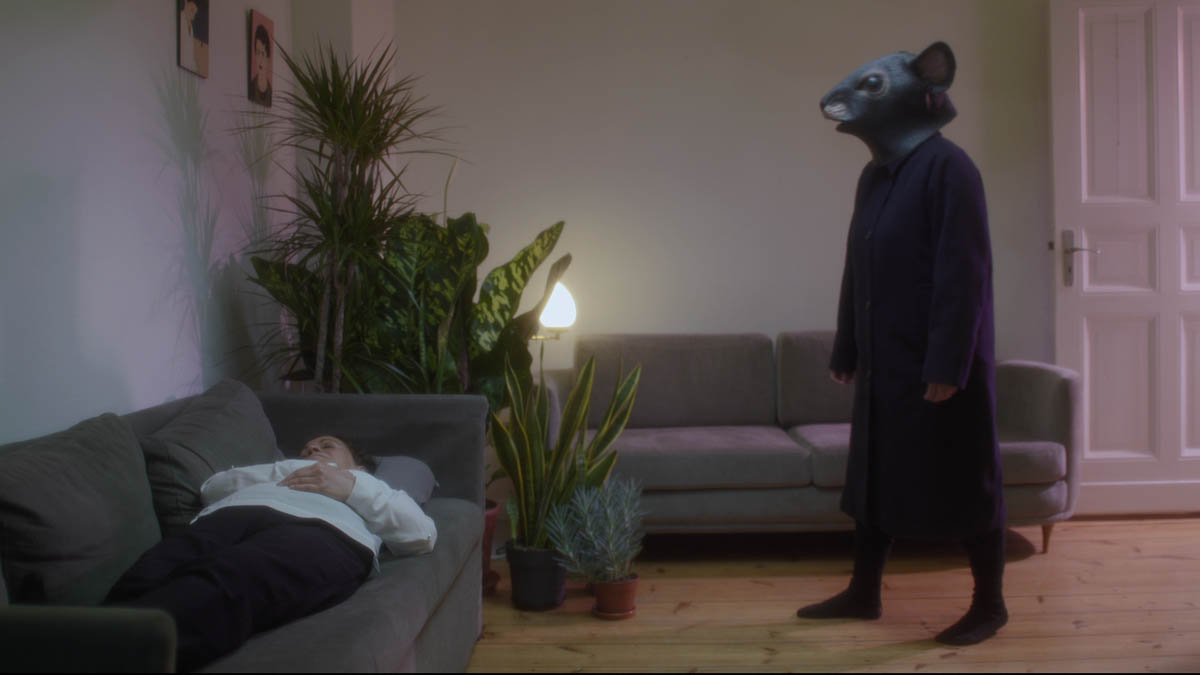
The sound and the camera movement in Part Five are definitely different from what we saw before. And your drawings were part of it.
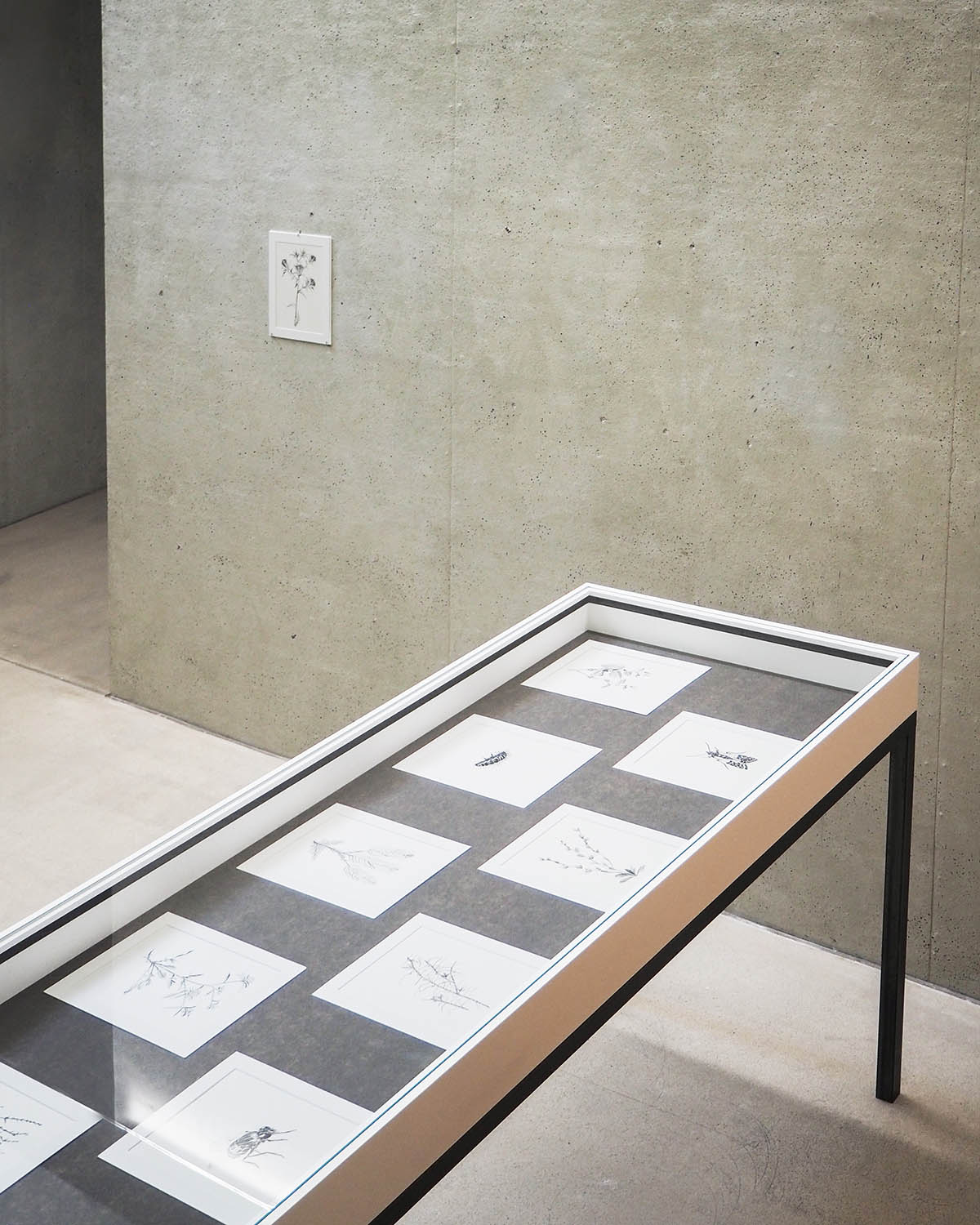
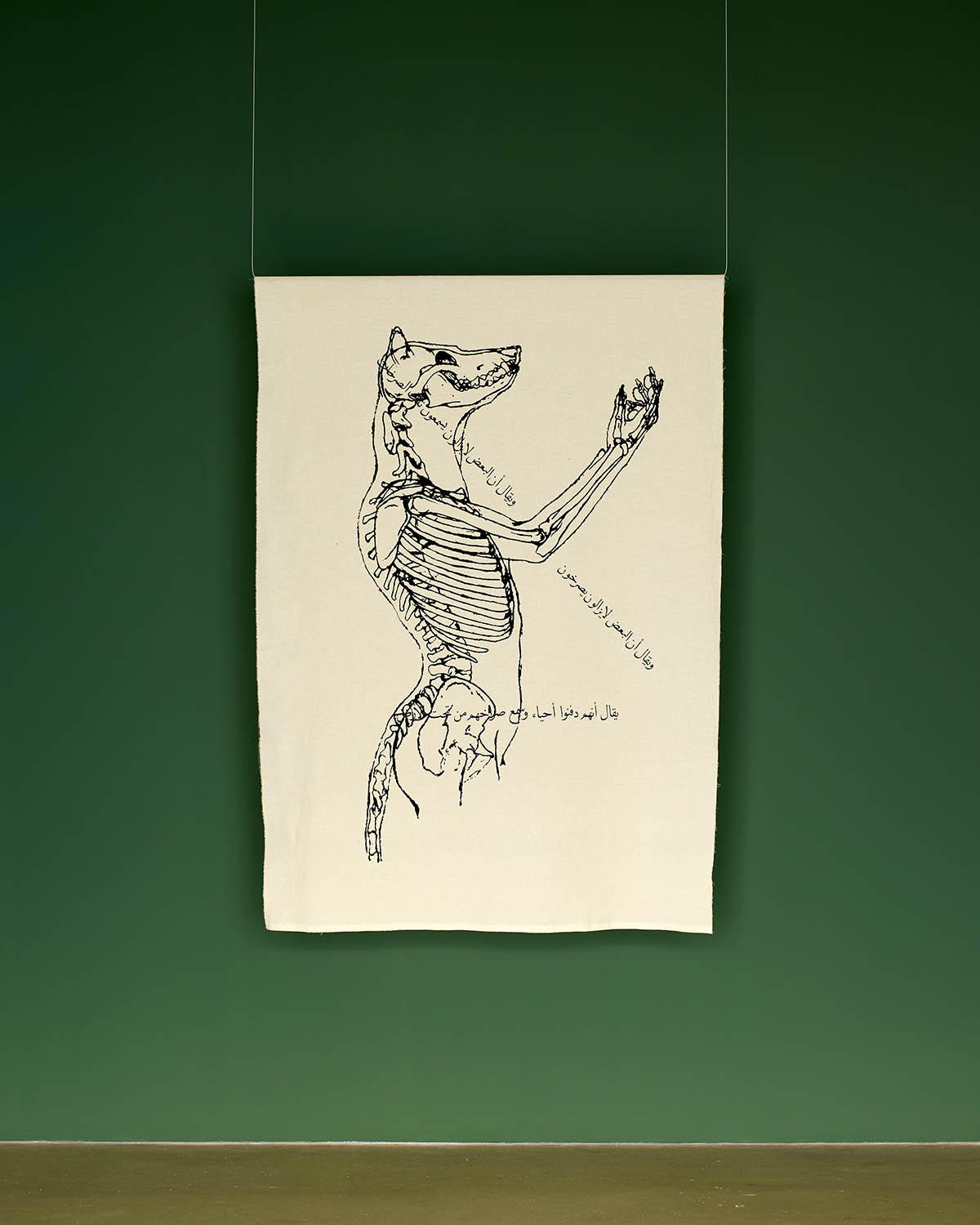
The drawing has its specific place in my practice, partly because I started with drawing—that was my fine art degree. I started making moving images not through documentary at all, but through animation: frame by frame.
The drawings always come in instantly either before the film, as a kind of focusing point and preparation, or after, also as a reflection. Drawing is a pre-film or post-film part of the practice for me.
How do you feel now, seeing the exhibition come to life and actually running? What are your reflections, and what are the next steps?
Alongside the exhibition at TAXISPALAIS Kunsthalle Tirol, which runs through October 4, 2026. The exhibition The Land Shall Not Be Owned will travel to Altdorf, Switzerland, to the Haus für Kunst Uri. It opens on September 12. 2026. While all of this is happening, I am preparing a new film about the burning of land as a colonial tactic—it’s still in an active process, and it has to do with a theoretical, more poetic dimension. The burning of agricultural land spreads toxic material that stays in the soil for years, so that farmers aren’t able to go back and work their land. I’m researching this right now, starting from the south of Lebanon, but also looking at other geographies where this tactic has been used. That’s mostly what I’m focused on at the moment. I also have a longer-term plan I’m working on very slowly: something more speculative, more fiction-based writing for film that should happen over the next couple of years.
Solo Exhibition: Marwa Arsanios: Who is Afraid of Ideology?
Curator: Nina Tabassomi
Exhibition Duration: June 27 — October 4, 2026
Opening Hours: Tuesday-Sunday 11 AM – 6 PM | Thursday 11 AM – 8 PM | Closed on Mondays
Address and contact:
TAXISPALAIS Kunsthalle Tirol
Maria-Theresien-Straße 45, 6020 Innsbruck
www.taxispalais.art
View all upcoming events here.
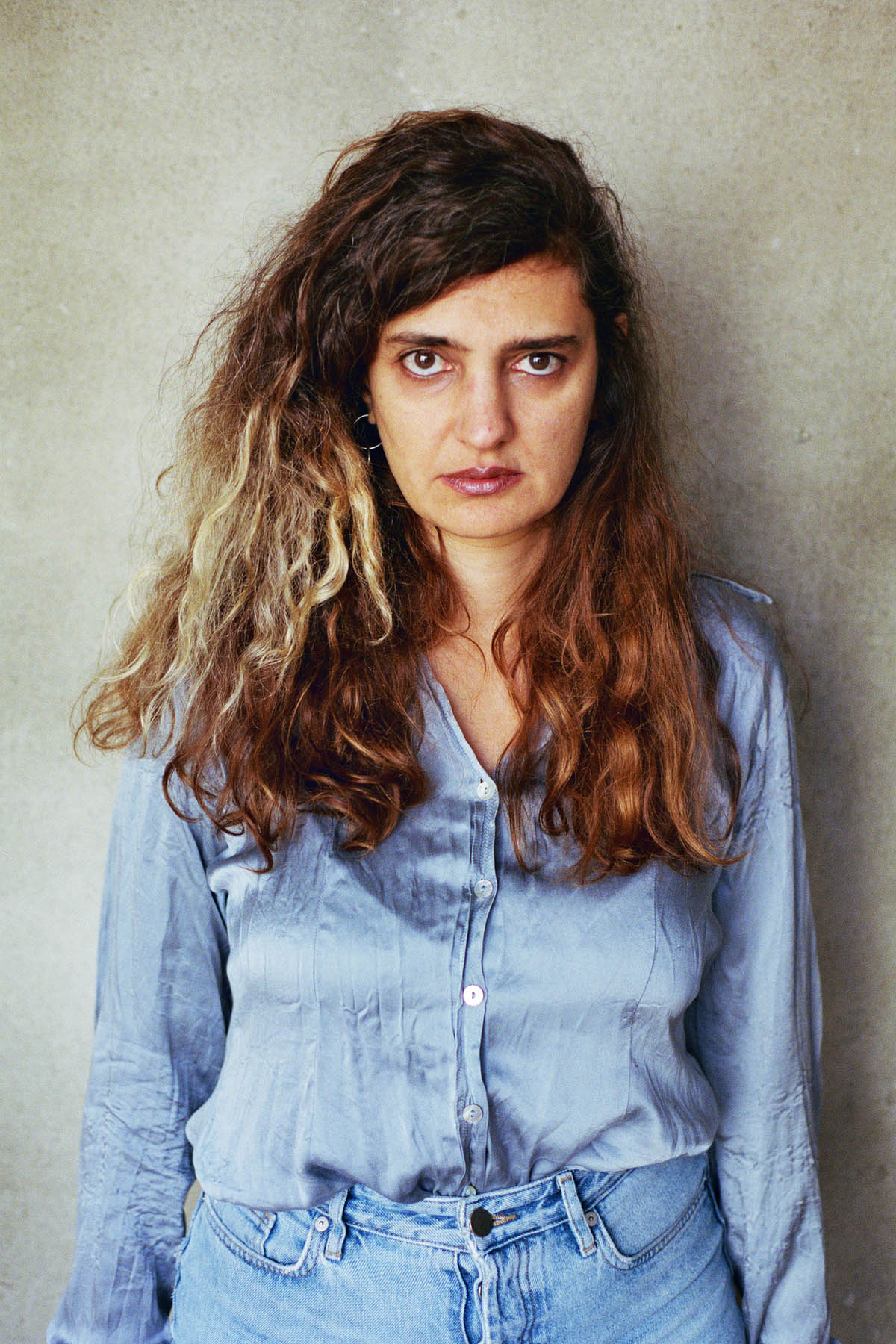
Marwa Arsanios is an artist, filmmaker, and researcher who reconsiders the politics of the mid-twentieth century from a contemporary perspective, with a particular focus on gender relations, urbanism, and industrialization. She approaches research collaboratively and seeks to work across disciplines. Arsanios has been the subject of solo exhibitions at the Beirut Art Center (2017); Hammer Museum, Los Angeles (2016); Witte de With Center for Contemporary Art, Rotterdam (2016); Kunsthalle Lissabon, Lisbon (2015); and Art in General, New York (2015). Her work has also been shown in numerous group exhibitions, including From Ear to Ear to Eye, Nottingham Contemporary, UK (2017); Home Return, MAXXI Museum, Rome (2017); Let’s Talk about the Weather, Sursock Museum, Beirut (2016); HERE AND NOW, Ludwig Museum, Cologne (2016); Thessaloniki Biennial (2015); Home Works Forum, Ashkal Alwan, Beirut (2010, 2013, 2015); Here and Elsewhere, New Museum, New York (2014); 55th Venice Biennale (2013); Meeting Points 7 – Ten Thousand Wiles and a Hundred Thousand Tricks, MHKA, Antwerp (2013); In Other Words, NGbK, Berlin (2012); and 12th Istanbul Biennial (2011), among others. Screenings of her videos have taken place at the Centre Georges Pompidou, Paris (2011, 2017); the Berlin International Film Festival (2010, 2015); and e-flux storefront, New York (2009). She was awarded the Special Prize of the Pinchuk Future Generation Art Prize (2012), nominated for the Paulo Cunha e Silva Art Prize (2017), and nominated for the Han Nefkens Foundation award (2014). She was also a fellow at Akademie Schloss Solitude, Stuttgart, Germany (2014), and Tokyo Wonder Site, Tokyo Arts and Space (2010). Furthermore, she is the co-founder of the 98weeks Research Project. Arsanios received a Master of Fine Art from the University of the Arts London (2007) and was a researcher in the Fine Art Department, Jan Van Eyck Academie, Maastricht, The Netherlands (2011–2012). She is currently a PhD candidate at the Academy of Fine Arts Vienna.