I’d felt that feeling before, during lockdown, when the music world I knew began shutting down. Sometimes, you can feel a world changing before you know exactly what comes next.
The photography work I had been doing around the galleries was becoming harder to find, and I was spending week after week sending emails into the abyss, trying to work out how to make the next thing happen. I was doing odd jobs, trying to get by, and wondering what came next. I was entering my Saturn return, and I knew I was going to have to change direction. Not long after this trip, I started my projects Peckham and Colony Room.
The day before I met Harry, I was cat-sitting for my friend Daisy Parris in the Somerset countryside, surrounded by trees and cats. I needed to get back to London to catch a flight to Vienna the following morning. The taxi to the station never came, so I called my family in the West Country, and my cousin Jimmy came to pick me up. I caught a late train back to London, went to bed, and woke up with two hours to get myself to the airport.
I was exhausted, but I was going to Vienna.
I’d lived there for a few months the year before, and somewhere along the way I’d fallen in love with the city. London had begun to feel claustrophobic. My life there was rainy, and the dark days seemed to go on forever through the winter. I’d step out of my red-brick building and cross the street as big red buses flew past. I’d climb onto one and disappear into the maze of London.
I wanted to see something new.
When I stepped off the plane, I was still carrying all of that with me. I walked through the streets, hearing different languages around me. I turned into a café on a corner, where a small queue of people were speaking German in front of me. When it was my turn, I ordered coffee and pastries, and warm chocolate croissants were handed to me in a small brown bag.
I stepped back onto the wide streets of Vienna and looked left and right before crossing. The sun was warm on my face. I stopped for a second and took it in.
I’d told artist Mafalda Figueiredo I was coming to Vienna, and I invited her to Luc Palmer’s show, which I’d travelled to Vienna to see. She said she’d come and that she was bringing her boyfriend, Harry Dean Lewis.
„You’ll love him,“ she said. „He’s Australian. He’s a brilliant musician, and he’s really funny.“
Perfect, I thought. I was excited to meet him.
When I arrived at the exhibition, there was a long introduction in German. I had done enough Duolingo to recognise „super“ and „wunderbar“, so I spent most of it quietly congratulating myself whenever I heard either word.
When it finally finished, Harry introduced himself to me in a great Australian accent.
Wow, this guy is fun, I thought.
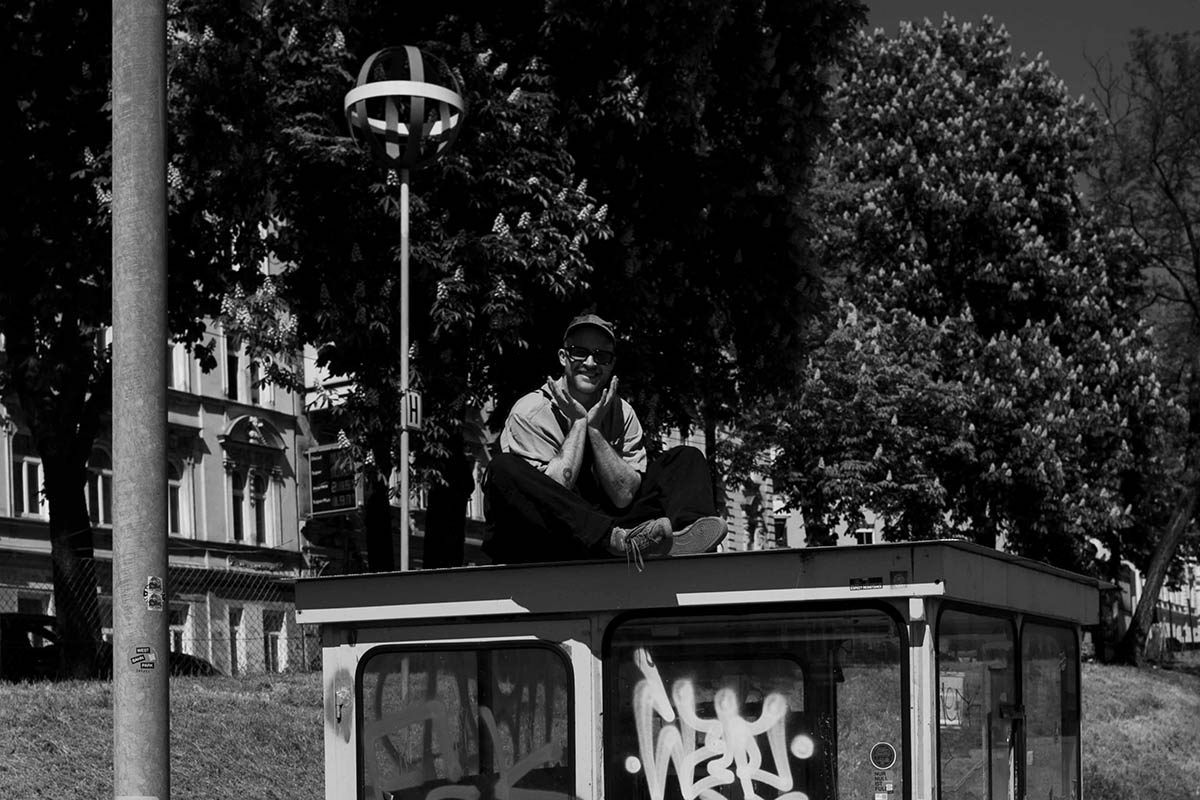
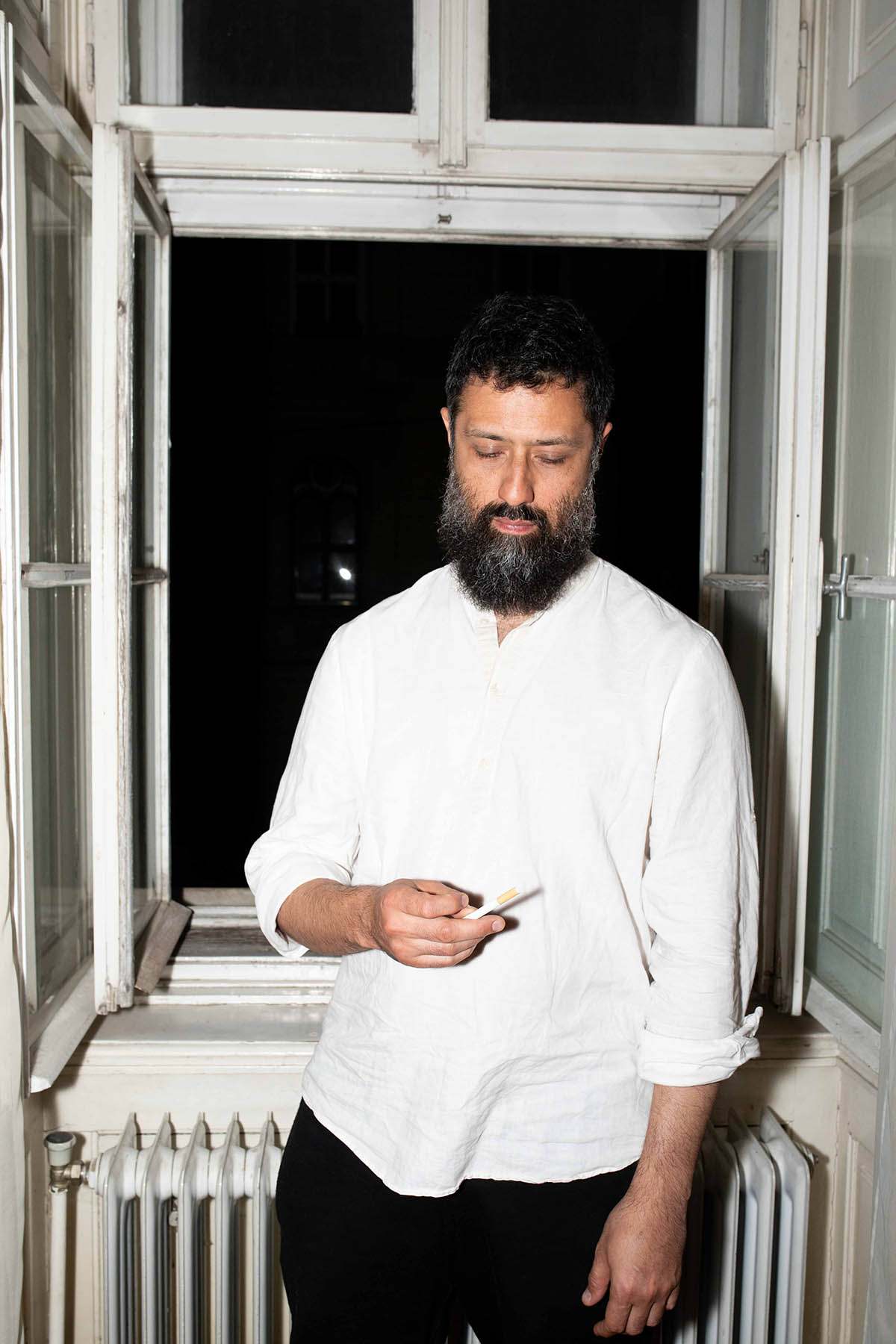
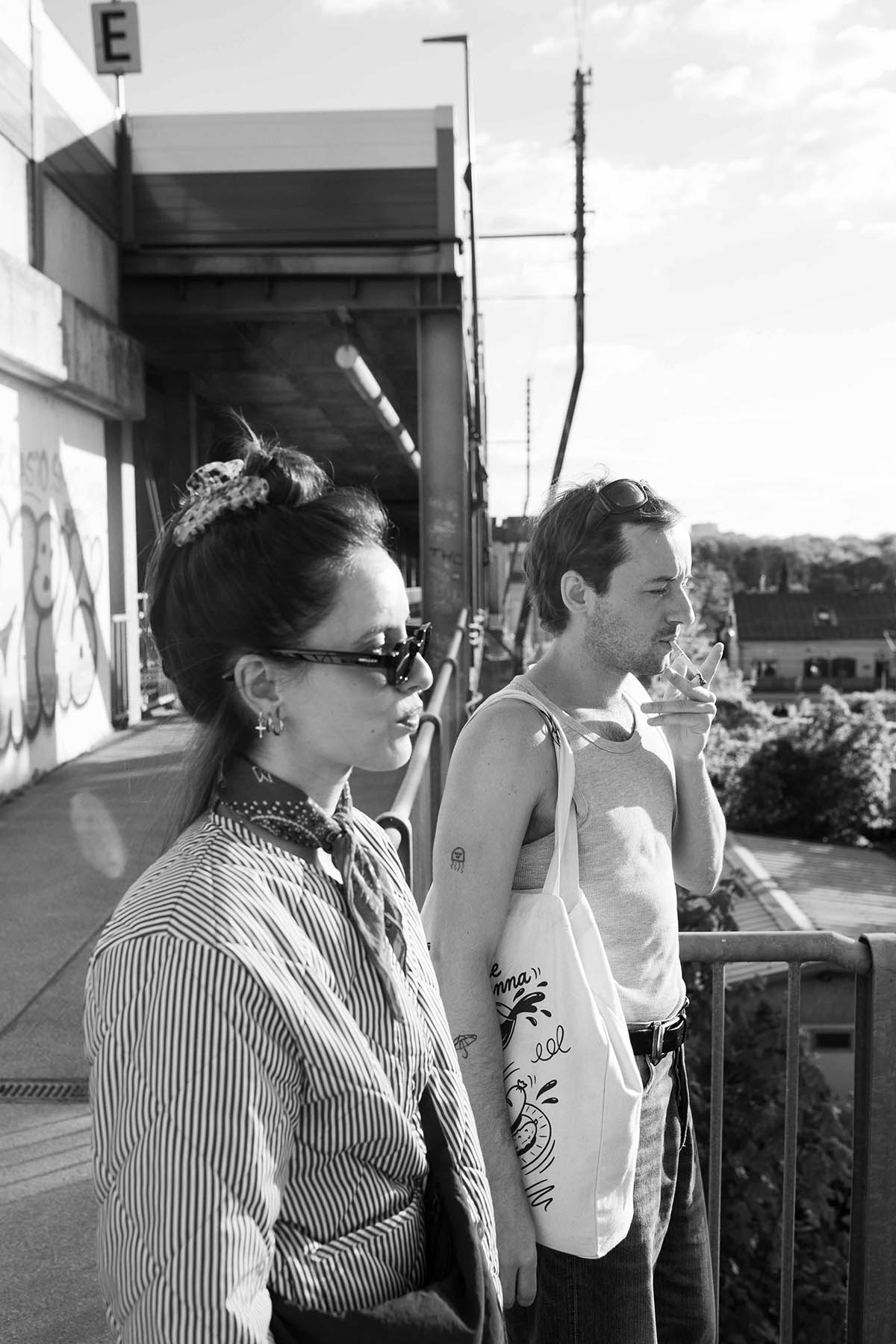
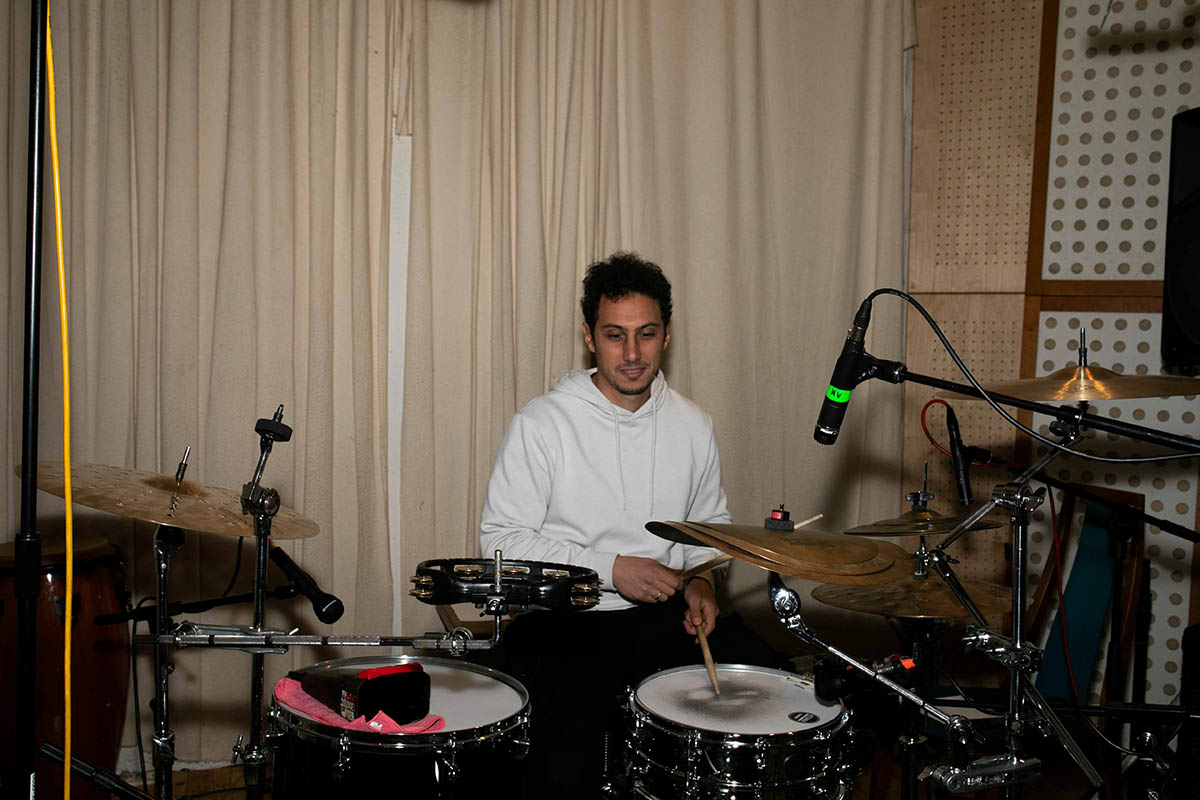
A year later, in April 2026, I came back to Vienna with my camera. This time, I was keen to explore the city’s music scene, and Harry became my guide. For a week, he showed me the people and places around him while I photographed his world.
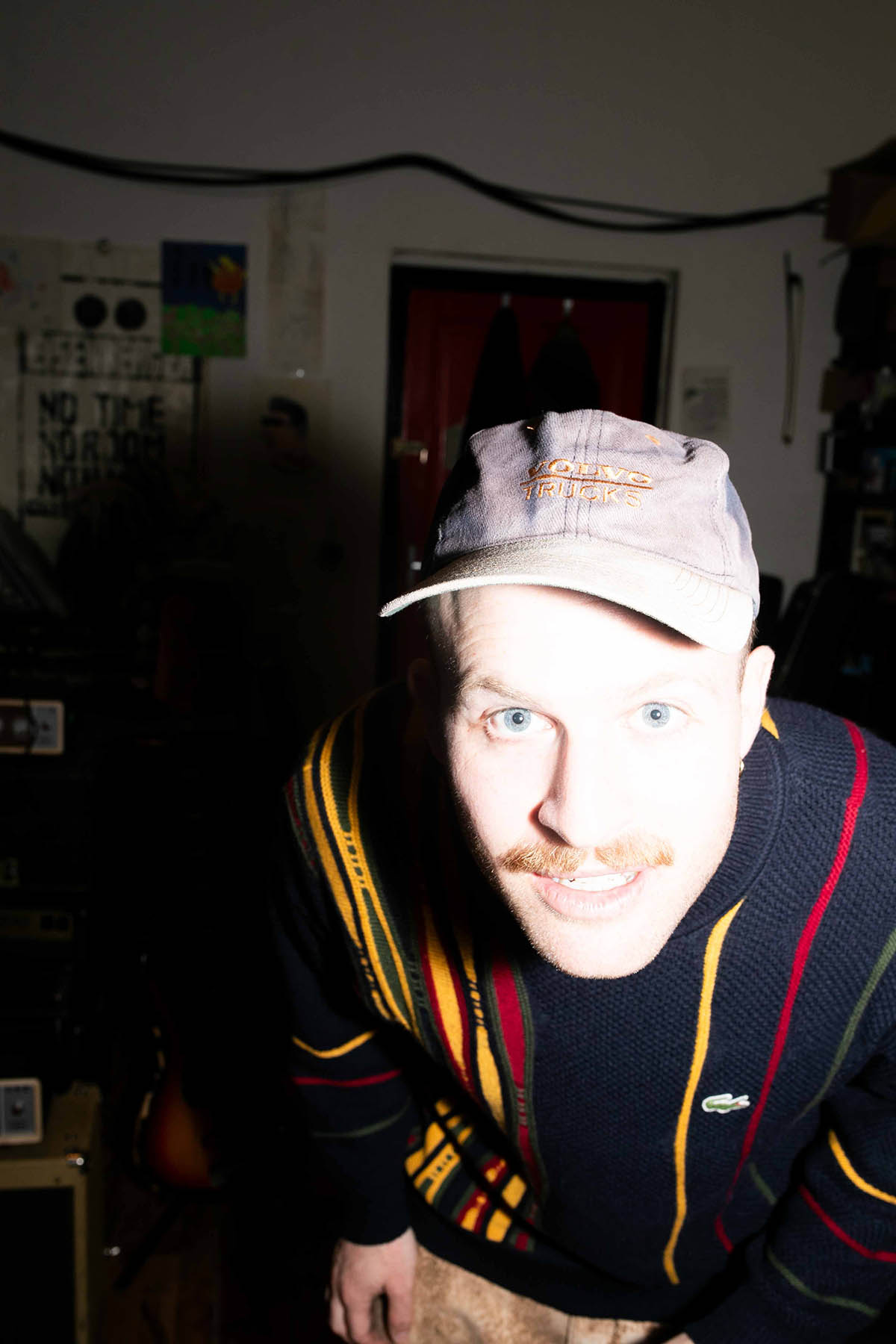
So is the conversation with Harry Dean Lewis.
Where did you grow up in Australia, and what was your childhood like?
I was born in Canberra and grew up surrounded by a lot of nature. My family was all from Sydney, but Dad got a job as an investigative journalist, taking us to the epicenter of the political world in Australia around my birth. I had a very free-roaming childhood and was mostly always outside. I left Canberra to finish high school in Sydney around 15, which was a cultural eye-opener. It also introduced me to Garage, Drum and Bass, EDM, and Dubstep (and everything that comes with it).
How did music first become part of your life?
Music was always part of my life in some shape or form. Both mum and dad had musical parents/backgrounds – there was a piano in the living room, and many embarrassing songs sung about us, improvised by Dad whenever people came around. Natural performer, that guy. I had piano lessons from a young age, which eventually turned into playing the drums, and then after a few years of that, I finally picked up an acoustic guitar in high school at age 12 or 13. I think that’s when the songwriting began.
When did you realise you wanted to build your life around music?
I remember having a conversation with a friend in primary school. We couldn’t have been older than 10, and I was baffled at the idea of a „regular job“; it didn’t make sense to do something that didn’t fully envelop you or that you would want to switch off after 5 pm. I think I was lucky to have people around me tell me that doing things you love is the best reason for pursuing them. It was a natural progression from there on out, and I always tried to find a lifestyle that suited making music with all my spare time. That being said, I’ve worked almost every bread-and-butter job you could imagine and was fired from almost every one of them.
What made you decide to leave Australia and move to Europe?
At 19, I’d saved a bunch of money working 2 jobs and playing shows in Sydney, so I went on a 3-month euro-adventure. The smell of the air getting off the plane instantly hit me with a realisation that this was a new world and 3 months would never be enough time to soak it all in.
Why Germany? What drew you there?
I took a train from Innsbruck to Berlin, met friends there at a festival, then got lost and went off for a night on my own. I had one of the most entertaining random adventures in that giant playground of a city. I decided then, and there I wanted to move to Berlin.
What was it like arriving in Europe and starting an entirely new life?
Organic! There was a point when my friend messaged me saying he was about to board the plane back to Australia, and I wasn’t at the airport, and I realised, „Ah, right, I think I’m not going back anytime soon“. In any case, it felt exciting that I was doing something for myself, by myself.
What eventually made you move from Germany to Austria?
The pandemic hit, and Berlin became a ghost town. My partner at the time had family in Tirol, so I went for the polar opposite of Berlin’s concrete jungle and ended up in the mountains. It was a necessary breath of fresh air, and after a few months reconnecting with songwriting, I migrated to Vienna, where I met several incredible musicians that I’m lucky to still call bandmates to this day. Shoutout to Audio.Manufaktur!
What was your first impression of Vienna?
I took it for granted when I first landed there (Before Berlin), and only after returning started to appreciate it for its utter beauty. Someone once referred to it as an Open-Air-Museum. I try to remind myself to look up as much as possible at all the insane details on all the absurdly beautiful buildings.
What made you want to stay?
It felt like a place where I could take some time to rediscover myself and my art. I met the right people at the right time and tried to go with my gut.
I’m not a musician, so I’ve always wondered. What does it actually feel like for you when you’re deep into making music? Can you describe that feeling?
Everyone SHOULD have a different answer to this: I’m not a diver, but I imagine it feels like that place of serenity when you’re looking around a ruin deep in the ocean. You connect to parts of yourself you didn’t know were there and evoke all kinds of emotions that have been lying stagnant: „Ah, cool, the kitchen of the ship, I wonder if they ate like I eat“. Like a big puzzle, but you make each piece one at a time before putting it together.
How do you know when a piece of music is finished?
It’s like breaking up; it never feels right, but you know it’s for the best.
What does Vienna give you as a musician that you didn’t have before?
A cultural hub, geographically central to so many other places, cultural support (from the government and the people), and a pace that feels human. There’s no rush, which in turn makes me more productive.
You’ve shown me a lot of the Vienna music scene. What is it actually like from the inside?
The touristic side of Vienna is quite surface-level; I think Vienna’s underground scenes are constantly on the up at the moment. Heaps of international artists and great festivals, and it’s continually building. It feels like an exciting place to have a base right now.
What do you think people outside Vienna misunderstand about its music scene?
Its diversity. I think other countries see Austria as a strictly classical scene, which isn’t true. There were some weird-ass 60s/70s/80s folk icons here that have established a surreal narrative of cabaret and songwriters. Nowadays, the city is also home to so many cultures and styles, be it North African, Latin, Jazz, or Hip Hop; you can find everything.
What made you want to learn German?
To learn the culture is to learn the language. I was 19 when I landed in German-speaking countries, so it was only natural to understand what on earth they were all yapping about all the time.
What does „home“ mean to you now that you have spent so much time living away from Australia?
That’s a feeling that grows in many directions. I’ve definitely still got my roots in Australia, and the older I get, the more I realise how much I love that country. The people and nature are 2nd to none, and the informality of everyday conversations alone could keep you entertained for a lifetime. I now live in Vienna with a great community of people whom I couldn’t imagine living without either. I guess we need to look at home as a fluid thing. Maybe break down the constructs of belonging to a certain country or place and try to be connected and a part wherever we are.
You record music from your home and often have musicians coming through to work with you. What’s that like?
Good excuse to tidy up the flat. I do try to get out to work in other studios too and have the privilege of access to some great spaces. Being too close to my bed can also be a bit dangerous when the afternoon dip kicks in.
What made you start your own record label, House of Larrikin?
It started as a place for me to release multiple projects and productions without being tied to anyone else’s opinions, and then quickly turned into a collective mentality. It goes back to question 17. And wanting to build a family and community over here that felt like home. Most music business people very rarely have any connection to the artistic process themselves and quite overlook the wants of the artist. Normally, it’s to be heard and respected fairly.
What does having your label allow you to do that simply being a musician doesn’t?
It’s allowed me to work with other artists in a non-creative way and build the surrounding community cumulatively. Furthermore, there are new cultural grants and revenue streams available only to labels, so if anyone is considering setting it up. DO IT! You maintain your master rights, and it feels like paying off a mortgage rather than renting an apartment from some ghost.
What do you think makes a good music community, and what makes Vienna’s special?
Comradery. Openness to help, share ideas, listen, and further the conversation.
What’s the hardest part of being a musician?
Not knowing what’s coming next. Like every aspect of it seems pretty momentary, every show different from the last, every session a complete gamble of the arts. Keeps it interesting but also keeps it pretty on edge. That’s also obviously a massive part of the excitement. I think I’m most comfortable in that discomfort somehow. Did I contradict myself here?
What does music give you that nothing else does?
Some weird form of abstract clarity. It makes sense of nonsensical things. It’s satisfying to me to create/blend together new emotions or vibes and then step back and look at them as if they were always there.
I think you could be a comedian if you weren’t a musician. You’re a very funny man. What do you think you would be doing with your life if music had never taken your fancy?
I actually won a free beer at a comedy night for telling the best joke (as an audience member). Came up wth it on the spot, too. I got the beer and thought to myself: „Well, that’s about as far as I’ll take that professionally“.
What do you want people to feel when they listen to your music?
Inspired, Self-reflective, confused.
What are you most excited about in your life right now?
I’m enjoying living at the moment. Day by day. I spent many years chasing a rabbit, and now I’m happy having a good night’s sleep, getting into the studio, and playing shows with friends.
What do you want to build over the coming years?
A cult. Subscription fee basis ideally. Or a DIY community of like-minded artists.
What’s something about your life in Vienna that you never expected when you first moved to Europe?
Comparing certain lakes to the Maldives.
If you could go back to the moment before you left Australia, what would you tell yourself?
Ration your money, kid. 10k will disappear quicker than you think.
Harry Dean Lewis is an Australian-born singer-songwriter and producer currently based in Vienna, Austria. After refining his songwriting and musical voice in Berlin, he relocated to Vienna, where he has since become an active part of the local and international indie/pop music scenes.
Harry Dean Lewis – www.harrydeanlewis.com, www.instagram.com/harrydeanlewis/
Brynley Odu Davies is a London-based photographer working across portraiture, documentary, and cultural storytelling. His work centres on British identity — from artists’ studios and music venues to the streets of Peckham — building a long-term archive of the people and places that shape the country today.
Brynley Odu Davies – www.brynleyodudavies.com, www.instagram.com/brynley.odu.davies/