Daniel Bürkner, you’re an art historian and head of the team Public Art München. Could you walk us through the Focus Year 2026 format as part of the Public Art München initiative: what it is, where it came from, and what this year’s edition looks like?
Daniel Bürkner: In 2013, the Munich Department of Arts and Culture initiated a festival to spark a new, bold debate about the meaning and identity of urban space in Munich. That same year, the Scandinavian artist duo Elmgreen & Dragset were invited to curate it. This also led to the Billboard on Lenbachplatz.
In 2018, Joanna Warsza took over as artistic director and curator. Under her leadership, the three-month festival ran under the title Game Changers, a format in which she invited international artists and had full artistic freedom over the programme. It was in this context that she coined the term Public Art Munich; we later adapted the title to Public Art München to encompass the full range of activities.
Public Art München is a programme run by Munich’s Department of Arts and Culture, functioning as a framework for the individual projects. We work together with artists and curators to realise art in public space. This is the history that led to the Focus Year, which in 2026 once again places a particular emphasis on art in public space.
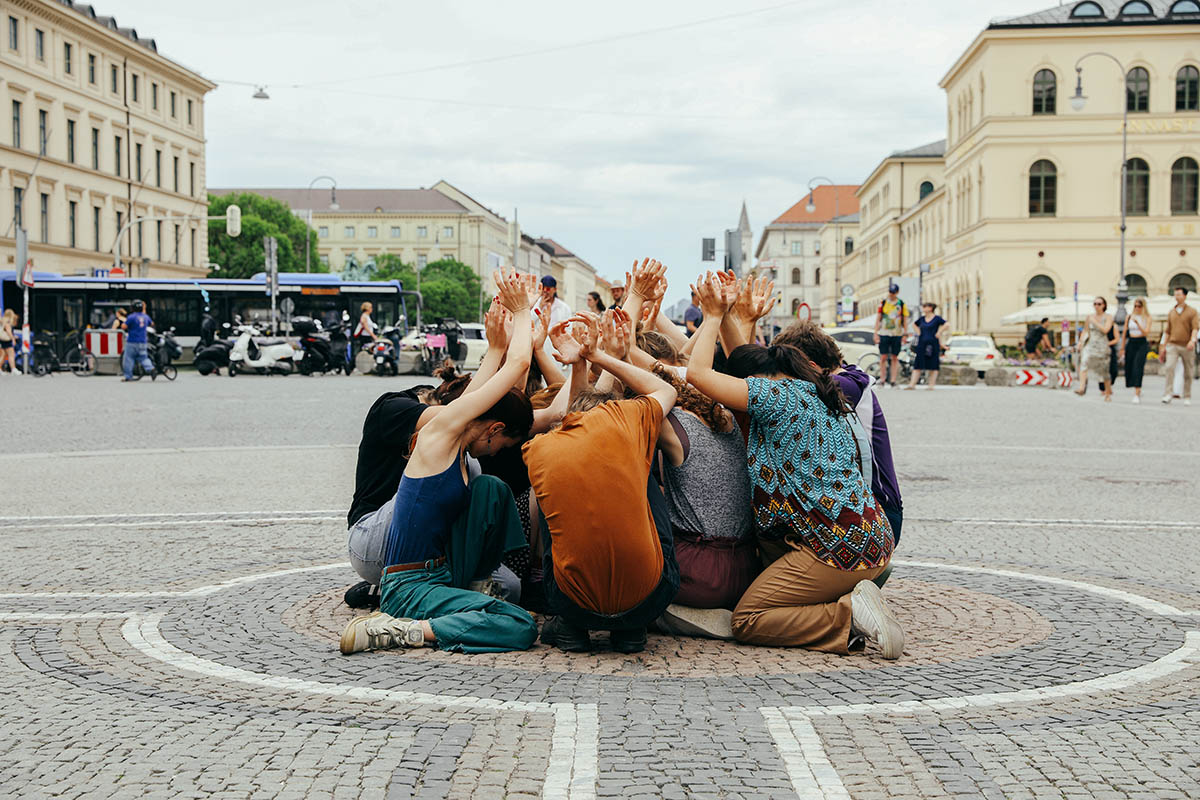
Lena von Geyso: Focus Year is kept thematically open, exploring different aspects of public space through a range of formats: larger international and local artworks, performative excursions across Munich led by local artists, and a collaboration with the performance class of Alexandra Pirici at the Academy of Fine Arts Munich, whose students created six performances for Munich’s public areas, exploring the city’s invisible structures. Besides that, Focus Year opened with a performative intervention by Justin F. Kennedy.
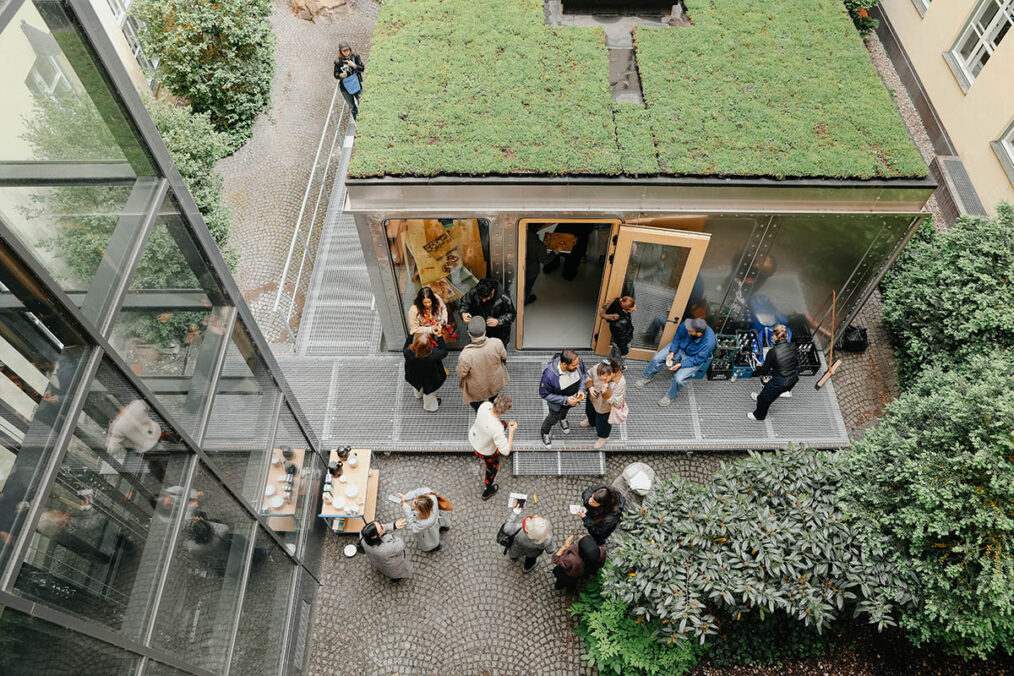
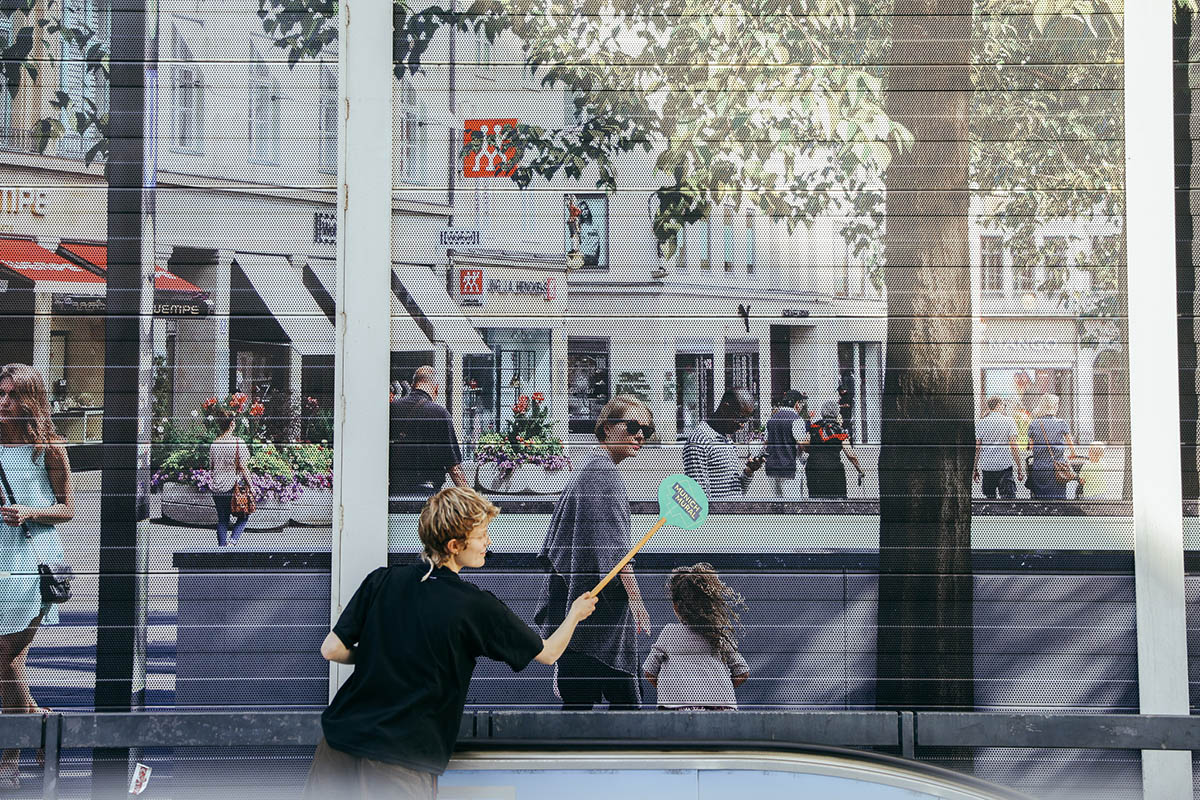
Additionally, for two months, the Artothek Pavilion in the courtyard at Burgstraße 4 became a temporary meeting point, programmed by the artists with extended formats. And then there’s the Billboard, installed in 2013 at Lenbachplatz: in 2026, after about 13 years, it’s moving into its next chapter: Billboard goes Neuperlach.
How is the format Focus Year 2026 different from previous programs?
Daniel Bürkner: We deliberately chose not to set out a curatorial narrative or theme and then invite artists to work with it. Instead, it is the artists who develop the questions. Our role is to accompany them throughout: to create the conditions for their projects, to keep the process transparent, and to make room for the different articulations and narratives that emerge.
Lena von Geyso: This is why the projects were so diverse, in topics as much as in formats: from activism in sport to negotiation in public pools, from the origins of language and communication to Munich’s queer history. That diversity is essential to us.
The themes cover a wide range: political activism, sports, sign language, performance, and expression. As a result, many people feel connected to the programme.
Daniel Bürkner: Yes, exactly. Before a project can be realised, it passes through a process involving a range of people. Major projects are reviewed by a programme advisory board made up in equal parts of art experts and members of the city council. The decision-making takes many steps, and I think the programme is better for it.
Lena von Geyso: It does, though it naturally also entails the compromises inherent to such processes. That’s why it’s our responsibility to keep the process as open and flexible as possible, creating the conditions rather than determining the outcome.
How is the Public Art München funded?
Daniel Bürkner: The City of Munich invests 1.5 percent of its municipal construction budget in public art projects every year. Half of that goes to QUIVID, the city’s programme for permanent art in architecture, which has its jury. The other half is devoted to our programme, which we use for temporary work. This model has existed since 2009.
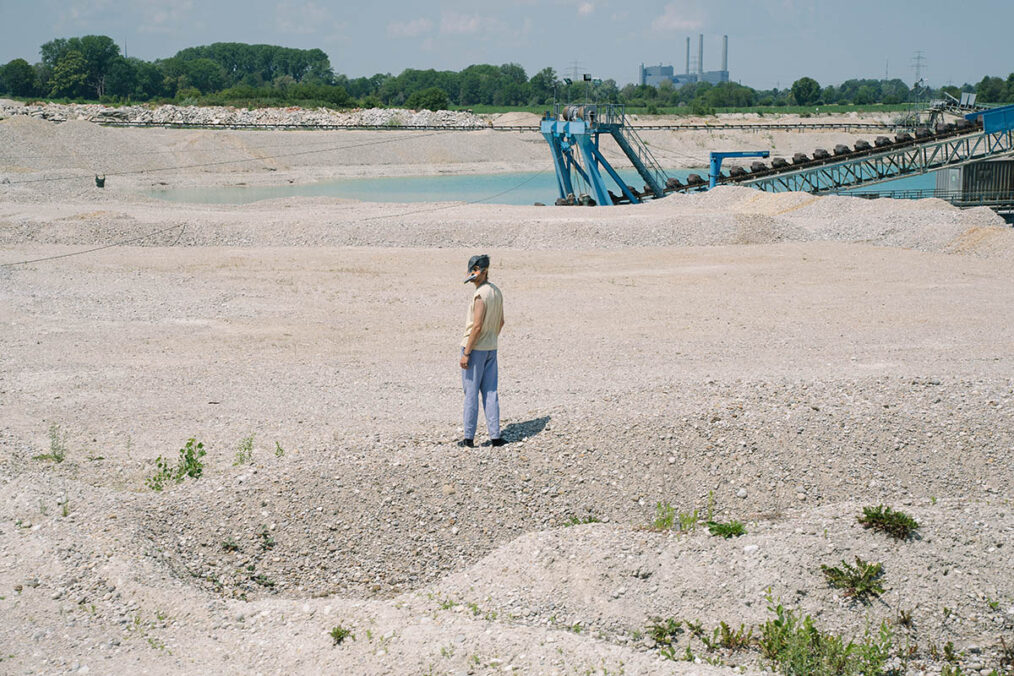
What does working with a temporary format allow you to do that a permanent model wouldn’t?
Daniel Bürkner: If you look at public art from the 1980s and ’90s, it was predominantly sculpture in public space — objects to be looked at, much as in an exhibition space. We don’t work like that anymore; it’s much more about process-based projects. That includes working directly with a site, with those who operate there and those who move through it.
The range of artistic forms is wide, from analog to digital. Another advantage is that we can take a long view and develop projects over an extended period. Atelier Bow-Wow, for example, started a few years ago with only a rough idea of what they wanted to build: a large-scale project along a stretch of river. It took them about two and a half years of conversations with everyone connected to that place before the work found its final form.
We embrace participation: when you work in public space, you owe respect to what and who you’re working with. It’s a shared space, and the public should be part of it. One welcome effect is that mediation isn’t something added on afterwards — it is built into the work itself, because people are already part of the process.
That’s one of the real benefits of working temporarily: it lets us stay in dialogue with the city and engage with social questions in a more grounded way. Not that we can solve them, but we can address them and open up conversations that wouldn’t otherwise take place.
Lena von Geyso: And not every work has to speak to everybody, but across the programme there should be different points of entry.
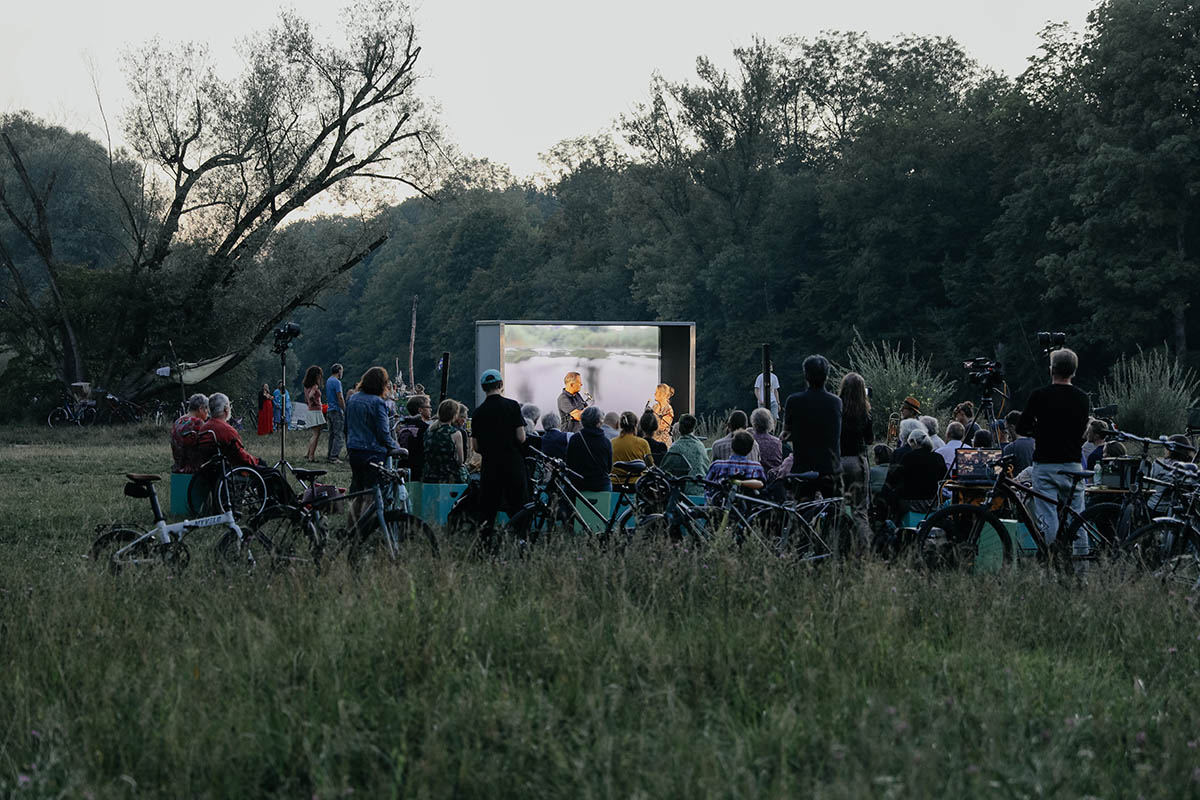
Lena von Geyso, you are Chairwoman and a board member of Kunstraum München; you are a curator and in charge of the international projects at Public Art München. What were you actually looking for in the application?
Lena von Geyso: Yes, Kunstvereine are a context I’m closely involved with, curatorially as well as structurally. Working with Public Art München was never a matter of leaving one world for another — I still work in both. Who is making decisions, who has access to which spaces and resources, and how can free spaces be protected? These are questions public space itself raises, and ones we have to turn on ourselves: what responsibility do we carry within these structures?
That feeds into how we work on the programme. The projects should have a strong site connection, and we always ask ourselves: what does this work mean in an institutional context, and what does it mean in public space? That’s where it gets interesting. What’s particular about art in public space is that the audience hasn’t chosen to encounter it. Shaping that encounter, making it a meaningful experience, is one of the central aspects of our work.
With the public art projects, art is, in a sense, brought to people; the public is confronted with it. How do you go about selecting locations?
Daniel Bürkner: That starts with the artists. Whether through open calls or invited competitions, the artists propose where something should happen, and we always tell them: the city is yours. That’s a freedom, but also a challenge — working out where and how. Over the course of it, we can nudge them toward certain directions and sometimes steer them away from others, because some locations are simply impossible to work with. That’s where our practical, on-the-ground knowledge comes in: knowing what’s actually feasible, socially as well as logistically.
Site specificity is not only related to the choice of site but also to the choice of form. This year in particular, we’ve had a lot of performative work, and I think that’s partly because public space itself is difficult to work with in terms of permits. If we take „site specificity“ seriously, we also have to accept that the whole city is administratively difficult terrain. That’s part of why many artists now work performatively: it is often the more workable path, and it spares them half a year spent securing a permit for a permanent installation in a contested space, among all the parties who do or don’t want to be seen there.
Lena von Geyso: Every project ends up building a small institution around itself — its own structures, its own network — because in public space there is no institutional framework to fall back on.
Daniel Bürkner: In public space, a project may pass through twenty different desks, each with its perspective, before anything can happen. In a private space, a single „yes“ is usually enough, one person’s approval, and the work exists. The friction of these democratic processes is worth the effort: they tend to improve the work, not by grinding it down into compromise, but almost despite themselves.
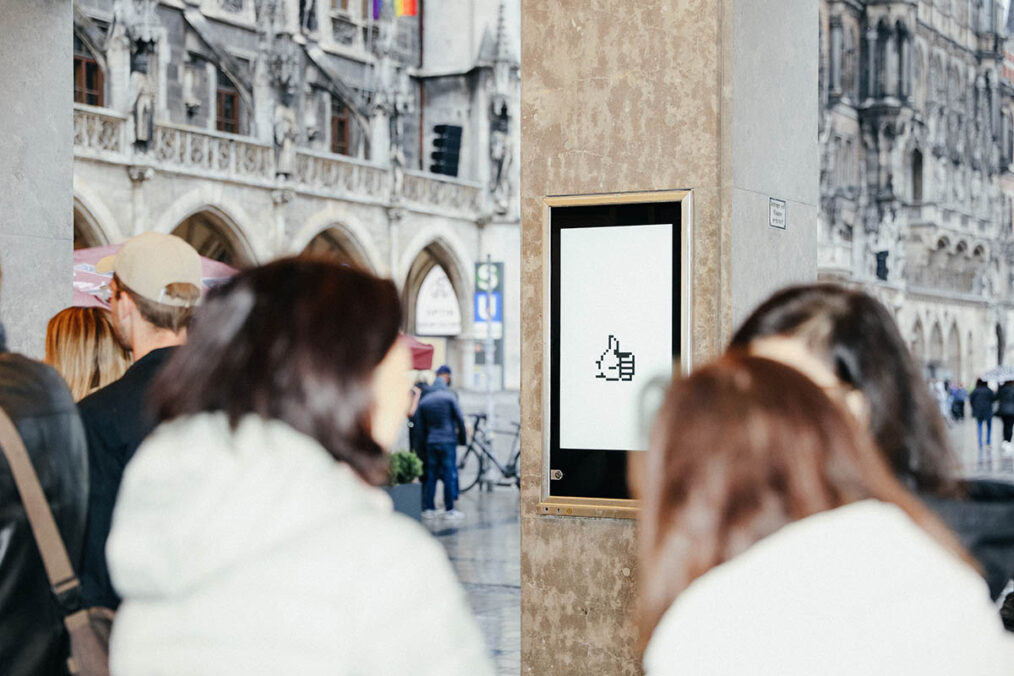
ABC (Always Be Communicating), a project in cooperation with the Gehörlosenverband München und Umland e. V. (Deaf Association of Munich and Surrounding Area) by the artist Thomas Mader & Christine Sun Kim, is about the development of American Sign Language on eleven monitors in the form of abstract animations. It’s in quite a prominent place.
Lena von Geyso: It’s important to think about where the artwork can actually stand, physically and conceptually. Choosing a site is never only a practical question. The site is part of what the work becomes, and duration matters just as much: Passage is more of a permanent format, so the works function differently there.
Most people assume there is one universal sign language. ABC starts exactly there: it traces the history of American Sign Language. Sign languages developed independently in different places, with their histories, and Christine Sun Kim and Thomas Mader followed that development. For each letter of the alphabet, they selected a word from an etymological dictionary and turned it into an abstract animation
The guided tours are not an accompanying educational programme, but part of the work itself. Developed with the Museum Signers, a Munich-based programme in which art mediators from the Deaf community lead tours through exhibitions, the tours are held in German Sign Language. Here you can see what the different points of entry actually mean: some pass by and see abstract animations; others bring the history the work refers to. Though everybody encounters it in the same place.
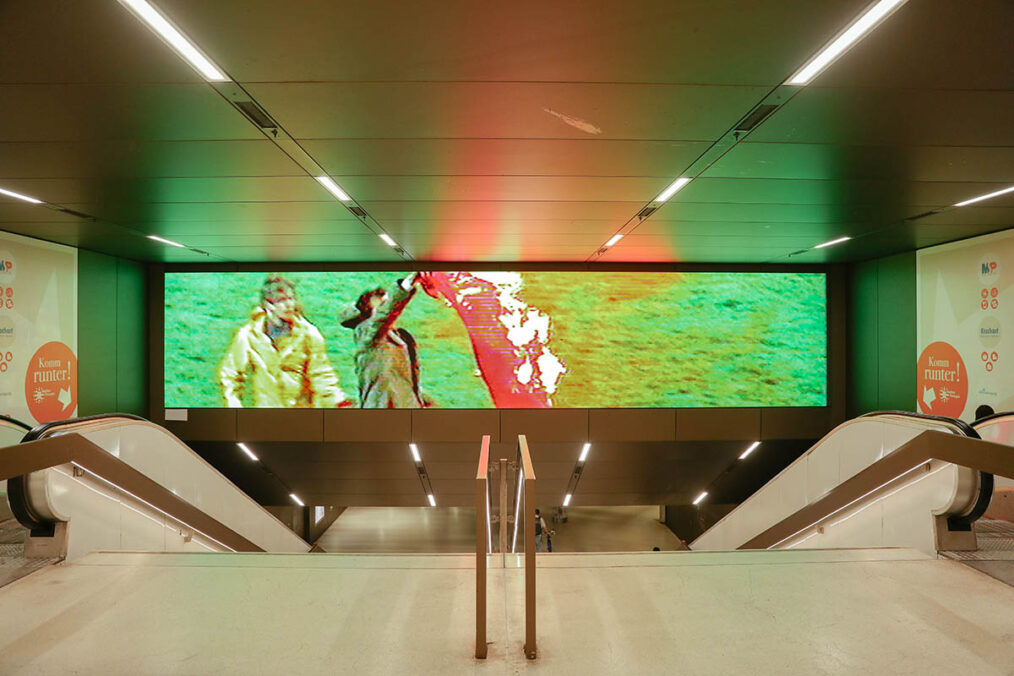
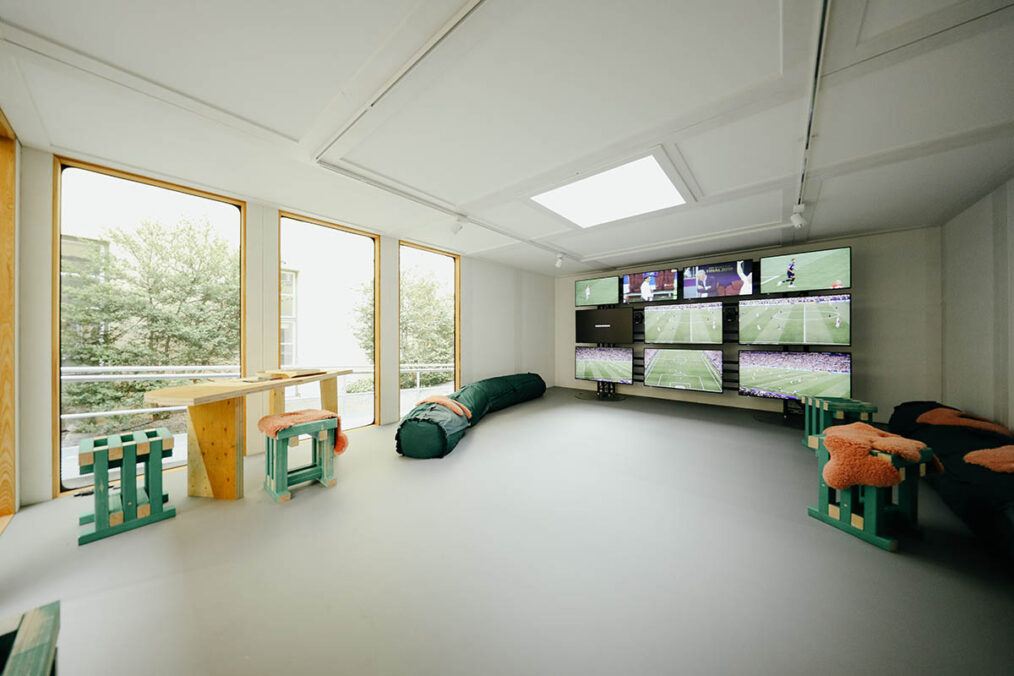
Sofia Dona’s Pitch Invaders, for example, took another route. While ABC uses a format with its infrastructure, hers was shown in two ways: as a ten-channel video installation in the pavilion, and on the giant screen in the underpass at Stachus at the start of the World Cup.
She assembled archival footage from FIFA and the Bundesliga that has never or rarely been seen, material recorded by match cameras but rarely included in live broadcasts. It documents politically motivated pitch invasions from the 1960s to the present, and it focuses as much on the interruption itself as on the reactions of players, coaches, security staff, and the audience. Broadcasters have long been instructed to keep pitch invaders out of the frame, using wide shots or cuts to the sidelines. What comes back into view are interventions against homophobic laws, climate injustice, excessive policing, and femicides, among others.
In the pavilion, the ten channels make the camera work itself visible: the sightlines, the cuts, the decisions about where to look. At Stachus, the footage interrupts the ordinary flow of the underpass. The images become pitch invaders themselves.
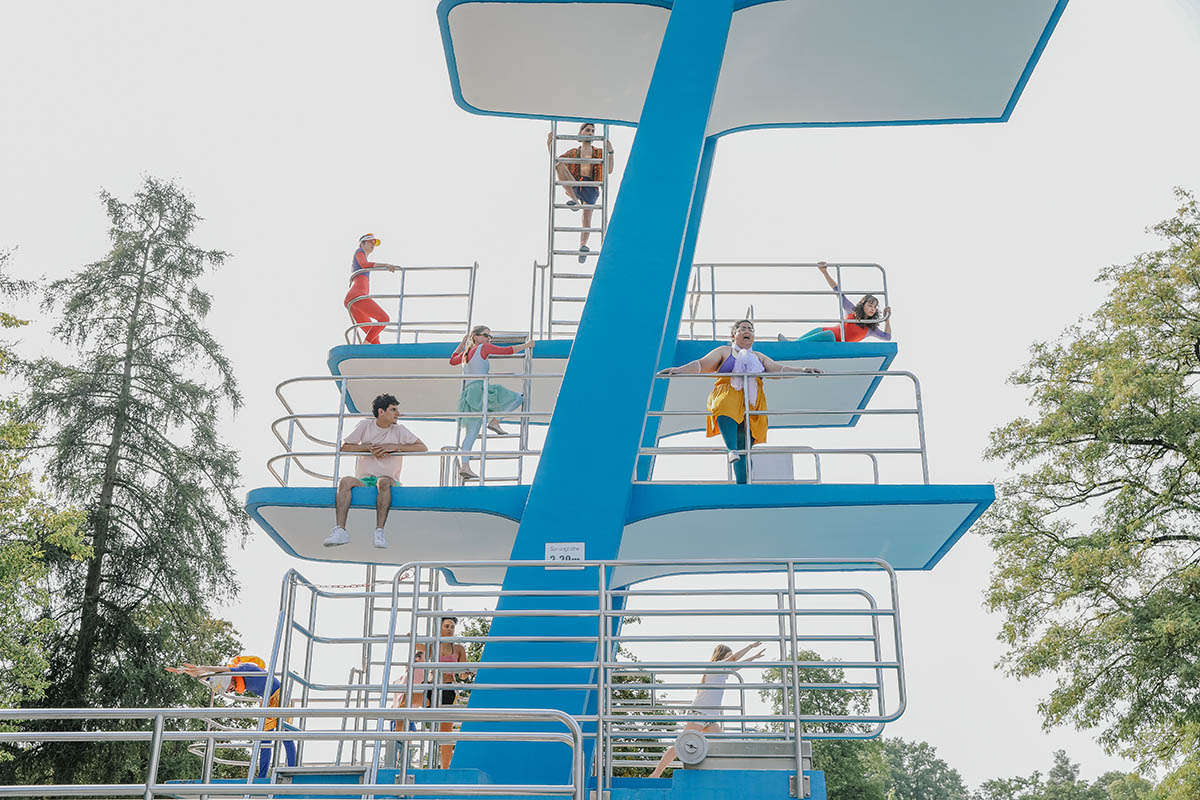
Christiane Huber’s project POOL PEOPLE was displayed at the public pool at Michaelibad, with a few programme points, such as performances and workshops.
Lena von Geyso: Public swimming pools are sites of body politics and negotiation — who is present, what conflicts arise, how the space shifts socially. Christiane Huber took that as the starting point for POOL PEOPLE, a project in three parts: a performance, an underwater sound installation, and a pool party. She spent extended time at the pool herself over the course of the project, becoming part of the rhythms of the place. There were workshops on synchronized swimming and high diving, and regulars took ownership of parts of the project — a small community formed that fed back into the work. The pool was not turned into a stage; it already was one. The work joined what was happening there rather than arriving with its own script.
Are there also many projects centered on collective memory?
Daniel Bürkner: This involves not only our team at Public Art München, but also close cooperation with Public History — colleagues whose expertise lies in historical continuities, cultures of remembrance and community-based work. These are the projects that would once have been called monuments; we prefer to speak of sites of memory in public space. The risk with new monuments is that they end up ticking a political box: a gesture of commemoration behind which nothing continues to happen. What we are working towards instead is a practice of remembrance that brings democratic knowledge and a living engagement with the past into everyday life. All of these projects are built on participation and activation. One example is a memorial we have been developing over several years, addressing all groups persecuted under National Socialism. It is based on the idea that a monument only becomes visible in the city through people actively engaging with memory.
The memorial depends on participation; the names and biographies of those affected must be researched by those who engage with it. If no one takes that on, if no one engages with the memorial as part of everyday life, then there is no memorial; only the idea of one. That is the question we are pursuing in our work on memory in more contemporary forms.
Another project involves the redesign of an existing monument dedicated to war victims, among them men who had in fact been convicted of war crimes — victims and perpetrators are conflated there. We are reworking the monument and adding a plaque that names what it leaves out, because otherwise it risks functioning as propaganda. These discussions can’t be avoided, and I don’t think they should be: they are exactly what keeps a democracy alive. Our memory projects are meant to keep that debate open rather than to settle it.
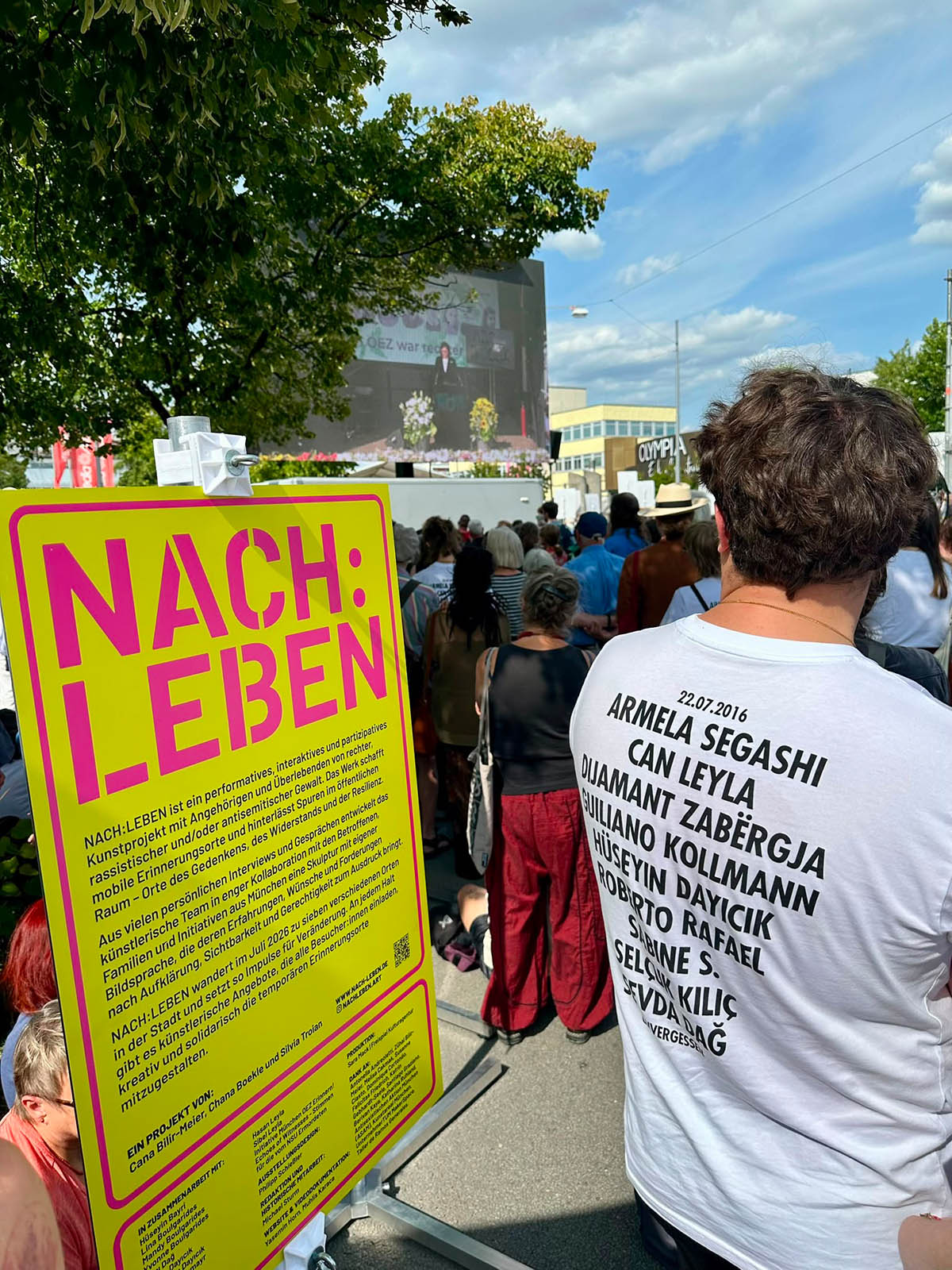
Nach:Leben. Eine Spurensuche zu Orten rechter Gewalt und Stimmen der Resilienz (After:Life. Traces of places of right-wing violence and voices of resilience) by artist Cana Bilir Meier, Chana Boekle & Silvia Troian was the memorial street-sign project developed with victims/survivors of right-wing violence from Munich. A writing workshop, a sewing workshop, and a book presentation were also part of the programme.
Daniel Bürkner: This project stems directly from our work in the field of memory culture, and it takes that approach furthest. The aim is to commemorate right-wing and racist violence in Munich, but not through a traditional monument. They worked closely with survivors and with those who had lived through these events, among them the Oktoberfest bombing of 26 September 1980, and the racist attack at the Olympia-Einkaufszentrum on 22 July 2016. Out of those conversations, they developed panels, formally close to street signs, that reflect the personalities of those who were lost. Not only images of grief, but also images of hope, holding on to the joy these people had for life before it was taken from them.
It was also a way of giving them an active voice, rather than leaving them defined solely as victims. What made it work was the way it moved through different parts of the city, engaging respectfully with the debates around memory that already exist in Munich and with the terror that actually took place here.
Lena von Geyso: Established forms of remembrance tend to speak about those affected rather than with them. This project works exactly in that gap. And because the panels move, the work doesn’t settle into one place: each location brings a different set of people into contact with it.
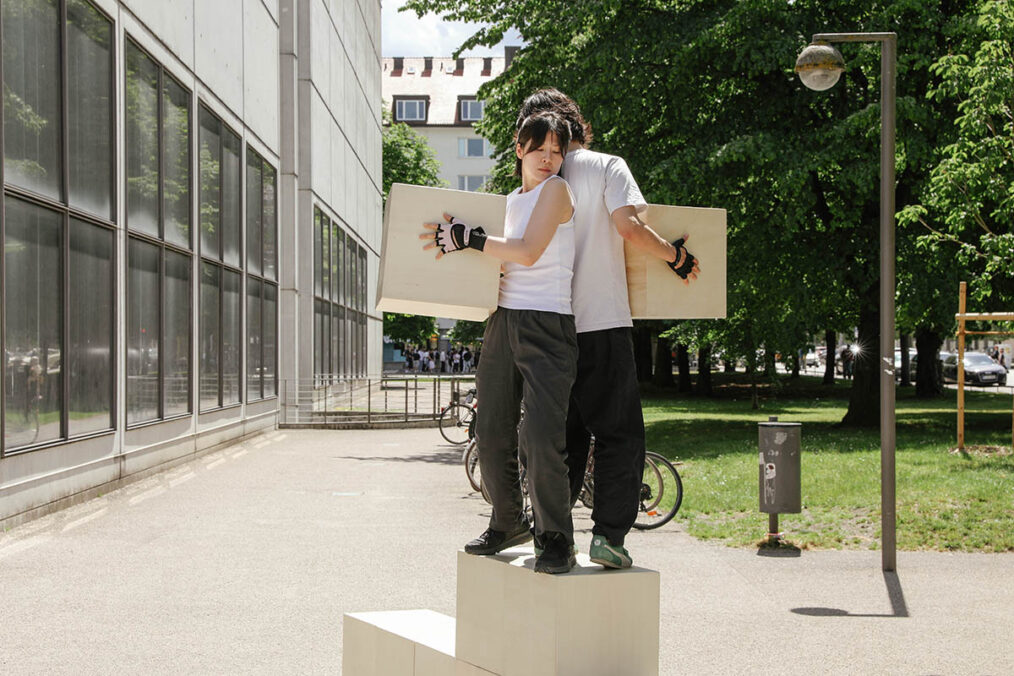
Can you tell us about the performance series Invisible City, the collaboration with the students from Alexandra Pirici’s class?
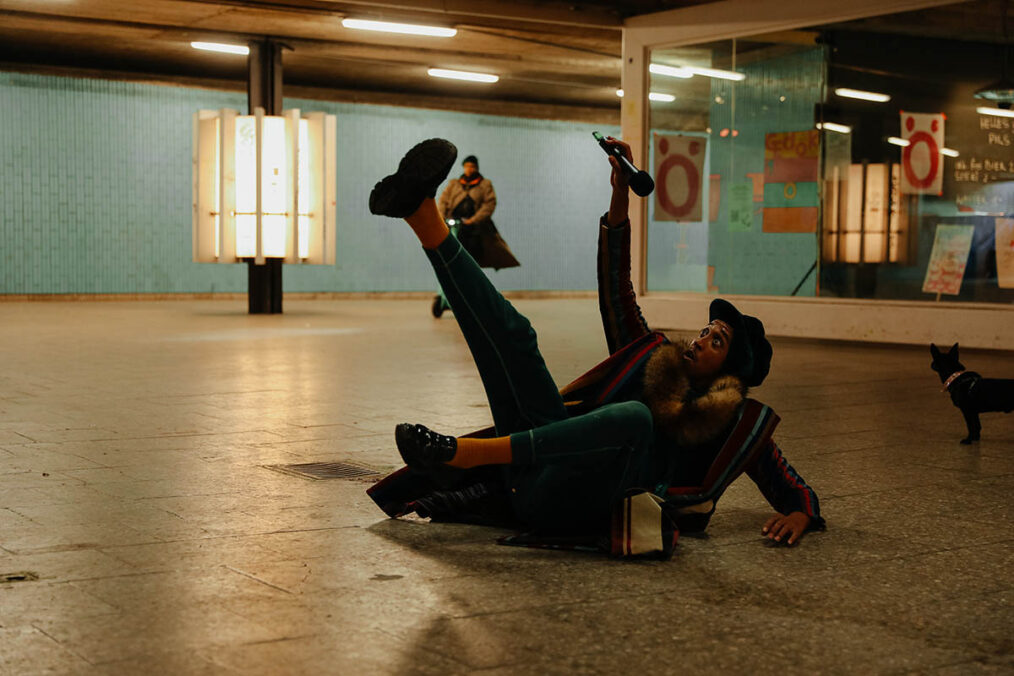
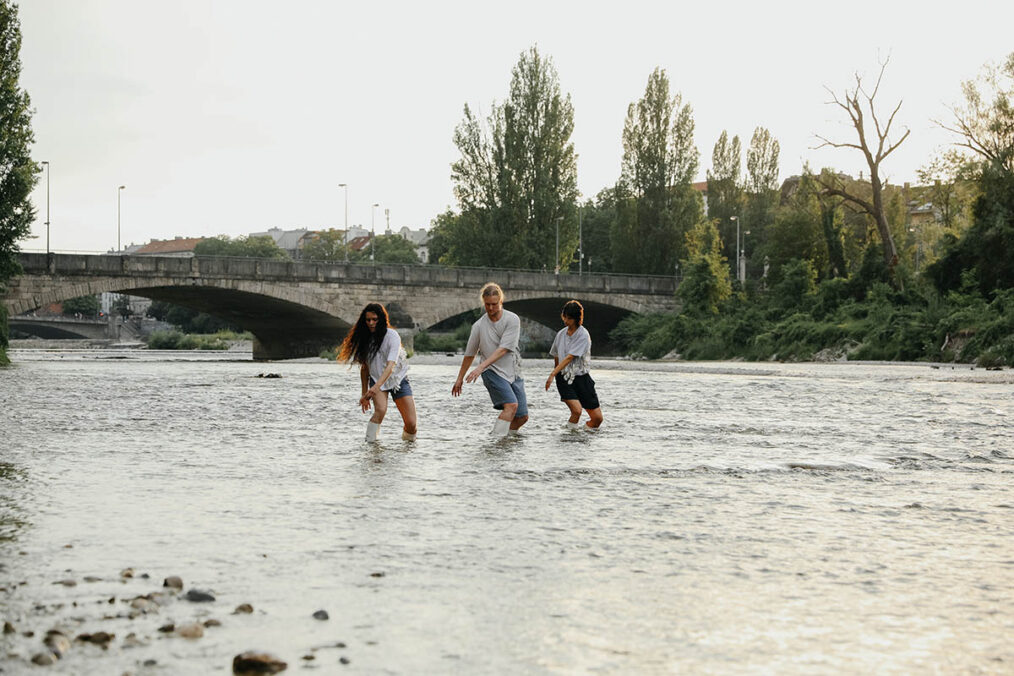
Lena von Geyso: This year’s programme brought together two very different formats. The performances developed by the students of Alexandra Pirici’s class were more tightly choreographed: along the Isar, for instance, working with the water itself, at first, you almost didn’t know what was happening, something that would appear and disappear again. Another took up the question of access in the subway: who can move where, where the barriers lie, and where movement is genuinely free.
Alongside this cooperation, six local artists developed what we call „excursions“, more open in form, less tightly choreographed, and moving through the city with an audience. One followed the queer history of Munich; another, its dance history, from hidden sites to places that no longer exist; and one turned the city into a live sound system.
I find these kinds of interventions interesting precisely for that reason: something surfaces and then gives way again. And sometimes they deliberately disturb the ordinary flow of things.
The open call for projects in 2027 is already open, but there are still exhibitions and projects taking place until December 2026, such as the project Billboard Goes Neuperlach.
Daniel Bürkner: I’m looking forward to the Billboard appearing in Neuperlach on October 1 and seeing how it interacts with people — how it comes to life. Also in October, we will present the redesigned war memorial, which is a significant work for us. And in collaboration with Public History, we will present a sculpture by Cologne-based artist Nando Nkrumah on Munich’s colonial history, the first work of its kind in Munich’s public space. It opens to the public on October 23 at the Alter Südfriedhof, as part of Sensing Sites – Dekoloniale Gedächtnissuche.
Lena von Geyso: For next year, the international projects are set, but the call for the local ones runs until November, and I’m curious to see what comes in.
Focus Year: Public Art München
May–December 2026
Submissions and Information: Calls for applications are usually issued annually, often around a central theme. Unsolicited applications are also possible here.
Find out about the program and locations here: www.publicartmuenchen.de
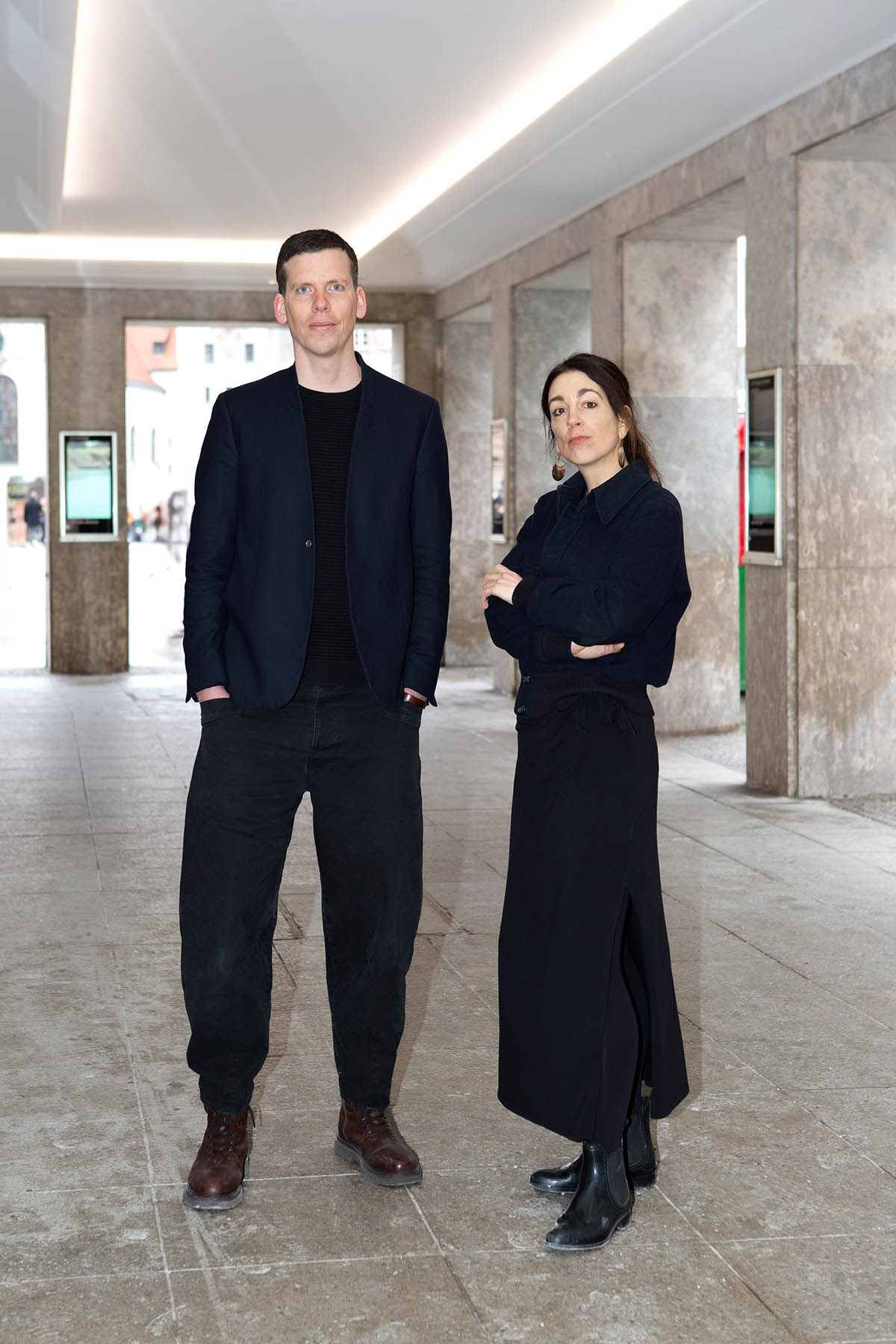
Lena von Geyso is a curator, cultural and media theorist. She completed her doctorate in Art History and in Economic and Social History at Heidelberg University. Her dissertation examined how the directors of German Kunstvereine in the 1970s shaped the professional profile of the curator and is currently being prepared for publication. She is the Chairwoman (1. Vorsitzende) of Kunstraum München and a board member of the Arbeitsgemeinschaft Deutscher Kunstvereine (ADKV).
Dr. Daniel Bürkner is a Munich-based German art historian, curator, cultural theorist, and musician. He earned his PhD from the Department of Art and Visual History at Humboldt University Berlin. His 2015 doctoral dissertation focused on photography and nuclear catastrophes, specifically examining their visual representation.