

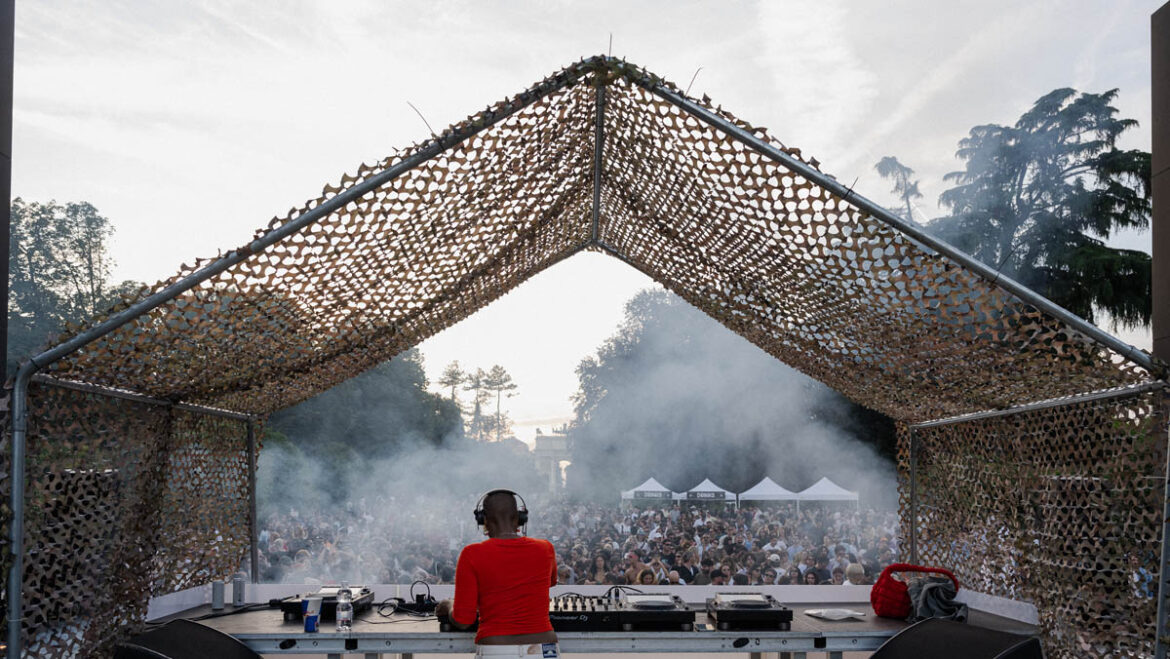
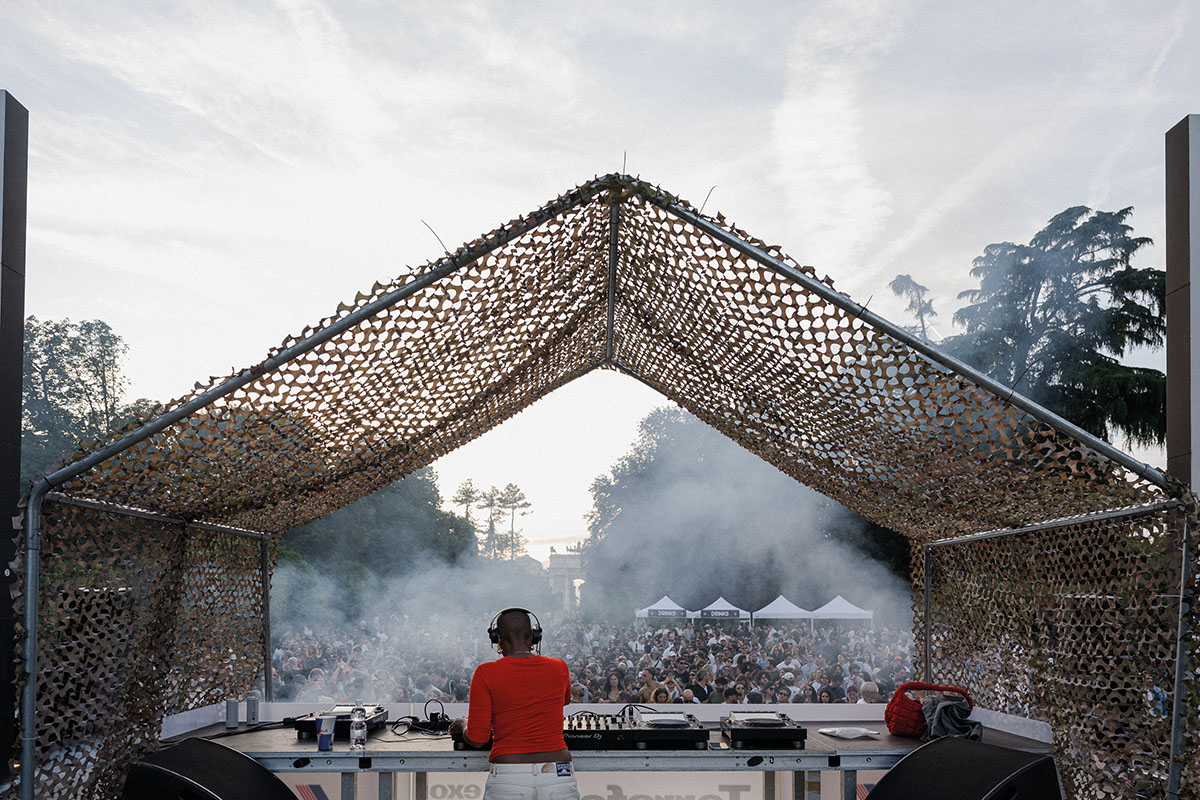
This year also marks a geographic leap: after Milan, the project expands to Rome’s Forte Antenne and Palermo’s Villa Tasca, continuing its mission to activate memory-rich sites through listening, performance, and collective transformation. We spoke with Ruggero Pietromarchi, co-founder and artistic director, about the vision behind this year’s edition.
What are the main objectives of this second edition of Terraforma Exo? What’s the connecting thread with the first one, and in what ways does it differ?
With this second edition, we want to continue the process of terraformation that began in 2024: no longer a festival understood as a container for events, but an evolving organism that grows with and within the places it inhabits. The core thread remains sound ecology, seen as a practice of conscious listening and a tool for connecting with space and with others. The difference is that we now have more tools, more awareness, and deeper roots. Terraforma Exo 2025 is a step forward toward a truly diffuse, participatory, and transformative cultural vision.
This year’s expanded program starts in Milan but also touches historically charged sites like Forte Antenne in Rome and Villa Tasca in Palermo. Why is working in such contexts important, and what are the opportunities and challenges involved? How does Terraforma Exo contribute to the cultural value of these places?
Forte Antenne and Villa Tasca are true narrative devices, places where time is layered and the landscape already holds stories. Bringing Terraforma Exo there means surfacing submerged memories and working with the echoes of the past to generate new futures. We collaborate actively with local institutions, associations, scholars, and curators. The goal is always the same: to create contexts that are not ephemeral but capable of leaving a meaningful trace. In times of ecological and social crisis, we believe culture can still build alliances, imagine alternatives, and recirculate empathy and responsibility.
How can a cultural event like Terraforma Exo respond to today’s environmental and social crises?
We live in a time where every cultural gesture carries political weight. The climate crisis is no longer an abstraction—it is a structural condition of our present. Terraforma Exo stems from a desire to rethink cultural formats through an ecological lens. We do this both practically, by reducing environmental impact, working in synergy with existing spaces, promoting conscious mobility, and symbolically: sound becomes a vehicle to express urgency, to create spaces of shared awareness, to train our sensitivity to what often remains invisible. It is also a matter of collective responsibility: we believe art can still be a tool for activating healthier relationships between people, the environment, and institutions.
How does Terraforma Exo continue to nurture and strengthen its community?
Calling it a “flexible and utopian organism” means breaking free from the logic of isolated events. Terraforma Exo infiltrates spaces, listens to them, adapts, and allows itself to be changed. Utopia, for us, is not an illusion but a space of possibility built through concrete actions. Sound is a powerful tool in this sense: it can open inner landscapes, transform perception, and break down barriers. A carefully crafted soundscape can make us feel part of an ecosystem, can restore habitability to forgotten places, and can heal.
How do you build a program that values both emerging talent and established figures in experimental music?
Terraforma Exo grows thanks to its community: a hybrid and constantly evolving ecosystem made up of attentive listeners, artists, researchers, activists, institutions, and independent spaces. We don’t see the audience as passive, but as a living body that co-creates the project with us. Our curatorial process is never top-down; it feeds on dialogue and relationships that develop before, during, and after each event. In this sense, Terraforma Exo doesn’t end with a performance; it continues through research paths, conversations with partners, workshops, and editorial formats that accompany the program. Our challenge is to remain accessible and porous, creating long-lasting and navigable connections, even between people and worlds that don’t usually meet.
The 2025 season begins in Milan. Can you tell us about some of the key projects featured in the programme?
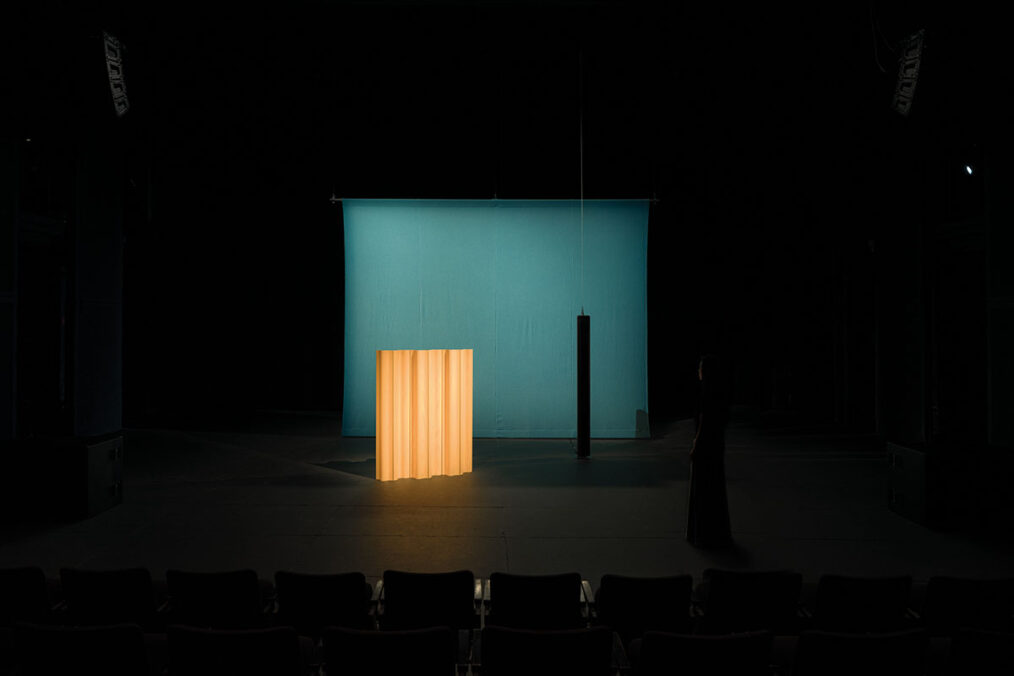
Among the most emblematic projects is FAVN by Florian Hecker, an automated performance that blurs the boundaries between perception and hallucination. Drawing from psychophysics and Mallarmé’s symbolist poetry, Hecker invites us to question the nature of listening itself: What did I hear? It’s a disorienting yet precise sonic encounter that dissects the sensory apparatus and reveals its fragilities.
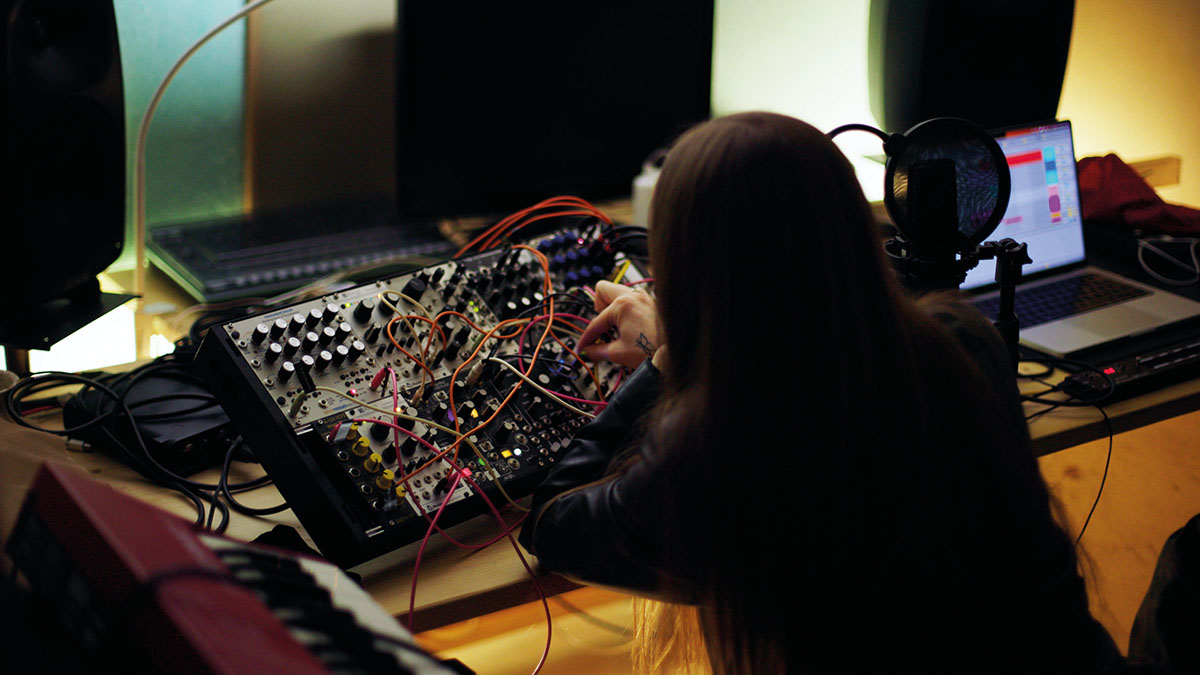
Equally emblematic is The Talk, a surreal multi-disciplinary performance by Heith, James K, and researcher Günseli Yalcinkaya, with the set design by Andrea Belosi. Set in a timeless dimension and inspired by the Antikythera mechanism, the first known analog computer, this A/V piece opens portals through hypnotic soundscapes and speculative storytelling. It’s a meditation on how technology shapes our perception of truth, time, and fiction.
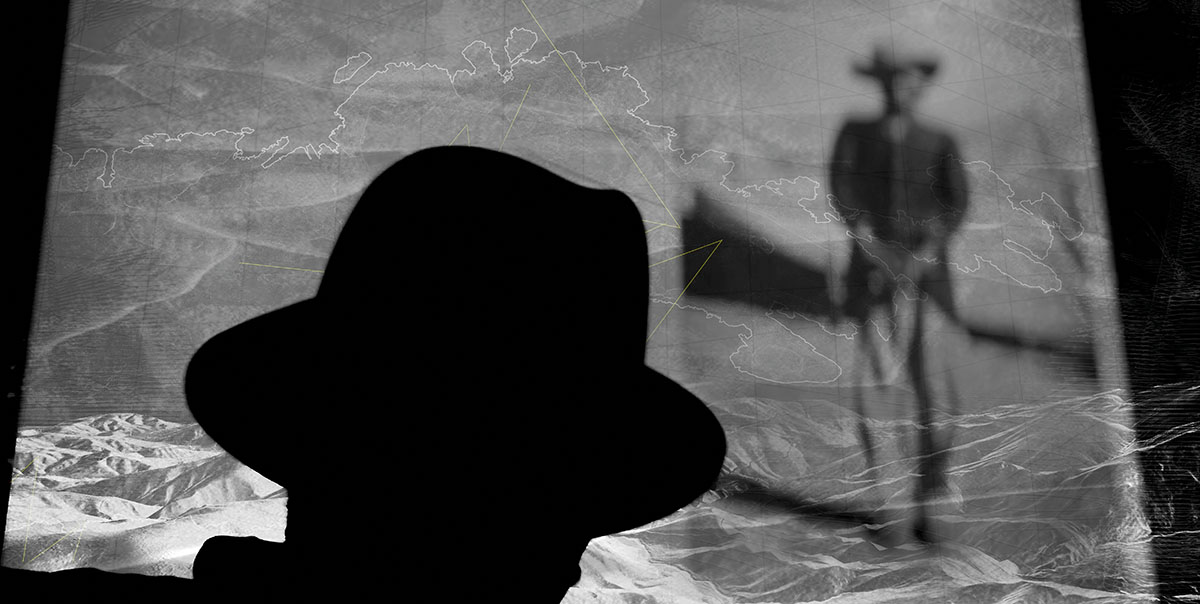
We also present The Drum and the Bird by Bill Kouligas and Forensics, born from research by Forensic Architecture. This multi-sensory work reflects on colonial amnesia, bringing to life the voices of landscapes marked by violence and exploitation. Through generative audio and spatial modeling, it transforms the environment into a living archive and urges us to listen to what history tried to silence.
These performances embody what Terraforma Exo stands for: listening as a political act, as memory work, and as a tool for constructing new forms of coexistence.
Alongside these flagship works, the Milan programme includes Eureka! by Lorenzo Senni, a retrospective of his mix-based investigations; Contemporary Oscillations, a tribute to the RAI Studio of Musical Phonology at Castello Sforzesco; a large open-air event curated with Hundebiss at Teatro Continuo; and a club night at Teatro Principe featuring Sister Effect, HiTech, DJ Plead and more.
Terraforma Exo 2025
28—29 June
Parco Sempione Milano
Full programme here: www.terraformaexo.com