

Through monsters, masks, and watchful eyes, the work explores identity, difference, and the fragile space between seeing and being seen. Also active as a biomathematics researcher, Wang moves between mathematical structures and imagined creatures, searching for harmonies that connect an inner world to the world outside.
Tell us a little about your background.
My roots are in China and Japan, but I moved to Belgium at a very young age. Growing up between cultures made me sensitive to the differences that catch people’s attention and to the meanings we attach to them. This has become a recurring thread in my work, where references to Japanese mythology intertwine with Western imagination, taking on unfamiliar and sometimes mischievous forms.
Through my experiences, I have noticed how readily people turn differences into labels: skin color, beliefs, ways of dressing, and sexuality. I want my work to loosen those boundaries and make room for the absurd, the imagined, and the things that don’t quite fit into any existing category.
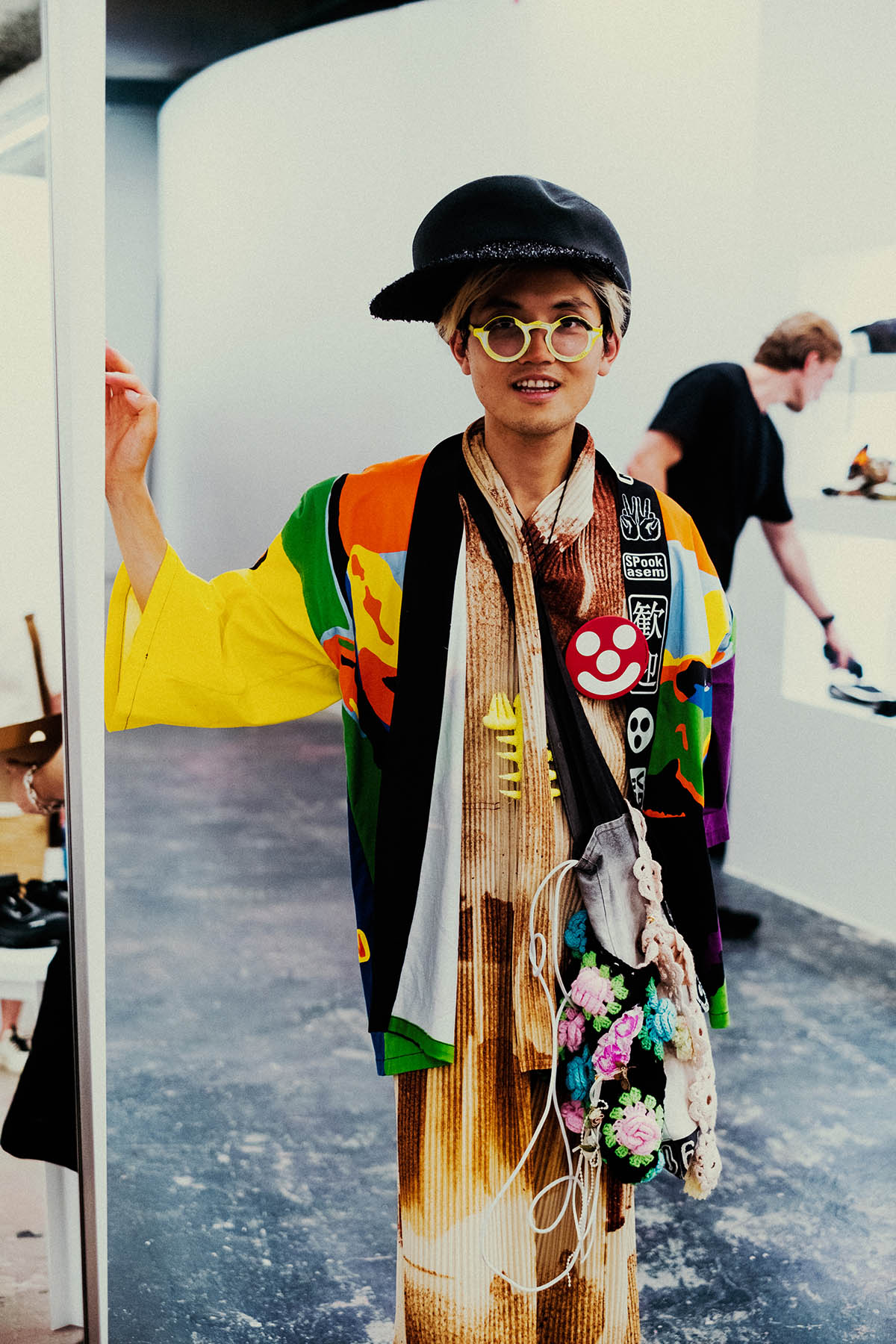
I studied fashion for a year at the Royal Academy of Fine Arts in Antwerp before pursuing mathematics at KU Leuven. Today, I remain active as a biomathematic researcher. My fascination with fashion, however, began in childhood. I was always drawn to colorful prints and unusual shapes and to the possibility of expressing an entire world beyond words. I also write poetry; sometimes an image needs a sentence, and sometimes a sentence needs to become an image.
During my fashion studies, painting became a way to shape visual stories. I began with oils, which remain my primary medium, although I occasionally experiment with ink and gouache.
Mathematics allows me to discover a harmony in the patterns of the natural world. Art allows me to search for a corresponding harmony within myself.
“Unleash yourself with a fusion of art and fashion.” What does it mean to you?
Art and fashion continually flow into one another. Often, this connection begins with color. Much like a fashion designer gathers fabrics, patterns, and textures, I start with a theme, then bring together colors that give it a particular emotional atmosphere. Their combinations help me imagine the work before its forms become clear. While painting, I imagine how an artwork might take on another life as a garment or an object. Sometimes the connection comes through a shared theme; sometimes an image might become a print, a texture, or part of the material itself. I enjoy the possibility of art becoming something playful. Their relationship is puzzlingly complex. The way I dress contains a hidden code for the way I paint, and my paintings carry traces of how I want to move through the world. I like imagining that someone who connects with my work might eventually inhabit a small part of it through a piece of clothing. Through these subtle exchanges, I hope to make the boundaries between art and fashion more porous. They are both foundations of my universe, helping me build the psychedelic world I want to invite people into.
Are there repeating themes that you use in your work?
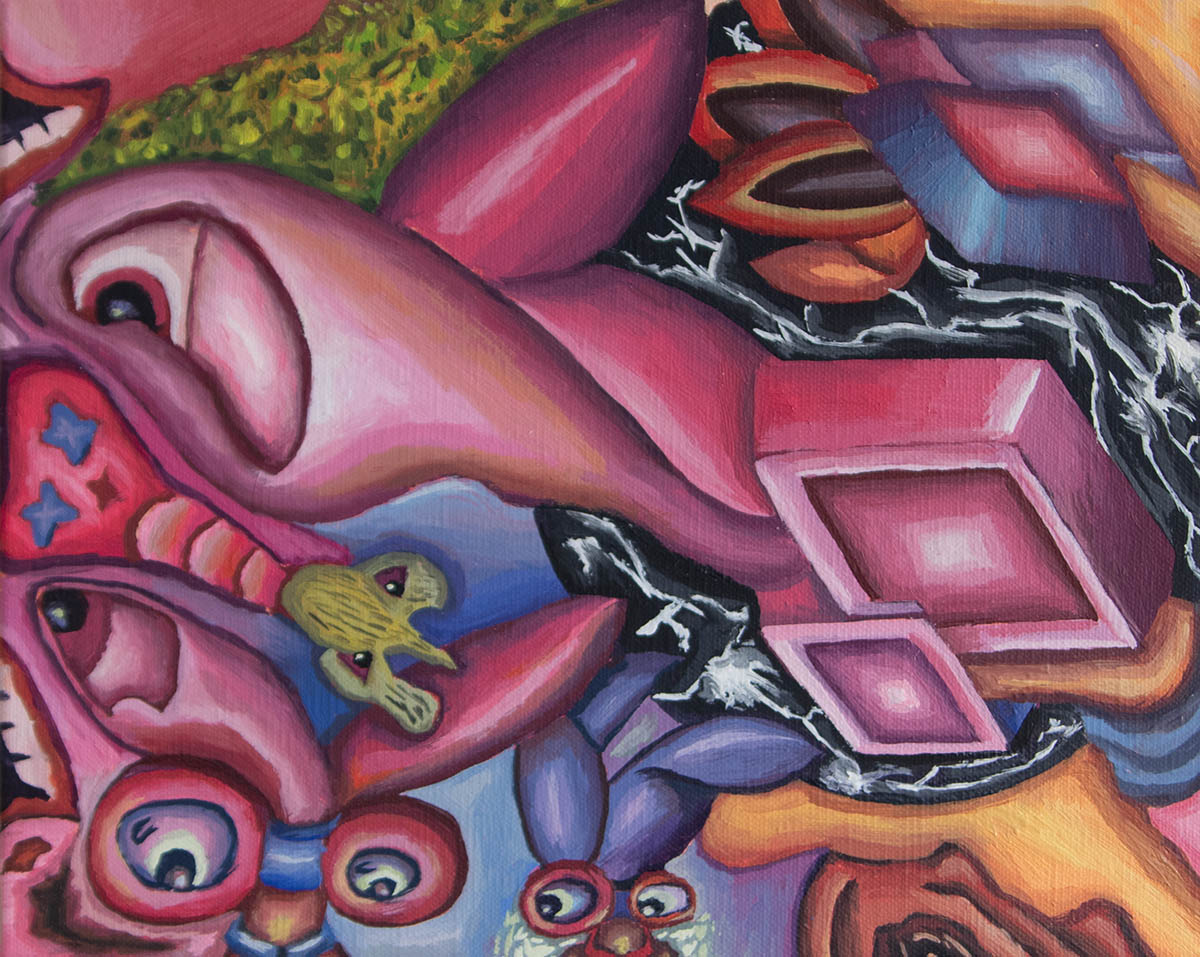
Color is always a recurring language in my work. Choosing a palette feels a little like composing music: individual colors carry their tones, but something else emerges when they meet. My choices are usually instinctive and shaped by my mood. In that sense, the paintings become fragments of an unconscious world, perhaps offering a shelter to people who recognize something of themselves there.
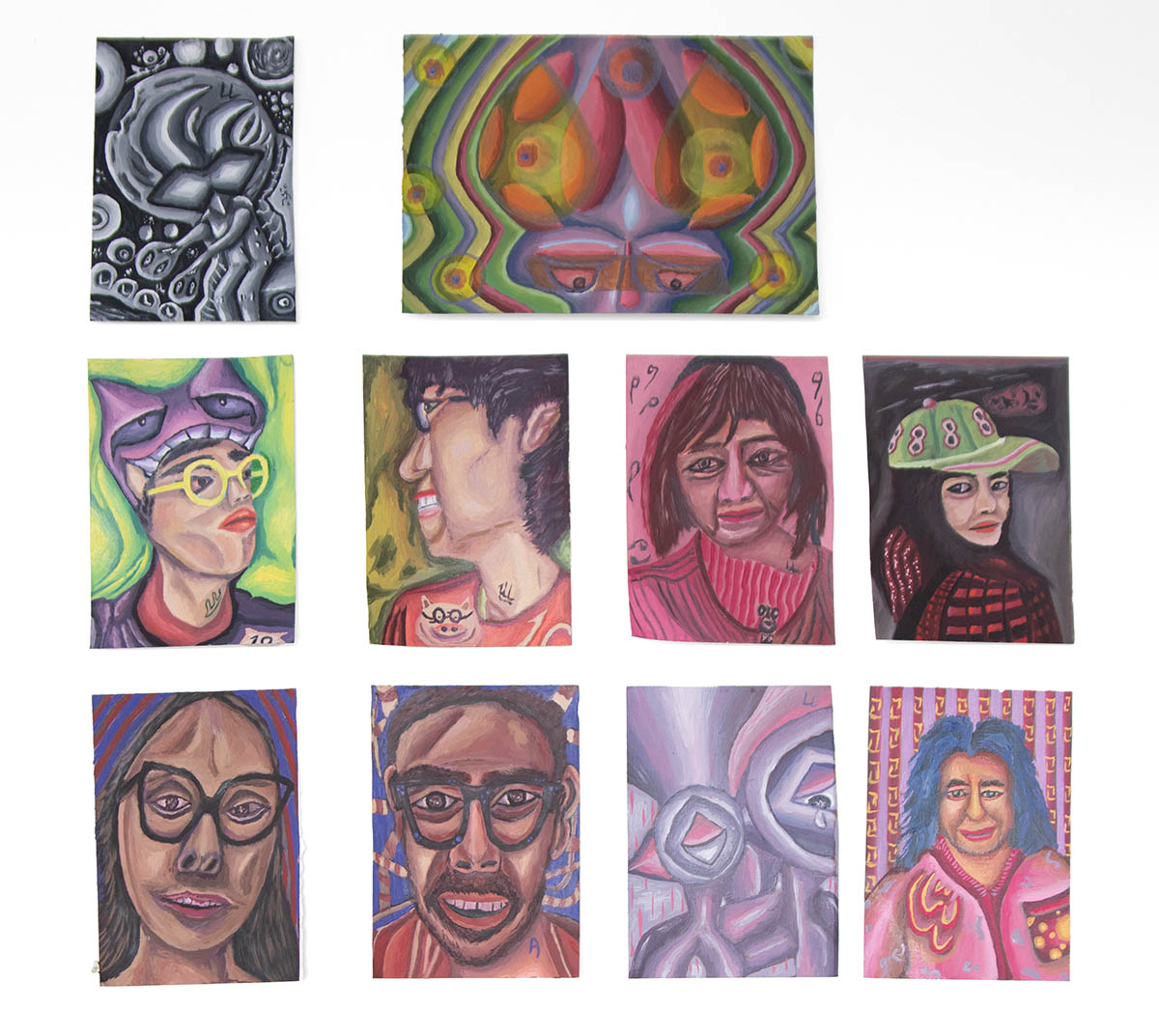
Monsters, masks, and eyes also return again and again.
When I say “monsters”, I mean creatures that seem to exist somewhere between the familiar and the impossible: figures drawn from mythology, animals transformed by imagination, hybrid humans, or beings that might have arrived from elsewhere. However strange they appear, they come from our observations, beliefs, and desires. These creatures allow me to explore how we become objects of other people’s judgement and how our sense of identity takes shape beneath their gaze. I have often felt that others see me as some kind of alien or monster. Yet other people can seem equally alien to me, because we can never fully enter another person’s thoughts. Something that remains beyond our reach.
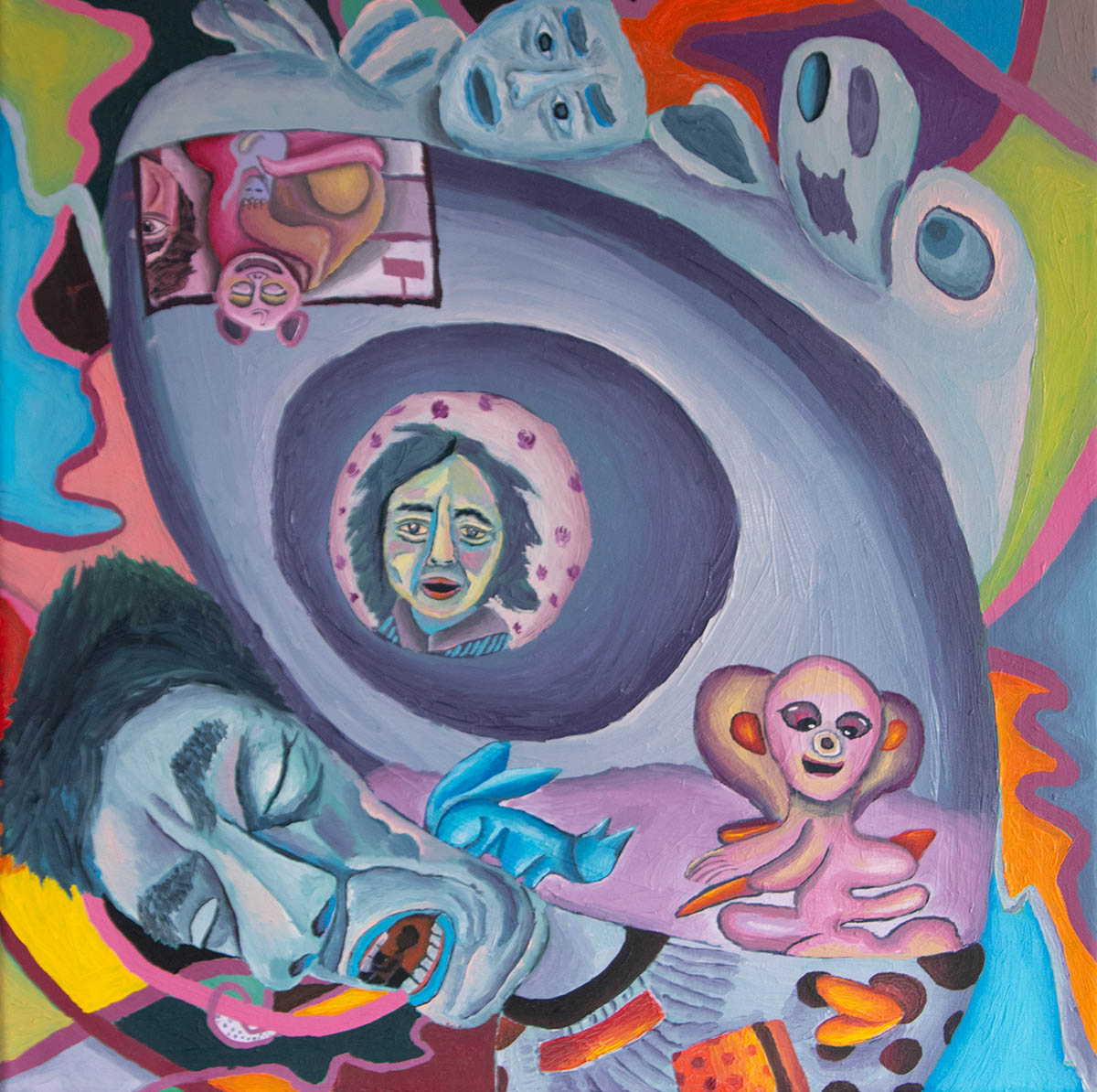
I wonder what might happen if we allowed that strangeness to be shared. By exaggerating our differences, I hope to reveal something we have in common. If those differences can become playful, even absurd, perhaps we can approach one another with more curiosity and less judgement. Masks and eyes carry a similar tension. We wear masks as filters and shields, but they can also obscure our understanding of ourselves. Eyes hold both our longing to be seen and the discomfort of feeling exposed. They look outward, yet they also remind us of everything we keep hidden.
These images may appear absurd, but they give form to questions I keep returning to. They are part of what keeps me painting.
How do you start a new work?
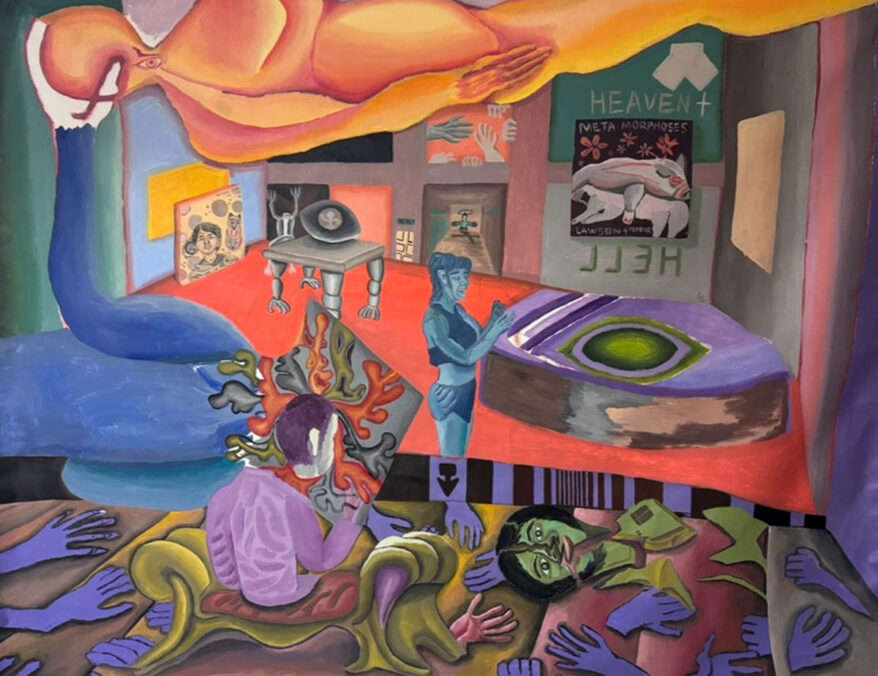
I usually begin with a little research into the story or theme I would like to explore. The larger world is already there, but each painting feels like another chapter in an unfolding novel. Before I begin, I need some sense of the story I want to leave hidden inside it. Then I think about composition and color. I start with an underlying layer of color, allowing it to establish the atmosphere and suggest how the composition might develop. Those first colors continue to influence what happens above them, even when they become partly concealed. I rarely make detailed sketches. I prefer to leave space for the painting to change as I work. This makes the process more intuitive and psychologically alive, like starting a conversation with something that has not yet learned how to answer. I have an initial direction, but the work gradually develops its own presence.
It is similar to writing a character: you may begin with an idea of who they are, only to discover another personality as the story unfolds. Certain elements appear only during the painting process, and the changes happening in my life inevitably enter the work as well. Each painting becomes a time capsule, holding the movement of my thoughts and emotions across the days in which it was made.
I saw your work at a group exhibition at Salon Kronenburg in Antwerp. Aside from art, what connects you to this city?
Fashion is a large part of my connection to Antwerp. The legacy of the Antwerp Six, alongside the city’s many avant-garde designers, has made it a place where I feel there is room for distinctive ways of seeing and expressing yourself. The academy and the new generations of artists and designers bring a constant sense of movement. Antwerp is small, but it holds a surprising density of ideas and encounters. I enjoy that balance: enough energy to keep me curious, and enough quiet to live and create at my pace. I find inspiration in its architecture, its changing light, and the people moving through its streets. I value the creative community here, especially people who are open to individual visions and willing to support something unfamiliar. Of course, there are fewer romantic aspects, including the weather in certain seasons. But I enjoy living somewhere I can keep rediscovering. Even a familiar street can offer something different when you return to it in another state of mind.
What role does fashion play in your daily life?
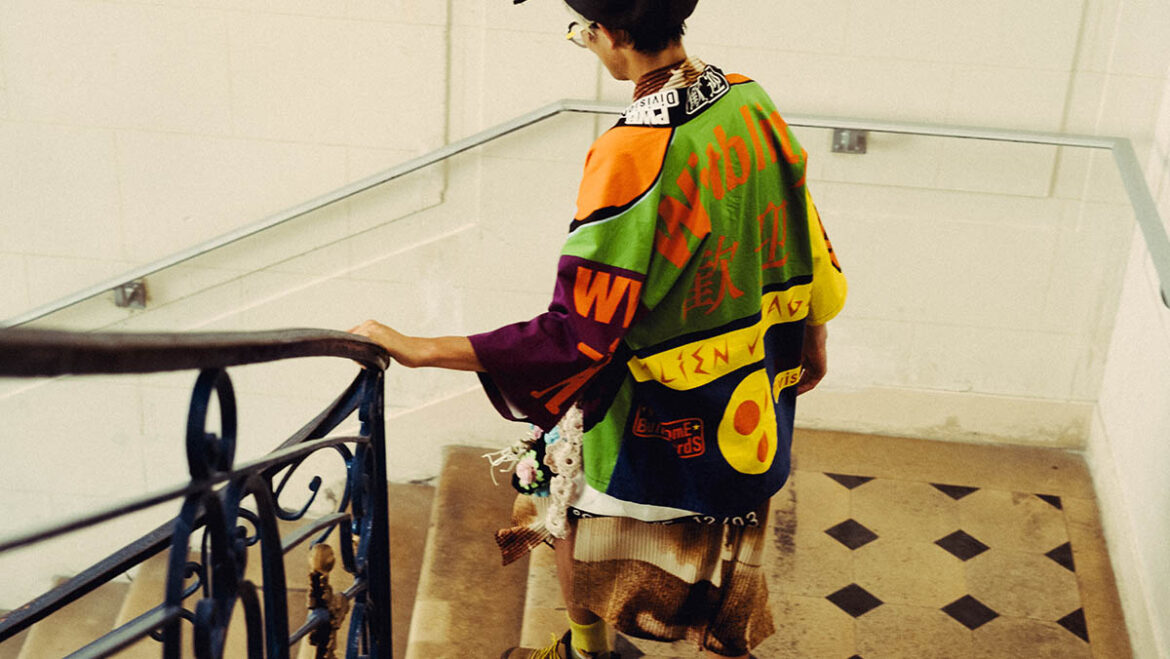
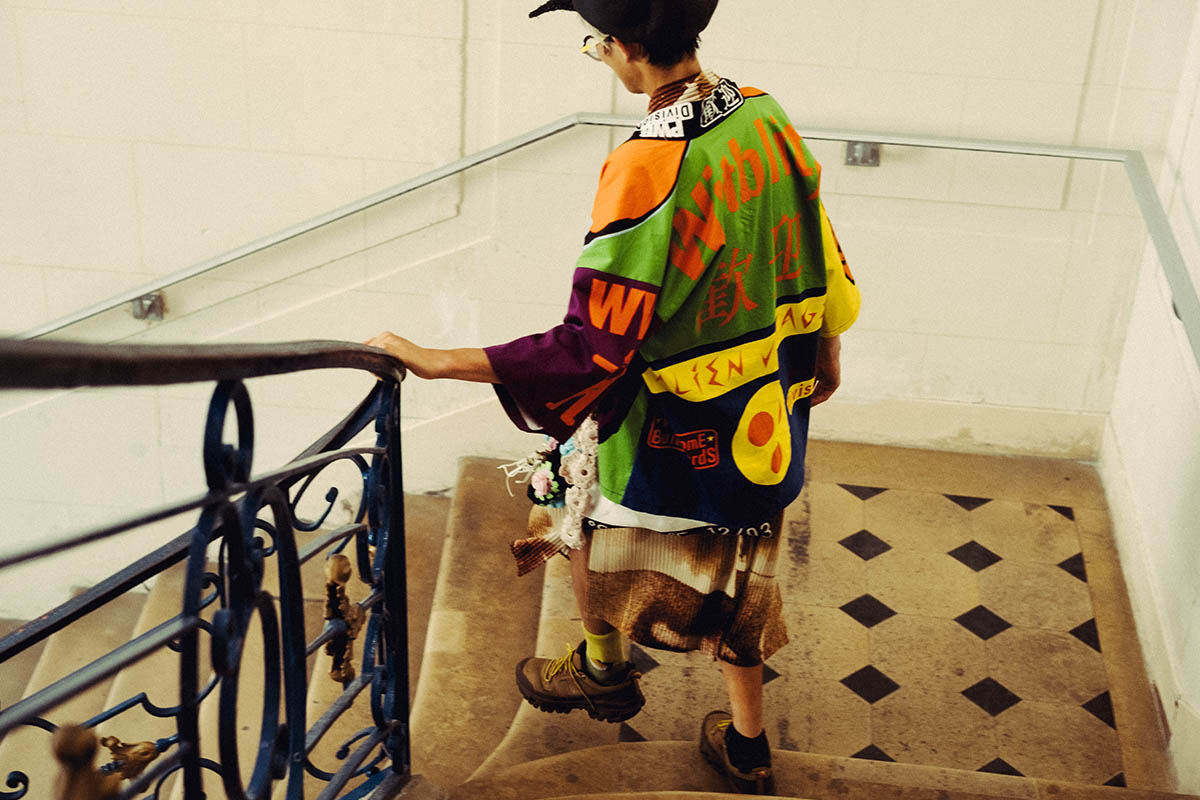
Fashion is woven into my everyday life. I have a very particular way of dressing, and choosing what to wear is another way of giving form to how I feel. It comes from an inward desire to recognize myself in what I wear, to look a little like the world I create. I paint what I am drawn to, what I imagine, and every so often what I wish I could become. I enjoy it when people tell me that, after seeing how I dress, they immediately recognize my work. It makes me feel like the same language is travelling through different forms.
Fashion also brings me joy.
It introduces color and possibility into ordinary days, helping me move through the shadows that sometimes linger in my mind. Getting dressed can be a small act of imagination, a way to carry a little hope on the body. It is another visible layer of an inner world.
What are you working on right now?
For my next exhibition project, I am developing a series of paintings, objects, and garments around the theme Station of Eye Distances. It explores what happens in the space between two people when their eyes meet and remain there. Sometimes the greatest distance can lie precisely in the most intimate encounter. A gaze can bring someone intimately near while making us aware of everything we cannot reach in them. Through fantastical creatures and absurd worlds, I would like to explore lust, desire, trust, betrayal, and the many emotions that pass between us, often before a word is spoken. I imagine each work as a different station: a place of arrival, departure, or waiting, where these feelings meet and change direction. Together, the works will form a network of encounters, tracing the distances we cross, the connections we miss, and the things we leave behind in one another’s eyes.
Lawson Wang – www.lawsonlawsonstudio.com, www.instagram.com/lawsonl_studio/