

Category

Art

Category
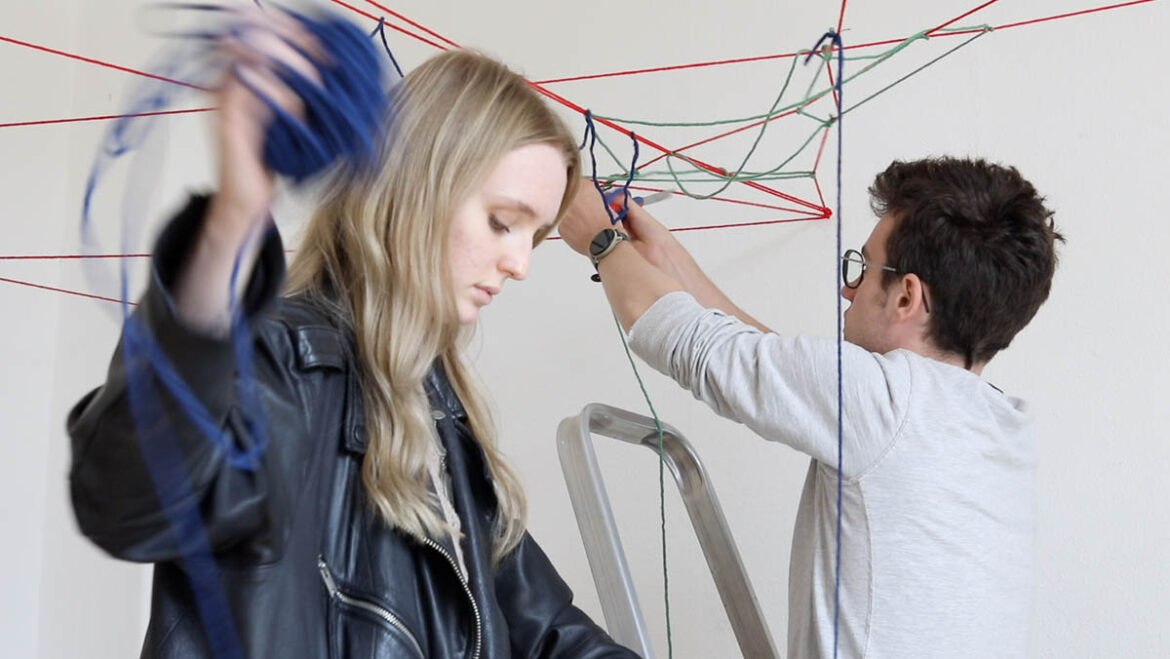
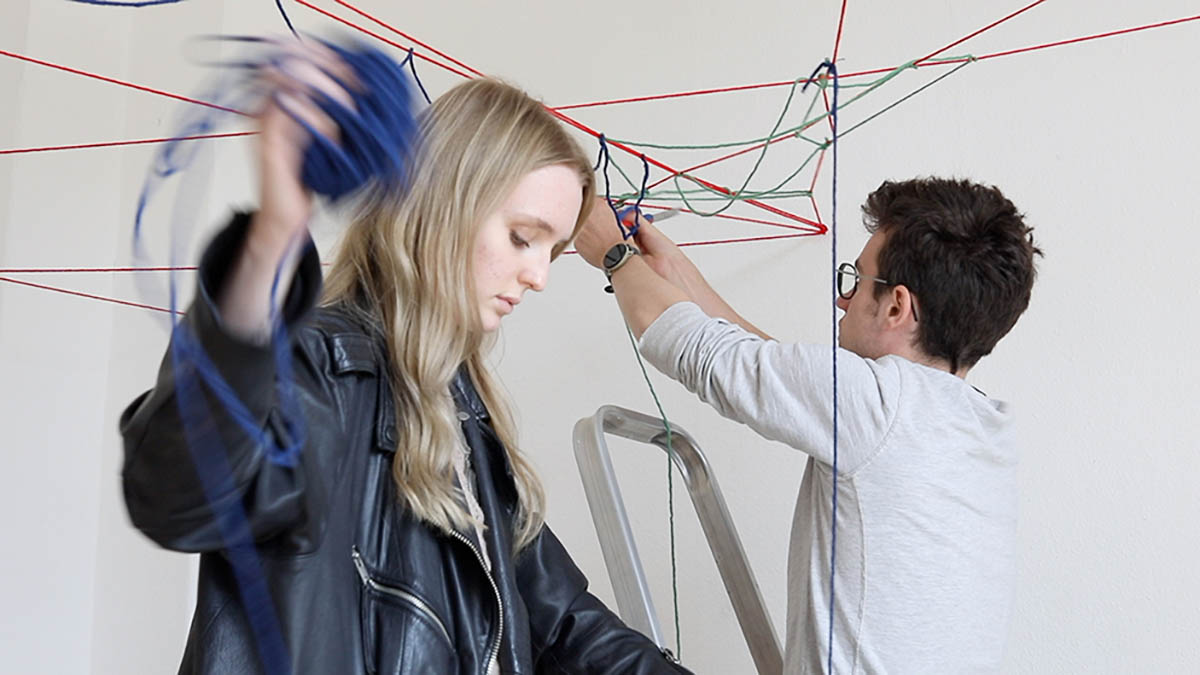
Berlin Summer University of the Arts. Photo: Franck Lazare

Unter dem Jahresthema ENOUGH setzen sich die Workshops mit Fragen von Reduktion, Nachhaltigkeit und Widerstand auseinander – als Gegenentwurf zu Konsum, Wachstum und Reizüberflutung. Das Konzept wird in sozialen, politischen und ökologischen Kontexten beleuchtet: von materialbezogenen und performativen Praktiken bis hin zu nachhaltigen künstlerischen Strategien.

Mehrere Kurse widmen sich dem bewussten Umgang mit Material, etwa „Learning from Bio-Materials“ (Annika Haas & Petja Ivanova) oder „Bending Wood“ (Esra Nagel), der traditionelles Handwerk mit Fragen der Nachhaltigkeit verbindet.
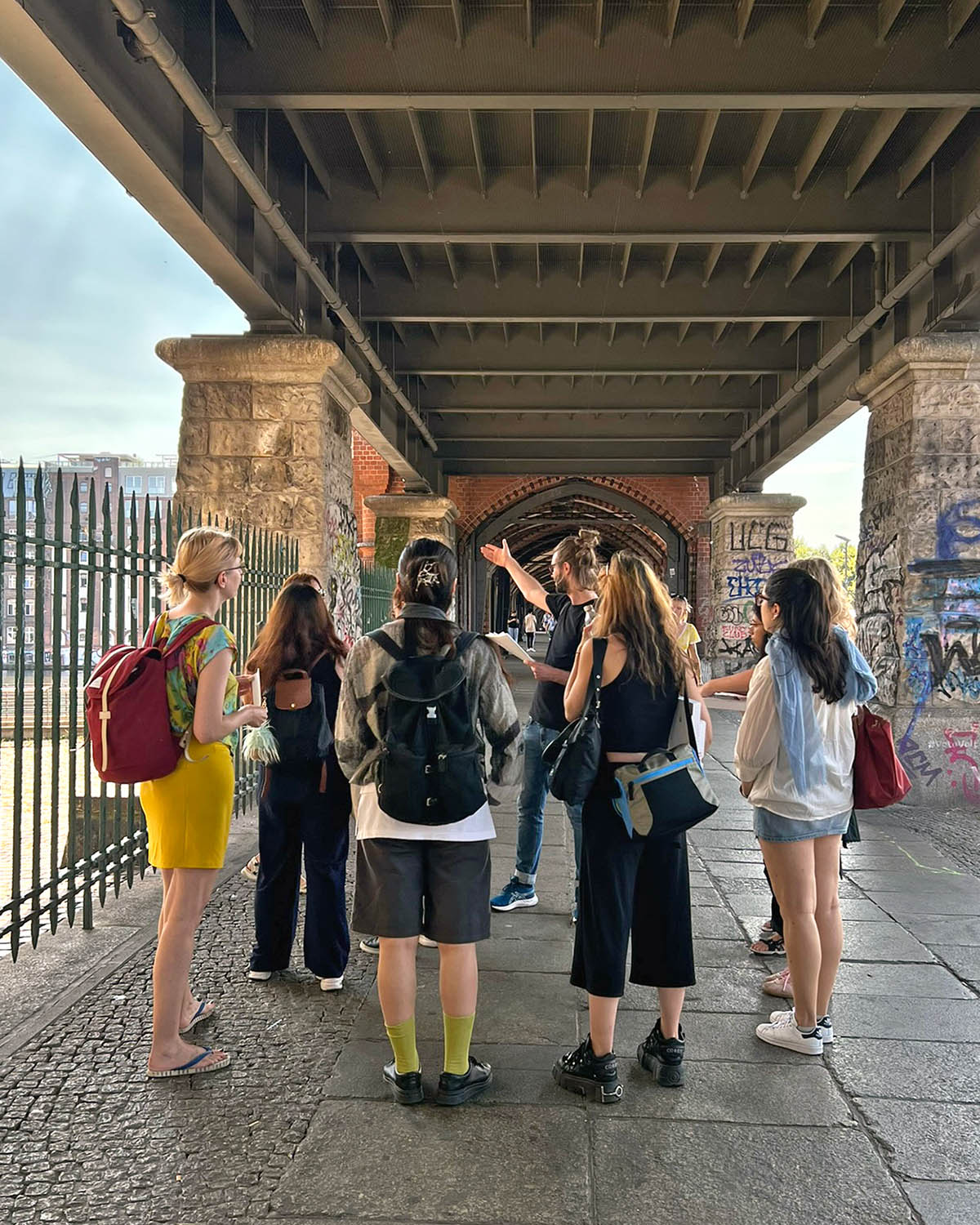
Berlin Summer University of the Arts. Photo: Ella Pienkoss

Der öffentliche urbane Raum steht im Fokus zahlreicher Workshops: In „Tracing (Future) Mobility through Walking and Film“ (Mirjana Mitrovic & Jan-Holger Hennies) wird das Gehen als künstlerische Forschungsmethode untersucht. „The Slow Line“ (Natalia Irina Roman) nutzt Züge und Bahnhöfe als künstlerisches Material, während sich „Edible City“ (Gosia Lehmann & Valerian Blos) alternativen urbanen Strukturen zuwendet oder in „River Song“ (Alessandra Eramo) die Flüsse der Stadt als Klanglandschaften stimmlich erkundet werden.Ein weiterer Schwerpunkt liegt auf kritischer Reflexion und Kunsttheorie. Workshops wie „Critical Seeing of Neo-Orientalism in Contemporary Art“ (Tara Habibzadeh & Priyam Goswami Choudhury) oder „Too Much is Not Enough“ (Kate Brown & Mitch Speed) hinterfragen zeitgenössische Bildproduktion und Kunstkritik im Zeitalter des Überflusses.
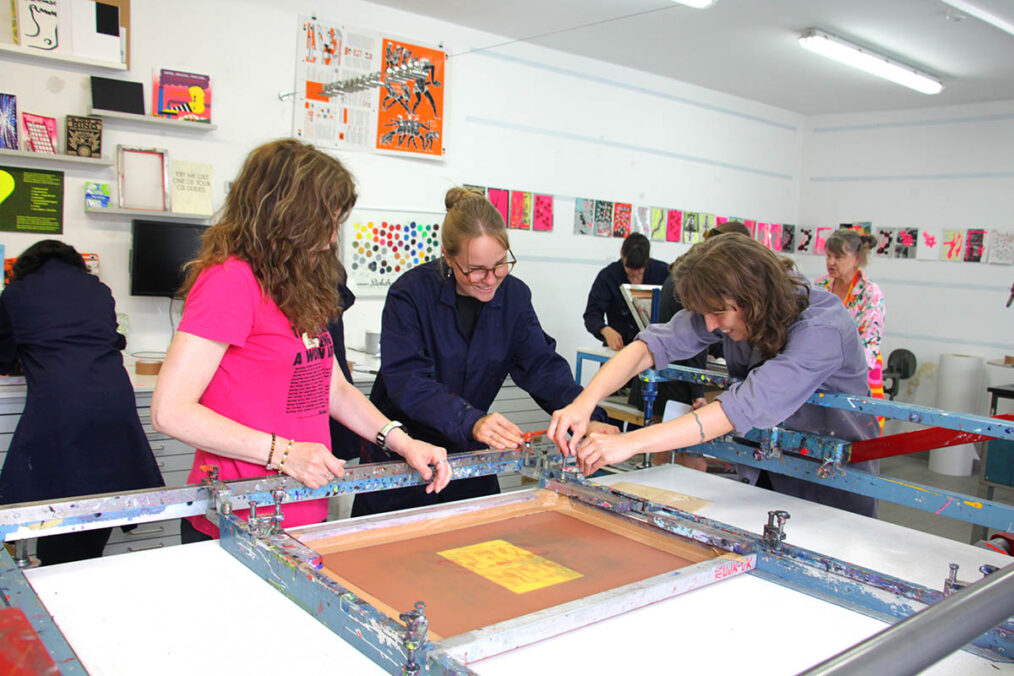
Berlin Summer University of the Arts. Photo: Ella Pienkoss

Auch die Auseinandersetzung mit dem Körper spielt eine zentrale Rolle. Kurse wie „Stitching Urban Landscape“ (Vanessa Gravenor), „Enough Images?“ (Diana Weis & Lisa Andergassen) oder „Do I (only) Need my Body?“ (Slava Kushkov) untersuchen den menschlichen Körper und dessen physische wie digitale Grenzen aus künstlerischer Perspektive.

Berlin Summer University of the Arts 2026: Enough
30 Workshops | Juni bis September 2026

Das internationale Workshop-Programm am UdK Berlin Career College startet im Juni. Das vollständige Programm sowie alle weiteren Informationen zur Anmeldung findest du unter: www.summer-university.udk-berlin.de


Die Universität der Künste Berlin gehört zu den größten und vielseitigsten Kunstuniversitäten Europas, an der sich künstlerische Lehre und Praxis sowie wissenschaftlicher Diskurs gegenseitig beeinflussen und das akademische Profil prägen. Mit ihrer über 300-jährigen Geschichte ist sie tief in der Stadt Berlin verankert und ist mit jährlich über 700 Veranstaltungen eine bedeutende kulturelle Impulsgeberin. Die UdK Berlin vereint ein breites Spektrum an Studiengängen der Bildenden Kunst, Gestaltung, Musik, der Darstellenden Kunst und der auf sie bezogenen Wissenschaften. Ihr Profil wird durch das Hochschulübergreifende Zentrum Tanz Berlin und durch das Jazz Institut Berlin ergänzt. Ihren rund 4.500 Studierenden – von denen etwa ein Drittel international ist – bietet sie exzellente Lehre und Forschung und fördert einen kontinuierlichen Austausch zwischen künstlerischer Praxis und wissenschaftlicher Reflexion.

Weiterbildung im inspirierenden Umfeld der UdK Berlin bietet das Zentralinstitut für Weiterbildung und Transfer (ZIWT). Mit seinem Berlin Career College und dem Career & Transfer Service Center verfügt es über eine in Deutschland einzigartige Bandbreite an universitären Angeboten im künstlerisch-kreativen Bereich. Das Programm richtet sich an Künstler:innen, Kulturschaffende und Kreative, die sich an einer der größten künstlerischen Hochschulen der Welt weiterbilden möchten. Das Artist Training bietet Beratung und Weiterbildung für Künstler:innen at risk und die internationale Berlin Summer University of the Arts ein hochwertiges englischsprachiges Programm für Künstler:innen und fortgeschrittene Studierende aller Disziplinen.

Das ZIWT befindet sich derzeit in einem Reorganisationsprozess und wird in seinen zentralen Angebotselementen aus dem Kursbereich, der Summer University und dem Artist Training fortgeführt. Parallel dazu wird ein neues Strukturmodell für eine dauerhaft angelegte Nachfolge-Einrichtung erarbeitet, in dem die bisherigen Schwerpunkte Transfer, Weiterbildung, Digitalität und Internationalität weiter etabliert und um neue Strukturen aus dem dritten Zyklus ergänzt werden. Präsident der UdK Berlin ist seit dem 1. April 2025 Prof. Dr. Markus Hilgert.

Galleries were joined by 16 institutions and 6 artist-run spaces, bringing the festival’s total participant count to 39 venues. This is the biggest the festival has ever been.

In our conversation in his studio in Vienna, Franz Türtscher reflects on his early fascination with images, concrete art principles, and the ideas of openness, transformation, and intuition.

Reflecting on the last six years of the gallery max goelitz, a new location in Munich, the close connection to artists represented, and the collaboration with the gallery Hauser & Wirth.

Karolina Szwed is a painter based in Warsaw, Poland. Her work has recently been shown, for example, at the Inside-Out Art Museum in Beijing and at the Museum of Contemporary Art in Krakow.

Ty Kawabe is a designer born in Australia and raised in Japan, based in Nagoya. He studies Industrial Innovation and has been regularly creating and publishing posters since late 2024.

Eri Maeda’s work is uncanny, rebellious, and protective. She transforms everyday objects into rebellious ceramic monsters that invite us to question the beliefs and inner ghosts we carry through life.

Power; empathy; drawing’s resistance to detachment; focus on mise-en-scène; and feeling rather than logic. In conversation with New York-based artist Marianna Simnett on identity, fluidity…

While trauma is often sublimated through silence and breath in Gabrielle Goliath’s best-known video and sound works, the body assumes an unprecedented pictorial form in the new series.

Welcoming us into his studio in Vienna, artist Roman Pfeffer reflects on the “I” perspective, measurement, abstraction, and earlier works, on the occasion of his solo exhibition at the gezwanzig gallery.

Maria Naidyonova is a Ukrainian-born, Berlin-based artist working in drawing, painting, and animation. Her artistic style merges classical drawing techniques with contemporary aesthetics.

In the context of Klima Biennale Wien 2026, the exhibition program “Immediate Matters. Speak We Must We Must Speak” was curated in collaboration with and hosted by ten independent spaces.

The city’s art scene will be activated by a dozen of guest galleries, guest curators, over 250 artists and many other international guests, who will contribute to VO’s rich program.

Die Energie AG vergibt mit der Kunstuni Linz 4.500€ für „Un/learning“: Umlernen als Zukunft. Welche Routinen wir verlernen müssen – und wie Kunst das sichtbar macht kann.

ART CIRCLE’s 4th edition in St. Wolfgang transforms historic lakeside hotels into residencies where international artists live, create, and exhibit from April 27 to May 3, 2026.

With Anne Faucheret, Curator of this year’s edition of “Immediate Matters,” about the exhibition program titled “Speak We Must We Must Speak,” which will take place in ten independent art

Magdalena Herzog’s paintings explore themes of intimacy and the violence that lies beneath the surface. Drawing often serves as the starting point of her process, capturing a thought or a memory.

The newest part of the project spans twenty years already. „Developments“ will be exhibited in La Villette in Paris. With Artist Erik Tannhäuser on the project’s origins, all the locations.

On Beginnings, Objecthood, and Milan in the 1980s. In-depth about material agency, mechanical choreography, and aesthetics & functions of display in Anna Franceschini’s expanding body of work.

Zagreb-based artist Ivana Fischer talks about her studying times, influences, and how her work navigates themes of identity and vulnerability through intuition. In preparations for her next solo show.

To blur the boundaries between exterior and interior, to unsettle the interface between nature and construction, and to investigate on the relation between our bodies and the space we’re living in.

In conversation with Marilisa Cosello, an artist working across performance and photography, we explore her practice and ask whether the real medium might ultimately be the body itself.

Bunny Hennessey is a London-based painter whose work arises from the physical and sensory conditions of painting itself. Driven by movement, her practice explores the inner parameters of the body.