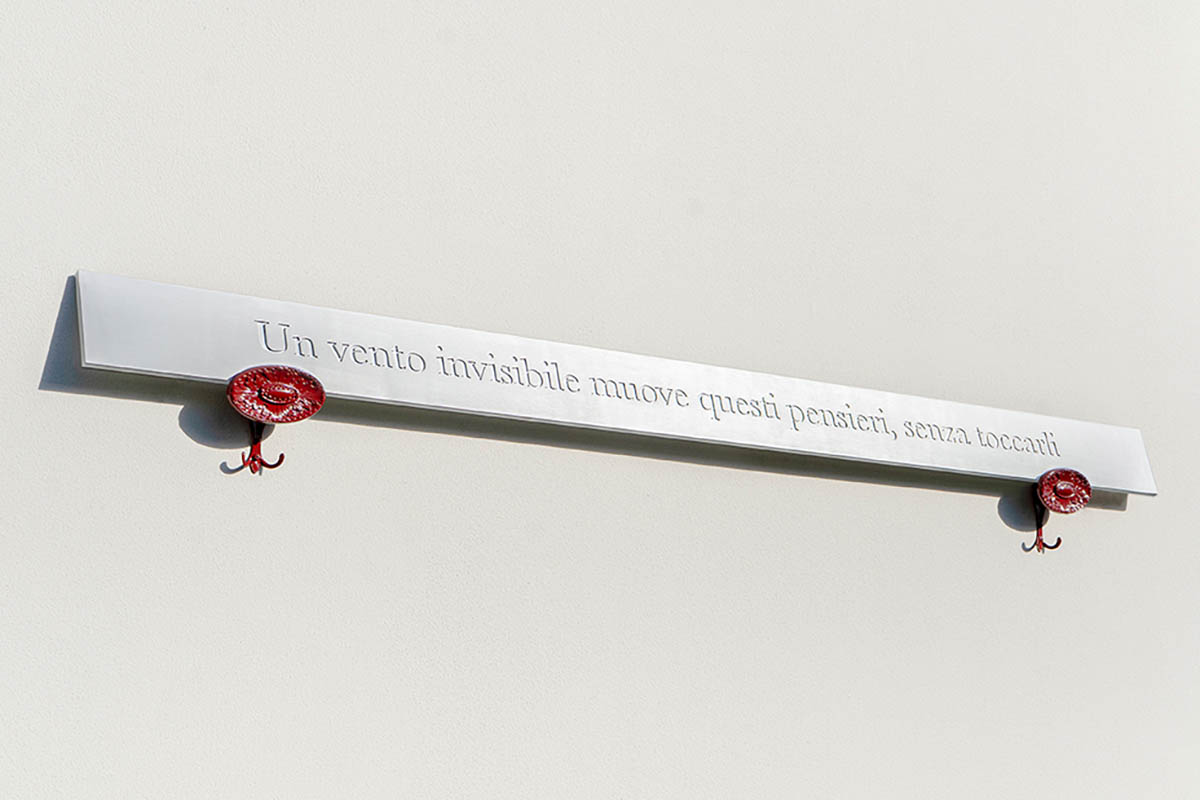
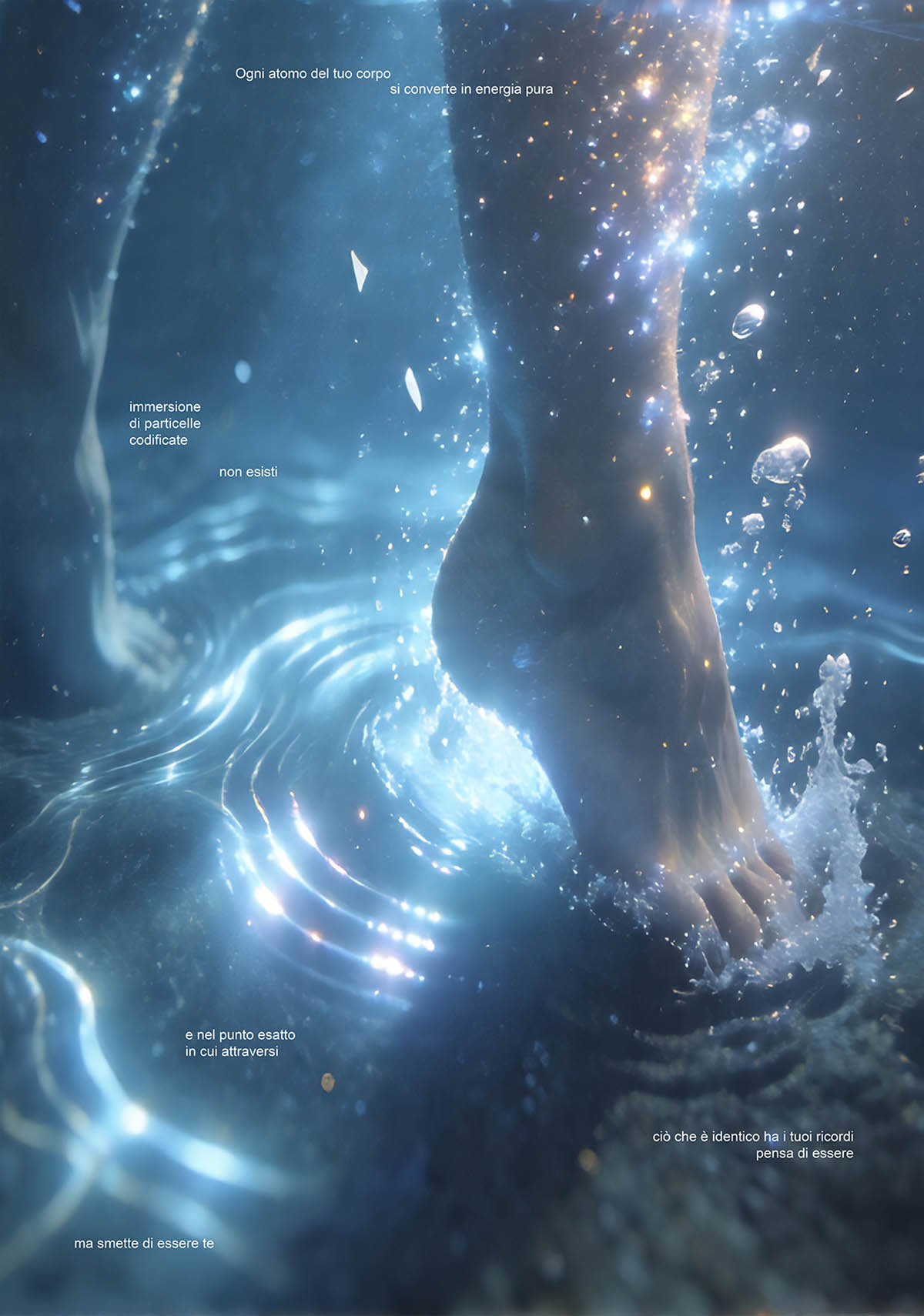
Through fragile materials, archives, digital platforms, artificial intelligence, and participatory dynamics, Camilla Gurgone often transforms everyday situations into ambiguous spaces where the boundary between reality and fiction, presence and simulation, and individual and collective experience remains constantly unstable. Her research focuses on contemporary technologies that shape perception, language, memory, and human relationships, while always maintaining a strong material and physical dimension. Many of her projects emerge from processes of translation and rewriting. Rather than approaching technology as something futuristic, her work considers it an emotional, social, and political infrastructure already embedded in everyday life.
Describe to us your working process?
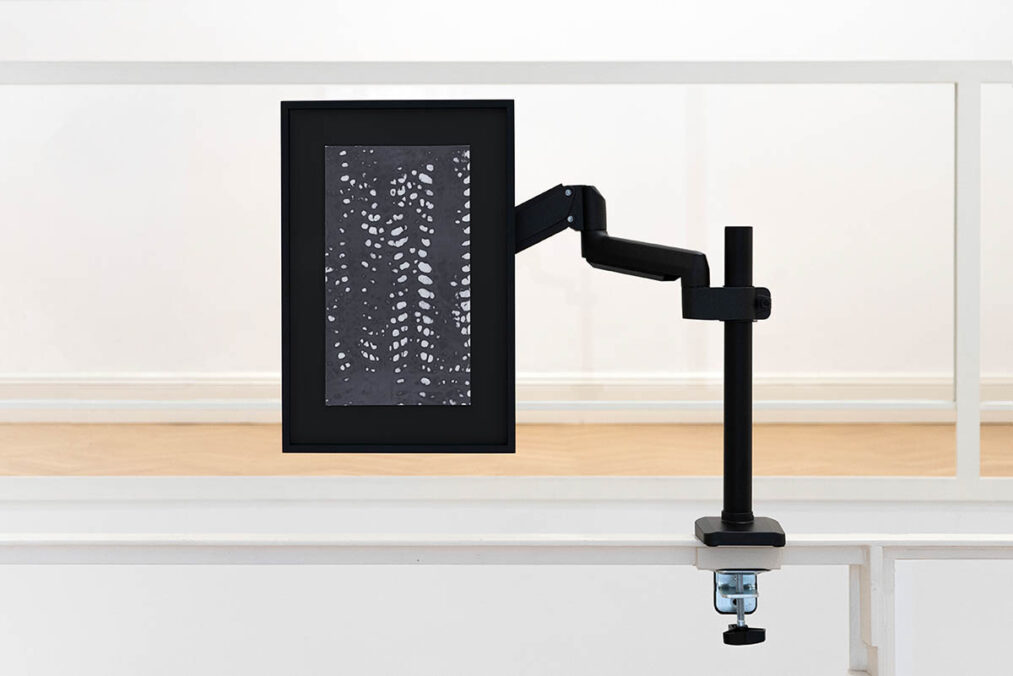
Regularly, by observing behaviors or structures that already belong to everyday life but that we tend to perceive automatically or invisibly. For me, the conceptual aspect is not so much about abstraction but about constructing structures that alter the way we read a situation. I usually accumulate materials over a long period. I explore how certain dynamics shape the way we construct relationships, memory, and identity. At a certain point, a shift occurs. These elements are translated into physical, installation-based, or performative devices that slightly alter their original function. Not to turn them into symbols, but to make their structures, contradictions, and emotional implications more visible. Even when I work with digital tools or artificial intelligence, the process remains deeply material. I need things to occupy space, pass through a body, consume themselves over time, or enter into a relationship with the viewer. Rather than producing closed images, I try to construct conditions to move through.
Do you work collaboratively?
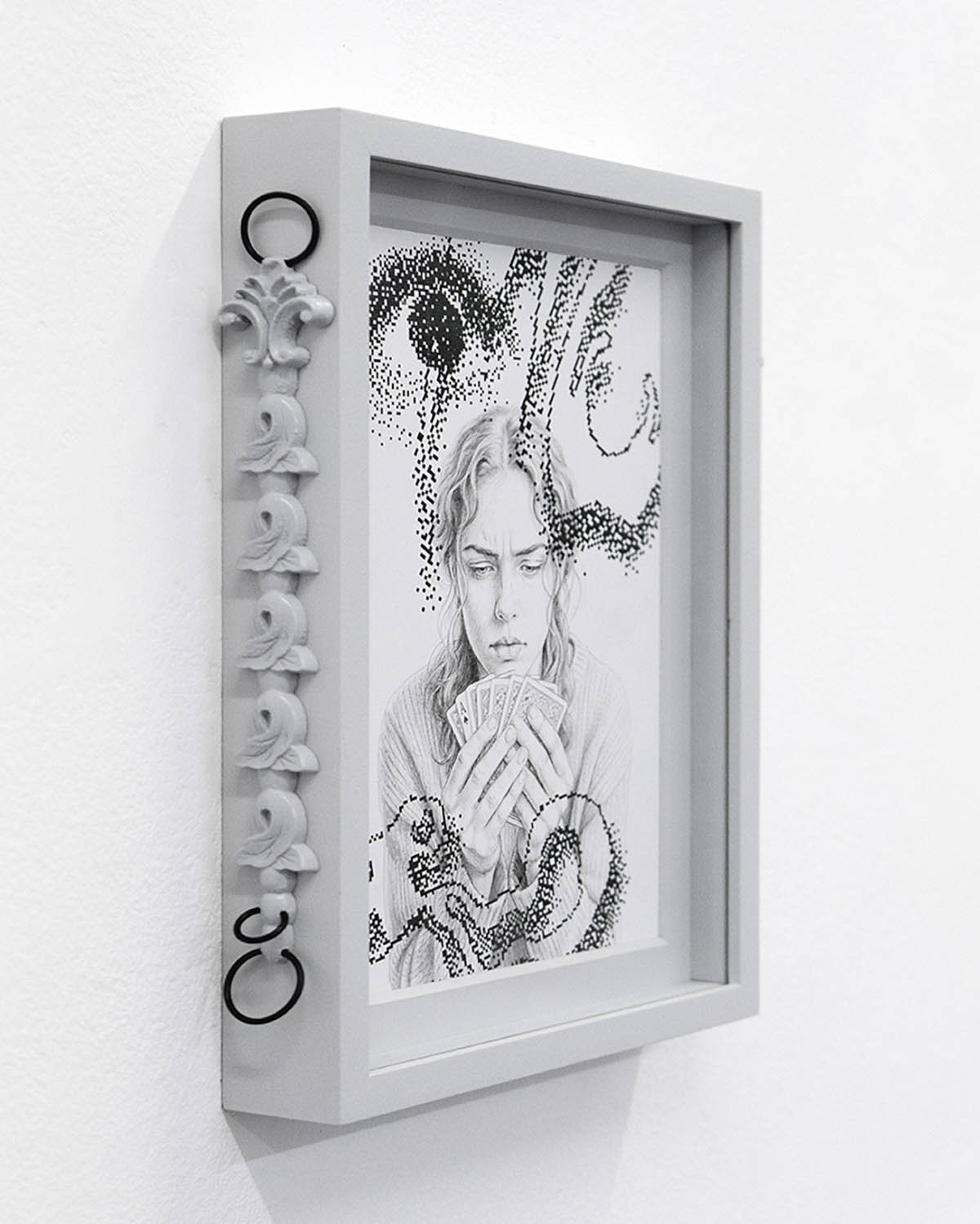
Yes, although it takes different forms depending on the project. Some works emerge from direct collaborations with artists, performers, or curators, while others develop through participatory and relational dynamics or through the involvement of companies, platforms, and technological systems.
In projects connected to performance or installation, I often focus on constructing open structures in which the audience, collaborators, or even the context itself actively influence the work. Even in some older projects, the relational aspect was already central, especially in the idea of creating shared situations rather than autonomous objects. In past years, I’ve started engaging with corporate environments and contemporary working infrastructures, observing how collaborative, digital, and productive systems shape the way we communicate, work, and build relationships. In these contact zones between different languages and structures, I am interested.
Technology plays a strong role in your work. What is your relationship to it?
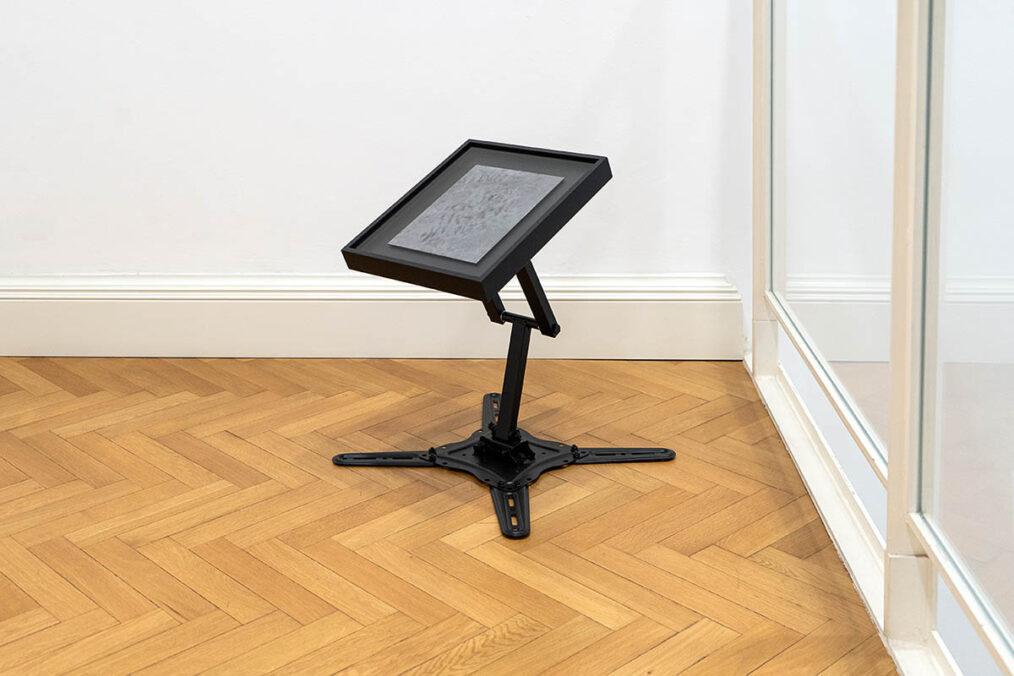
A significant role is not played by technology itself, but by the way it reshapes behaviors and forms of perception. I typically begin with extremely ordinary tools, such as collaborative platforms, artificial intelligence systems, screens, digital archives, or online dynamics, because these are environments we already move through every day, often almost unconsciously. I don’t have either an enthusiastic or a nostalgic approach toward technology. On one side, there is a genuine fascination with these systems and the possibilities they open up, while on the other, there are forms of control, dependency, exposure, and standardization that cannot be ignored. For this reason, my works create small displacements or slowdowns—situations in which technology temporarily stops being invisible and becomes something we can observe in a more critical, emotional, or even physical way. I think it’s important today to remember that behind every apparently immaterial system there is always a deeply human dimension.
Is commercial appeal essential to you while finalizing the work, and why?
Not particularly. It starts with a question or a structure I feel compelled to work through, with form emerging afterward. At the same time, I am aware that artworks inevitably enter systems of visibility, circulation, and value. It is difficult to separate artistic practice from these dynamics. What interests me is how to operate within such systems without letting them fully define the work itself. Some of my projects are deliberately slow, unstable, or not immediately accessible, which already creates friction with the logic of fast consumption and optimization. I am drawn to works that require time, uncertainty, or participation rather than instant readability.
How is the art scene in Milan in relation to its equally strong design scene?
Milan is in a very particular situation, as the art and design scenes are closely intertwined, although not always in a balanced way. For example, Miart, Milan’s international fair for contemporary art, and Milan Art Week take place just one week before Milano Design Week and the Salone del Mobile Milano. This proximity inevitably creates an imbalance as the city’s attention shifts. Recently, there has been increasing discussion about how Design Week almost “engulfs” Milan’s Art Week. I think there is some truth in that. During these days, the rhythm of the city changes completely, and design becomes a vast economic and communicative machine. At the same time, art and design in Milan remain relatively independent disciplines. What is changing is that contemporary art is increasingly supported, financed, or absorbed by systems connected to fashion, luxury, and design, as these currently represent the strongest economic and communicative forces in the city. I do not see this as entirely negative, as these overlaps sometimes create interesting opportunities and allow artworks to exist in less traditional contexts. However, there is also the risk that art becomes too closely aligned with the logic of visibility, branding, and experience.
Camilla Gurgone – www.camillagurgone.it, www.instagram.com/camilla.gurgone/
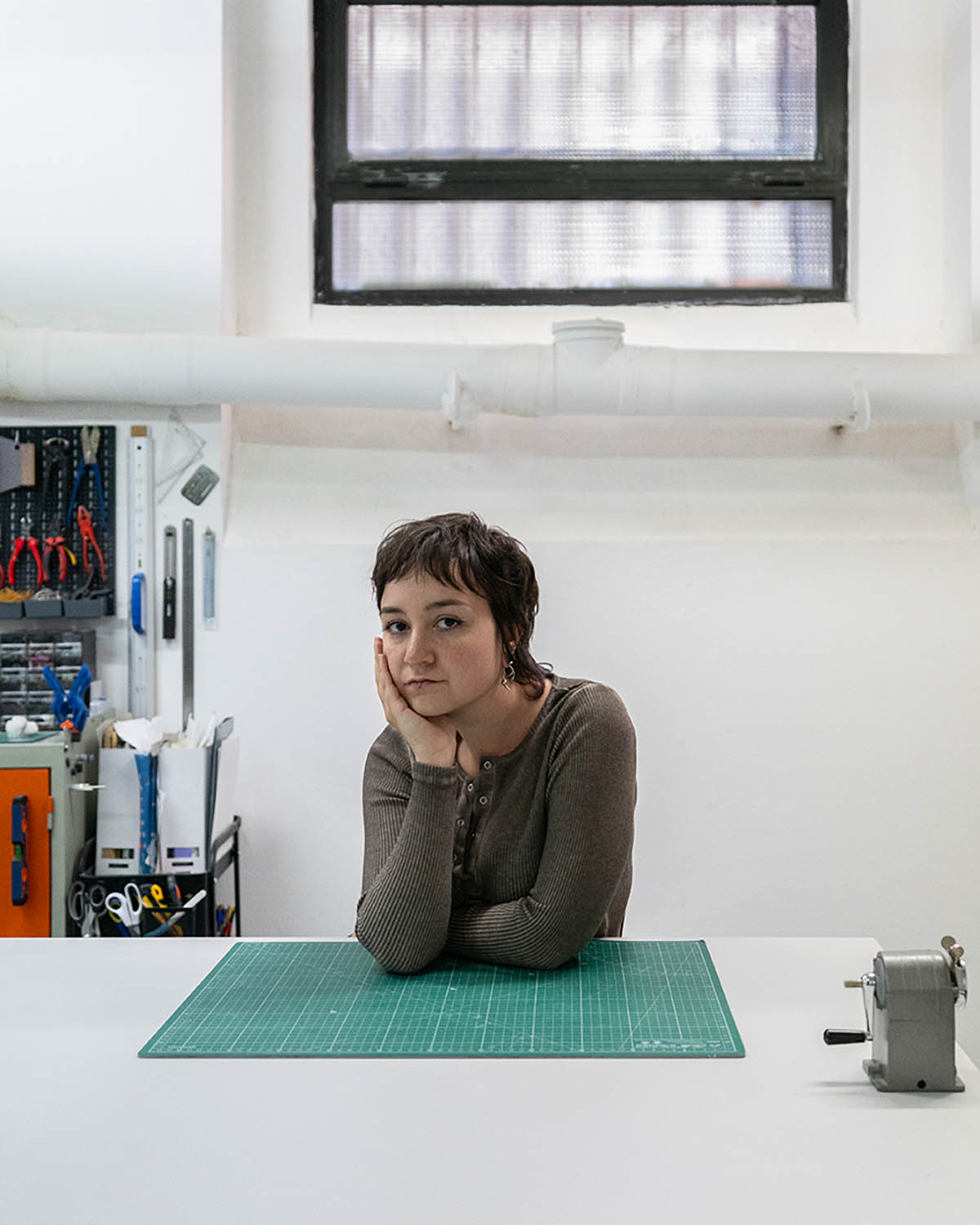
Camilla Gurgone is an Italian visual artist living and working in Milan. After studying across Rome, Bilbao, and Milan, with a background in sculpture, visual arts, and curatorial studies, her practice developed through installation, performance, and writing, creating dispositifs that connect bodies, images, and contemporary technological systems. Since 2022, Camilla Gurgone has been part of the curatorial team of spazioSERRA in Milan, and since 2024, she has been represented by VIASATERNA. In the same year, she was selected by Artribune as “Best Young Italian Artist”, while in 2025 she was included in the “Forbes Italia 100 Under 30” list.