Prior to the upcoming solo exhibition where things stay too long you already collaborated with The Tiger Room Gallery in the group show formats and the art fair formats, before the official representation that came late July this year. How this collaboration with the gallery came about.
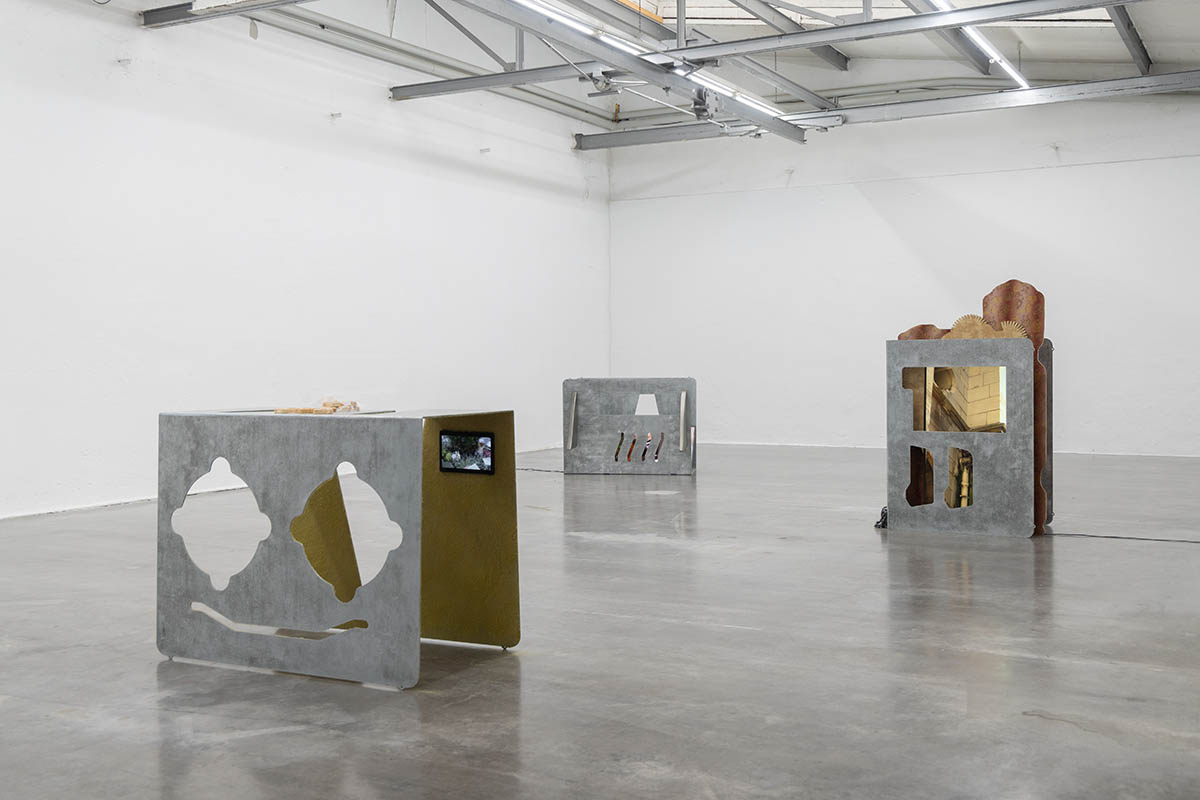
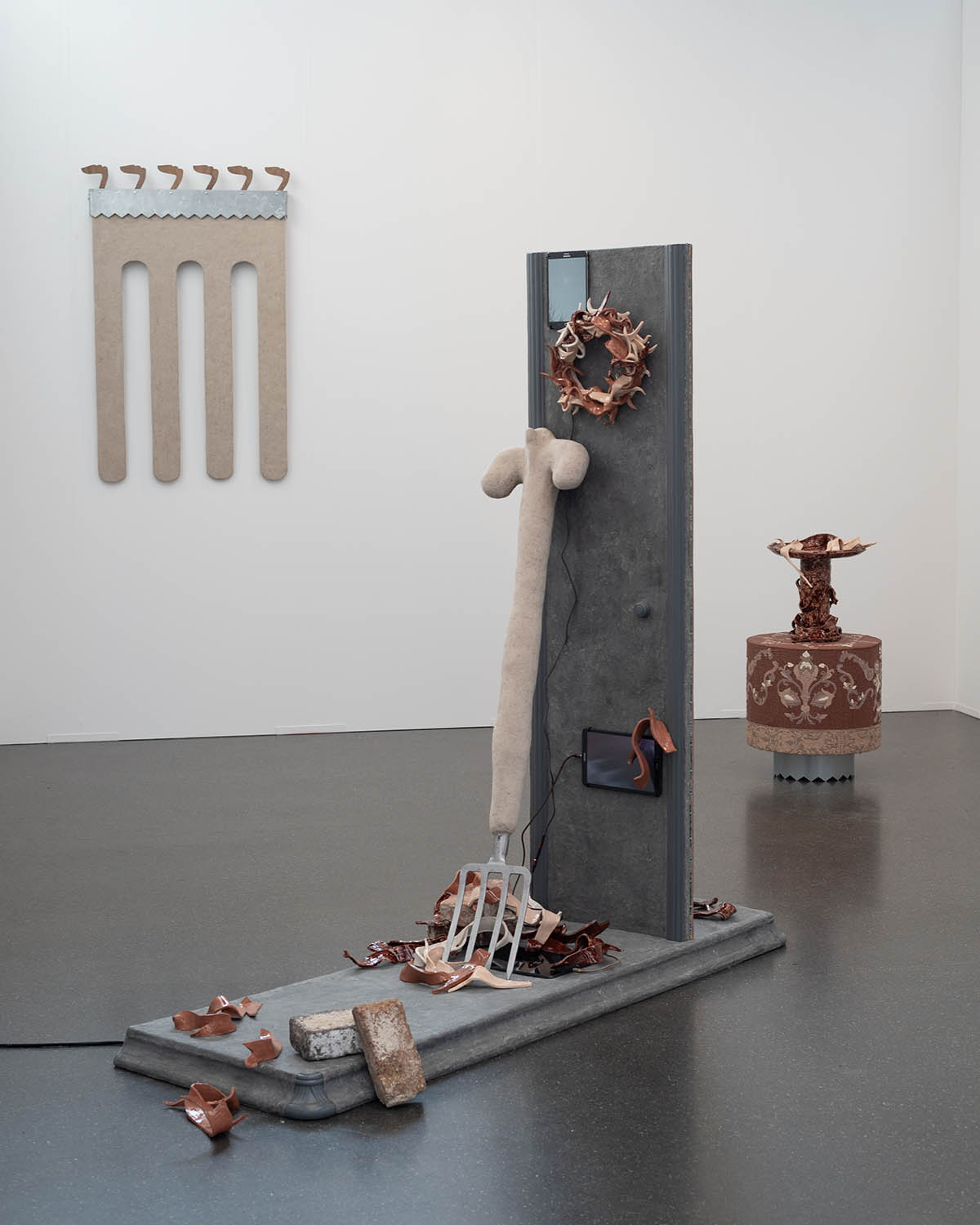
The first collaboration happened in 2024 with the group exhibition, Floating Paradise (October 19. – December 07. 2024). After that my works were part of the The Tiger Room participation at Beijing Dangdai 2025. Earlier this year at Art Düsseldorf, we presented my installation That Which Crawls Inbetween. Prolongation of it will be in a solo exhibition where things stay too long. Some works from the initial installation are definitely going to be part of it, and I worked on a new body of work dealing with the same subject.
And how does the process of research setup work later on?
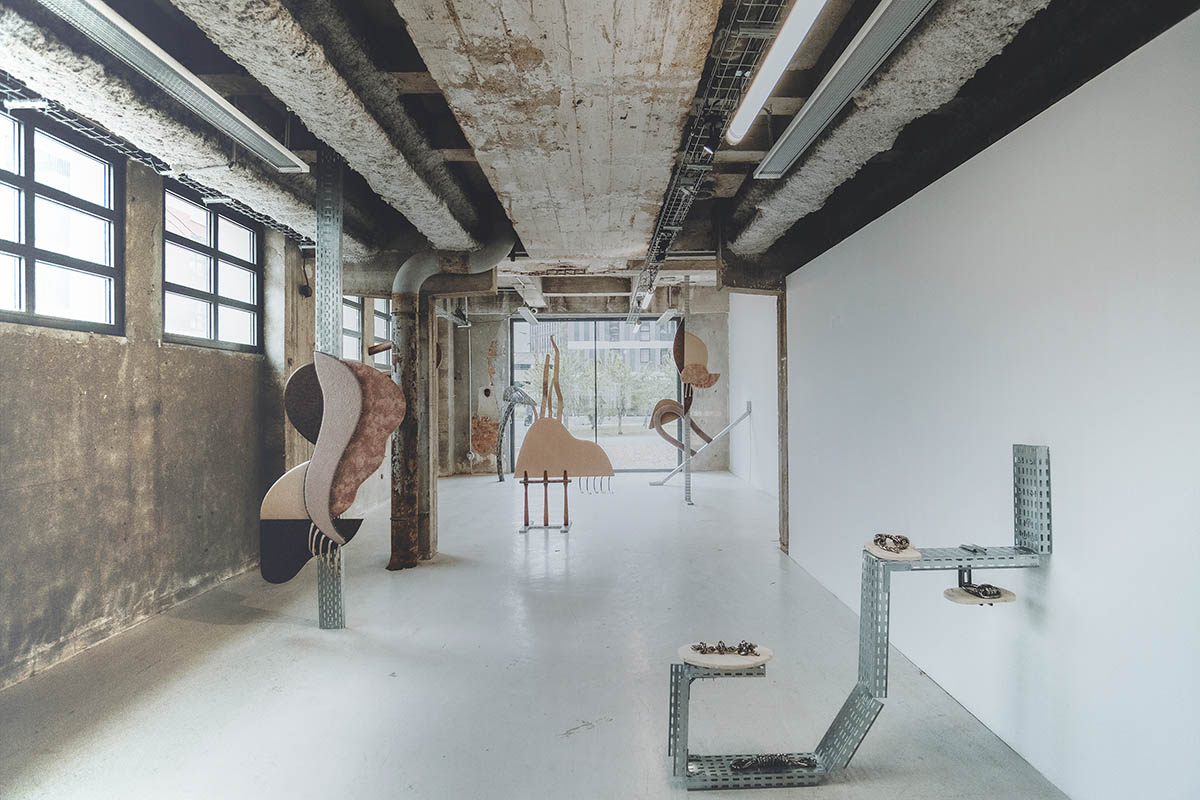
I work by circling a subject. I start from a story, a character; often the starting point is something I have read about. This could be a story or an essay, something theoretical or something fictional; many works emerge from that process. They are not necessarily separate pieces—they become a body of work, and then, depending on the room, I decide how many pieces go in, and how they relate to each other. So I decide a lot on-site: what comes together, what the relationships are between the works, and how I actually build the installation. I typically refer to objects or characters from the real world, so the viewer has some kind of real anchor point—something recognizable, like a door, that grounds them. Then I decide the parameters around that. For this show specifically, the whole topic is cohabitation, more precisely interspecies cohabitation—how different humans and living beings exist together, and the question of „commoning“: the question of ownership and whether it is the right frame still.
The concept I started with was the idea of a front yard, built around the question: Who does the garden actually belong to? The human who puts up a fence and says, „This is my garden“? Or is it the insects and other creatures that shape and create the garden? Or the plants themselves, growing and spreading in their directions? Is it even the garden gnome or the fence itself?
How they all coexist, collaborate, and work with each other. I’m genuinely interested in objects that humans make for other species. Not just in the sense of coexistence, but working with each other, helping one another.
How does the title where things stay too long reflect on your practice lately?
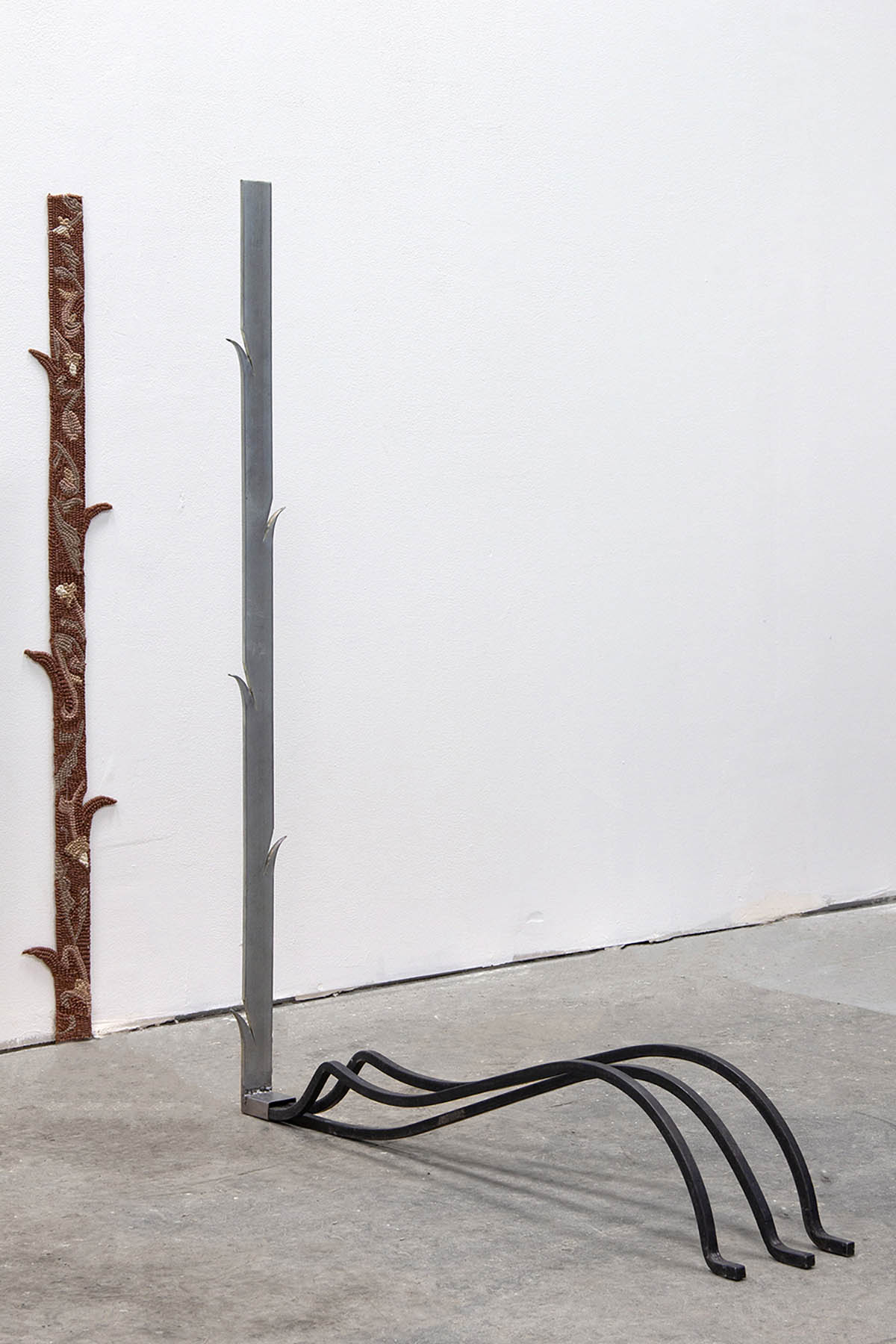
The upcoming exhibition is about things staying too long. It’s a continuation of a work I’d already started—it comes from that idea of things staying too long around us. It does have a personal reference point for where to stop work or to keep going. When I installed them for the first time, the earthworms that emerged after winter were the central figures, renewing the earth and preparing it for spring. Now, the leaves we saw there have grown and (might) fall. For both installations, it was about all these living forms that humans maybe don’t pay attention to, because they’re “not so relevant” to us.
There are many materials in the garden or foreyard you use, and after removing them slightly late, the new population has grown around them; a lot of other living beings have actually settled underneath. You remove it, and then there’s a whole cell of life underneath. Something staying around too long might be bad for one species, but another species could use that. Then I thought of shoes; in a house you might have a big pile of shoes in front of your door. There is a moment when you have to remove them and maybe switch your winter shoes to summer ones. It is also about interpretations, or ways of seeing the world and its inhabitants, that have remained for too long and that this installation is now questioning. I have many associations with this title, but there’s not one single story I can give for it; it is a cosmos around the state of staying for too long.
In the same vein, but from a different angle: Where did your interest in nature come from? What is your relationship to it?
Artistically, I was always interested in the relationship between humans and other forms of life. Earlier, I was focusing on humans and objects. Since I have moved to Paris, I started working on the relationship between humans and non-human animals. That came from a holiday in Normandy, where I started working on the project around the trophy—what is a trophy? What’s the concept behind it? What values are attached to it, and what would a trophy look like if it represented new values, and so on? I worked a lot with the hunting trophy specifically. Through the hunting trophy, I got interested in the relationship between humans and the specific animals we care about versus the ones we don’t. But I’m interested in why that is and whether that attachment could shift or change. Art is the best tool for „investigations,“ you can tell a story and switch the roles all the time. Through speaking with hunters and working on research, what became critical to me is that we (humans) are not at the top of a hierarchy; we belong to the ecosystem like anything and anyone else. On a personal level, questions about nature became about my small struggle: How do I live in the world? How do I act? What’s my position? Small questions, like eating meat or not eating meat, things like that.
Equally important to me is that there isn’t some “holy nature” versus „evil human.“ It’s not that humans interfering with nature is inherently bad, as if nature does everything perfectly on its own. If we want to live in the world, we have to consider ourselves as part of it and act within it. Of course there are better and worse actions we can take, but we are its, and that gives us a kind of power to actually act.
Video is a big part of your practice. Over the years, the way you present video work and integrate it into your installation practice has become a core, central part of the installation as a whole. Can you tell me about your relationship to video as a medium?
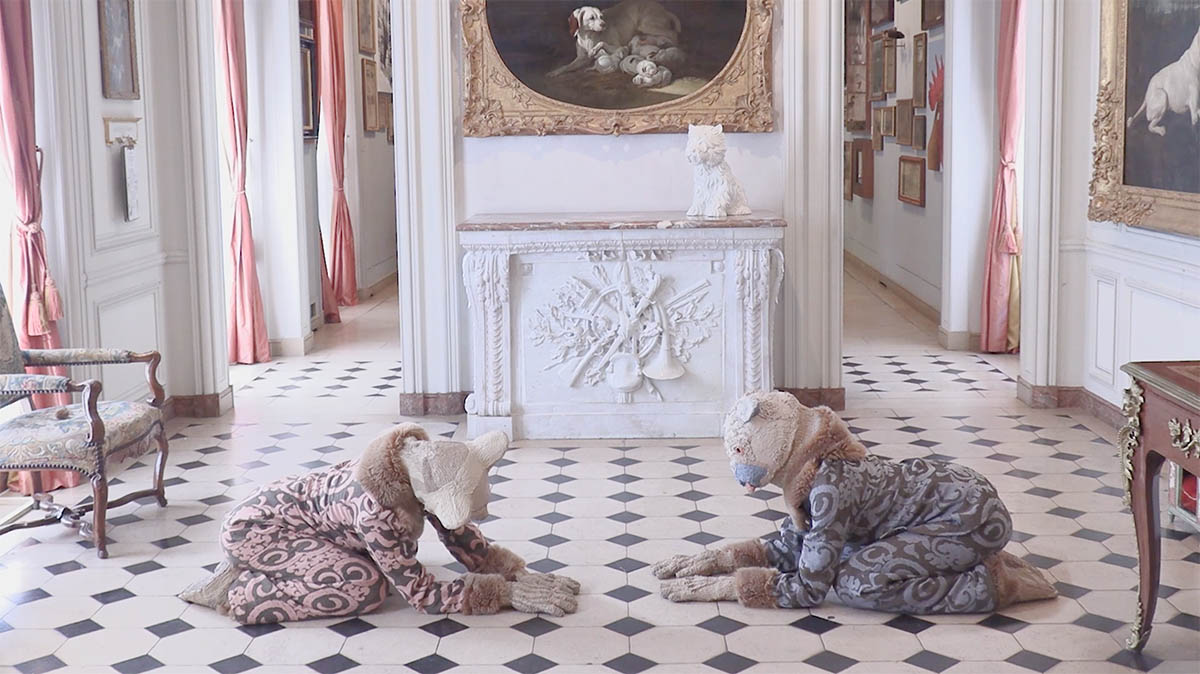
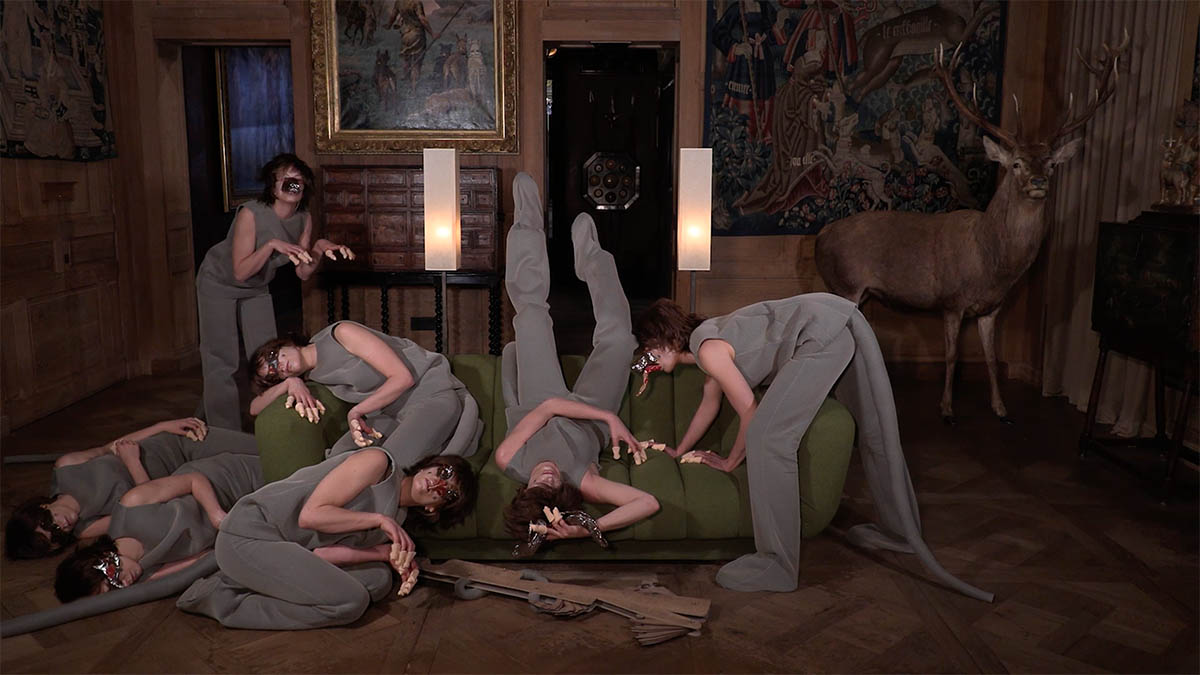
I love video as a medium; it can pull people in on an emotional level, in a very direct way. With sculpture, your attention can wander off elsewhere, but with something like film or music, it can truly absorb you completely. I have two ways of working with video. One is the fictional „feature film“ work, with a real story time set in scenography with costumes and characters I created myself. One example for this way of working is the film We used to be wild (2024). Even though here, I didn’t build the whole set myself, because I found this Hunting Museum in Paris, a wonderful place. I knew immediately I wanted to film inside it, because it was the perfect scenography for the story I already had in mind. But I built costumes, and the entire acting was done by me.
I work in “hybrid” roles and forms. I do have some help, basically one person filming me while I’m in front of the camera at the same time. Not only that, but I’m always the one directing, and it’s always me you see in the work. It’s an second self (alter ego) : this might come from a wish of being able to switch into a different role than the one I’d actually live. There is second way of working with video: in a form closer to the visual essays. Sometimes I am just filming something outside—architectural elements, or small scenes. It‘ intuitive, hands-on work, and I think that’s an important part of what I do.
There is a lot of writing involved, alongside a lot of imagination, speculation, and fiction: trying out new identities. I’d be curious to hear generally how you work: what a working day in the studio looks like for you, because there seem to be so many modes and methods you move through.
I have an intuitive entry and, on the same side, a conceptual frame from where I start working: for example, with the concept of cohabitation or anthropomorphism; that’s the frame where I am moving myself in. Frequently it’s actually the material that takes control. And i never know how they will actually react, what are the qualities of a specific material and how will it work or not work in combiantion with another material.
I constantly try to work with something entirely new, something I haven’t done before. I don’t like being too patient about it, making models, and trials. I always start directly with the material meant for that particular work. Like this, I cannot control the process fully, which I like.
Are there any books—could be theory books, could be novels—that have been important to you? Can you give an example?
Yes, one fiction book I really loved recently is by Olga Tokarczuk, titled Drive Your Plow Over the Bones of the Dead—kind of a crime novel, though I never read crime novels normally. It’s about a village where a person dies, and the animals there are somehow implicated—there’s a sense that the animals are involved in some kind of plot, or revenge against the humans. It’s cleverly done. The other book was Nightbitch by Rachel Yoder. The protagonist while she’s struggling with the question of motherhood, her way out is that she essentially becomes a “dog” in a second life — she goes out and lives this other, wilder existence every night. You’re never quite sure if it’s real, or a fantasy, or if it’s meant to represent a kind of art performance she’s doing.
The last thing I read was vital to me, and I think it will play a big role in the next exhibition I’m doing at KEBBEL VILLA in Schwandorf, Germany. The book is What Would Animals Say If We Asked the Right Questions? By Vinciane Despret. It is a theory-based book about different questions connected to animals: whether animals can feel, whether they think, whether they have self-awareness, whether they understand death—all these big questions. What actually differentiates humans from other animals and so on? The interesting thing is that she compares scientific approaches with people who live with animals—people who have a lot of experience with animals but not from a scientific angle. Someone who works with horses, or someone who lives with dogs or cats. . It’s a different kind of relationship, a different kind of knowledge. The book is structured almost A to Z—every chapter tackles one question, and she gives a bit of the historical background around it.
The direction I work in for the exhibition „where things stay too long“ is this question of whether anthropomorphism is actually something we need to understand and relate to other, non-human species—to actually have empathy with them. Or whether, eventually, it’s something that gets in the way.
I believe this has been the underlying theme across the last five years of my practice; it’s about confronting yourself with your surroundings, trying to find your place within all the “madness” and the political side of everything.
Do you feel that way yourself? Does it make you feel more peaceful, working with these ideas?
Probably, it’s a bit like being in the studio. When you’re in a good flow, everything feels meaningful, it feels right, and things work almost easily—the material works with you. And then other times it’s the opposite; it fights against you. I feel the same thing happens with theoretical concepts. Sometimes you feel like you’ve taken a step forward, and then you realize it’s not quite like that—or you learn something new that’s fascinating but genuinely difficult to sit with, because it clashes with your existing assumptions.
You work with silicone in a special technique. The texture you are making reminds me of woven fabric or woven wood.
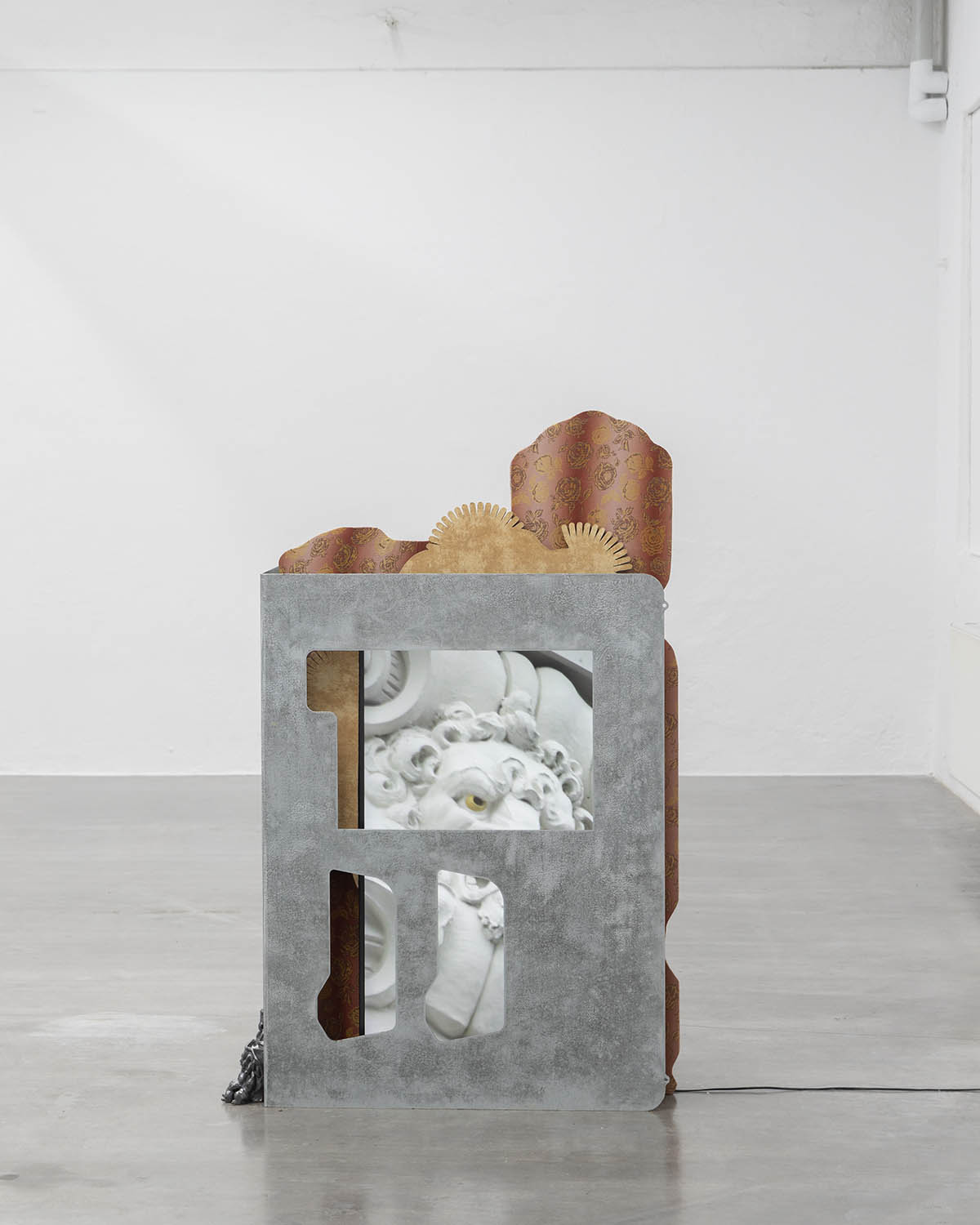
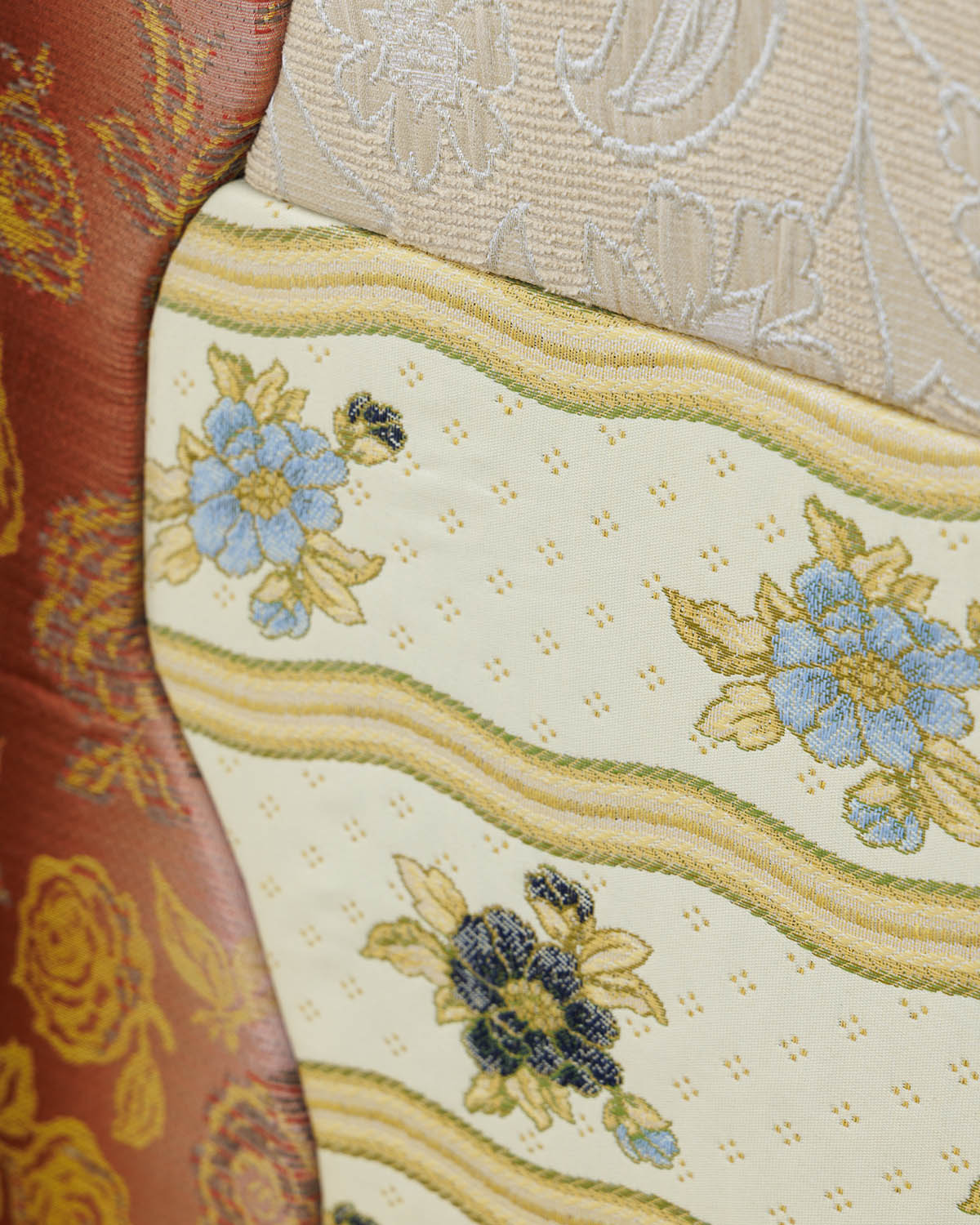
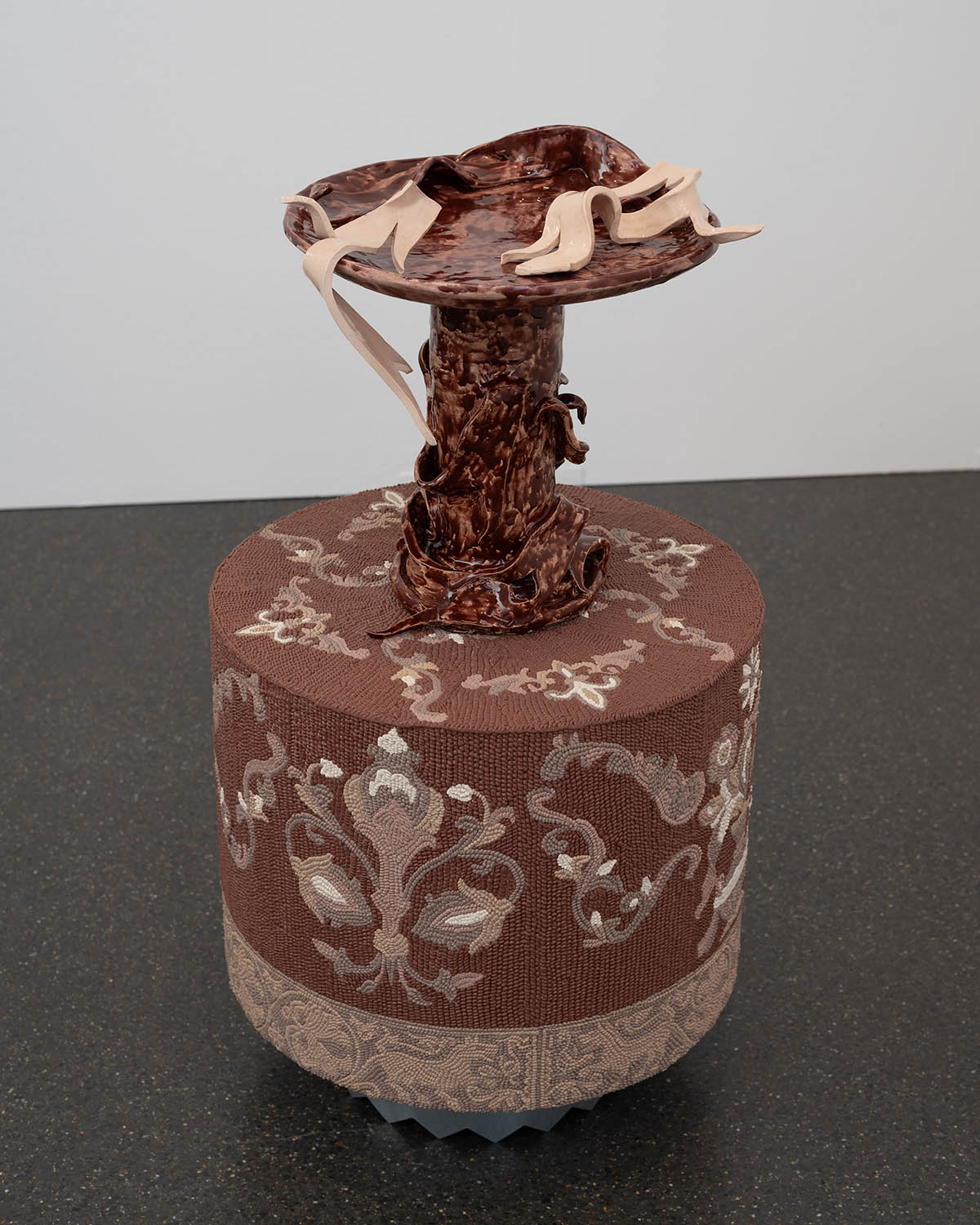
It’s funny with silicone. For some people it reads as totally textile-like, for some pearls—many tiny beads. When we showed it in China, most people thought it was 3D-printed. But I never 3D-printed anything. It’s important to me that people want to touch the objects—that they would like to know how heavy something is. I love playing with the idea that you can’t immediately tell what material it is, or whether it’s heavy or light. You can mess specifically with the perceived value of a material.
I love working with a material that pretends to be something else entirely: something with an entirely different value association. Even in earlier work, and still now, I always talk about „productive decoration.“
I think a lot about ornament and decoration, and the value systems around materials—like faux marble wallpaper, that kind of thing. I love that kind of stuff. That is how I arrived at it. I have two techniques combined that create the final result: one is the „dot“ technique, and the other is more of a „cord“ or „string“ technique. I found out that at first I was only making these flat, 2D tapestry-like pieces, and I noticed they looked woven, and I loved that huge material gap embedded in that. This „woven“ quality has something so cozy, homely, and familiar about it, and then the silicone brings this other, almost gross side to it, shiny, a little awkward. I liked that shift: from far away you think, „oh, what a beautiful woven wall-hanging,“ and then you get closer and go, „Wait, why is this so weirdly shiny?“
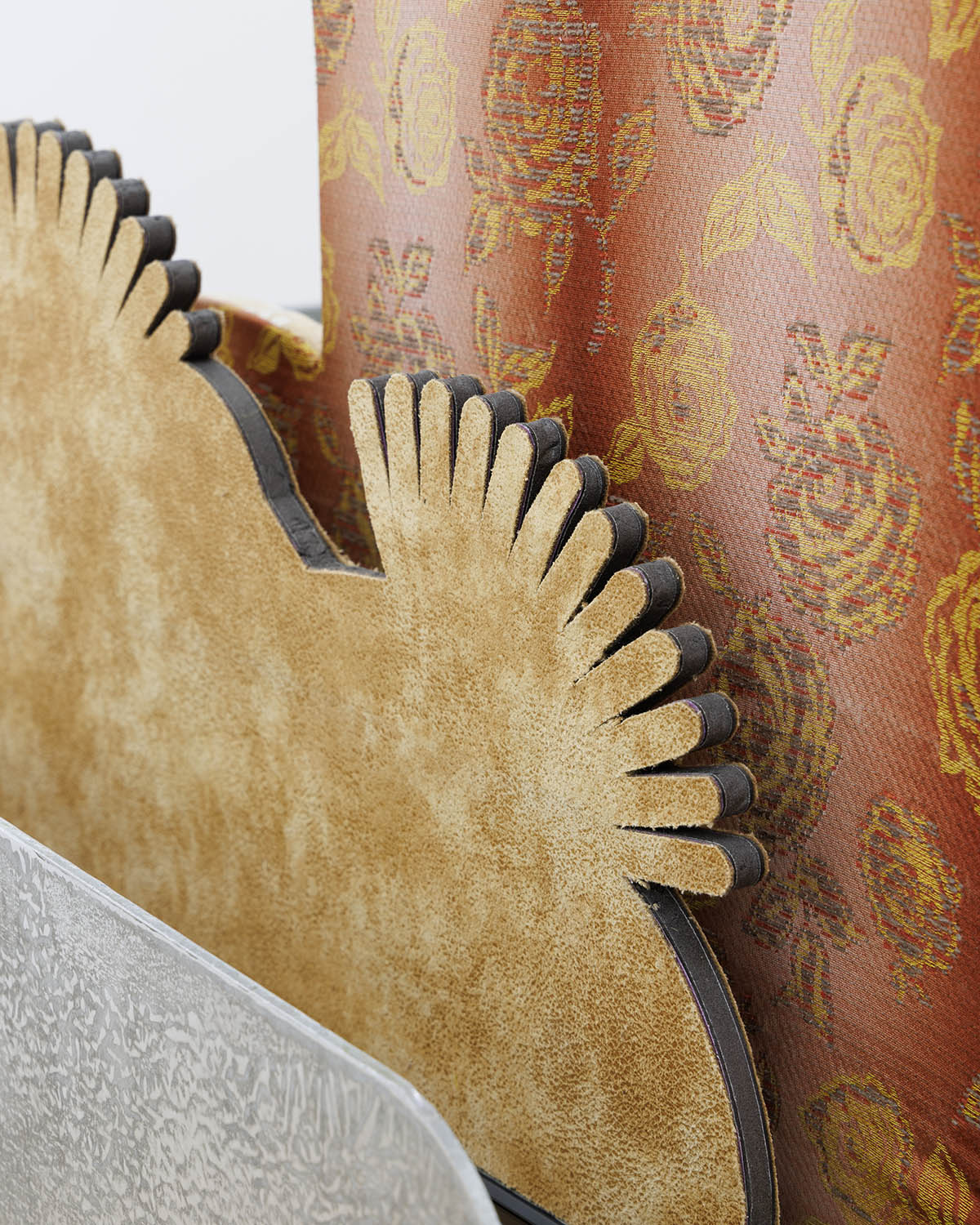
Then there’s the gender association that comes with textile art, which historically has so often been categorized as either „made by women“ or „women’s craft“ — and that’s in a way, interesting to me: this idea of it being not “high art” but „craft.“ I struggle with it.
Your begging was in drawing. Does drawing give you a sense of freedom, different from the material struggles you described with production?
Honestly, drawing for me is like a holiday from my studio practice. At one point I actually wanted to go further with it and learn special techniques; maybe that brought me to drawing less. It’s still important to me, but I’m not pushing to develop it further as a discipline right now. I’d love to go back to that more developed approach eventually, but it’s not that easy.
After finishing your studies, you became an assistant at the university fairly quickly. How was that whole ride for you from being a student, to being an assistant to eventually teaching yourself as a lecturer/professor?
Education shaped me a lot. I learned a lot at the academy from Stephan Huber and Alexandra Bircken—they were my professors. I think I picked up a certain kind of clarity and strength—like how to quickly understand why something isn’t working or how to troubleshoot a piece. Becoming an assistant was a continuation of this process. While working with the class, I kept questioning art-related questions around production, meaning, and, for example, the effect a work can have. Teaching, like my time at the Academy, made me realize how important friends and a good network with colleagues are.
I am asking myself how long my way of working will remain sustainable. I make large sculptural work; I have three storage units; I constantly need costly transport. My surroundings play a big role in this. My friends, colleagues, galleries, and family are constantly helping me with all kinds of things, and the exchange with my friends is crucial to me. Without this support, the way I work would simply not be possible, and this is what I was trying to tell my students. This kind of exchange is one of the most essential things when it comes to making a life as an artist possible.
Now I’ve just moved into a new studio space here in Paris while becoming a member of the collective Diamètre 15 in Montreuil. I’m really looking forward to expanding my artistic network here. After stopping teaching in Munich, I now get to actually be here more, which feels like a vital moment for my career.
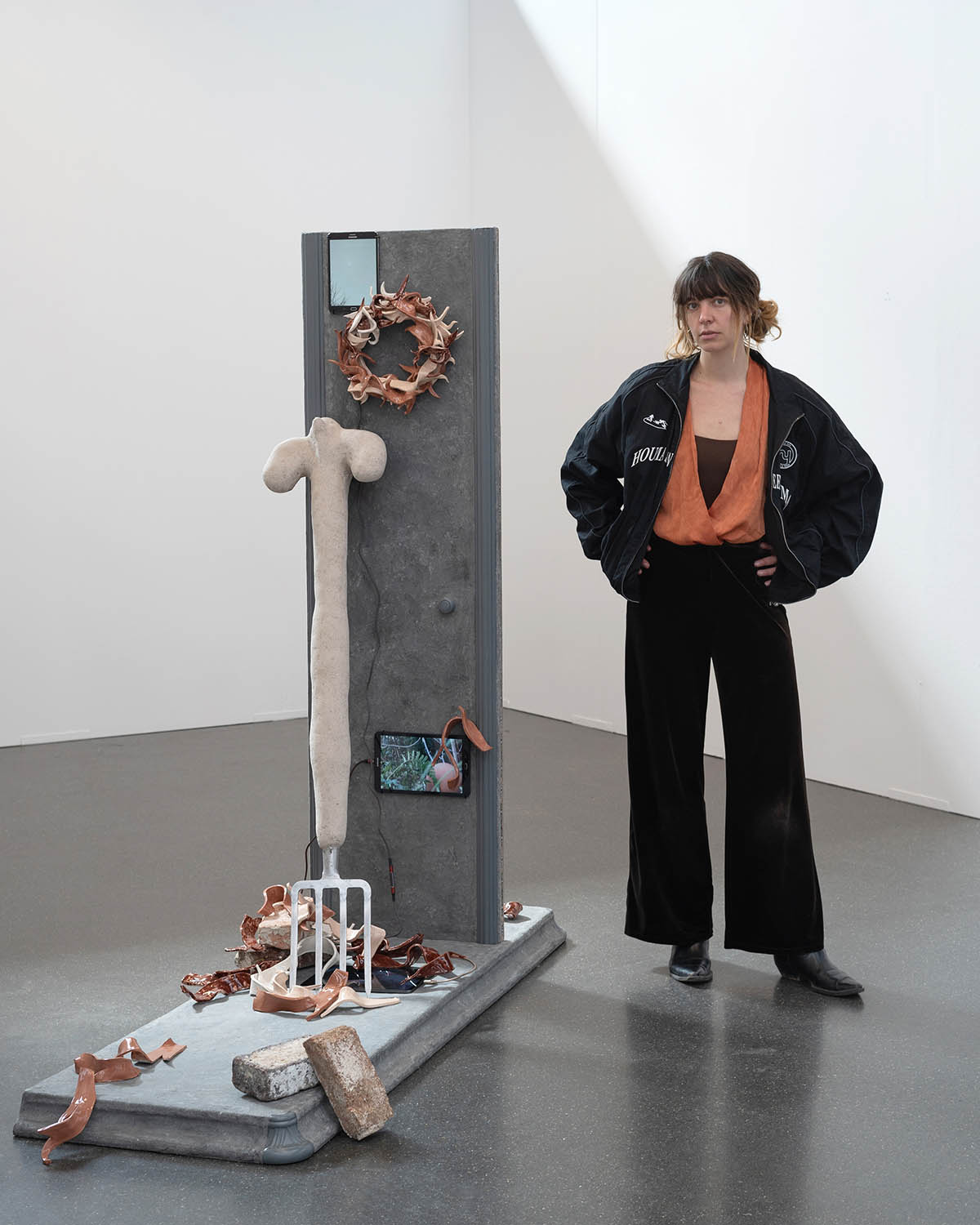
Solo Exhibition: Sophia Mainka- where things stay too long
Opening: September 17. 2026. 6:00 — 9:00 PM
Exhibition Duration: September 18. — October 31. 2026
Opening Times:
Thursday to Friday, 10:00 AM – 1:00 PM
Saturday 1:00 PM — 5 PM or by appointment
Address and Contact:
Galerie The Tiger Room
Heßstraße 48b (entrance through courtyard)
80798 München, Germany
www.thetigerroom.de
Sophia Mainka www.instagram.com/sophiamainka
thetigerroom.de/online-catalogue/sophia-mainka
Sophia Mainka (b. 1990, Munich) lives and works in Paris. She began her studies in philosophy at LMU Munich before continuing at the Academy of Fine Arts Munich, where she completed her studies in Fine Arts under Alexandra Bircken in 2020. Since 2022 until 2026, she has been teaching sculpture at the Academy. Her practice combines conceptual research with immersive, material experimentation, exploring the interplay between sculpture, video, and installation.