Tell us about your background. What kind of world did you grow up in?
I grew up in Wrocław, a big city in southwest Poland. As a kid, I was into drawing and gravitated a lot towards anime and manga, spending a lot of time on DeviantArt drawing my horrible Homestuck OCs. My passion for character design was a foundation for my later love for fashion. In a setting of a visual story, like a comic book or an anime, the outfit of the character is tied to their personality, their role, and often their magical powers as well. The clothes are crucial to the design and worldbuilding and are not constrained by the rules of reality (or social pressures) found in the normal world. As an older teen, I gravitated towards Tumblr, where I discovered all the emerging 2010s aesthetics, as well as fashion designers like Jun Takahashi, Rick Owens, Maison Margiela, and Alexander McQueen. I felt like, “Wait, you can design characters in real life?”
Your work feels so unconventional and fresh. Which themes resonate most strongly in your work?
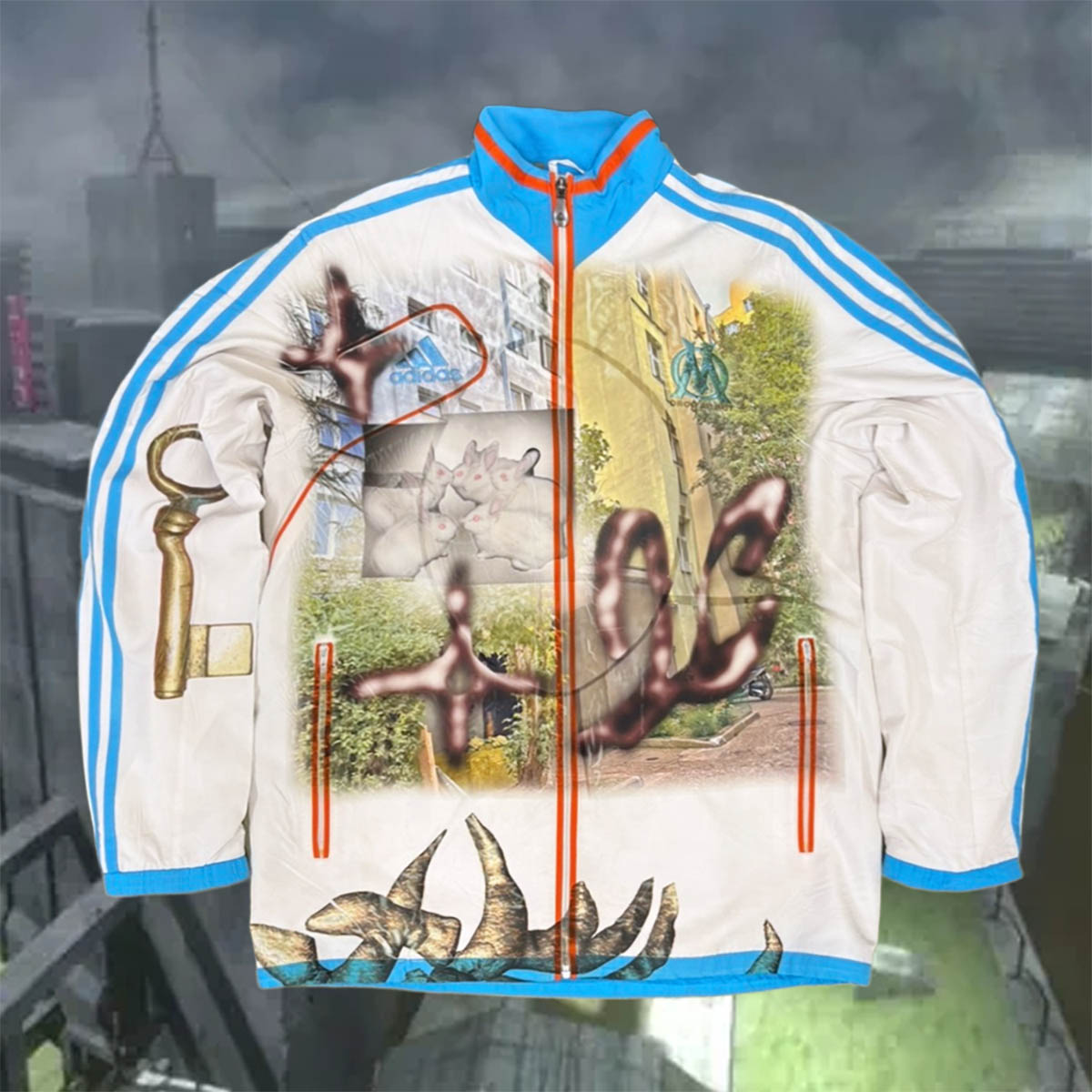
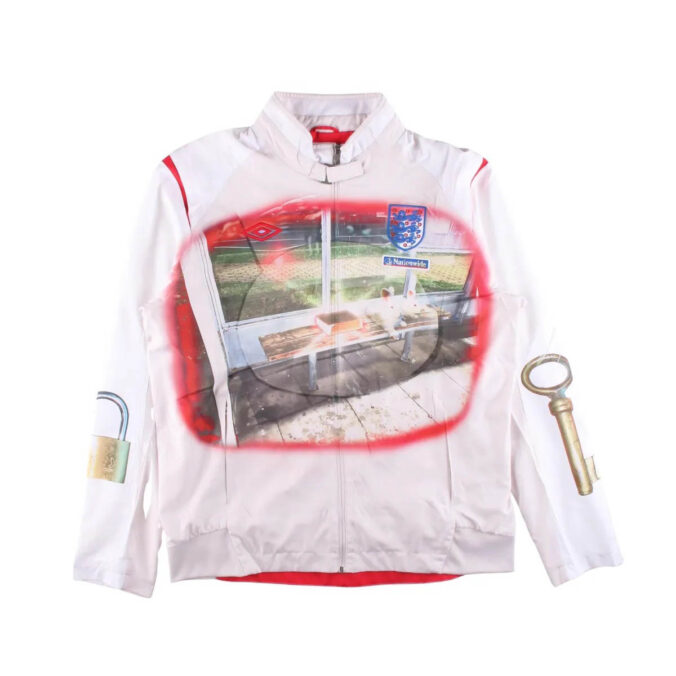
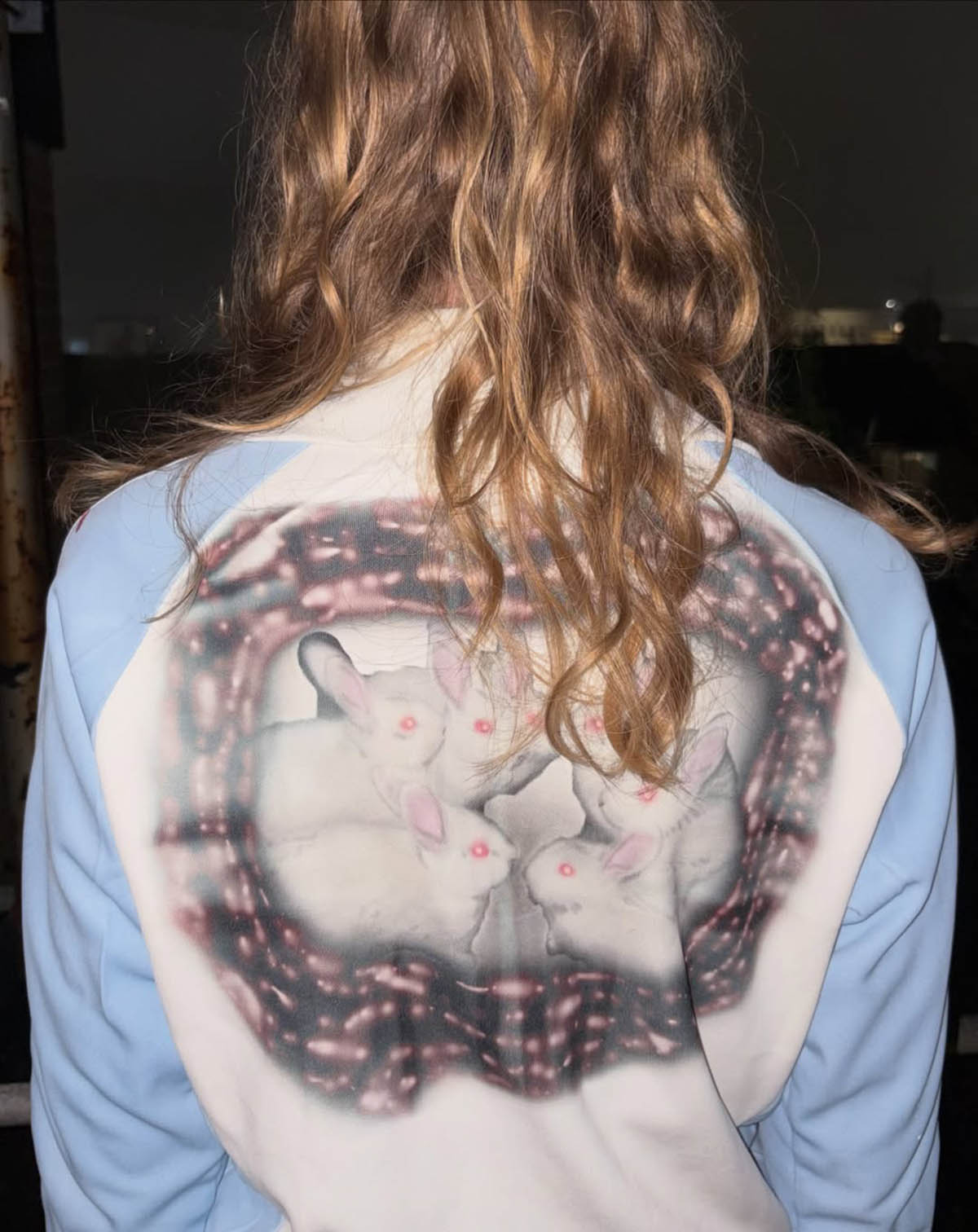
Thank you! I am a big fan of horror, particularly niche internet creepypastas (scary “real” stories written by anonymous users) and indie horror games. Continuing on the theme of character design, I gravitate to creating a world that is similar to ours but with some type of fantastical or magical twist. I place the character as a protagonist in the story, giving them agency in how it progresses. A mystery they need to solve, maybe with the use of a magical object or their abilities. I try to create a found-footage vibe, taking photos of the world around me and photoshopping in some lights, animals, or red circles and arrows like on cryptid photos. These types of visuals can be appealing because they strike on the uncanny valley, a familiar scene but with an eerie twist, encouraging you to look closer, to figure out the story behind it. These photographic prints on upcycled sportswear are unusual and unexpected. It feels like these items existing “don’t make sense”; that makes it interesting.
How does observing people in the urban space shape your art?
The characters I create are always young people living in urban settings, similar to me and my friends. I feel that is the classic fantasy scenario, something unusual happening to someone usual. The contrasts are important in my work: something strange happening in a familiar setting, a weird photographic print on a familiar jacket, and a sharp edge of a soft, airbrushed object. When I imagine a character, I need to place them within a world. The world that I know the most, that feels most familiar to me, is made up of moments in the city, interiors of flats, empty streets at night, and cigarettes in the kitchen at a house party.
What do you love about London?
I love London a lot! I’ve always dreamed of living here; I can’t imagine myself somewhere else. I love the feeling of safety and anonymity that comes from being just a person in a giant crowd. Furthermore, I feel like I’m never alone here; even on a 3 am cycle, there are always lights in some windows and some cars on the road. As with most capital cities, many Londoners were born outside of it, so I don’t feel like an outsider when I’m surrounded by other outsiders. London is so vast and has so many little “centers”; places like Dalston, Crouch End, and Deptford all feel like unique cities connected with high-speed rail. In London, I sometimes take a day trip out to Zone 4, gaze lovingly at Thamesmead, and quietly imagine what it might have become if the funding hadn’t been cut under Thatcher. Then I head back home in time for dinner.
How did you first become interested in using an airbrush? Who introduced you to it?
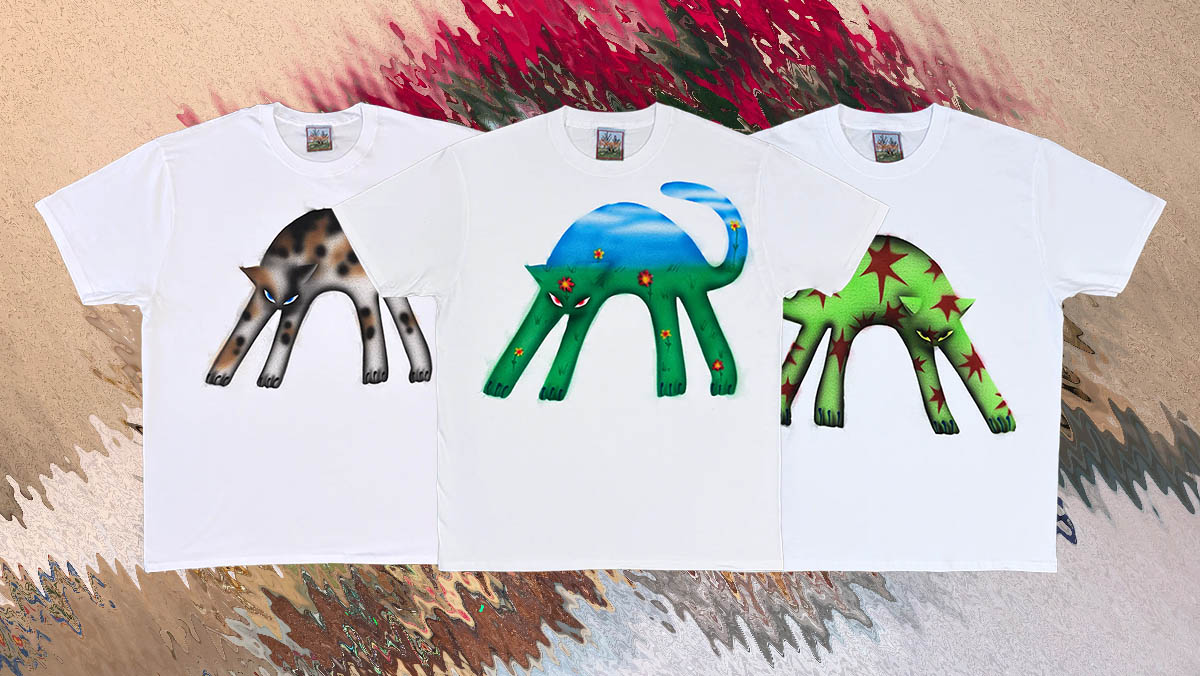
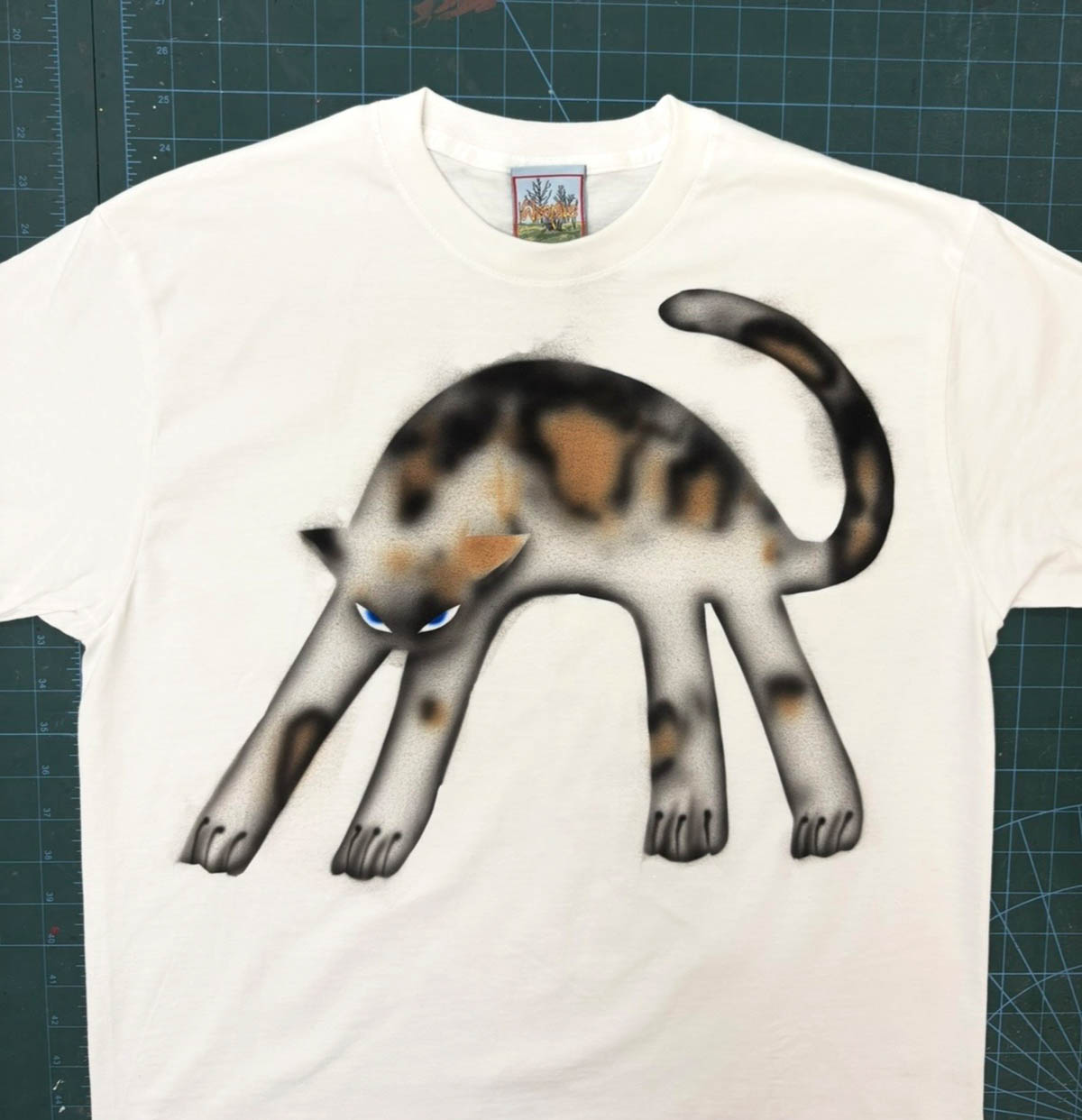
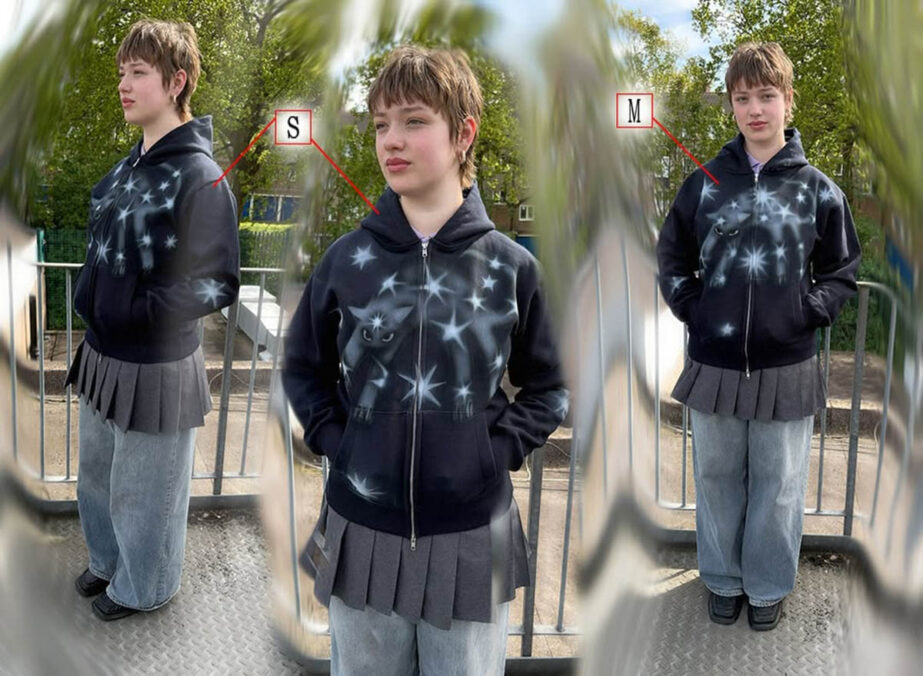
I was always into altering clothes by painting on them, later sewing on patches, and later printing with linocut. At university I got introduced to screen printing, which I enjoyed but realized would be difficult to do on my own when upcycling clothing. I prefer my tools for control and flexibility in working. Screenprinting introduced me to working with stencils, which I realized I could use in other mediums, like in airbrushing. It’s important to look at the history of the airbrushed tee, particularly its connection to hip hop and streetwear. The Shirt Kings were a group of graffiti artists in the 80s and 90s who played a key role in establishing and popularizing the style. The personal touch of the “spray,” similar to mini-graffiti, creates a painting that can be worn on the body. The t-shirts are 1-of-1s, and you can see the (air)brush strokes of the artists in the design, creating a personal connection between them and the wearer.
Airbrushing as a tool has been going through a renaissance, with so many artists using it alongside me, like Gerrit Jacob, Gao Hang, MASHINE, and Taewon Ahn. I feel like I’m a part of a very cool aesthetic movement. This, along with the rise in popularity of other 1-of-1 handcrafted items like ceramics, reflects the people’s exhaustion with fast fashion and mass-produced garments. Alongside the graffiti-spray aspect of airbrushing, the soft and blended aspect of its appearance can be made to look like PS1 and PS2 graphics, particularly when combined with a sharp edge of the painted object. The artists Bezimienny and Jonas Hejduk are both great examples.
On your website, people can buy unique pieces you’ve painted on old clothing. How important is this way of expressing yourself?
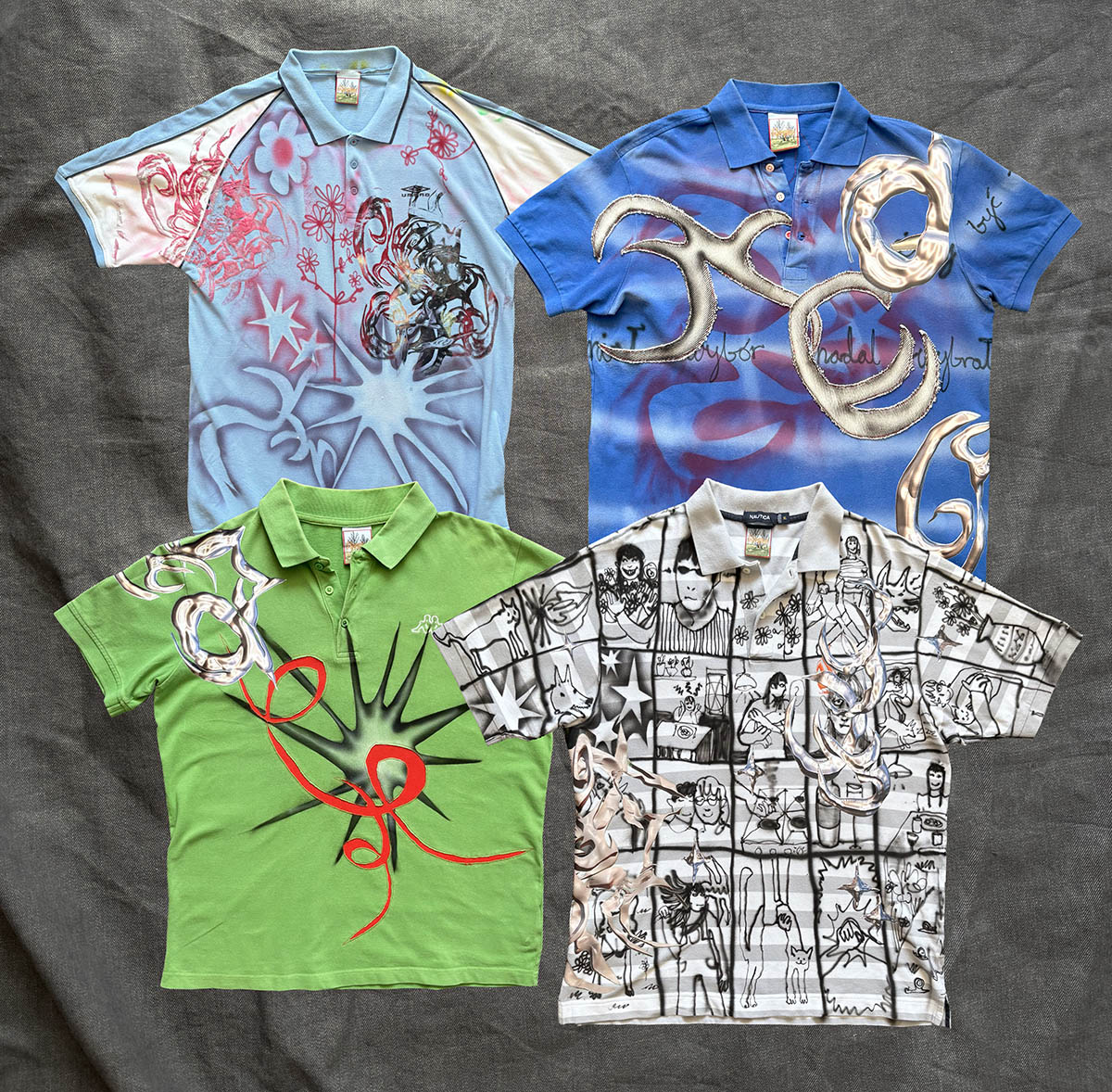
Currently the upcycled items form only a part of my drops, with the majority being done on newly made blanks, which are much easier to source when around 50-80 per month are needed. I am looking to increase this percentage in the future, as I’m very keen on sustainability, and I love the qualities of them, with every used garment carrying a story. What I love about fashion design are the two layers of meaning: a garment means something on its own (a gown meaning “I’m elegant”), but once it’s put on a body, there is an interaction of meaning (alignment, contrast) with the wearer. The same gown on a stern woman = I’m beautiful and intimidating, and on Harry Styles = I’m subversive, fashion-forward, and eccentric. There are also all the other interactions with the shoes, the accessories, and the physical place where the wearer is. Everything says so much. I’m mentioning this because when I’m upcycling a garment, it already carries these meanings: we can imagine who has worn it in the past and why it was designed. For example, the polo shirts are one of my favorites. Designed to look elegant, resembling a t-shirt but a comfortable one, it originated from preppy sports: polo and tennis. It later became an important staple for chavs, representing working-class identity. It has much more “oomph” when worn compared to a t-shirt; the collar frames the neck, and the fabric is thicker and structured. All of that history and meaning is already there before I start adding things to it. And when I do, there’s a sharp contrast—polo shirts are not traditionally printed, not traditionally associated with art or bold designs. The contrast creates strong pieces, full of weirdness and mystery. Printed upcycled polos are my favorite item to make.
How essential is fashion to your identity?
I have been very experimental with my fashion as a teen, combining a lot of aesthetics from Tumblr, the emo subculture, and the anime fandom world. I was very lucky that my parents were supportive of me walking around with shaved eyebrows and bright silver shoes in 2013 Poland; that freedom has really made me who I am today.
That changed when I came to the UK and started living as an adult. My family wasn’t able to support me financially, so alongside my maintenance loan, I’ve always had a part-time hospitality job. As a service worker, I felt I needed to preserve my sense of self by separating it from the “work self.” I became just a customer service machine, doing my job and staying professional. I would rather not wear my nice clothes to work in case they got dirty, and I usually headed to work after school. In time my whole wardrobe was full of boring, utilitarian clothes. I left hospitality in December 2025, and I’ve been slowly rediscovering my personal style since, in the calm of my studio.
How does music influence you? What are you listening to right now?
My taste in music is high-energy, upbeat, intense, funny, and sexy. I love clever lyrics in rap; I love when there’s some humor in the music. I love when music takes me up emotional highs with a story. I listen to a lot of classic hip-hop, pop, and Polish rap artists. I love techno as well, again, when it’s a bit crazy, atmospheric, and hypnotic, like a wave of energy.
When you drop, pieces always sell out super fast. Do you have any tips for getting one?
I know, I’m so lucky! I am always in disbelief when things sell out so fast; I am so grateful for the overwhelming support for my brand. I’ve got plenty of repeat customers; that makes me the happiest, knowing they’ve had my garments for months and enjoyed them. I am honestly living the life I always dreamed of, making clothes in my studio as a full-time job. I don’t have any guaranteed tips, but being on the website on the dot when the drop is the best.
I usually get 20% of the orders in the first 1-2 minutes of the drop. Crazy to think about! To get a piece, I have the following tip: My online store allows you to purchase using the purple “Shop” button, where your card details and address are already saved for a quick checkout, so you don’t have to type anything in. The same goes for Apple Pay (I think!). If you’re not sure whether it’s set up, you can test it by adding an item to your basket and going through the checkout process.
What are you currently working on?
I am continuing my biweekly drops on the website! When I finish sending one out, I often start painting the new one the next day. Alongside them, I have been planning on making a small collection with items I design and sew myself; I just haven’t had an opportunity to do it yet. I love patternmaking and sewing, and I really miss it, but it’s just so much more time-consuming than printing.
Wenpius – www.wenpius.co.uk, www.instagram.com/wenpius/