

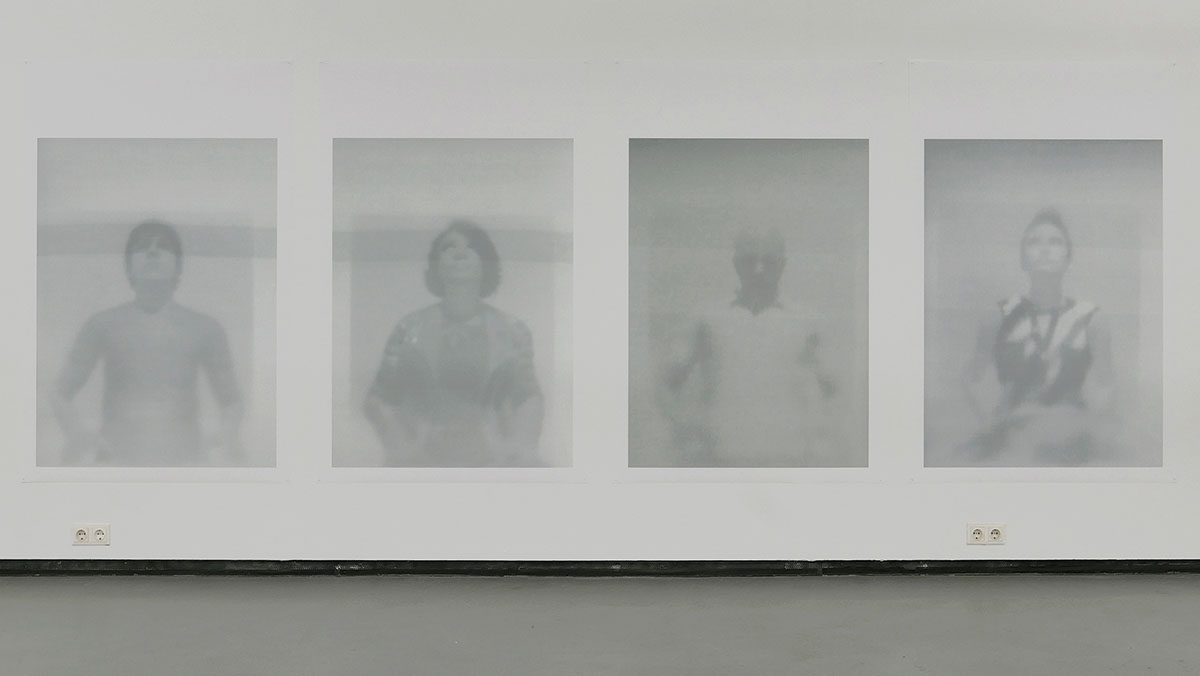
Foggy, opaque images might give the impression of depicted individuals, however those are stock animate 3D characters. Free to download, they were positioned in a sitting posture with slight regular movements as if they were real persons, and then imprinted on a photo sensitive paper by applying it manually on the screen. Faint horizontal stripes across the images are traces of a tape with which the paper was fixed. Inspecting the artworks closer, one discovers the digital nature of protagonists’ bodies, although the blurry, fading away contours seek to conceal it and trick the gaze.
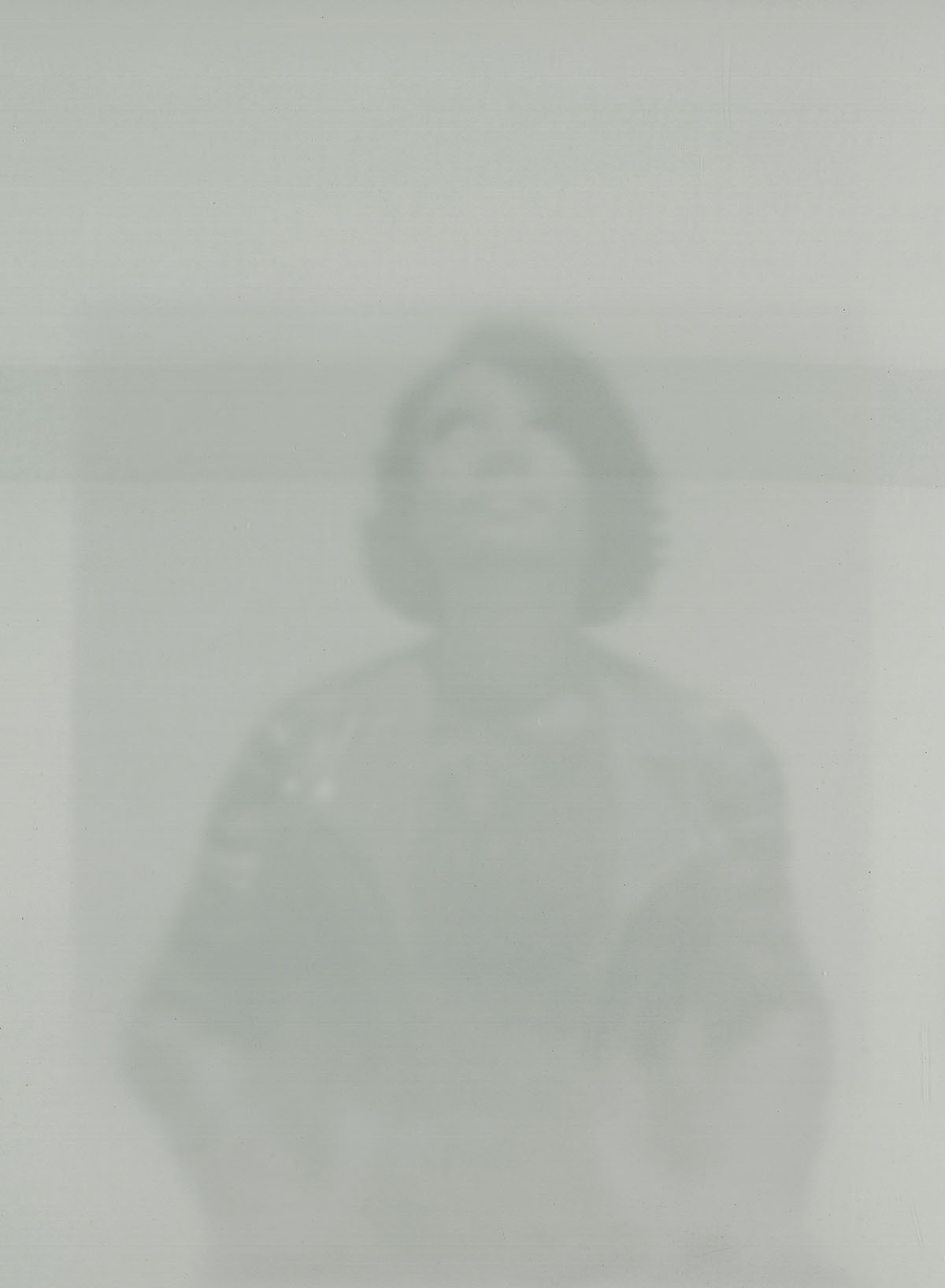
The models emerge like seen through a hazy foil – appearing and disappearing – they inhabit the realm beyond this membrane, as if it were a border between our world and theirs. The corporeality and simultaneously the artifice of the figures is uncanny. Alienated, unfamiliar, they possess a certain presence, even a personality. Armann reaches the pitch of estrangement, for the spectators can feel that they are also observed. She creates a vis-à-vis situation, so that the gazes of individuals and digital copies of individuals can meet. And even though not all her characters watch straight forward, still one has the feeling that the next second their eyes would meet.
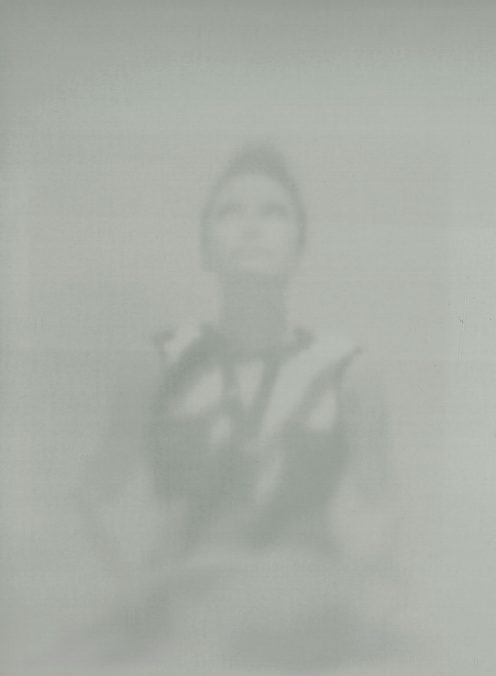
Despite broad-based use of animated characters, the idea of an eye contact with them is odd and eerie. Meant for service, leisure, fun, they are just visuals to be tailored and exploited. Yet Armann engages them as sitters and studies the way they are created, searching for something beyond the randomness of their appearance – a countenance, a pace. She treats them as if they had a story to tell, an experience, after all – a life. And this gesture of anthropomorphizing the algorithm is that what makes the spectators unsettled. The assumption that they might have their own reality, in some way reproducing our own, evokes a dystopian picture of digital world growing into an independent land with its intelligent and emotional inhabitants. And the eye contact, the artist stages here, is like a first mutual acknowledgment: confronted anew, we are encouraged to embrace each other.

The idea of a threshold between the physical and virtual space is important for Armann’s artistic research, and by placing these four portraits rather low on the wall, she achieves the body feeling of a potential walk in or out – shimmering, moving, breathing behind the filter, her sitters might see us the same way – greyish and vague – and might likewise question our realness, and likewise anticipate with fear the eye contact to happen. I believe sitting on {..} expands on the challenge of transition to post-human era, along which we will have to accept and recognize the rights of diverse entities, including not only material existences, but also technological ones.
Exhibition: Maximiliane Leni Armann. Sitting on {..} at Fotogalerie Wien
Duration: 4 May to 5 June 2021
Maximiliane Leni Armann – maxiarmann.wordpress.com
About the writer: Liudmila Kirsanova is an independent curator and writer, whose research is focused on autofictions, storytelling, and politics of belonging. In 2019 she became the finalist of the curatorial award Bonniers Konsthall, Stockholm. Curating international and domestic projects, Kirsanova has been advocating and promoting female artists, in particular those from non-Western cultures.