

In 2015 Brigida exhibited in the collective curated by Vittorio Linfante „The New Vocabulary of Italian Fashion“ at the Milan Triennale. In 2016 his works were part of the exhibition „Haute à porter“ curated by Filep Motwary at the Mode Museum in Hasselt (Belgium). In 2019, in Paris, he participated in the collective exhibition Image Nation in the Galerie Joseph and the following year he collaborated with Pierre Louis Mascia at the Leclaireur boutique. At the same time, his shots have been published in various international magazines: Vogue Russia, Vogue Japan, Vogue Poland, Vogue Portugal, Vogue Italy, Harper’s Bazaar USA, Rolling Stone, Another Magazine, Dazed, and Encens Magazine.
Between 2014 and 2018 Brigida began to experiment with portraiture and taught as a photography teacher at the Italian Institute of Photography, Milan; the European Institute of Design (IED), Milan; and Paris College of Art, Paris.
I started a conversation with him, finding out the first details of his Roman solo show and focusing on his language and research.
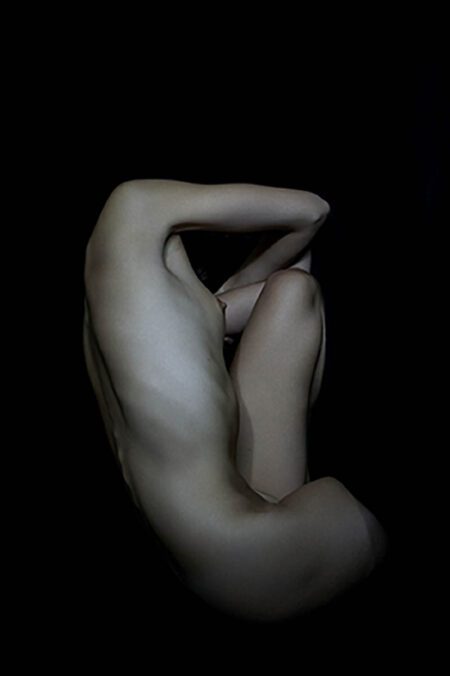
Study for a Sculpture 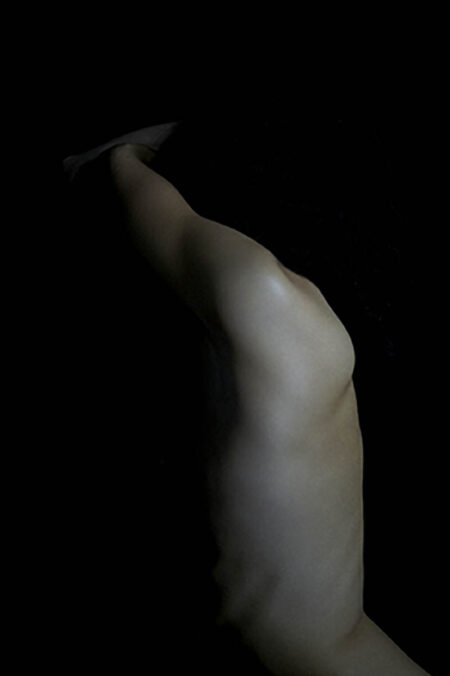
Study for a Sculpture
How did you first come to the arts? Why is art important to you?
Since I was young my aunt used to let me explore the library of her house. There were lots of books, Greek art, Egyptian art, Giotto, Michelangelo, the Impressionists, the surrealists, photography books, and various Italian novels. Soon I realized how interesting was for me to expand my imagination. Feed my brain. When I started taking pictures with my first camera I was attracted by the potential of this object. To create new atmospheres, suspended moments. I started taking pictures of my daily life, I could select a portion of my life to create nice photos, abstract pictures of objects, landscapes, or experimental portraits. I wasn’t conscious of the potential of the camera. But something conquered me. Creativity is the language everyone can use to express himself or herself. At a different level. This is important.
How do you develop your projects?
I assisted some talented architecture photographers. I am obsessed with the balance of the lines in the composition of the images. With time and experience, I developed my language. I like the elegance of the movements and the balance of the body’s shapes. I would say I love to be essential. When I approach a new project, I spend time studying and researching new references, ideas, paintings, poems, or films that inspire me. I create a portfolio that shows me different hypothetical creative directions and thoughts. As a first step, I prefer to create a concrete idea for my future project. The possibilities are thousands, and the important thing is to select the essential that I like. I love to be clear and squared in my creative process. Once I have a vague but clear intention, I am ready to play, create, and try to get closer or distant from my idea. I like the contradiction during the complex process of creation.
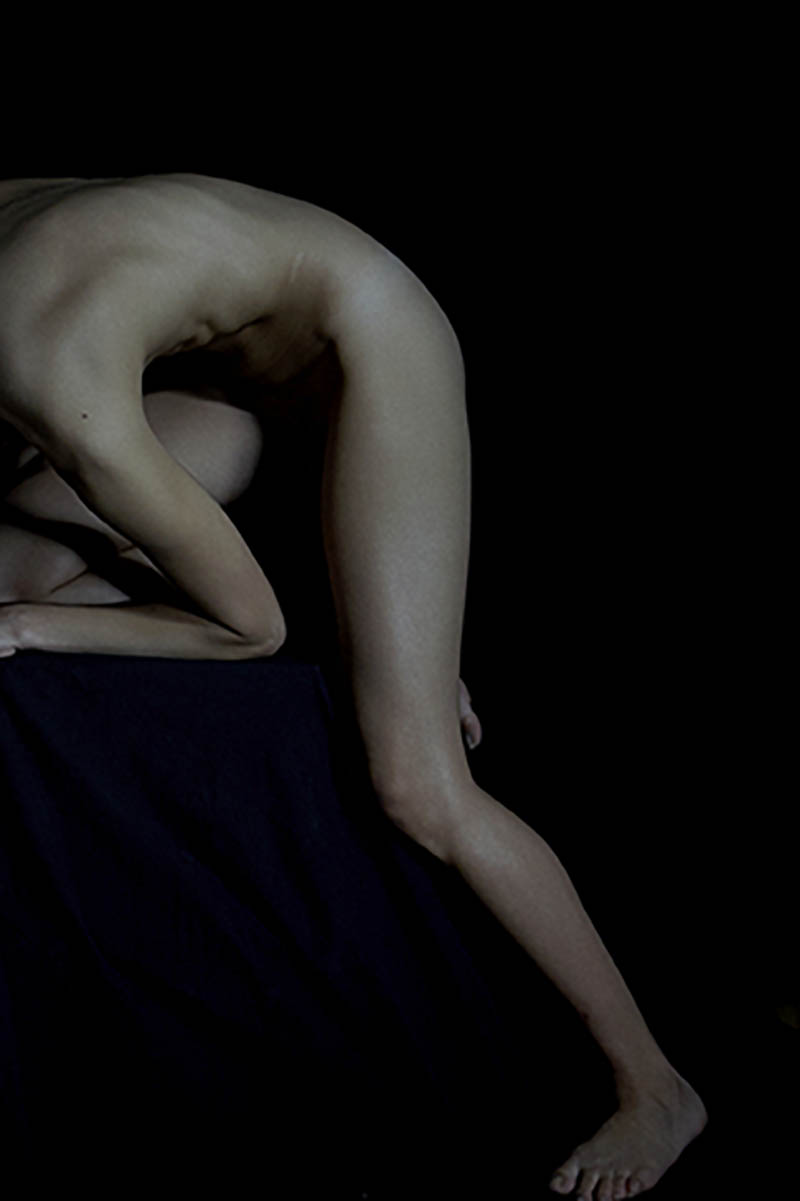
Study for a Sculpture 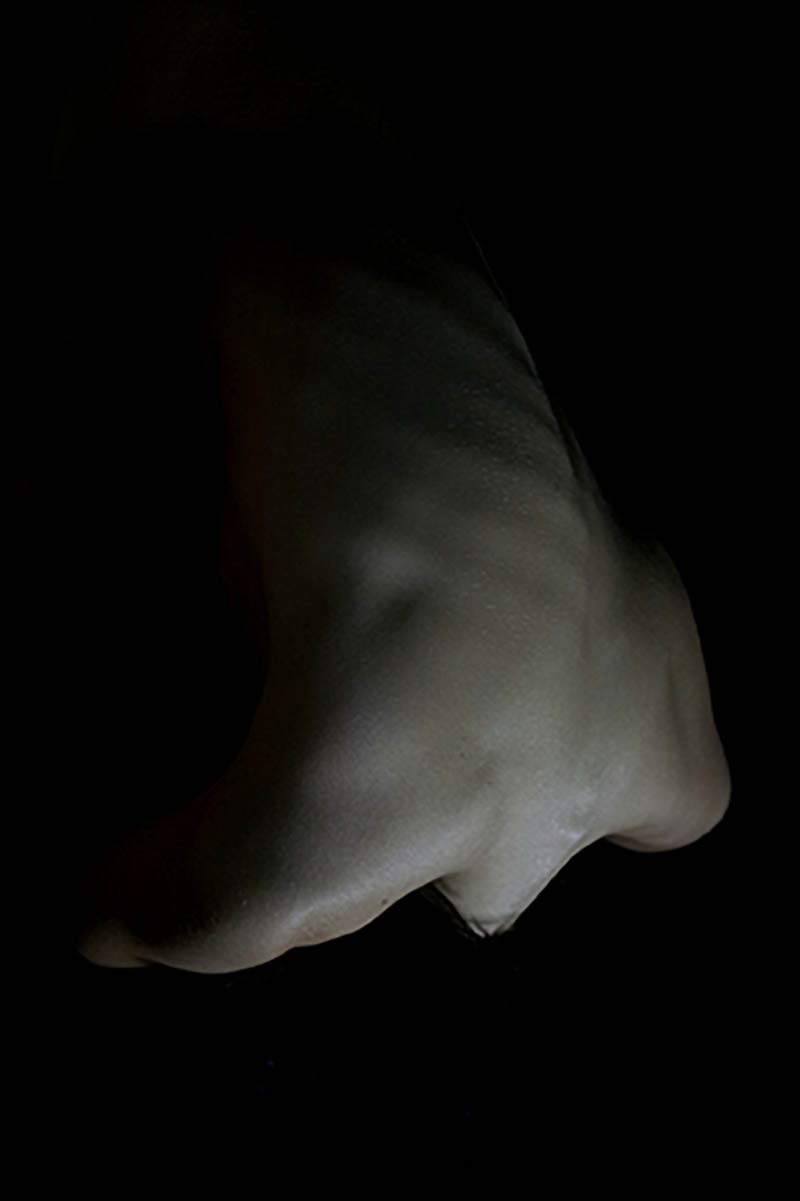
Study for a Sculpture
What is the link between fashion and art? Has one influenced the other?
I think there is a constant dialogue between the fashion photographer and the artist in me. When I did Studio per una scultura, I thought about the idea of a book for a long time before I realized it. Usually, a fashion project has a specific timing. Research, production, and publication. With the publication the project gets the maximum exposure, and there is a fast use of the pictures ( which is a shame sometimes). However, an art project has a different timing. I realized the book around the end of 2021. I did the first exhibition in the past January at Alessia Paladini Gallery in Milan, and now others are following. All this is to say that for my book to get the maximum attention took a long time, something that can’t be reduced to a single publication. For both types of projects (fashion and art projects ) I get to use my sense of aesthetics, my sensibility, my knowledge, the research and studies that compose my universe.
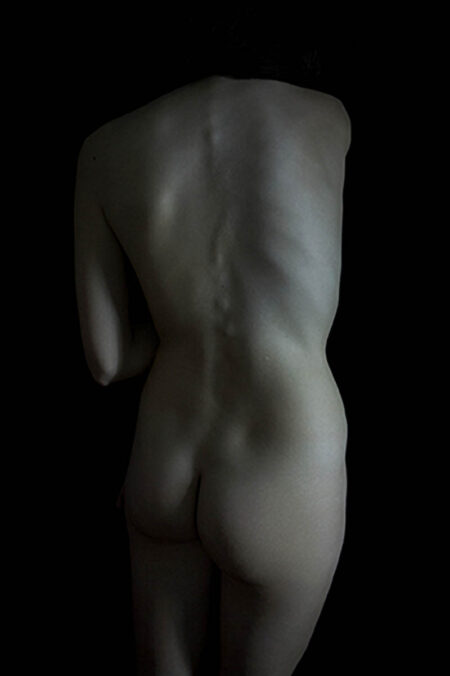
Study for a Sculpture 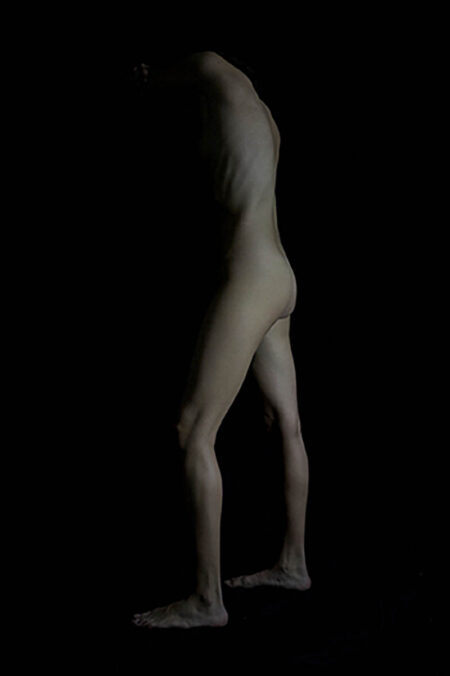
Study for a Sculpture 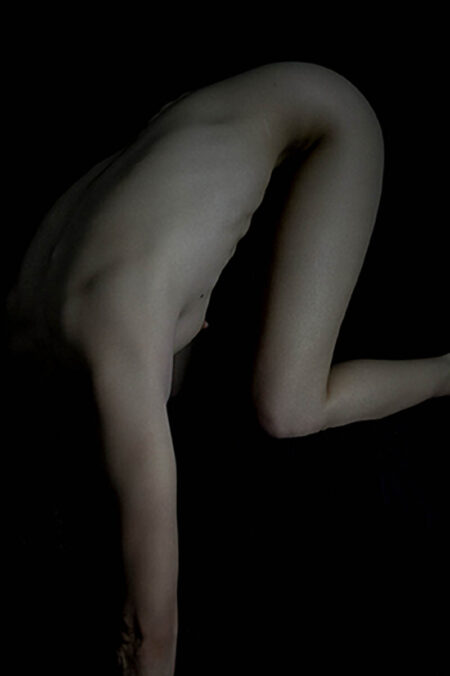
Study for a Sculpture 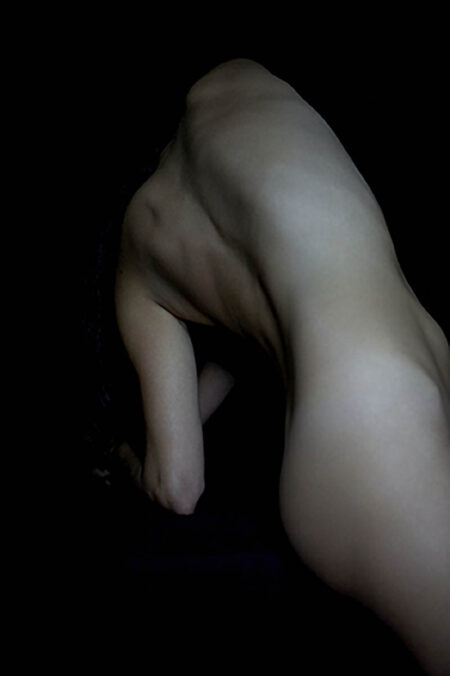
Study for a Sculpture
Referring to your new book Stvdio per vna scvltvra (‘Study for a Sculpture’), published by edizioni Linke, could you tell us something more about the creation of the book?
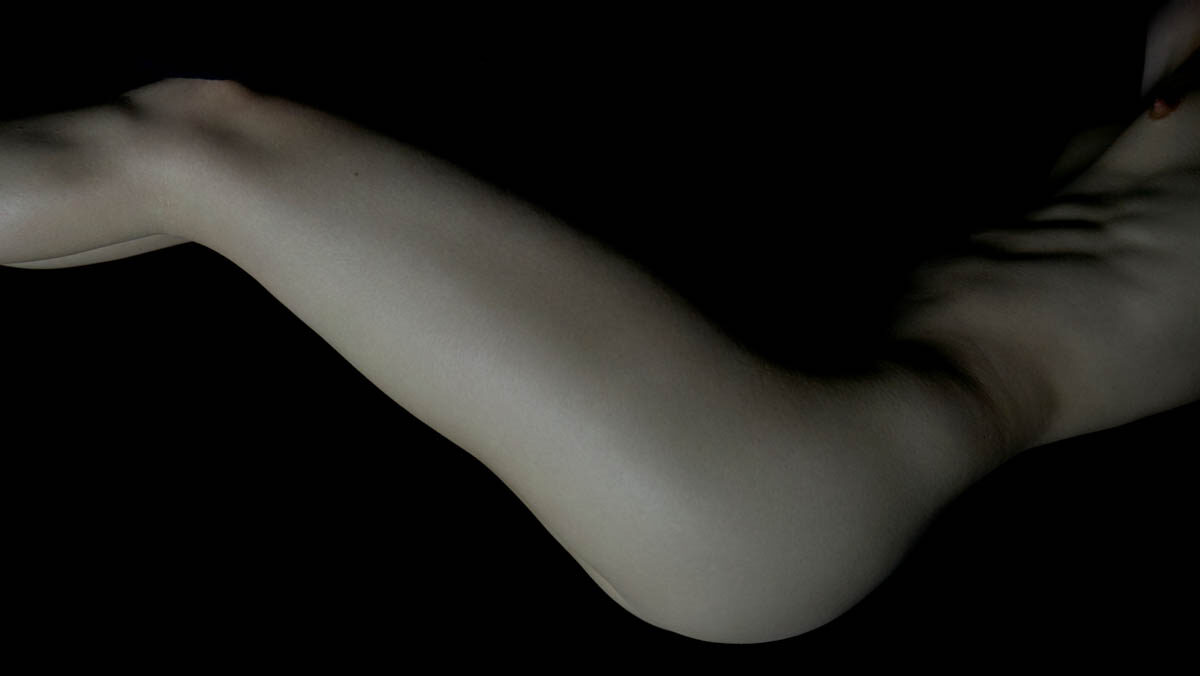
Drawing inspiration from classical sculpture, I create images that examine body language and interact with movement. Stvdio per vna scvltvra (‘Study for a Sculpture’) is the culmination of my research into the human body’s potential for representation. For two years, I worked with one model and one subject. Nudity puts the body into a state of sublime simplicity and purity, preparing the subject to be photographed and portraying his/her movements in the flesh, as they are. The body appears molded, as though it were an actual, sculpted material. There is no hint of sensuality or eroticism. Using a pared-down visual language, I create images of ideal sculptures. They appear against a black background, chiseled by the light like in a nocturnal scene. In these shots, the head seems to disappear. The face is generally considered the mirror of the soul; but looking closer, we see that all the muscles in the body express the intimate feelings of the human psyche. Stretched-out limbs, a twisted torso, and hands can all smile with the same tenderness as the eyes. Engaging with classical sculpture means training ourselves to observe nature. The Ancient Greeks always portrayed nature just as they saw it. They emphasized the main features of the human figure without suppressing the realistic details that breathe life into the sculpture, simply blending them in with the whole. Greek sculptors expressed tenderness and sensuality in the beauty of the human form that any other nation has never equaled.
Can you introduce your Roman solo show at AOC F58 Galleria Bruno Lisi and tell us something about how it will be?
The book is always a unique space where to express an idea. But what I find very interesting is the possibility of reworking the layout of a project to show it in a gallery. Using the walls of the gallery as white three-dimensional pages, playing with the different formats of the pictures and the sizes of the space. I decided with the precious collaboration of Camilla Boemio to express in this exhibition the potential of each group of pictures adapted to the space. I prepared quite a new layout for this solo show. Something that connects easily the viewer to the picture. As for the rest, you are invited to enjoy it personally.
Francesco Brigida – www.francescobrigida.com
Camilla Boemio is an internationally published author, curator, and member of the AICA (International Arts Critics) and IKT (International) based in Rome. In 2013, Boemio was the co-associate curator of PORTABLE NATION: Disappearance as work in Progress – Approaches to Ecological Romanticism, the Maldives Pavilion at the 55th International art exhibition La Biennale di Venezia. In 2016, Boemio was the curator of Diminished Capacity, the first Nigerian Pavilion at the 16th International art exhibition La Biennale di Venezia. Boemio’s recent curatorial projects include her role as co-associate curator at Pera + Flora + Fauna. The Story of Indigenousness and The Ownership of History, an official collateral event at the 59th International art exhibition La Biennale di Venezia, 2022 and she curated several exhibitions for Polo Museale Sapienza at Museo dell’Arte Classica and at MLAC Museo Laboratorio Arte Contemporanea, in Roma. Invitations to speak include the Tate Liverpool, MUSE Science Museum, and the Cambridge Festival 2021, at Crassh, in the UK.