

A masterfully orchestrated exhibition, furthermore profoundly touching. UNFAIR GAME talks about game as an enabler of existence, game as a survival mechanism, but also game as a realm filled with tactics, calculations, and trickery.
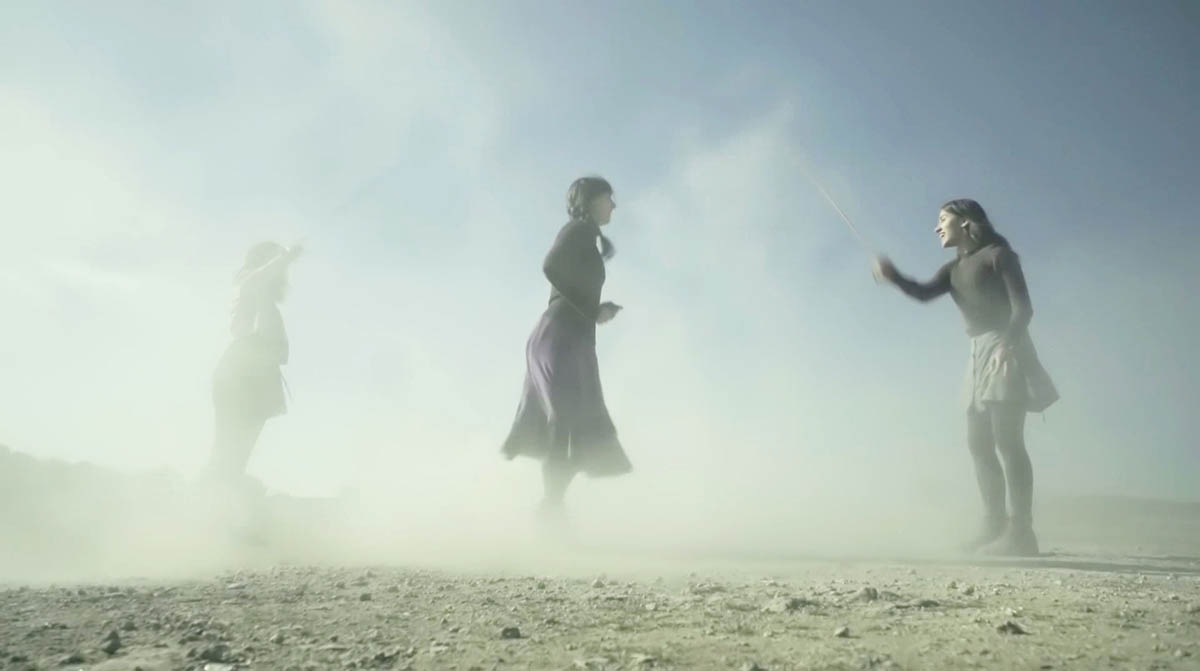
The exhibition begins, at least for me, with a video work by Şener Özmen, „Women Jumping Rope“ (2017), shot in the heart of Diyarbakır, women playing who end up disappearing into dust. Dust, an enduring symbol in the artist’s work, perhaps it is precisely this dust that led him to exile.
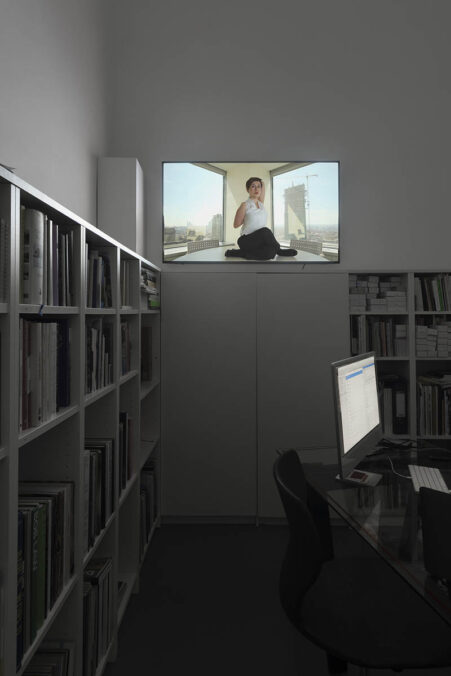
Exploring deeper within the confines of the gallery office, one stumbles upon the thought-provoking video „Crisis and Control“ (2013) by Burak Delier. The video examines the absent boundaries between work, personal life, and leisure. But at the very end, as articulated on the artist’s website, there appears to be a true fascination among these office workers and managers for the intense, sleep-deprived, stress-laden work reality. The deliberate positioning of the video adjacent to the gallery founder’s desk adds a layer of intentionality.
The video titled Crisis and Control fluctuates between documentary and performance as an art form. The performers are real office workers and managers who practice yoga; these are actual statements. – Burak Delier
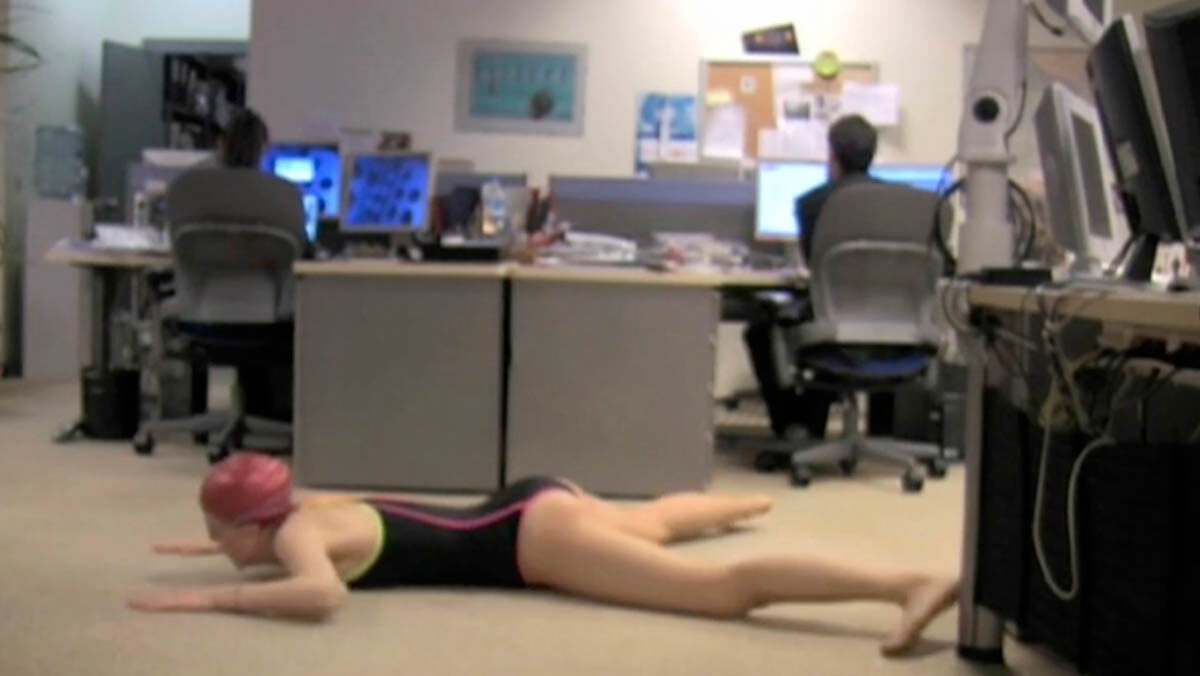
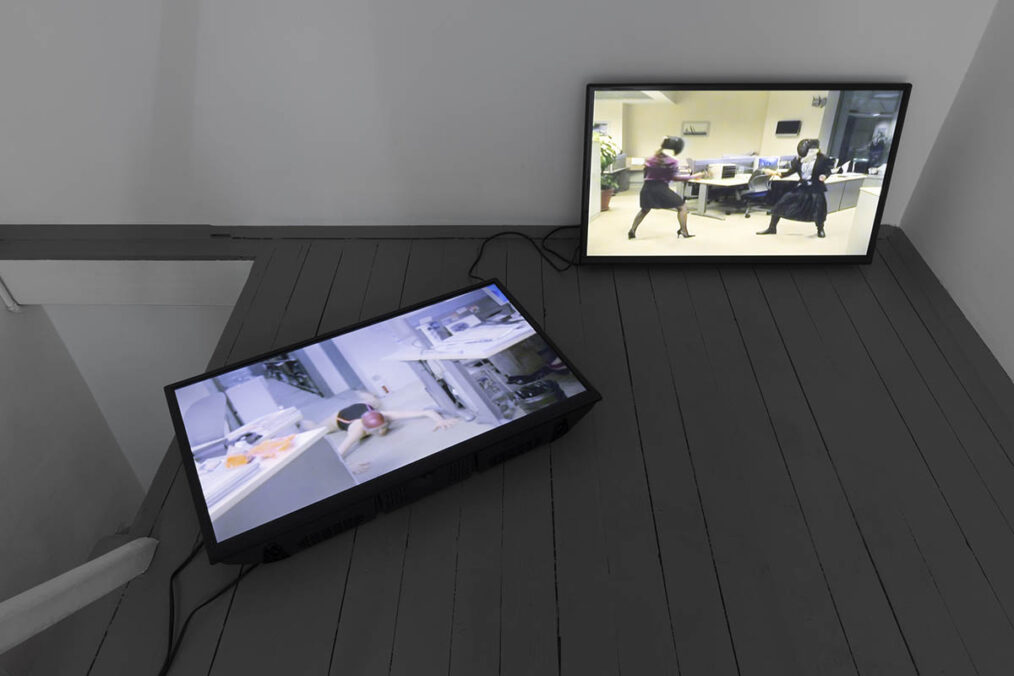
Ascending to the gallery’s second floor, one discovers a group of works between video work and painting, by artist Nazım Ünal Yılmaz, Sena Başöz, and Pınar Öğrenci herself. Within Sena Başöz’s videos, positioned side by side, a surreal narrative unfolds within an office space. On the right screen, two colleagues engage in a sword-fencing duel, while on the left an employee, presumably from the same corporate realm, has put on a tournament swimsuit and swims across the office floors. This seemingly bizarre scene prompts reflection on the many times we’ve probably forged other aspirations within our current work settings.
The exhibition ends in a dimly lit room, housing Pınar Öğrenci’s „Hotel Miks.“ Immersed in the video, I find a profoundly intimate space for solitary contemplation. Captivated by the work, the music, the faces, the hand movements, I linger to watch it twice. The video unfolds the remote city of Miks in Turkey—the birthplace of the artist’s father.
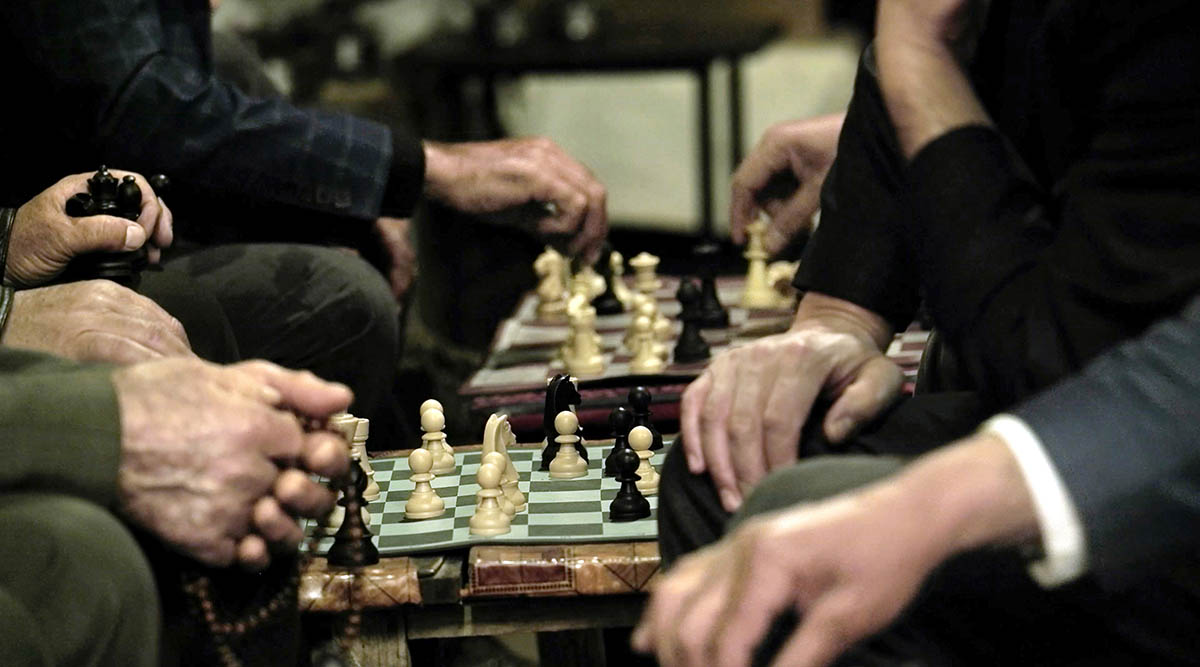
The isolated, snowbound region reveals the communal heart of its people, men gather in tea houses, engaged in riveting endless games of chess. As a soundscape, we hear Armenian and Kurdish traditional instruments, each laden with historical essence and cultural identity, reenergized with electronic elements skillfully crafted by electronic producer Carlota Marques. Simultaneously, her music serves as a bridge, connecting us with the local realities. Only briefly does the music wane, yielding to some decisive and fast movements of chess pieces – pawns, bishops, knights, rooks, and the king and queen – after felt melancholic, concentrated faces, we see a man smiling. In the end, the whole becomes something that one cannot forget. Unfair Game and the works of all chosen artists have a real transformative power.
Exhibition: Unfair Game with Sena Başöz, Burak Delier, Fatoş İrwen, Pınar Öğrenci, Şener Özmen, Nazım Ünal Yılmaz, Nalan Yırtmaç. Part of the Gallery Festival Curated by at EXILE Gallery.
Exhibition duration:12.9.- 14.10.2023