

Many people know your work primarily through video, though the medium only entered your practice after your move to Italy in 1997. Having trained as a painter at the Academy of Fine Arts in Tirana, you have described in a conversation with Kathrin Rhomberg how working in a medium that was not initially your own opened up new expressive possibilities. Looking back today, how do you think that distance shaped the language you developed?
I was trained as a painter in Albania during the years of Socialist Realism. I have drawn and painted since I was little, and in this way developed a strong familiarity with the medium. Video was introduced into my practice as a new tool. It was a kind of irruption, and I used the video camera because I needed it, not because I knew how to use it. This relationship with necessity remains an important aspect of my work even today, when I choose a medium. In general, the process of making a work doesn’t start from the position of knowing, but from the attempt to explore something. So the work doesn’t become an expression of “my ability”, but rather takes shape as an exploration of a possibility or a potentiality. There is always a space of exploration even inside one medium. I still paint, and I still try to explore the medium, and I don’t see it as a limit.
What I learned from my experience with video is that you need to bring to the work something that is out of you, something that is in front of you, something that you are witnessing, but at the same time, you don’t control. So the experience with video brought me more of a kind of attitude than just a new medium.
What was your first video work?
Albanian Stories was my very first experience not just with video art but also with a video camera. It was not the decision to make a video art piece, but the necessity of using a new tool for witnessing the stories that Jolanda, my daughter, was telling, that brought me toward this language.
I realized that I couldn’t use drawings or paintings to deal with this experience, so the video came as an organic choice.
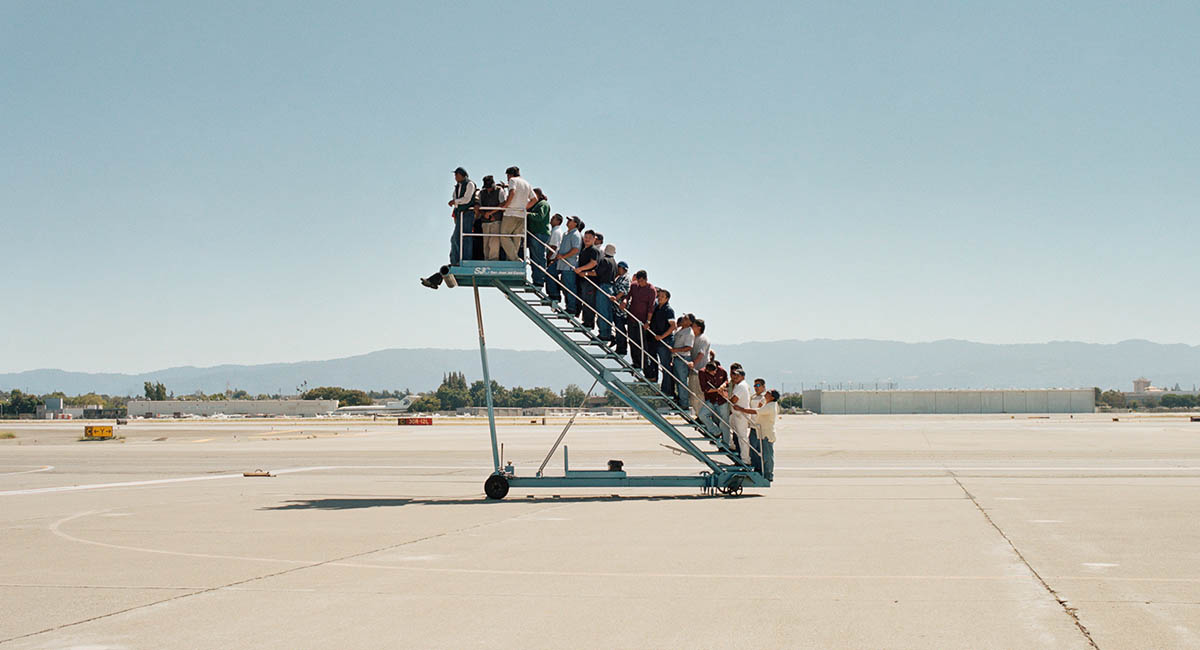
I’m thinking of works like Centro di Permanenza Temporanea, Per Speculum, The Wanderers. How do you arrive at the people who enter your works, and how do you work with them once they are part of the process?
A few days ago, I was looking through some old tapes. In them, you see my friend Maria Del Carmen and me in the streets of San Francisco, speaking with immigrants and inviting them to take part in the making of Centro di Permanenza Temporanea. It brought me back to those memories and to the process itself. I remember that we initially made an open call, but very few people showed up. So I told the team that we needed to go to the street and try to involve people there. We went to an area where mostly Mexican immigrants gathered while waiting for a daily job. We had a budget to pay, not much, but of course, their working day had to be covered. We explained the idea, and they agreed to participate.
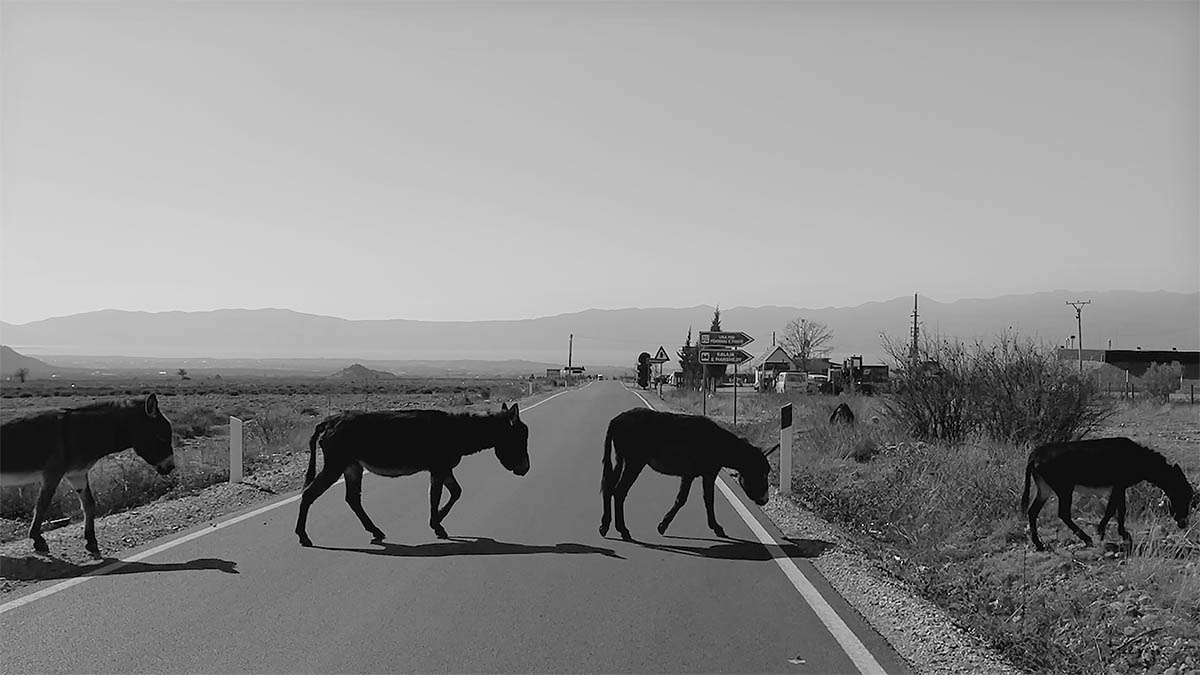
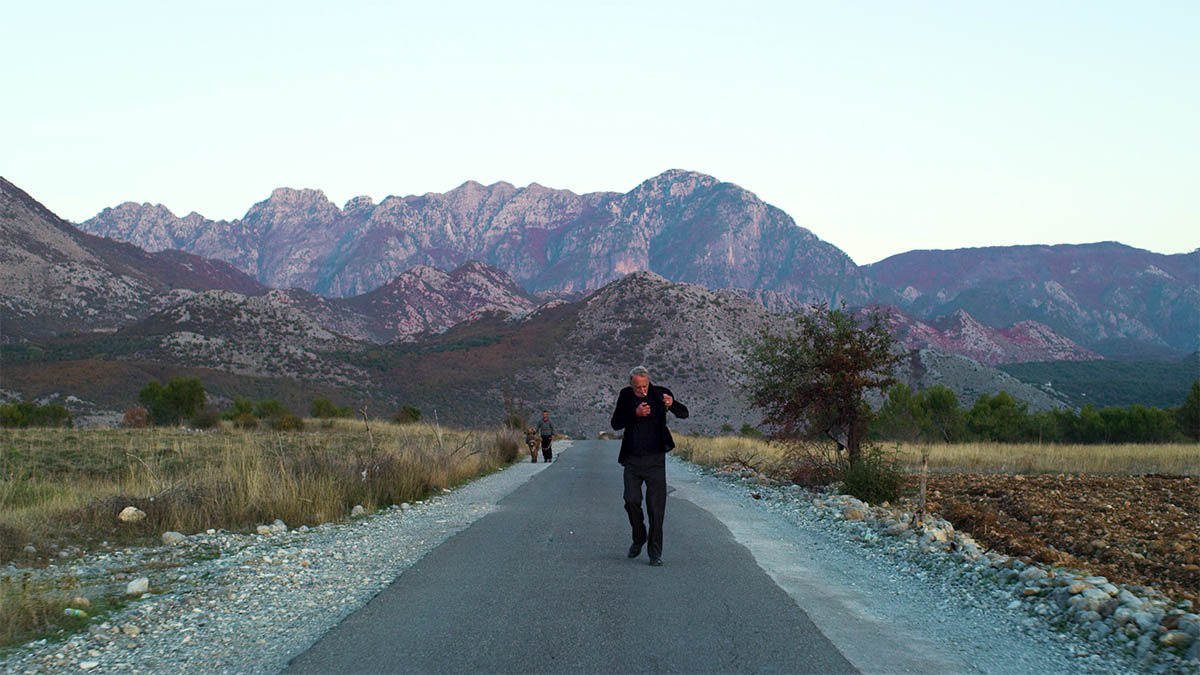
For The Wanderers, I had been travelling for more than a year, collecting footage in the streets of Albania with people or animals walking in the streets. At a certain point, I needed to shift from spontaneous, fragmented shooting to a constructed long take, where movement is reversed in relation to the camera. So I went to this village called Reç, in the north of Shkodra, where there is a long street that goes up and down and permits you to change the position continuously, remaining always in the same street. Together with a family friend who had once worked there as an agronomist, we went to the village’s main restaurant. The guy who runs the restaurant knows everybody in the village, and we fixed a day to meet with a group of around twenty people, so I explained to them what they had to do. Normally, I ask people to play themselves. They don’t have to act strangely, just walk, wait, shake hands, tell a story, or just sit in front of a microphone and say “prova“, which means “ test”, “ try”, “attempt”, “rehearsal”, “proof”… so it is a very simple but very rich word.
Are there video works you are particularly fond of that haven’t been shown or circulated as much as iconic works, like Centro di Permanenza Temporanea? I suppose every artist has such works.
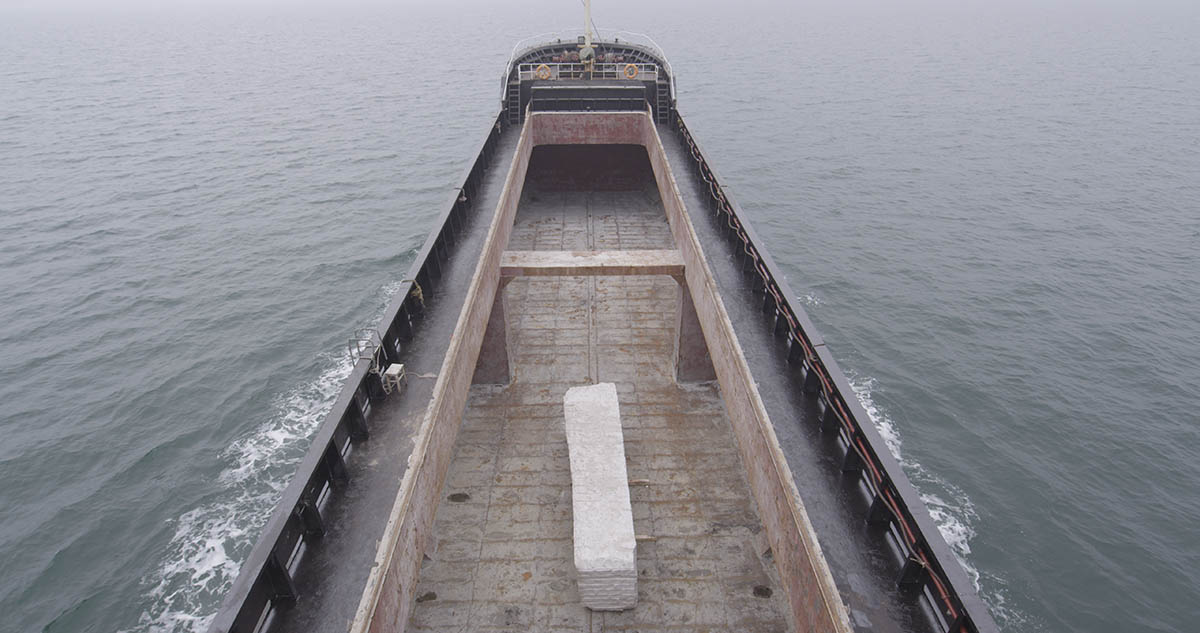
At different moments, there have been different videos of mine that have been, let’s say, successful. In the beginning, Albanian Stories was shown at the Venice Biennale in 1999, then at Manifesta in 2000, and after that in many other shows. Later, it was Vajtojca that Harald Szeeman and René Block invited to their shows about the Balkans in 2004. Turn on was quite successful also, and after the Venice Biennale in 2005 it was shown in many venues, and so was Per Speculum, even though it was more complicated because I showed it on a 35mm projector in a loop. In recent years, The Column has been shown in many museum shows in solo and group exhibitions, but also in film festivals. Centro di Permanenza temporanea remains an iconic work, and that image has circulated a lot, but I think that the real work of an artist is made by a complex and articulated body of works where every element has its importance in this organic body. Sometimes even the spaces between the works are more important than the work itself.
It is interesting to think of the way works circulate. What do you consider to happen in this “in-between” space?
The space between the works is not a space that you control; somehow, it just happens. It is a bit like the famous sentence of John Lennon when he says that “ life is something that happens to you while you are busy making other plans”. It is a kind of “ Off-Screen”, and I consider it very important. You are asked just to pay attention, to feel the flow, to discover new elements that maybe can give you a new context and influence your position. On the other hand, this space is not just your space; it is also the space of the work. Even the work needs a space outside of itself. Otherwise, how can the works relate to each other if they don’t have a space between them? The upcoming work needs to be welcomed or maybe to break something in the body of works you have created, but there is a life between the works, and this life continues even after they are finished. They keep moving and reposition themselves.
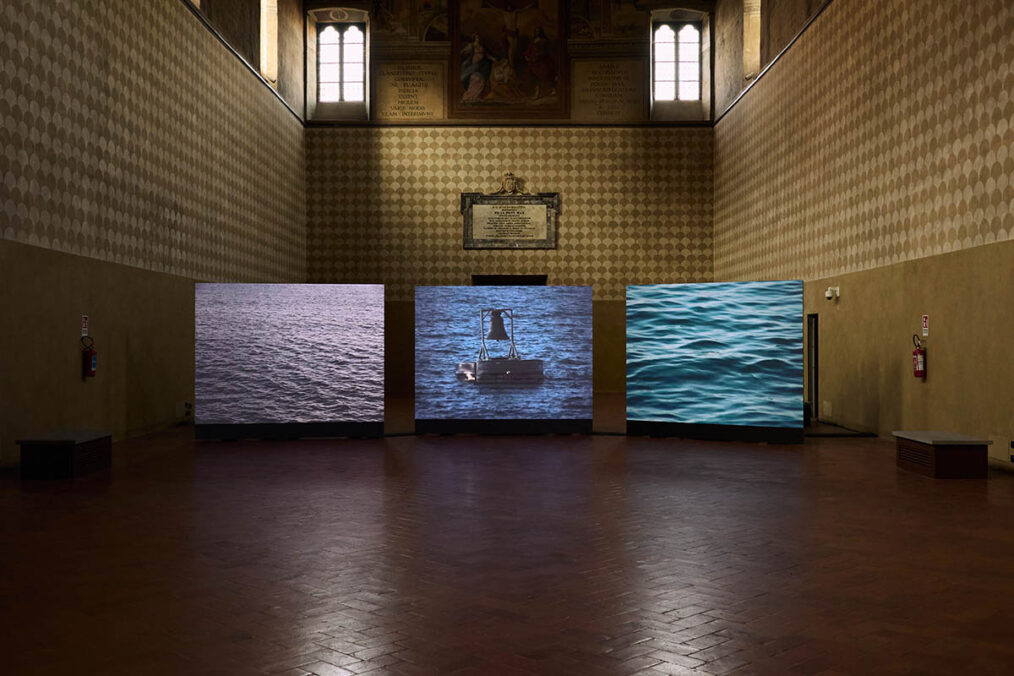
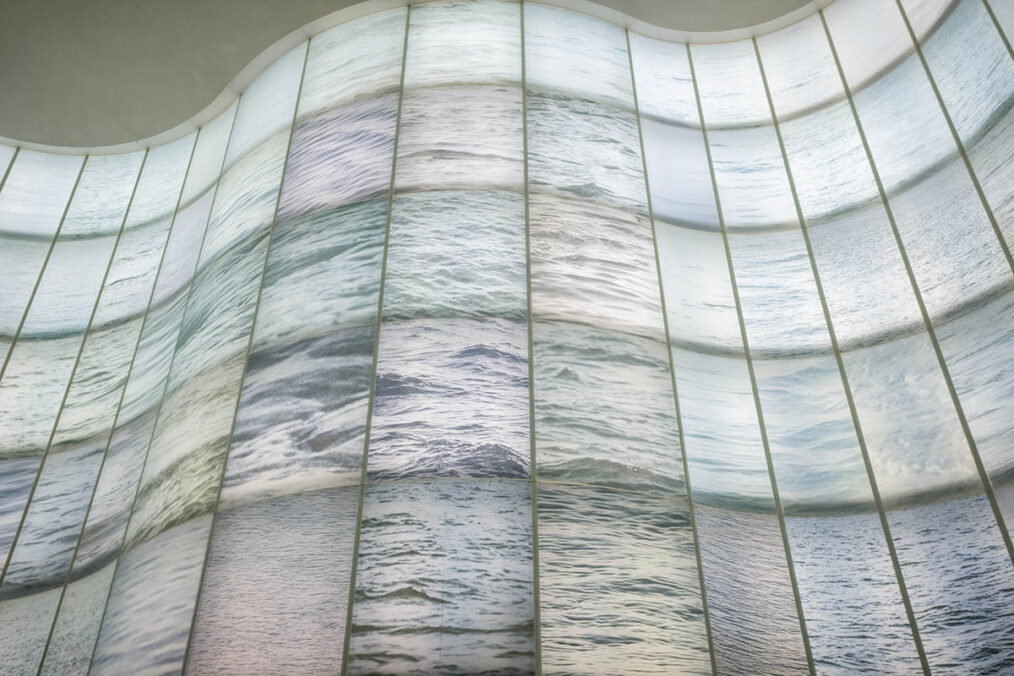
Something that really inspires me is the use of multichannel structures in your video works. What draws you to working with multiple rather than single screen?
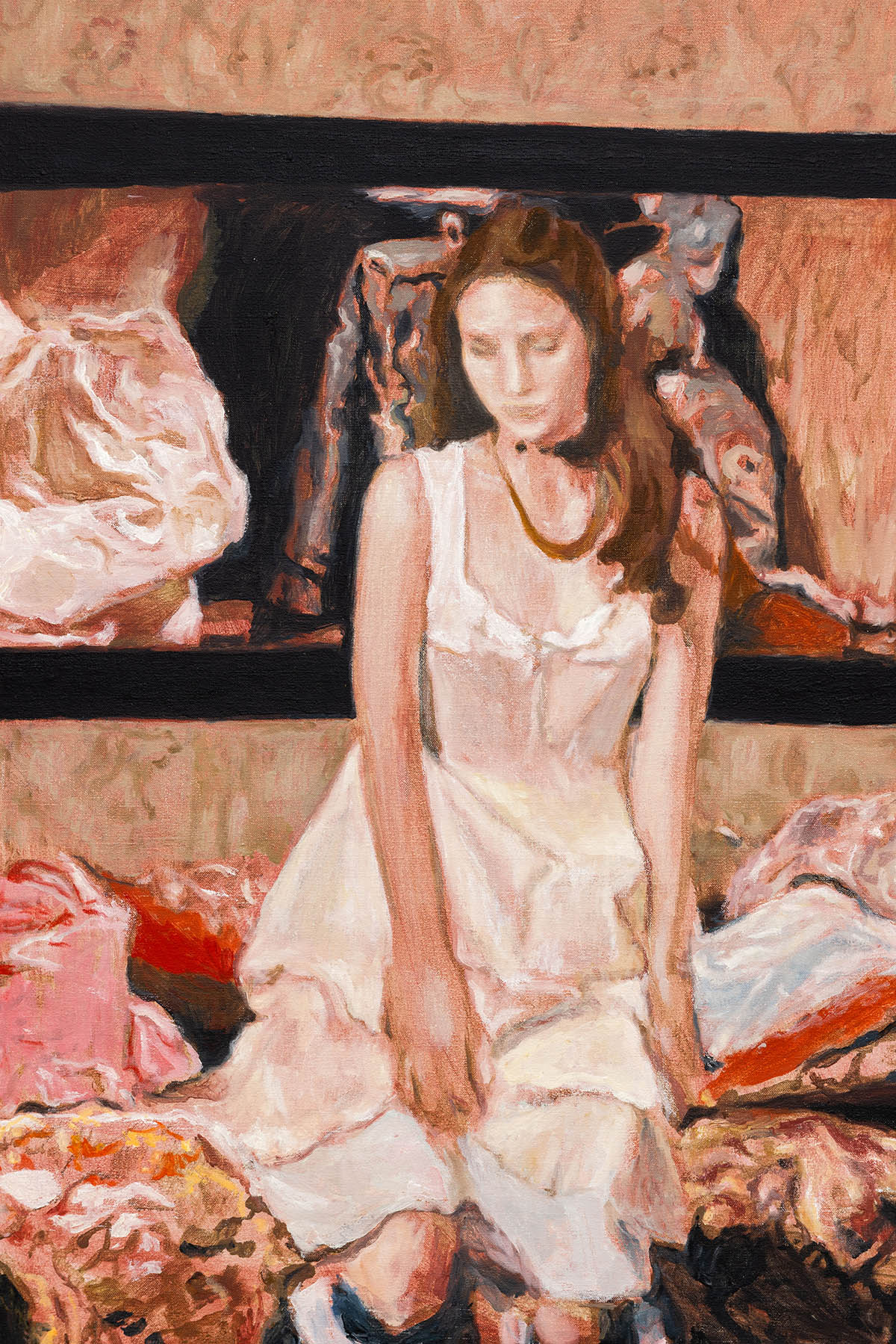
The multichannel videos like “ Sue proprie mani”, „The Wanderes”, “The bell tolls upon the waves” or “ Broken words” are thought to bring together more dynamically the notions of time and space. You can somehow “squeeze” time in a fragmented space, but you can also bring together different spaces at the same time, and create a sense of chorality in the work. Every work is a system of relations, and sometimes you underline this by creating a structure that gives more of an idea of multiplicity. In my work, this also happens across other media, such as the series of paintings “The Wedding” or “According to Pasolini”, but also in photographic series like “Home to Go”.
Being based between Milan and Shkodra, how do these two cities shape your rhythm of time, thinking, and work?
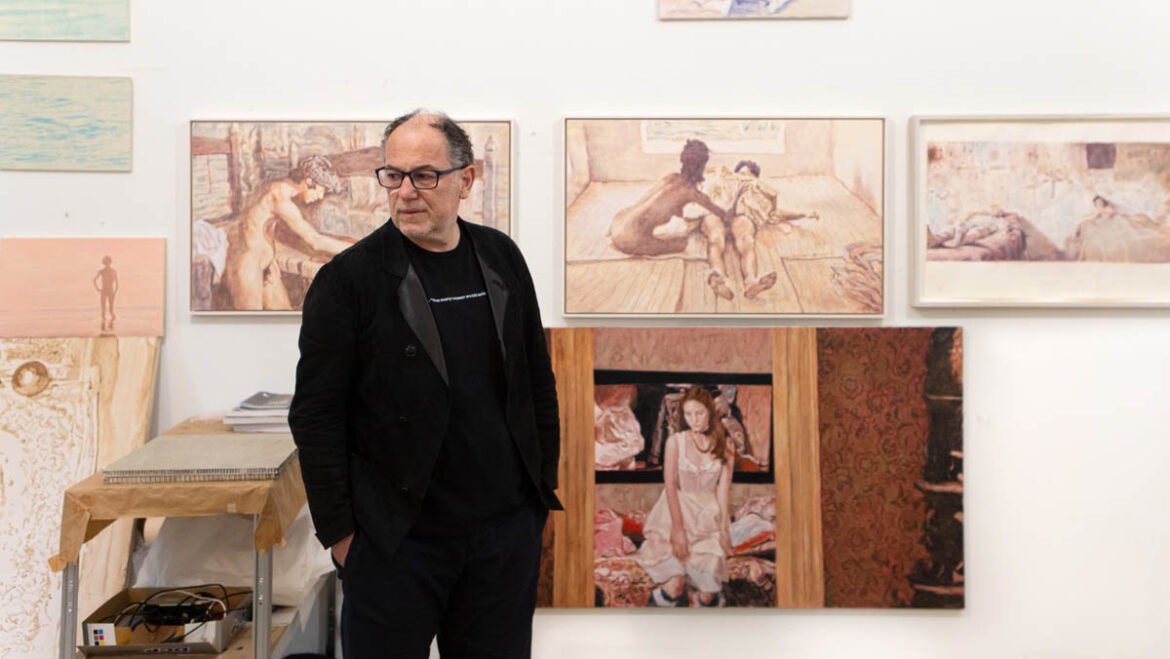
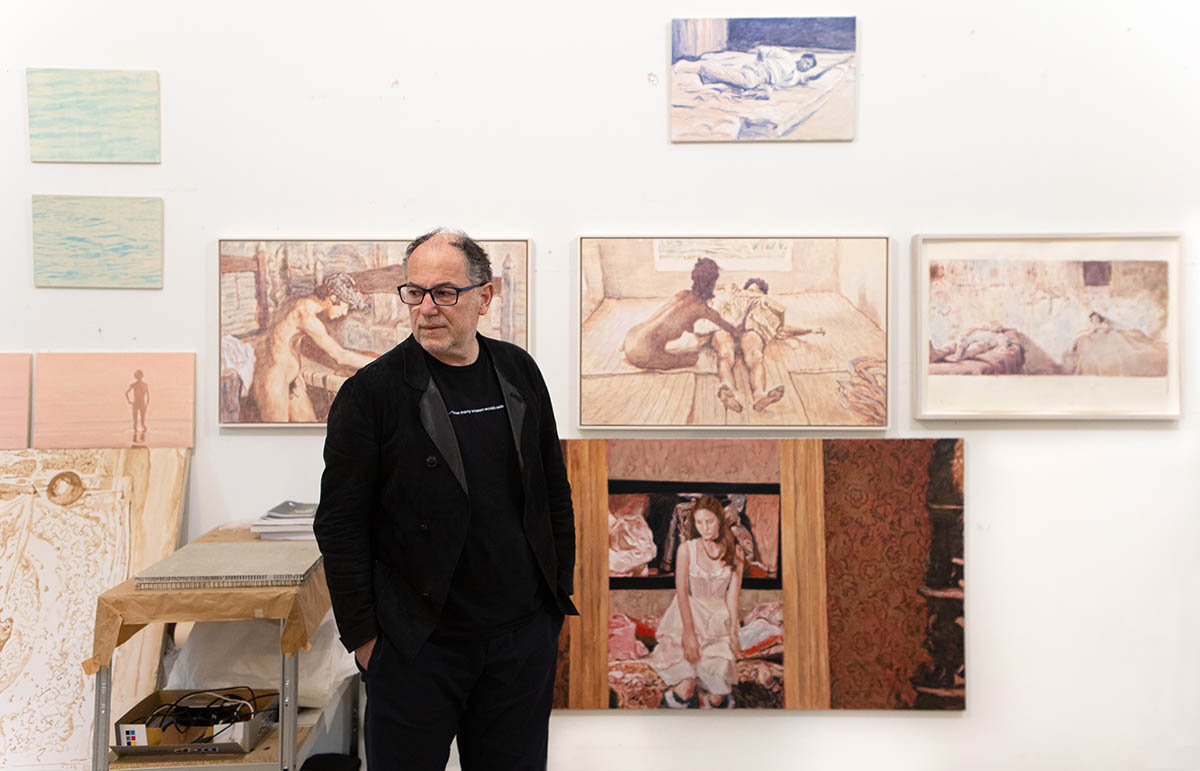
Milan and Shkodra are quite different. After spending almost 30 years in Milan, I can say that my life in this city is for sure longer than my life in Albania, but still, when I think about home, I think about Shkodra. Since 2015, I have been there more often with the project of Art House, reactivating my home place both as a private and public space where artist and curators from the art world can share their projects with the local artists and the public, but also as a platform for young Albanian artists to meet each other, exchange their practice and ideas, and create new ones. We built a house with this intention from the very beginning, so it has two areas: a private one and a public one, and they communicate with each other. The house is not small; there is a meeting room, an exhibition room, and a guest room, but there is no space for a studio. I have to see if I can modify it in the future, but actually, I don’t have a space for me to work in Shkodra. My studio is in Milan. I use it mainly for painting. It is not far from my house, and I spend most of my time there when I am in the city. You go to the studio not always to work; you can read, look at your paintings, sometimes meet people, or have a glass of wine with a friend. It is not big, but it has enough space for me.
What is the beauty of transmitting knowledge? You’ve taught at several art academies and universities, and you currently teach at NABA in Milan.
I have been teaching for more than thirty years now, and of course it is quite complex to talk about it. Anyhow, I think it is important to consider teaching not as a transmission of knowledge from somebody who knows to somebody who doesn’t know, but to see it as a generative process of building knowledge in the relationship and in the practice of making. Of course, you have more experience; you have been dealing with the arguments that you teach for a longer time and have read books and have seen artworks more than your students, who are approaching art maybe as a new experience, but still, what I like in this process is that something new and surprising is coming out.
When they do their work, they don’t do it because they accumulate a certain quantity of knowledge, but because they need to give shape to a certain intuition that was within them. My role is to follow them in this process, sometimes to guide them, sometimes to stimulate them and maybe inspire them with the examples from artworks created before. Mainly, the beauty of the process has to do with the fact that something new is being born, and not your knowledge, but them and their work are the main protagonists.
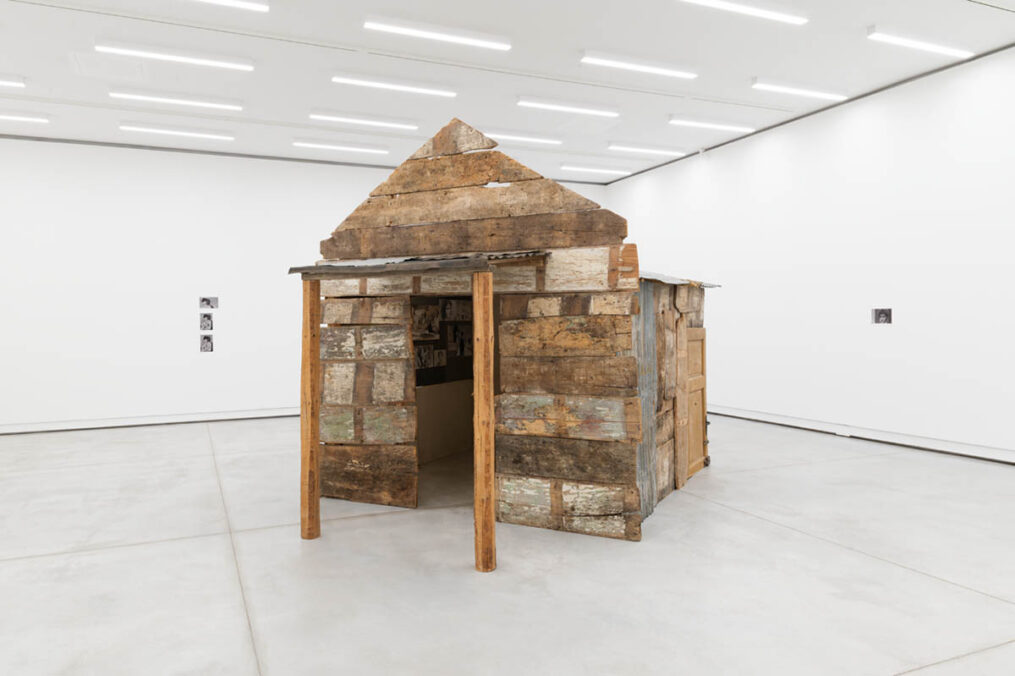
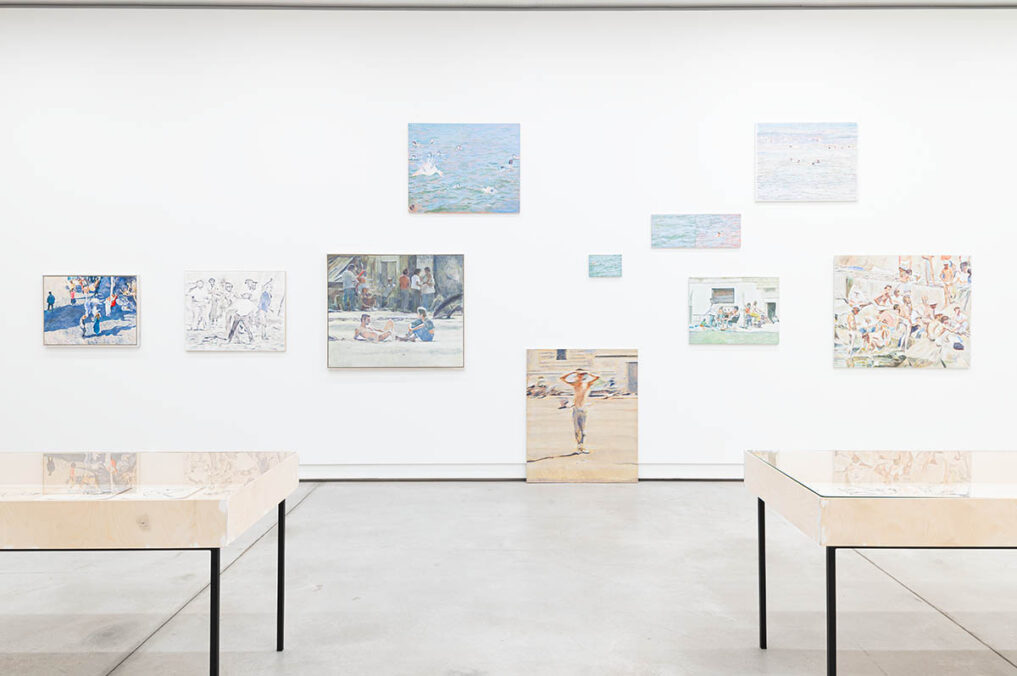
Do you as an artist, like to be involved with the ideas of display around the artwork, and how is your relationship with the exhibiting space in general?
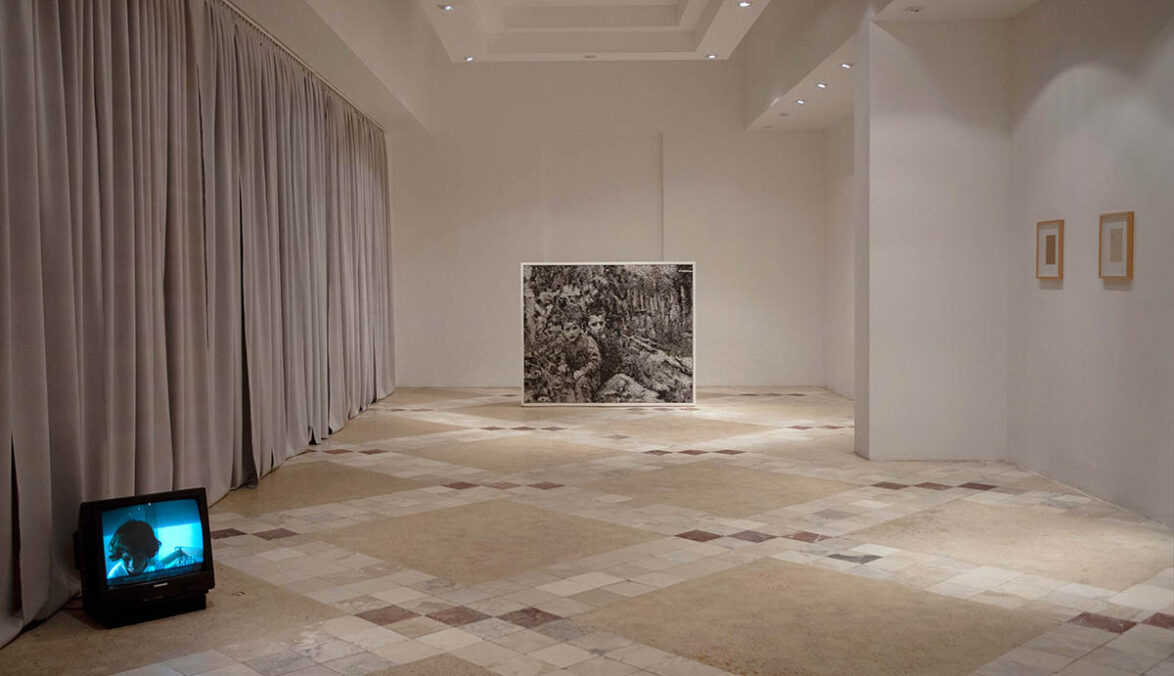
I think that the relation with the artwork is a kind of physical relation. It happens in a space and produces an experience that, before becoming mental or sentimental, has to be physical. In that sense, the display of the works in the space plays an important role in building this experience. When you show a video work, the space has to be often dark, but still there is a difference between the black space of a cinema where somehow you have to forget about the physical space and the only one space possible is that of the screen and the space of the exhibition where the viewer is invited to enter, to stay, to walk, to move and to come back.
In my practice, I like to be involved in the display of my shows, especially the solo shows, but there are also cases where you want to leave the display and the narrative of the works to the curator. It happened with my show at Cukrarna in Ljubljana. I needed to take a step out of my work and offered Pierre Bal Blank, the curator of the show, all my trust to organize the works in the space. The result was a surprise for me. I really appreciated the fact that Pierre didn’t do any plan in advance. He refused any sketch-up or render of the space and preferred to work with the physical works in the space.
Adrian Paci – www.instagram.com/adrian_paci/
Adrian Paci (born in 1969 in Shkoder, Albania) studied painting at the Academy of Art of Tirana. In 1997, he moved to Milan, where he lives and works. Throughout his career he held numerous solo shows in various international institutions such as: Cukrarna, Ljubljana (2024) Kunsthalle Krems ( 2019) MAC, Musée d’Art Contemporain de Montréal (2014); Padiglione d’Arte Contemporanea – PAC, Milan (2014); Jeu de Paume, Paris (2013); Kunsthaus Zurich, Zurich (2010); Bloomberg Space, London (2010); The Center for Contemporary Art – CCA, Tel Aviv (2009); Museum am Ostwall, Dortmund (2007); MoMA PS1, New York (2006) and Contemporary Arts Museum, Houston (2005). Amongst the various group shows, Adrian Paci’s work has also been featured in the 14th International Architecture Exhibition – La Biennale di Venezia (2014); in the 48th and the 51st edition of the International Art Exhibition – La Biennale di Venezia (respectively in 1999 and 2005); in the 15th Biennale of Sydney (2006); in the 15th Quadriennale di Roma, where he won first prize (2008); in the Biennale de Lyon (2009), and in the 4th Thessaloniki Biennale of Contemporary Art (2013).