

Since January this year, you have been Vice-Rector for Cooperative Disciplinarity, Engagement and Innovation at the University of Applied Arts in Vienna. What does this role mean in practice, and what kind of change might you be bringing to the University?
My role encompasses a wide range of responsibilities: from international affairs, diversity, equality, and inclusion, to the Angewandte Interdisciplinary Lab and the ‘Klasse für Alle’ – and, of course, the Angewandte Festival. Since I joined the University of Applied Arts, I have found it to be a place where people from diverse backgrounds and with a wide range of abilities work together. What is particularly important to me in my role as Vice-Rector is to strengthen the University of Applied Arts as a place where one feels seen, heard, and supported. It is important to me that social mobility, diversity, and inclusion are not just buzzwords, but are put into practice – in our interactions with one another, in teaching, and in our own artistic work. Of course, this also means venturing out, entering into new collaborations, and meeting in other spaces beyond the university.
You have been head of the Institute for Language Arts since 2021 and have accumulated years of teaching experience before that. How have those experiences shaped your approach to planning this year’s Angewandte Festival?
As Vice-Rector, I am in a fortunate position of being able to draw on the expertise of Lena Kohlmayr, the festival’s long-standing director, who is responsible for the festival’s programme and organisation. She knows the University of Applied Arts, its departments, faculties, and specialised university facilities inside out, making her the perfect partner. I was able to contribute my experience in the field of creative writing and theatre to this year’s festival through the square design project, which is being realised under the title ‘unfinished business’ by the Institute for Language Arts /Sprachkunst in collaboration with Lena Kohlmayr, supported by Conrad Dorninger and Jonas Ramoser.
This year’s festival is held under the theme „unfinished business.“ What drew the university to this particular theme right now? What can audiences expect from the program?
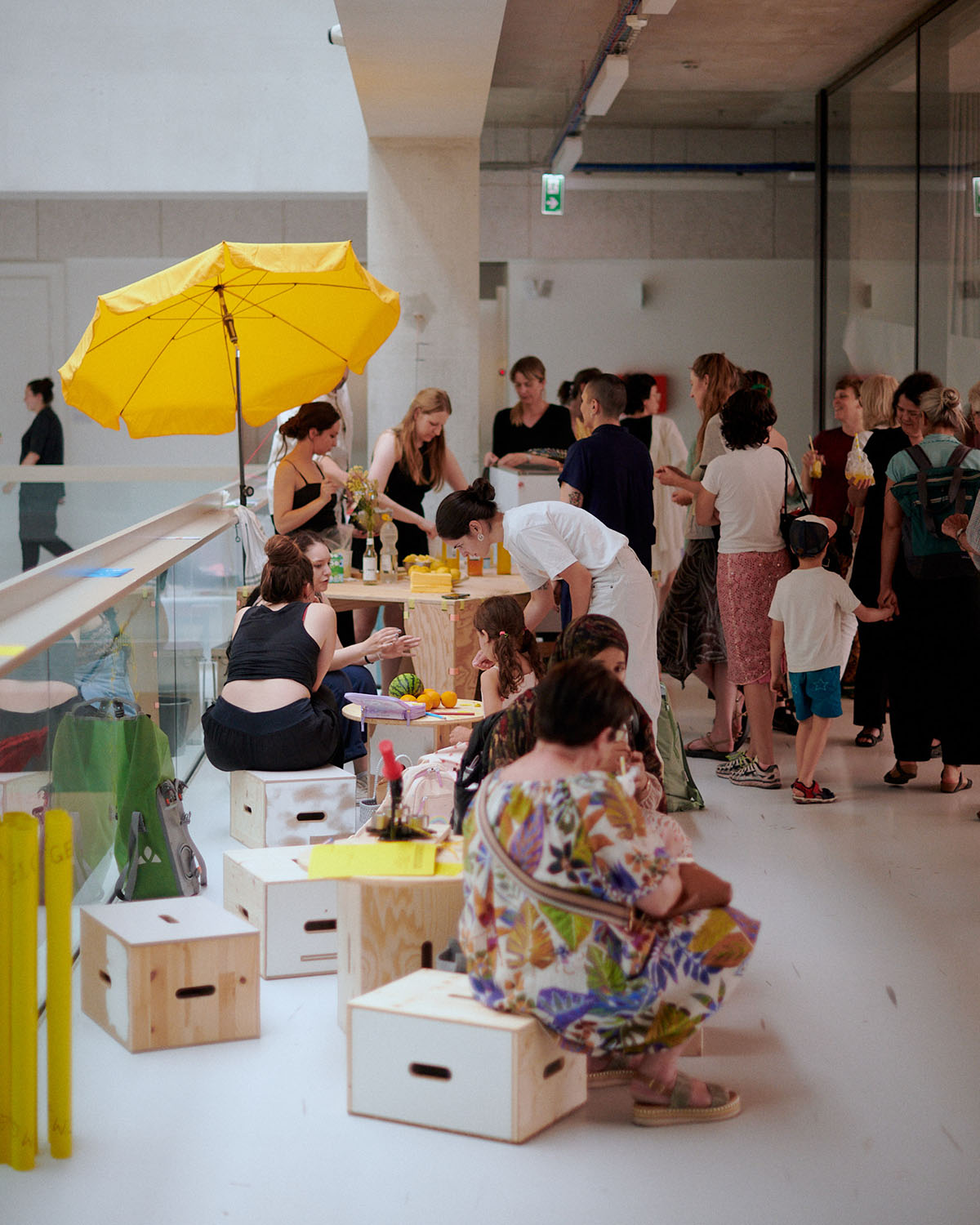
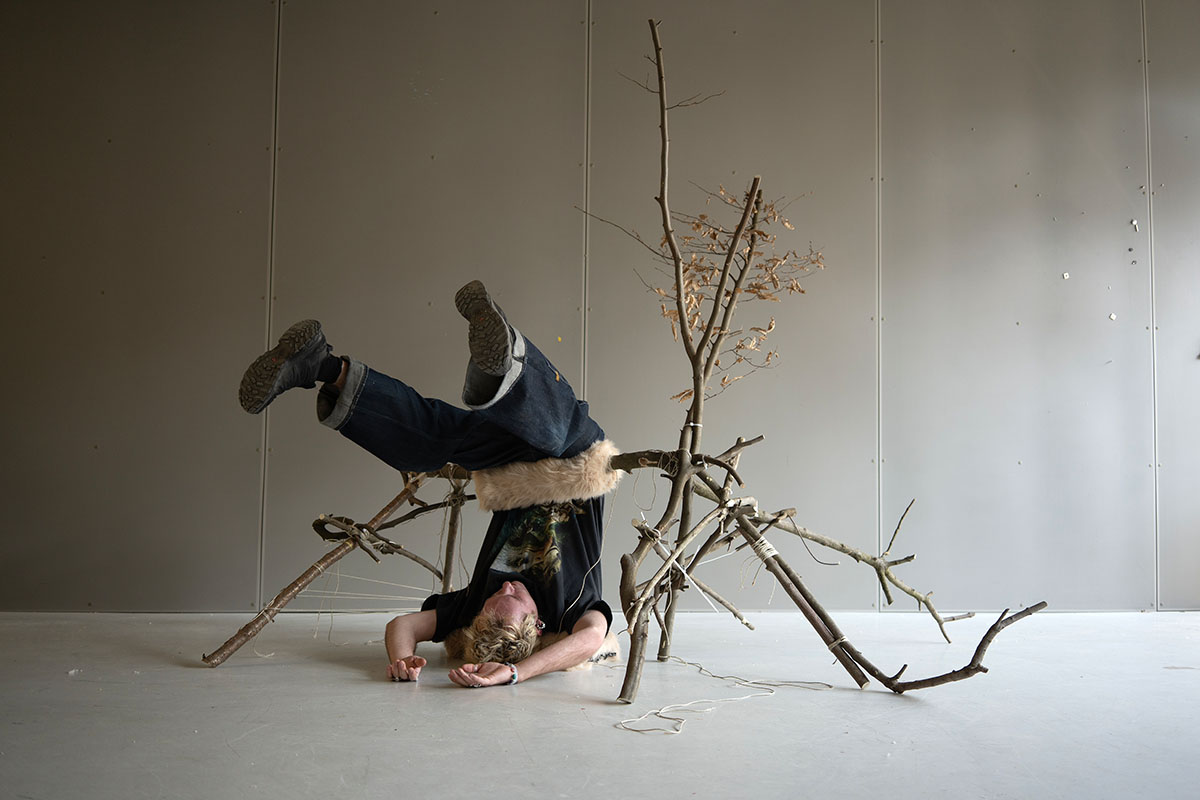
Working at the Institute for Language Arts / Sprachkunst has also shown me how important it is to treat students with respect, as equals, and with an awareness of power dynamics and boundaries – and to reflect on one’s own role. These thoughts, which are a recurring focus for us in the Language Arts team, gave rise to the theme of this year’s redesign of the Oskar Kokoschka Square– ‘unfinished business’. We approach this theme from different angles, always based on the text; we explore what ‘care’ is and can be at an art university, offer our services as writers, collectively challenge bureaucratic procedures, prescribe texts as temporary solutions, or engage with our immediate surroundings and history. We are collaborating with the Hufak and with colleagues from the Textile Technology department, and are striving to transform the Oskar Kokoschka Square into a polyphonic space.
However, it is important to note that the square’s redesign is only a small part of the Angewandte Festival. The festival is multifaceted, and that is exactly how it should be! For me, that’s exactly what’s so great about the festival: it shows just how important art is, because it has a diverse impact in a wide variety of contexts.
What are the central questions that the works and programme points are meant to raise or open during the festival days? Are the program points also trying to answer the questions or keep the conversation open?
At Language Arts / Sprachkunst, we are concerned with questions of accessibility: Who actually studies with us, and who are we targeting? How do we communicate with one another, in which languages and using which points of reference? Which topics, approaches and discourses take centre stage; which works receive greater attention, and why exactly? What and who remains invisible? We would like to raise these questions during the festival and thereby invite everyone interested – colleagues, visitors, passers-by, collaborators – to join the discussion.
The festival prides itself on being open to everyone, regardless of prior expertise or background. How is this year’s format designed to ensure there is a genuine point of entry for every kind of visitor?
The festival is as multifaceted as the University of Applied Arts, its lecturers, staff, and students. I can only recommend to anyone interested that they join one of the many tours offered during the festival, each of which has a different focus, whether on specific themes or in dialogue with external guests, such as Barbara Mahlknecht (curator; co-director, Künstler*innenhaus Büchsenhausen), Eva Kovač (BLOCKFREI Collective | artistic director, DAS WEISSE HAUS), Kathrin Heinrich (freelance critic), or Janina Falkner (head of education, MAK). I also really appreciate our more experimental outreach formats, such as the SculpTour, which incorporates tactile experiences and visits the ceramics workshop, or the BINGO! tour, which invites visitors to explore the Angewandte playfully, thereby creating unexpected points of access.
Which moment or program point from this year’s festival would you most want people not to miss?
1. Join a tour!
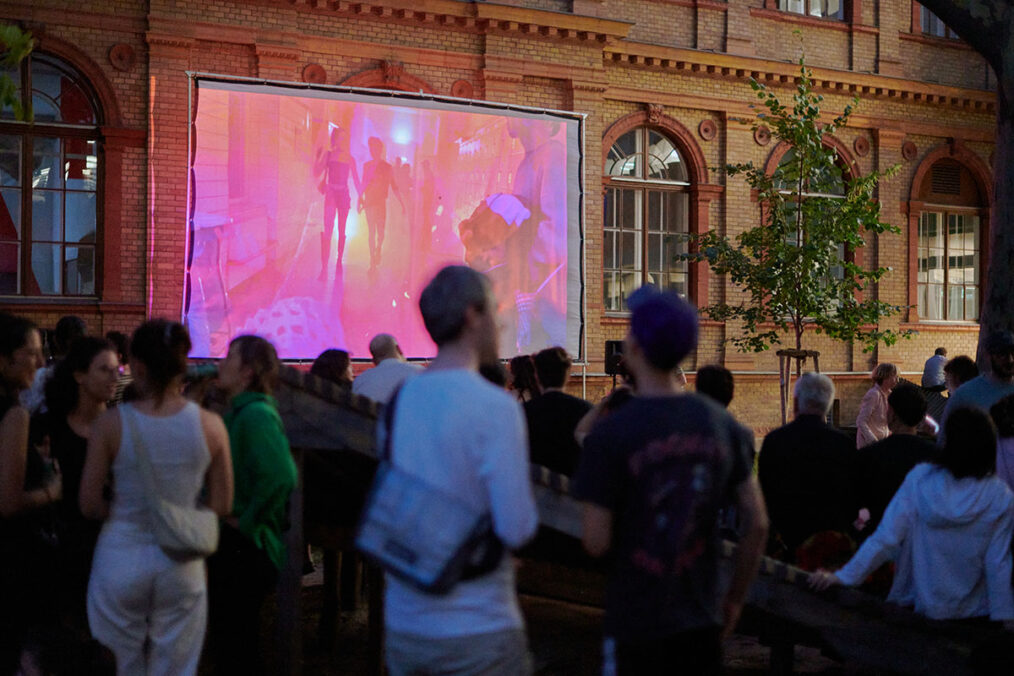
2. The Best of Animation: Painting and Animated Film, 9.30 pm, OKP courtyard on Thursday 2 July – one of my highlights every single year!
3. Keep an open mind, spend time at the square, and let yourself be carried away.
Angewandte Festival 2026
Wednesday, July 1, to Saturday, July 4
For more information and the full program, visit: www.www.angewandtefestival.at