

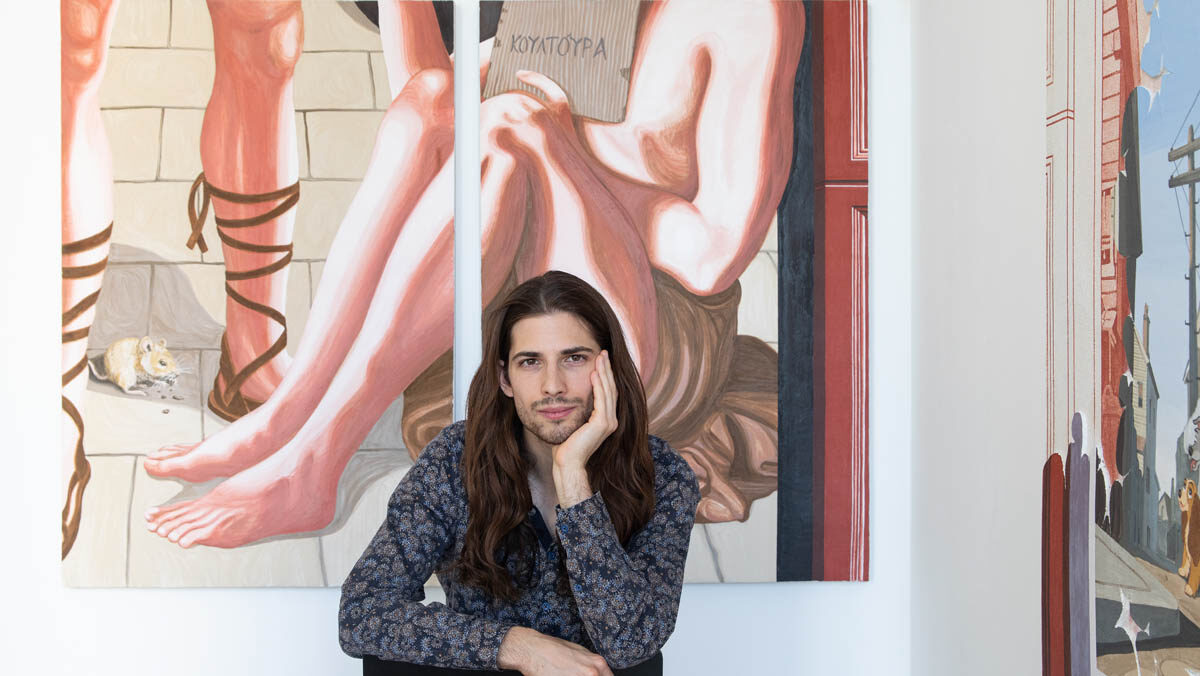
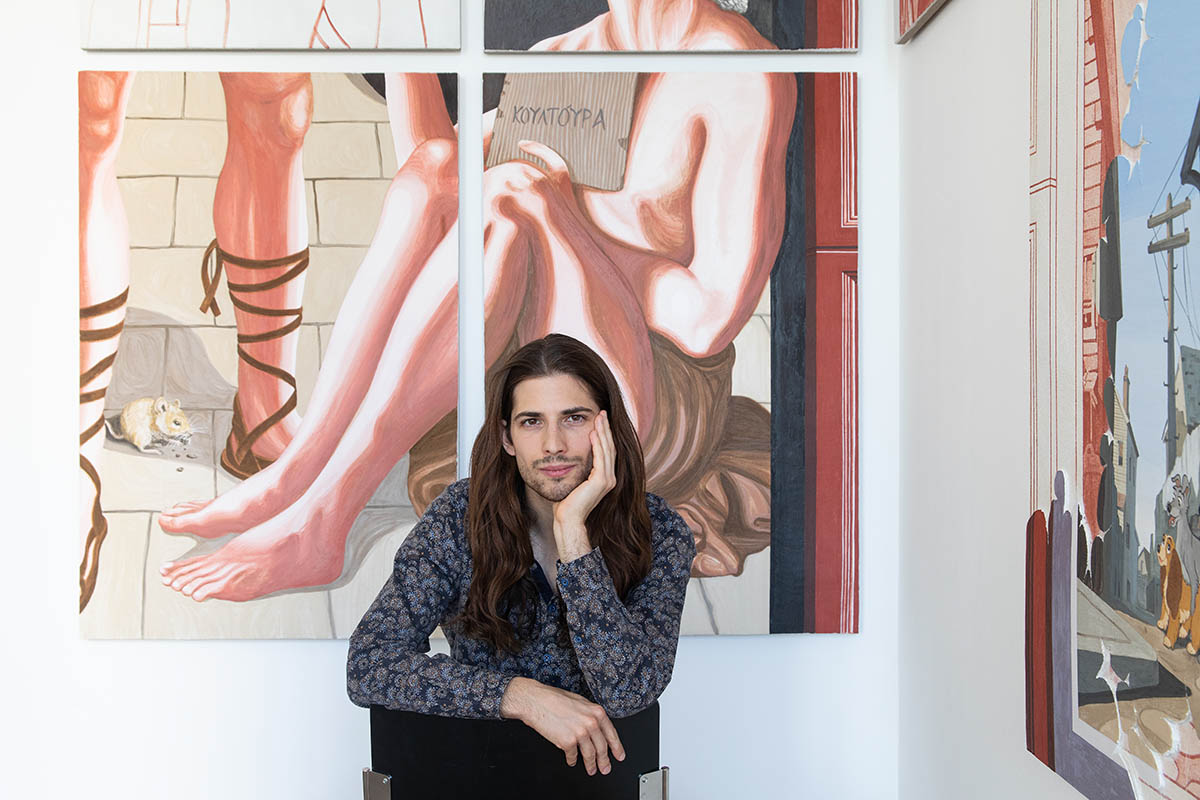
Kunstwerke entstehen mit dem Ziel, Blicke zu offenbaren, Wertzuschreibungen auszuhebeln und historische oder zeitgenössische Ausformulierungen von Realität vorzunehmen. Mit seiner neuesten Arbeit ‚Der Hund‘ hat der Künstler die Freskomalerei in seine Praxis eingeführt und erzählt darin von Kosmopolit:innen, Wohnungslosigkeit und von Hunden.
Wie würdest du deine Kunst beschreiben?
Ich würde meine Herangehensweise an das Kunstmachen als forschend und wissensdurstig bezeichnen. Das spiegelt sich manchmal auch in meiner Kunst wider. Diese versucht ebenfalls, etwas zu erforschen, stellt Fragen und schlägt Gedankenexperimente vor. Ich operiere dabei jedoch nicht unbedingt wie ein Wissenschaftler, sondern vielmehr wie ein Alchemist. Ich denke, meine Arbeiten sind ästhetisch betrachtet oft durchaus komplex. Trotzdem schaffe ich es manchmal, den Betrachter:innen im ersten Moment eine gewisse Leichtigkeit zu vermitteln. Im Kontrast dazu strebe ich auf konzeptueller Ebene die Vielschichtigkeit an, wobei ich mich wiederum alchemistischer Prinzipien bediene, wie etwa der konzeptuellen ‚Montage‘ oder der Verwendung von Allegorien, Metaphern und Symbolen. Idealerweise lässt ein Kunstwerk dann auch noch Deutungsmöglichkeiten zu, die außerhalb meiner ursprünglichen Intention liegen.
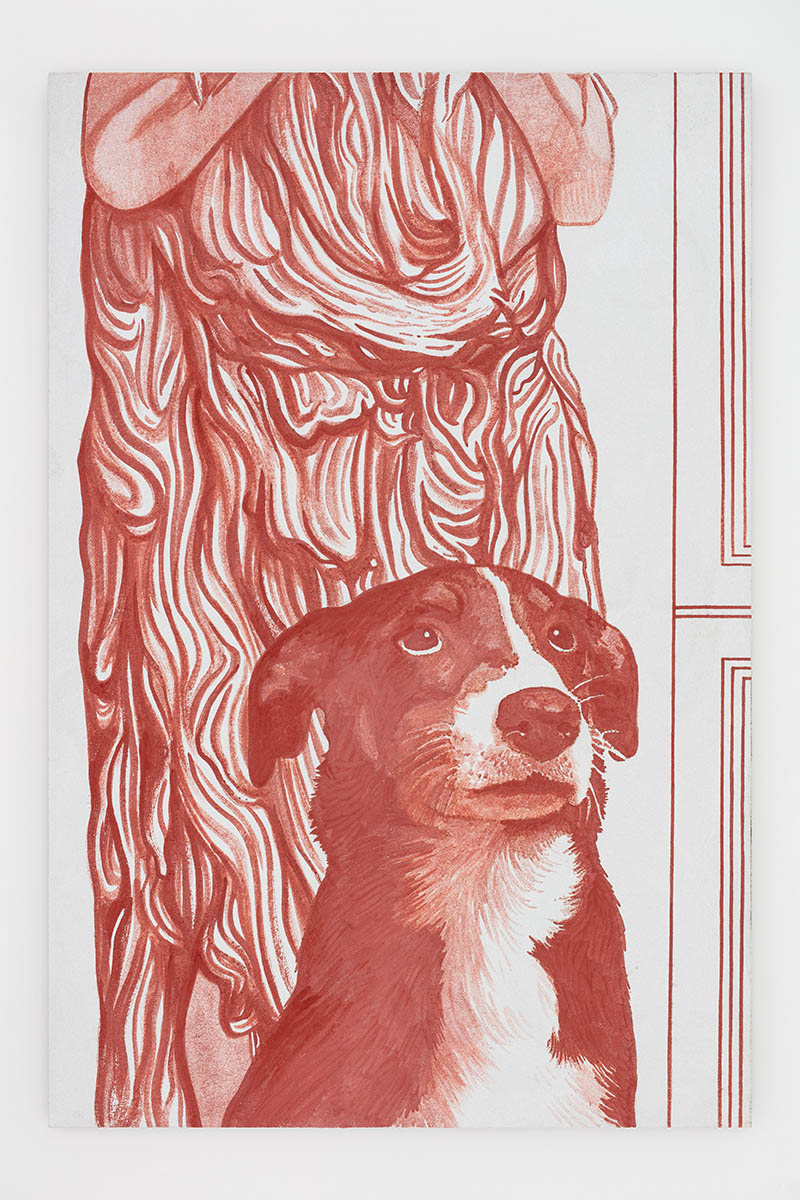
Da ich das Kunstmachen, besonders die Bildnerei, vorrangig mit dem Ziel von Erkenntnisgewinn praktiziere, steckt für mich hinter jeder meiner Arbeiten auch eine persönliche Lernerfahrung. Dadurch kommt mir die wohlbekannte Wertfrage in der Kunst etwas erträglicher vor, dieser weicht man ja selbst als junger Künstler nur schwer aus. Immun gegen Selbstzweifel wird man davon aber leider auch nicht.
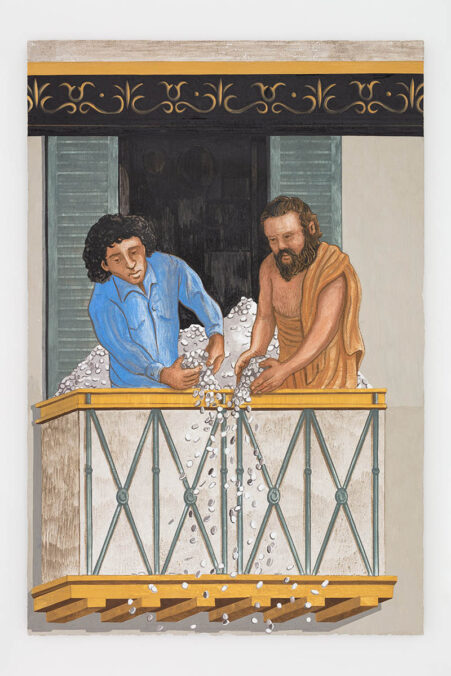
Krates befreit Krates, 2023, 120 × 80 cm, Fresko auf mineralischer Platte 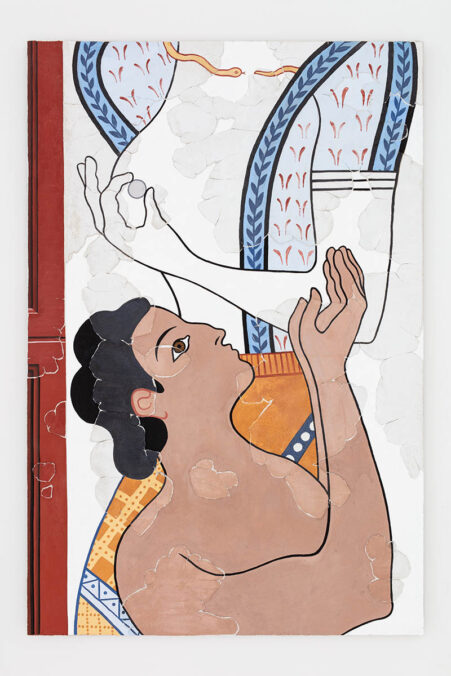
Krieg der Währung, 2023, 120 × 80 cm, Fresko, und Kaseinmalerei auf mineralischer Platte
Mit welchen Techniken arbeitest du?
Bisher hat in meiner künstlerischen Praxis die Technikwahl immer als Reaktion auf ein Konzept stattgefunden. So habe ich mittlerweile schon mit vielen verschiedenen Techniken gearbeitet. Das reicht von Malerei und Zeichnung über Ready-Made und Installation bis hin zu Video-Streaming, Maschinenkunst, experimentellen Herstellungsverfahren und ungewöhnlichen Techniken, wie etwa die Einbindung von vertraglich geregelten Kunsterklärungen.
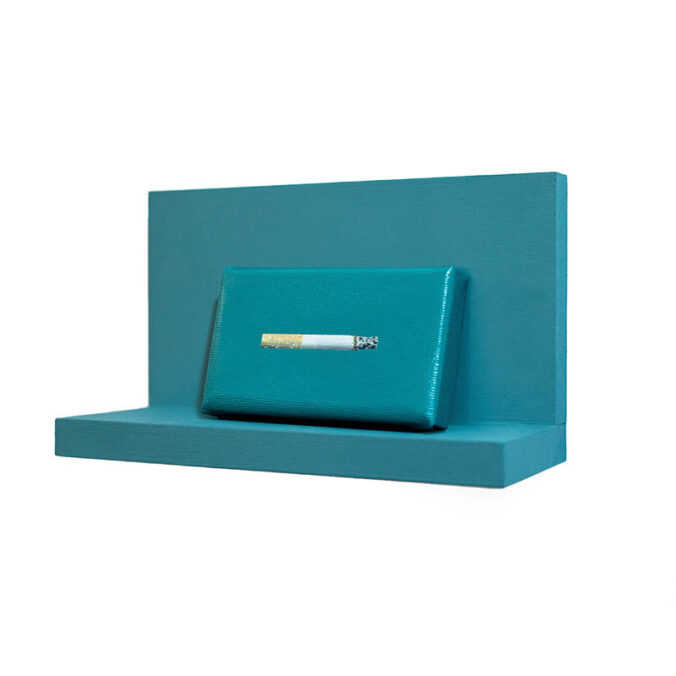
Tausch, 2021–fortlaufend. Ausstellungsansichten. Kunsthalle Wien 2022 | Foto (o.m.): Klaus Speidel | Foto (o.r., u.l., u.m.): Kai Philip Trausenegger 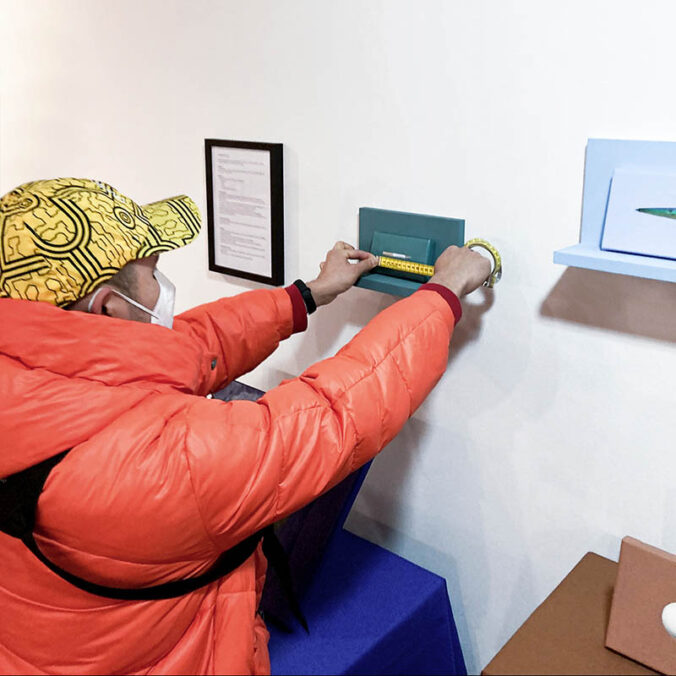
Tausch, 2021–fortlaufend. Ausstellungsansichten. Kunsthalle Wien 2022 | Foto (o.m.): Klaus Speidel | Foto (o.r., u.l., u.m.): Kai Philip Trausenegger 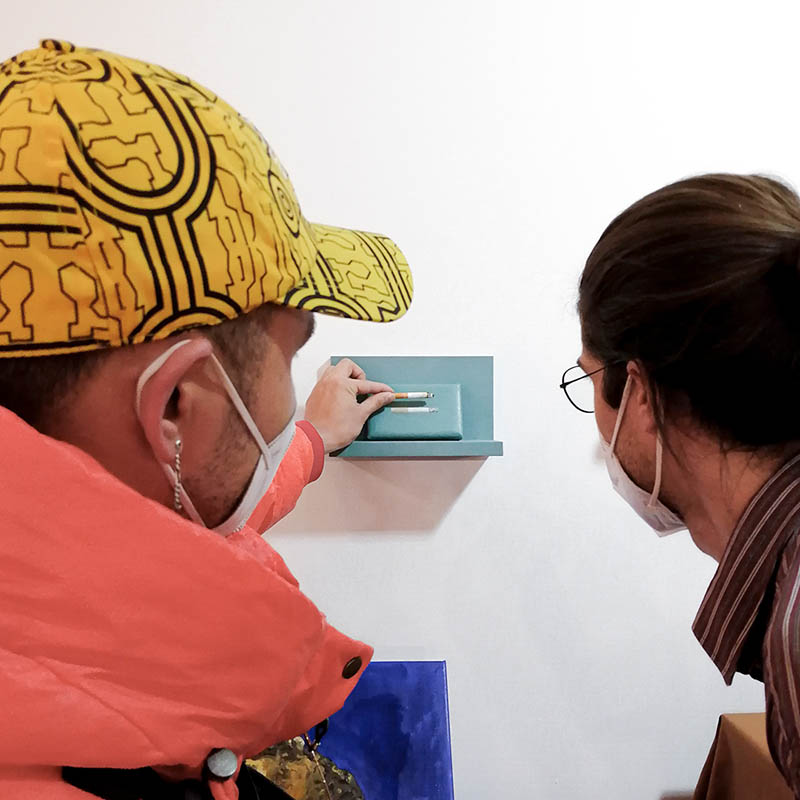
Tausch, 2021–fortlaufend. Ausstellungsansichten. Kunsthalle Wien 2022 | Foto (o.m.): Klaus Speidel | Foto (o.r., u.l., u.m.): Kai Philip Trausenegger 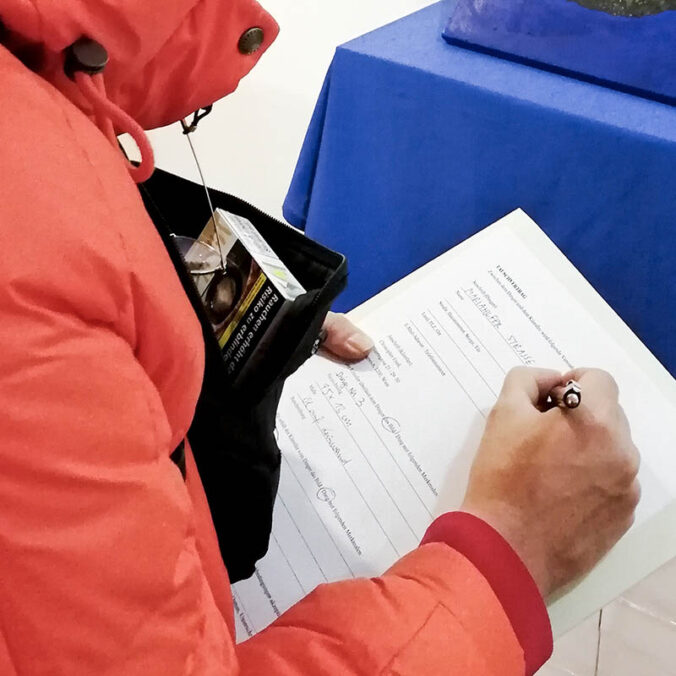
Tausch, 2021–fortlaufend. Ausstellungsansichten. Kunsthalle Wien 2022 | Foto (o.m.): Klaus Speidel | Foto (o.r., u.l., u.m.): Kai Philip Trausenegger 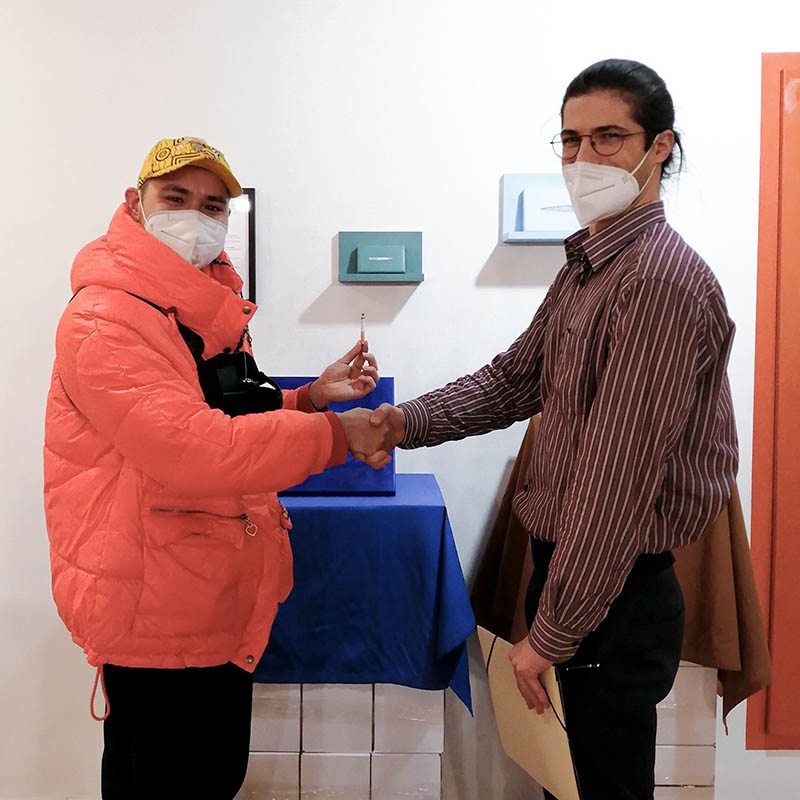
Tausch, 2021–fortlaufend. Ausstellungsansichten. Kunsthalle Wien 2022 | Foto (o.m.): Klaus Speidel | Foto (o.r., u.l., u.m.): Kai Philip Trausenegger 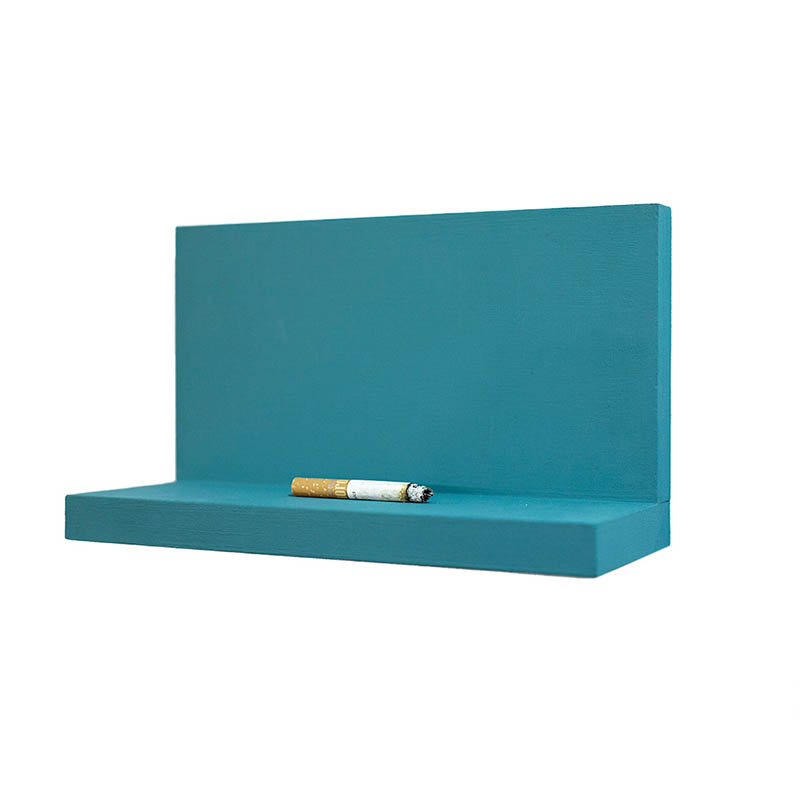
Tausch, 2021–fortlaufend. Ausstellungsansichten. Kunsthalle Wien 2022 | Foto (o.m.): Klaus Speidel | Foto (o.r., u.l., u.m.): Kai Philip Trausenegger
Was sich im Endeffekt durch alle meine Arbeiten zieht, ist das große Interesse am Bild. Selbst meine ‚Maschinenkunstwerke‘ haben etwa Bezugspunkte zur Malerei. Mit dem ‚Kymatischen Druckapparat für Dialoge‘ habe ich zum Beispiel eine Apparatur gebaut, die ein Gespräch zwischen zwei Personen auf eine Wasseroberfläche überträgt und jenes mit Hilfe von Tusche sowie einem entsprechenden Trägermaterial aufzeichnet. Dabei entstehen abstrakte Malereien, die jedoch in ihrem Wesen mehr mit einem Datenträger teilen und vermutlich auch mehr mit Fotografie zu tun haben, als ihnen malerische Geste zugrunde liegt.
Auch mit der ‚Sissa-Maschine‘ nehme ich mitunter Bezug auf ein Thema aus der Malerei, nämlich jenes der tabula rasa, dem unbeschriebenen Blatt bzw. in diesem Sinn: die weiße Leinwand. Dabei wird eine lange Papierbahn in einer Endlosschleife durch einen umgebauten Homeoffice-Drucker gezogen. Das Papier wird gescannt und das Gescannte wird wieder gedruckt. Mit der Zeit entsteht aus dem scheinbaren ‚Nichts‘ eine abstrakte Komposition – sozusagen die Antwort der Maschine auf die menschliche Angst vor dem ersten Pinselstrich.
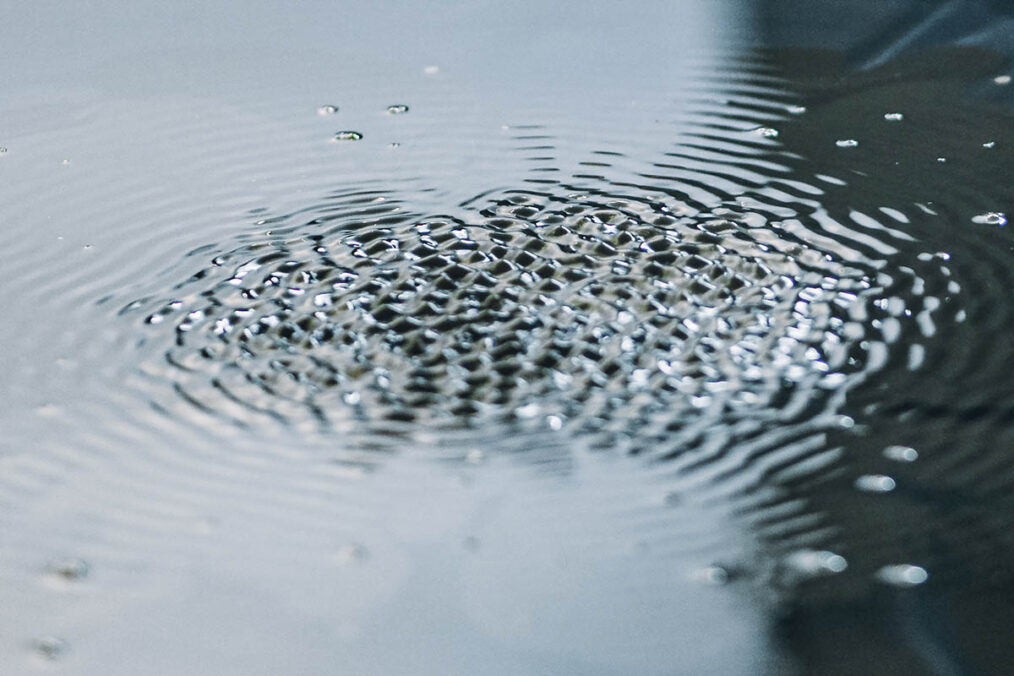
Detailansicht der Wasseroberfläche während der Bildproduktion mit dem Kymatischen Druckapparat für Dialoge | Foto: Miloš Vučićević 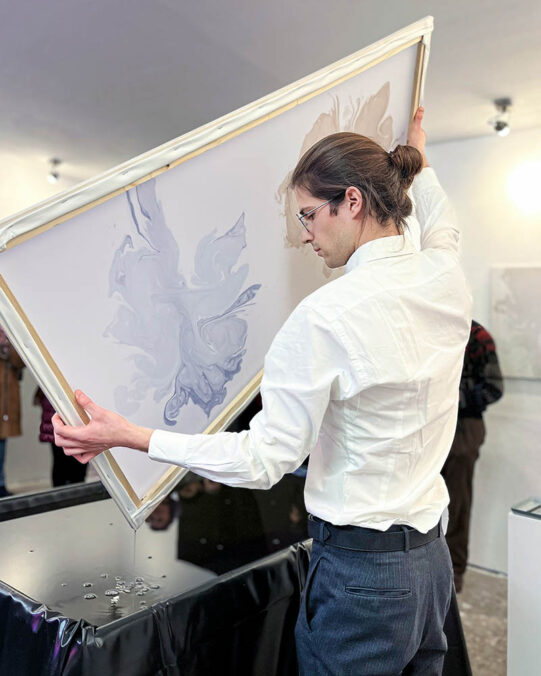
Demonstration der Funktionsweise des Kymatischen Druckapparats für Dialoge im Rahmen der Ausstellung ‚as the wind carries us‘ zusammen mit Huda Takriti. Improper Walls | Foto: Livia Klein
Wie entstehen deine Kunstwerke?
Meine Kunstwerke entstehen grundsätzlich in zwei Schritten. Im ersten Schritt kommt die Idee. Und die kommt, wann sie eben kommen will. Es gibt zwar Techniken, die diesen Prozess erleichtern und das genügt auch manchmal, aber gute Ideen sind nicht planbar. Im zweiten Schritt findet die Umsetzung statt und da hilft es natürlich, wenn ich bereits ein Konzept oder eine vage Vorstellung habe, wie ich mein Vorhaben angehe. Zu Beginn wird geplant, getüftelt, recherchiert, und konstruiert. Es schadet nicht, mit einem gewissen Grundvertrauen an die Arbeit heranzugehen. Meine Kunstwerke entstehen in diesem Sinne eigentlich immer mit einer bejahenden Stimme im Kopf. Ich überlege mir meistens nicht, ‚ob‘ etwas funktionieren könnte, sondern ‚wie‘! Da kommt es natürlich von Zeit zu Zeit vor, dass auch mal Dinge schief gehen, oder ich etliche Nachtschichten einlegen muss, bis es so wird, wie ich will. Aber das gehört eben auch dazu.
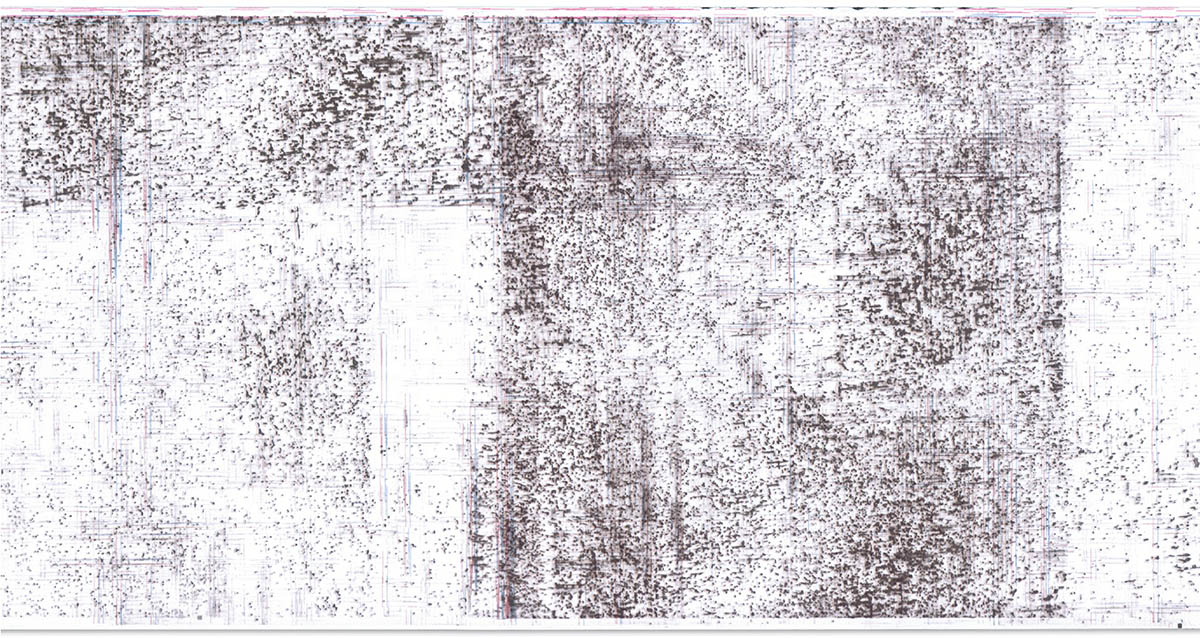
Über die Menge (Sissa-Maschine Druck #3), 2021, 21 × 626.5 cm, Inkjet-Druck auf Papier 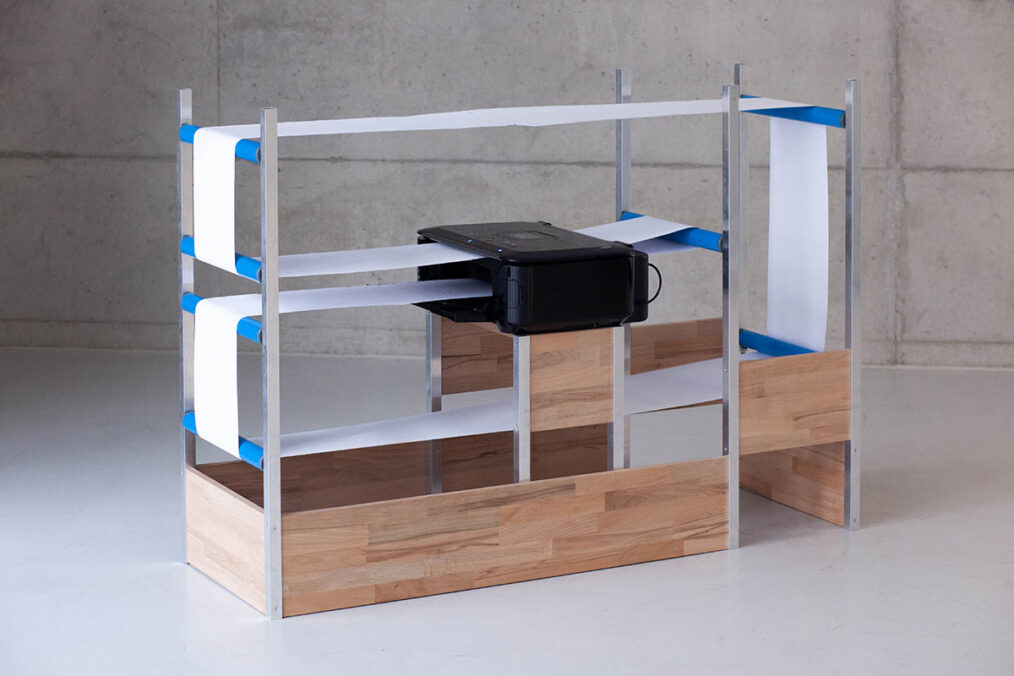
Sissa-Maschine, 2021, 99 × 142 × 45.5 cm, Holz, Aluminium, Transportrollen, Drucker, Mikrocontroller, Einplatinencomputer, Papier
Ich habe deine Ausstellung ‚Der Hund‘ im Zuge des Angewandte Festivals 2023 gesehen. Deine Bilder kann ich noch gut vor mir sehen. Wie kam es zur Entstehung dieses Freskenzyklus?
Ich wurde letzten Sommer von meiner ehemaligen Zivildienststelle, dem Bahnhofsozialdienst der Caritas Tirol, eingeladen, an einer Ausstellung zum Thema Wohnungslosigkeit teilzunehmen. Meine ursprüngliche Idee konnte ich damals (zum Glück) nicht umsetzen und malte deshalb kurzerhand vier Fresken, die sich mit dem Philosophen Diogenes beschäftigen – denn das wird zwar selten von diesem Standpunkt betrachtet, doch letztendlich war Diogenes ein wohnungsloser Mensch und noch mehr: Diogenes lebte auf der Straße und zwar aus voller Überzeugung. Besonders die zeitgemäße Relevanz vieler Geschichten aus dem Leben der Kyniker:innen faszinierte mich und ich vertiefte mich im Anschluss an die Ausstellung weiterhin in die Thematik. Daraus entstand schließlich dieser Freskenzyklus.
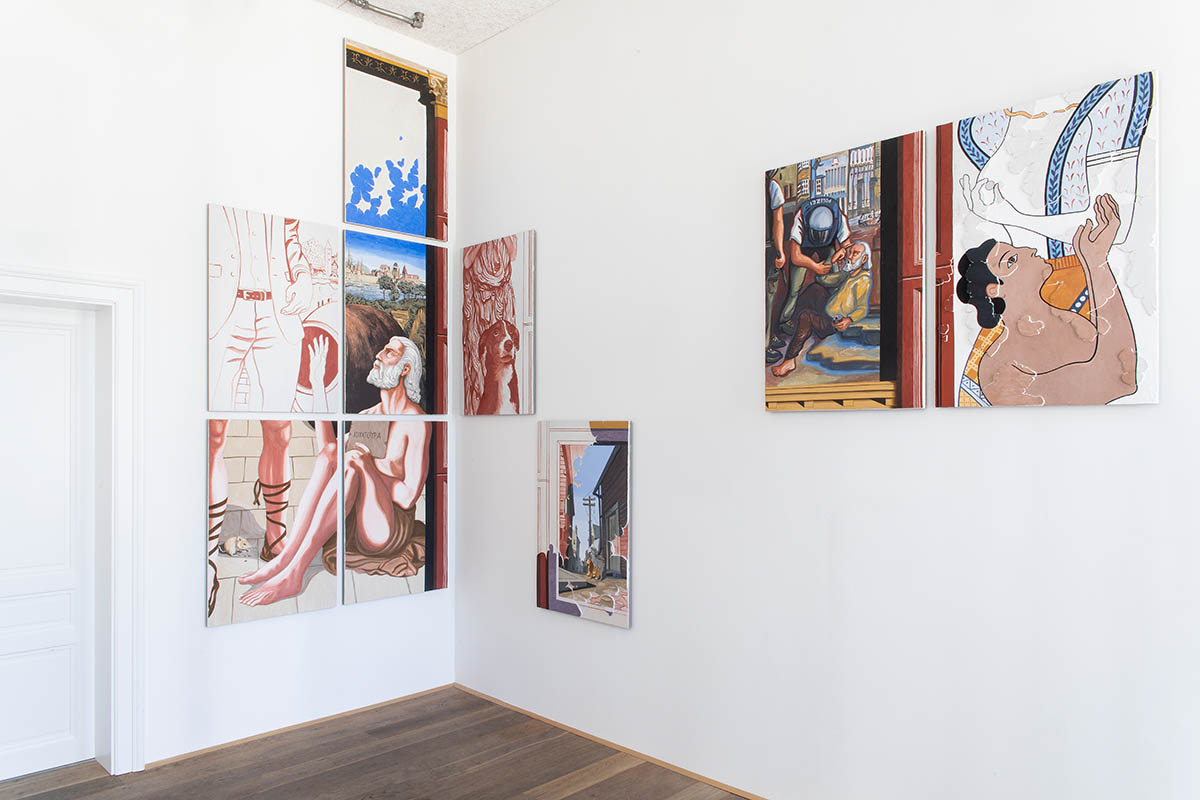
Ausstellungsansicht. Der Hund. Angewandte Festival 2023 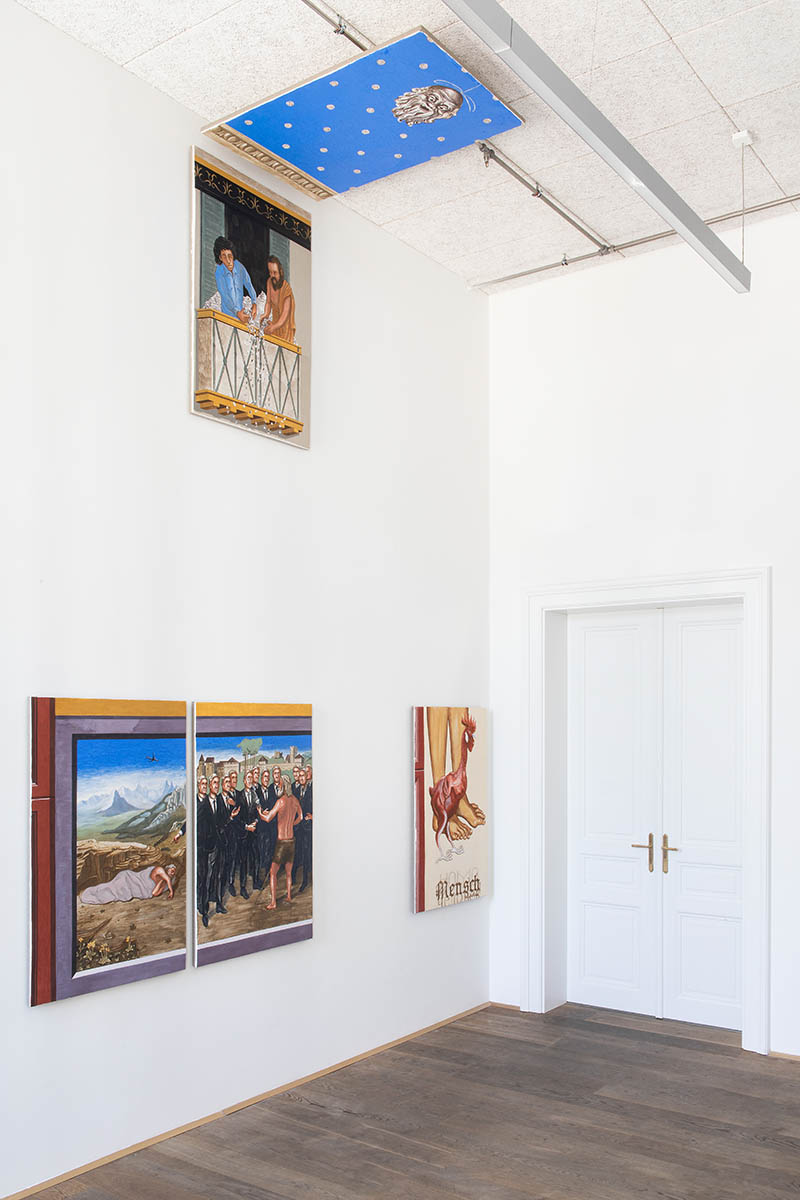
Ausstellungsansicht. Der Hund. Angewandte Festival 2023
Wieso hast du dich für die Freskomalerei entschieden?
Als Wandmalerei ist ein Fresko ortsgebunden und stark durch die vorherrschende räumliche Situation geprägt. Ich habe meine Fresken jedoch nicht auf die Wand gemalt, sondern als Tafelbilder ausgeführt. Dadurch stehen für mich die Bilder bereits durch ihre materielle Beschaffenheit in Beziehung zu kosmopolitischen Fragestellungen und Wohnungslosigkeit. Außerdem wird ein Fresko aufgrund seiner Materialität in sogenannte ‚Tagwerke‘ unterteilt. Das kommt davon, dass bei der Freskomalerei direkt in den feuchten Putz gemalt wird. Dabei wird immer nur so viel Wandfläche verputzt, wie an einem Tag fertiggestellt werden kann. Die starke Abhängigkeit vom Rhythmus und der Periodizität von Tag und Nacht sehe ich auch irgendwie beim Auf-der-Straße-Leben, aber das ist bloß ein ‚Meta-Detail‘.
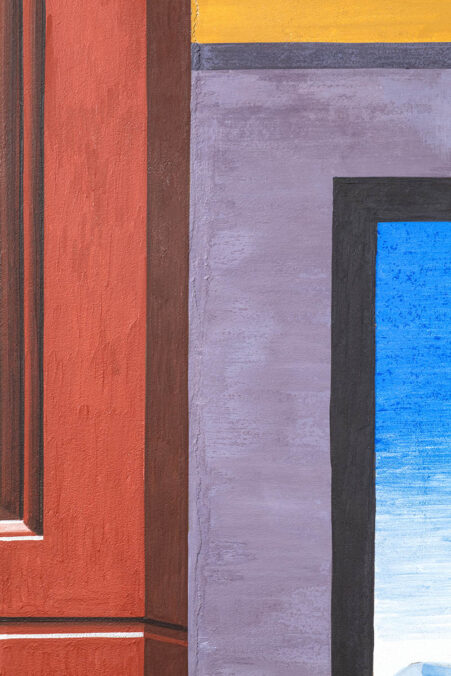
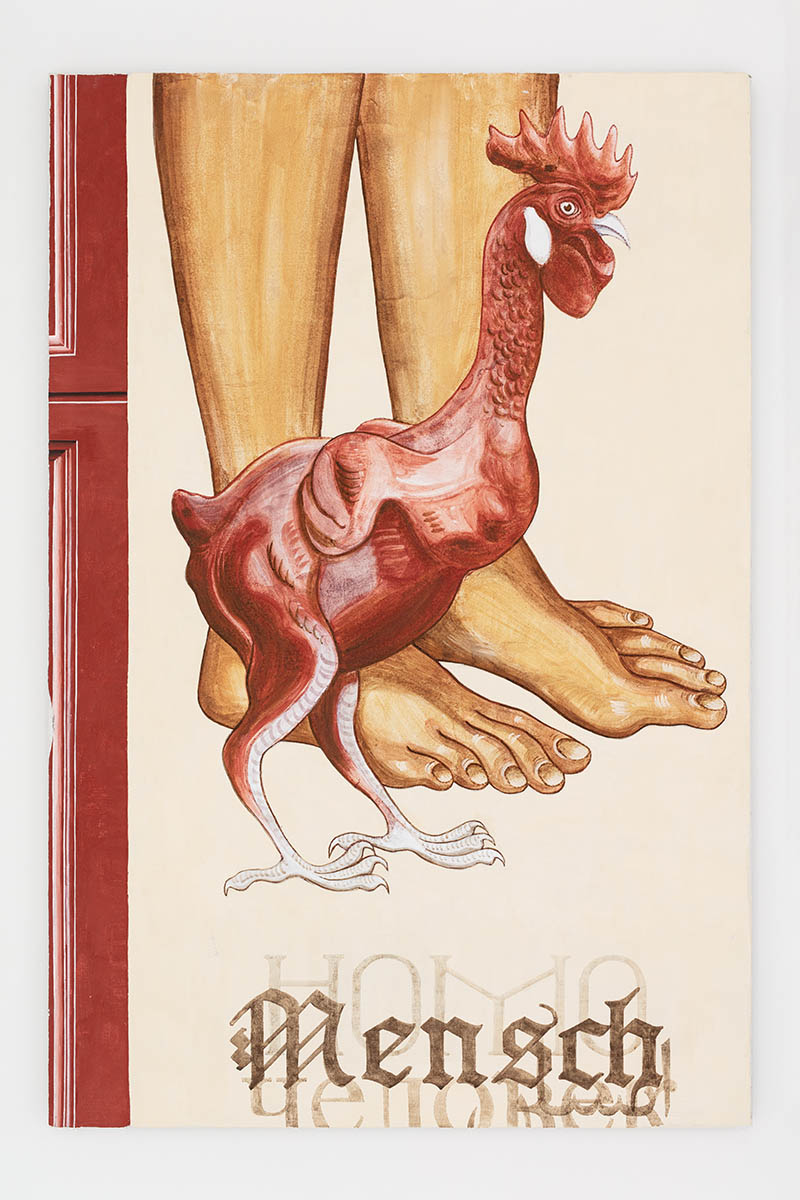
Detailansichten aus dem Freskenzyklus ‚Der Hund‘, 2023 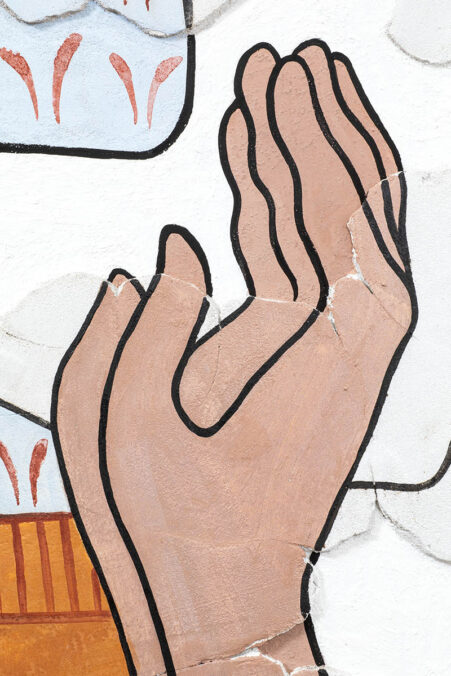
Detailansichten aus dem Freskenzyklus ‚Der Hund‘, 2023
Wie werden die Lebensumstände und philosophischen Überzeugungen der kynischen Philosophen in Bezug zur Wohnungslosigkeit dargestellt und welche Botschaft möchtest du dadurch vermitteln?
Um es ganz einfach auszudrücken, habe ich mir Anekdoten aus historischen Quellen zur Zeit der Kyniker:innen angeeignet und sie verbildlicht. Dabei lag mein Interesse immer darin, eine philosophische Überzeugung herauszuarbeiten, die in Beziehung zu Wohnungslosigkeit und kosmopolitischem Denken steht. Dieser Prozess fand natürlich nicht immer ohne Umwege statt und ich habe auch einiges verdreht, umgedeutet und schließlich versucht, die Geschichten mit einer zeitgenössischen Thematik zu verknüpfen. Das war für mich auch gar nicht so schwierig, denn obwohl etwa 2300 Jahre zwischen unserer Zeit und Diogenes’ Leben liegen und der Diskurs über Wohnungslosigkeit damals noch nicht dieselbe Bedeutung hatte, hat sich in mancherlei Hinsicht gar nicht so viel verändert. Machtstrukturen, die damals vorherrschten, sind auch heute noch in ähnlicher Weise vorhanden, Geld und materieller Besitz haben gewiss nicht an Bedeutung verloren und die Mehrheit blickt auf der Suche nach Erfüllung und Glück nicht auf die Armen, sondern auf die Reichen.
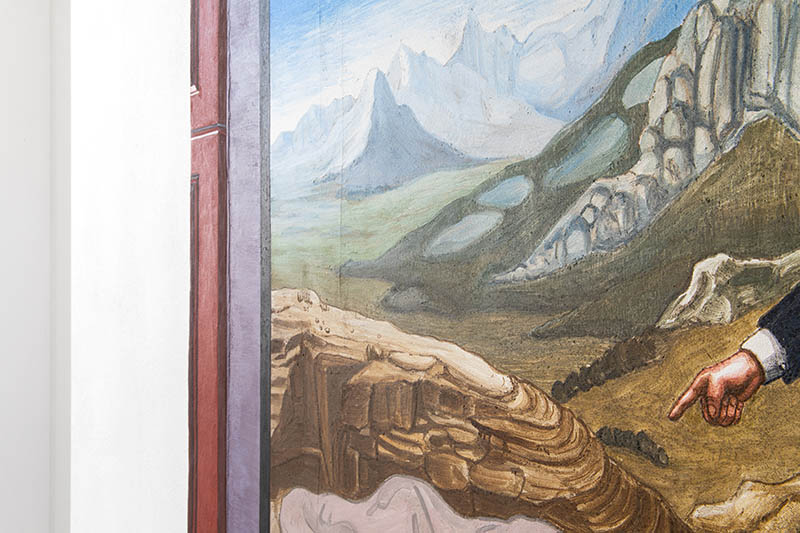
Meine Motivation hinter ‚Der Hund‘ ist der Versuch, einen Perspektivenwechsel auf bestimmte Lebensrealitäten vorzunehmen. Mit dem Verweis auf die kynischen Philosoph:innen versuche ich, das gesellschaftlich ziemlich kurzsichtige Bild auf wohnungslose Menschen zu dekonstruieren. Leider erfahren jene nämlich meist entweder starke Ablehnung und werden als ‚Schmarotzer‘ und ‚Nichtsnutze‘ beschimpft, oder sie werden durch Bemitleidung in ihrer ausweglosen Situation bestärkt. In beiden Fällen wird den betroffenen Menschen nicht auf derselben Ebene begegnet und aus so manchen Gesprächen mit diesen Menschen konnte ich genau darin viel größeres Leid herauslesen, als sie es durch Kälte, Hunger oder fehlenden Komfort beschrieben hätten.
Doch es geht mir eben nicht darum, die Ursache von Leid herauszuarbeiten. Vielmehr möchte ich mit den Ideen der Kyniker:innen, welche übrigens auch als die ‚Hunde‘ bekannt waren, eine Auseinandersetzung mit unserer eigenen Lebensrealität in den Raum stellen. Die Kyniker:innen, um den Philologen Georg Luck zu zitieren, philosophierten und predigten nämlich nicht für die Armen, sondern für die ‚armen‘ Reichen, denn in deren Augen waren jene viel schlechter dran als sie selbst.
Woran arbeitest du gerade? Wie verbringst du den Sommer?
Bis zum Herbst verfolge ich kein spezifisches Kunstprojekt und nutze deshalb die Zeit, um an Ideen zu arbeiten. Ich möchte als Nächstes aus meinem neu gefundenen Interesse für die Freskotechnik und die Wandmalerei heraus Arbeiten entwickeln. Abgesehen davon werde ich auch ein paar Wochen einfach mal weniger tun, mehr in den Tag hineinleben. Im August unternehme ich mit meinem Bruder einen Roadtrip mit spontanem Reiseziel, oder eine Rucksackwanderung in den Bergen. Spätestens im Herbst wird dann wieder der Pinsel geschwungen.
Christopher Frieß – www.friess.art, www.instagram.com/christopher_friess/