Category

Rubrik

Category
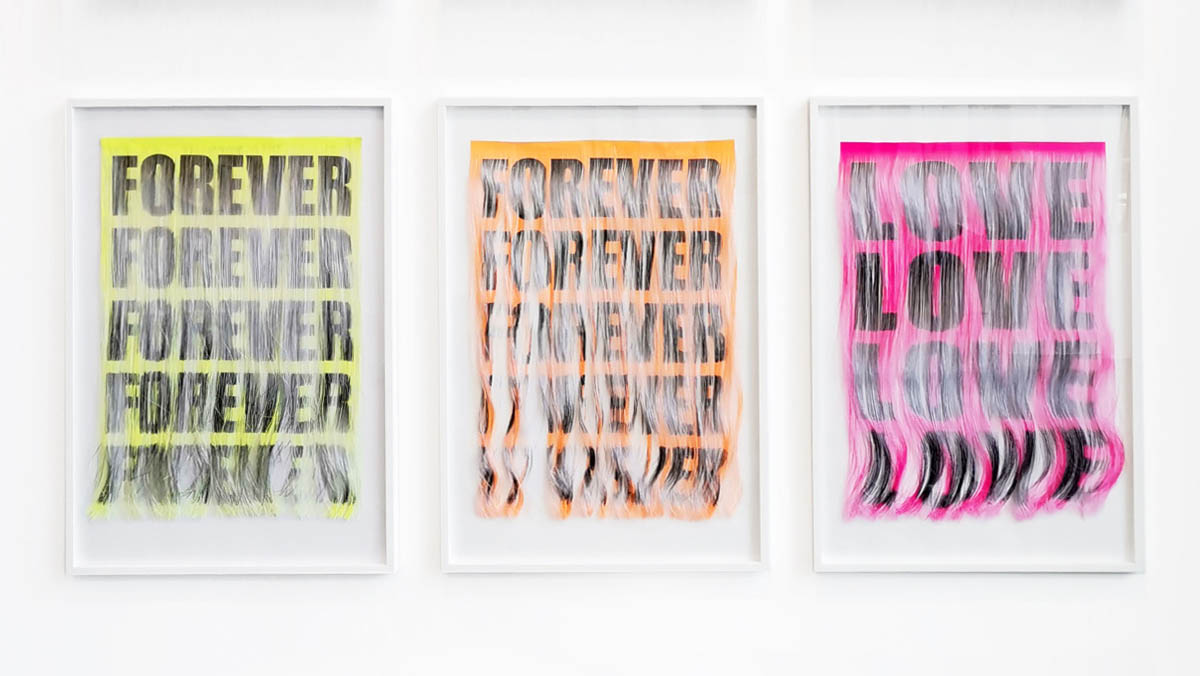
anexptg exhibition view Present Perfect Progressive Berlin photo: Matthias Leidinger @matthiasleidinger
AnexPtG exhibition view Present Perfect Progressive Berlin photo: Matthias Leidinger @matthiasleidinger

What were your motivations to conceptualize and initiate this exhibition?
(At)Huth: The motivation was to create an independent exhibition to collaborate with friends and acquaintances. We wanted to provide a platform where we can implement our style and projects without being restricted by various variables. Originally, I wanted to wait until the beginning of next year before releasing AnexPTG, but the opportunity arose to implement a spontaneous project. The entire exhibition concept including the CI, and artist selection with its communication was created in just 4 weeks. The plan to organize a group exhibition in Berlin in theory and has been in planning for some time. It was very important to temporarily finalize my 11-year stay in Berlin and to assimilate a bundled exhibition in which I integrated various artists who have shaped me in recent years and decades and who I appreciate very much.

Rezniczek: Finding new ways of working with artists as a group of people to fuel discussions who work with the topic of time in all its forms. The theme is starting with the contemporary current situation and is referentially going back in time as well as projecting ideas and visions for the future which has yet to be manifested and brought to life. Unifying different theoretical backgrounds as well as means of production, the exhibition aims to merge design art and spatial questions. Art forms and their perception as well as the audience’s response are investigated.

anexptg exhibition view Present Perfect Progressive Berlin photo: Matthias Leidinger @matthiasleidinger
AnexPtG exhibition view Present Perfect Progressive Berlin photo: Matthias Leidinger @matthiasleidinger

Can you tell me more about the concept for the exhibition series „Present Perfect Progressive“ and how its artworks contextualize the title?
(At)Huth: The term refers to the present time, to the „here and now,“ to acting progressively. I see art as a constant companion, and thus as a companion who gives me strength and endurance. The daily engine. Most people are aware of living in the progressive present but often forget to remember it. The exhibition takes up several time-based themes such as movement, networks, and transience, but also social and economic living conditions. As you can see from the title, Vol.01 is just the start. I find it exciting to work with various time terms in the further course and to design further projects based on them. I am already thinking about new projects.

Rezniczek: The exhibition focuses on the term Present Perfect Progressive as a way to describe time and timeframe and setting. With nonconformities, it aims to integrate theorists, performers, and video artists as well as scientists, designers, architects, art historians, and of course, everyone who is working on the intersection and exploring all of these areas.

The exhibited works present a diversity of artists who work in different media and styles. How did you curate the artists?
(At)Huth: The choice of artists was very intuitive. When we found out that we could exhibit in the space Hermetika in Berlin, we only had 4 to 5 weeks until the opening. I immediately contacted several acquaintances and friends and asked if they wanted to exhibit with us. It was important to me personally to show artists who work in various media and who have shaped my own artistic approach. Amongst them, artists and design studios who are working in various contexts were invited. Art is not always linear and hierarchical. It was important to me to show a non-hierarchical approach to make it possible to also comprehend what I produce as an artist. All in all, it was a group exhibition with acquaintances and friends.

Rezniczek: Having the status quo of artistic and technological production in mind as well as the term Present Perfect Progressive, the conceptual background of the chosen artists as well as the artworks showing a connection to the theme was important for me. Each artist deals with the topic of time and relates to the exhibition title conceptually and/ or practically.

Which role do you assign to art in these discussions? How can art help us find new possibilities for future thinking and envisioning?
(At)Huth: For me, art is a motivator that allows me to transcend physical and mental boundaries. For some it’s a hobby, for some, it’s a calling. I don’t see art as a savior in political discussions, but art is there to stimulate thought and uncover various topics, to work on them, and first to get interested in certain topics. Art is a carrier of information that can appear through media and conveys various themes through certain arrangements and in their statements. Art is part of a large engine, without other variables, the vehicle of art would not be able to operate.

Rezniczek: Since art is and always has been a visionary practice, it holds the possibility to shape our world through images, statements, and settings that provoke a discourse. Questions can be freely asked since art holds almost no boundaries regarding relevant topics. As the secessionist movement states ‚To every age, its art. To art, its freedom‘ Even though the exhibition does not refer to the secessionist movement – it still aims to create and provide the freedom of expression to evaluate what our time stands for. It tries to explore what is necessary now and might be of interest in the future. Our living conditions are always experienced as static. Yet they constantly change, sometimes without our contribution or knowledge, and we are confronted with new things. New advancements and a ’new world‘ that we have to adapt to. Thinking of future possibilities and visions enables us to generate and enact situations as if they were already real, and to make plans of how to incorporate new models and situations into our daily lives. By thinking through images and visualizations, a new language can be created which shows potentialities for the future and brings about new things that might otherwise not be describable through words and spoken language.

How would you like the audience to perceive the exhibition? Which influence and impact would you like the exhibition to have concerning its perception of art, technology, and innovation with a focus on our reality and living situation?
(At)Huth: It was important to us that the works stand for themselves and communicate. Without the recipient being confronted with a lengthy exhibition text. The exhibition should feel “light” and just inspire and motivate. It was important to me that the visitors leave the exhibition with a positive feeling and possibly also a smile, and feel free to give some feedback. This doesn’t happen that often in our industry, either, because many personalities are too uptight and serious. So far I think we’ve managed to convey a positive feeling quite well and have been rewarded with a lot of feedback.

Rezniczek: I aim to speak to a broad audience since many of these are not traditional audiences anymore. People throughout genres coming from design, technology, science, finance, and the humanities studies, to name a few, are drawn to art. Therefore, it is a great opportunity to speak to an interested audience with diverse backgrounds to bring new ideas and interpretations to the table. Being able to discuss the status quo of our living and environmental situation and future visions with visitors is very important to me. The exhibition space and the artworks serve as a stimulus to go deeper and get to know art and artists in a profound way, as well as contextually. By opening up our worldview and generating new ideas and understandings of what surrounds us and how artistic processes can fuel progress, reevaluating our current situation and bringing about change by dreaming and thinking big and outside the box can lead the way. I hope to spark joy in our exhibition visitors and enable them to further discuss new ideas and possibilities. I wish to create an experience, a means to broaden the audiences’ horizons, so they find new ways through a reflection of the past to deal with the presence and their ambitions and dreams for the future opening possibilities for heading towards new horizons.

More about the exhibition

AnexPTG – www.instagram.com/anex.ptg/


Susann Rezniczek worked for different art galleries and institutions and has a deep interest in art and everything related to the artistic process. Working with artists and supporting their ideas, fueling their potential, as well as investigating current concepts and topics is her deep concern. Curatorially she likes to keep up with the status quo of artistic processes in creation, as well as discussing and evaluateing the necessities for the world that surrounds us. Thinking about solutions, as well as portraying bits and pieces of the world through the lens of art, with its ideas, concepts and means of production, is her main focus.

Sascha (At)Huth, with his background in both industrial and graphic design, has founded various studios that operate at the intersection of art, design, and spatial installation. Most recently he created the label AnexPTG, which serves as a platform to both work as a solo artist, as well as in artistic unifications. His lab aims to integrate diverse backgrounds in art, cutting-edge design, technology, material, space, and object development. It aims to be a think tank for new ideas and approaches and provides a rhizome-like structure. Multiple entities can come together to question our living conditions and the status quo of artistic production.

Im LNR-Raum präsentieren wir in diesem Jahr die Ausstellung: »Ergebnis einer Addition. Wenn Kunstwerke eins werden«, in der die Arbeiten durch Künstler:innen in Ko-Kreation entstanden sind.

From the exel list to the written correspondence. I have always been fascinated by all that inhabits her paintings. Now, after receiving her portfolio, I have all the time of the world to gaze at her work.

Collecting privately as a group is a unique case. Get to know the history of Underdog Collection and their way of building a collection which embodies a truly eclectic perspective on contemporary art.

Yesterday, we had the opportunity to check our room at PARALLEL VIENNA 2023, held at Otto Wagner Areal. Additionally, I captured a few snapshots of Pavilion 16. Here are a few impressions.

Shi Jiongwen graduated from Xi’an Academy of Fine Arts. The „line“ in her works is a simple element. It has gone through a long process from being details to the main body of the work.

Kata Oelschlägel is a post-radical Viennese actionist, but where does the movement that she belongs to differ to the Actionism of the 60s and 70s? In the interview she is talking about her practice.

After studying and working abroad she returned to Athens in 2017 where she continues to run her practice. Her work represents various perspectives of existential questioning.

This year’s edition of Calle Libre is held from the 27th of July to the 5th of August, with contributions from many international street artists, including the Spanish artist Guillem Font.

This text had been blurry in my mind for months, but only now has it gained meaning. Perhaps because night has fallen, and I’ve come to understand that despite people are used to leaving.

Margarita Merkulova moved to Vienna 9 years ago. She graduated from the Faculty of Art History, specializing in Modern Art and finished the school of art for analog photography at Friedl Kubelka.

Arang Choi currently lives in Vienna. She pursued her studies in painting at the Academy of Fine Arts Vienna from 2016 to 2023. In 2019 she did an exchange semester at the Kunstakademie Düsseldorf.

Trudy Benson, an American painter based in New York, shows a new series completed at a residency with Galerie Krinzinger in Vienna. This group of works, which she calls “Plastic Paintings”.

Rocco und seine Brüder, ein Künstler-Kollektiv aus Berlin. Aus den illegalen Graffiti-Ursprüngen der Hauptstadt entstanden, sind sie heute Europas gefeierte Trainwriter-Stars. Doch das ist längst nicht alles.

Devin Kenny, who was invited by Pia-Marie Remmers to install a show in collaboration with one of Galerie Thoman’s artists in [tart vienna], selected Franz West to share the stage.

Daniela Grabosch’s works push the limitations of space and time creating (almost) like an invisible patchwork of overlapping layers. Pushing algorithms and bending the virtual into the tangible.

Die ART&ANTIQUE startet passend am Premierentag mit ihrer neunten Sommerausgabe, im Zelt im Residenzhof und im Carabinierisaal. Jetzt können auch die Salzburger Kunst-Festspiele beginnen!

Mit dem Hybrid Bodies Festival entstand am 1. Juli 2023 ein dreiteiliger Performance-Abend, der dualistische Denkmuster auf vielschichtige Art und Weise performativ auslotet und aufbricht.

“Wenn die Wände in Hotels sprechen könnten, würden sie die weirdesten Geschichten erzählen.“ Und diese Geschichten wurden am Wochenende erzählt, und zwar von der Superbude Wien am Prater.

Georgia Beaumont is an artist from the UK, based in London. Focussed predominantly on painting, she studies botanical forms with an acute interest in the plasticity of their structures.

Lena Mattson’s impressive artistic career stretches through decades including numerous appearances in renowned institutions around the world. In her work life itself, that which is private to us.

Wolf Silveri ist seit 19 Jahren freischaffender Fotograf. Er ist seit 2004 in verschiedenen Bereichen der Fotografie tätig, wobei sein Fokus auf der Portraitfotografie liegt.