

Category

ENG

Category
Julia Beliaeva
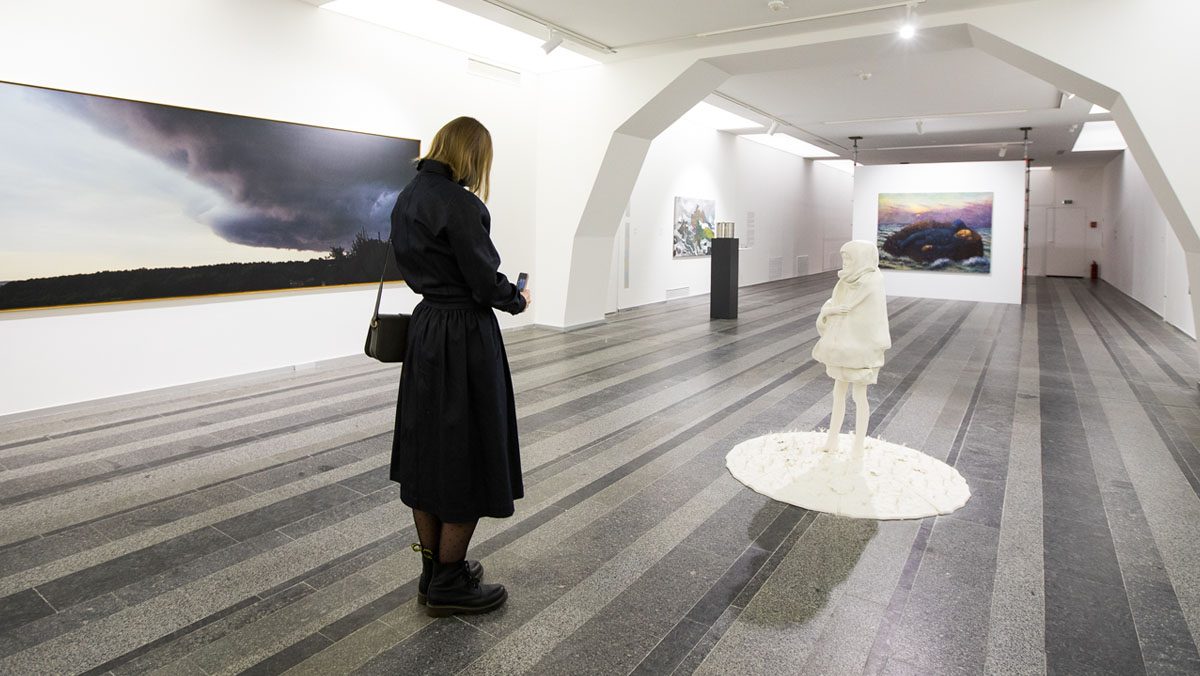
Exhibition. Pinchuk Art Centre (Kyiv, Ukraine). Photo: Andrey Pilipets 

When did you become interested in art?
At all stages of my life, I have been interested in art in one way or another. I have been involved with contemporary art since 2010, which is when I started holding my first exhibitions.

julia beliaeva interview
Artist. Julia Beliaeva. Photo: Vitaliy Khlebov

How do you create your sculptures?
I have an art education but wasn’t trained to become a sculptor. This art form found me on its own. I remember going to Copenhagen and visiting Ny Carlsberg Glyptotek and the Danish porcelain museum. As I was already interested in 3D software, I was very inspired by that, so I decided to take the ZBrush course. This is how my sculptures are created: scanning technology, sculpting stage in ZBrush, 3D printing, and casting in the material. I love porcelain and its semantic load. Porcelain is about fragility but at the same time, the material is very strong, just like humans.

We are resilient but the wrong attitude towards ourselves can turn us fragile and vulnerable. I am also inspired by Soviet porcelain and I want to experiment more with different materials.

What are you engaged in?
At this stage, I’m nurturing an idea that I want to implement. An idea must always go through a maturing stage. During this stage, the complete picture is put together like a puzzle and I end up finding different aspects and possibilities to present it qualitatively. I used to want to rush things and quickly reduce everything to an exhibition. Now I take pleasure in slowness and the feedback process. The best opportunity to display this or that idea comes in due time.

Regarding my current exhibitions, I’m currently participating in the group exhibition “Remember Yesterday” at the PinchukArtCentre and in a virtual exhibition called „The Last Childhood in this City“ at V-Art. In both exhibitions, I work with the theme of childhood against the backdrop of the historical events that Ukraine has had to deal with. Also, La Pamplona Art Studio x Vienna Collectors’ Club are showing my work at Parallel Vienna 2021 from May 26th to 30th.

What does your art mean to you?
It just so happens that my psyche is built in a way that creates the need for me to transform my experience, my sense of the world, into a form of art. Art is a way of thinking and living. I look for myself in different directions, I don’t want to get attached to one medium. Also, art is an eternal platform for experimentation, unification, and interaction with people. Through my art, I explore humanity as a whole as well as my humanity.

Where can people buy your art?
I work with the following galleries: La Pamplona Art Studio (Vienna), Sabsay Gallery (Copenhagen), and Forsa Gallery (Kyiv).

Portrait. Julia Beliaeva
Portrait. Julia Beliaeva. Photo: Maksim Hetman  

How do you like to spend your weekends?
I try to take my mind off work, go for walks in Kyiv, and be out in nature with my family. My son is 6 years old.

What else do you have planned this year?
I am planning to tokenize a couple of digital works and publish them on the Foundation app. I also want to put some of my more elaborate sculptures in porcelain. Together with La Pamplona Art Studio, I will launch two series in porcelain as a bigger edition soon. With “Edition of 2021”, we will celebrate art, craftsmanship, and technology. I try not to plan exhibitions. Covid has changed my attitude towards planning.

Julia Beliaeva – www.julia-beliaeva.com

Cross Hatching Affluence, an exhibition by emerging Ghanaian artist Hamid Nii Nortey. On view from May 6 – June 16, 2021 in person and online, the selection of 20 new figurative paintings acts.

Slovak artist Jana Zatvarnická, born in 1988, graduated in 2019 from Art Academy in Düsseldorf, where she studied painting in the studio of Prof. Katharina Grosse and Prof. Siegfried Anzinger.

There are a couple of synth fairs on this planet, but one unquestionably stands out – Superbooth. The fair came to Berlin in 2016, but in fact, has a history of more than two decades.

Whilst thinking of this introductory note, passages from Michel Foucault’s book* came to mind: Human beings design utopian places from the space they occupy, where they live.

We show a selection of abstract, expressive paintings that are not usually associated with Markus Tozzers publicly shown works. They all were created in an intuitive and sometimes manic manner.

Feryel Atek is a figurative painter, and art therapist from Paris based in Berlin since 7 years. Her main medium are her large scale paintings and an abundant collection of more intimate, detailed drawings.

Romanian artist Cătălina Cosma centres her practice around concept and structure. She prefers a cognitive approach to art, based on thorough research and aimed towards discovery and self-discovery.

In her debut gallery presentation Jelena Micić reveals a set of works thematizing different aspects of her long-term color investigations. The exhibition gathers around the methods of color sampling.

The National Museum of the Romanian Peasant launches a new space for contemporary art production, in the hall located in the basement of building B, under the Horia Bernea Studio, starting with April 6.

In 2014, he moved to Jeju Island, where he came to be fascinated by a theme called “nature”. Apart from his past urban life, his new surroundings allowed him to create an emotionally restructured landscape. Now the nature of Jeju Island is one of his significant sources of inspiration.

„Dive into the Zeitgeist“ is the first exhibition for art in search of answers; this is the theme of the new economART project by AMY D Arte Spazio, which reopens its doors after a latency of 3 months.

The title of the exhibition – When Gesture Becomes Event – refers to Judith Butler’s same-titled essay. However syntactically, it also evokes another title – When Attitudes Become Form.

Her work consistently displays an interest in complex and diverse histories, relating to these topics through her installations, sculptures, videos, prints, and writing— bringing forward questions of identity.

The interest in three-dimensionality and the relief-like character emerging from the carving is also clearly visible in the other creative outputs of Eva Yurková, such as painting, ceramics and installation.

Galleria Umberto Di Marino is delighted to present Luca Francesconi’s fourth solo exhibition, Hormone Disruptors, on Saturday March 6th, 2021. The new project is part of the artist’s research.