


In seiner Arbeit versucht er, diese wiederkehrenden Bilder zu verarbeiten und in neue Zusammenhänge zu überführen. Dabei beschäftigt er sich mit Surrogaten, Geisterbildern und dem Internet als einem Raum, der nichts vergisst. Realität erscheint dabei nicht als etwas Festes, sondern als ein Zustand zwischen Erinnerung, Vorstellung, Fakt und Heimsuchung.
Das Konzept der Hauntologie taucht in deinen Arbeiten häufig auf.
Hauntologie ist ein Wortspiel von Jacques Derrida. Er verbindet darin Ontologie, die Lehre vom Sein, mit dem englischen „haunt“, also heimsuchen oder spuken. Dahinter steht die Vorstellung, dass die Gegenwart nie ganz abgeschlossen ist, sondern von Vergangenem und von Möglichkeiten, die nie eingetreten sind, heimgesucht wird. Mich beschäftigt dieser Gedanke schon lange, weil es Bilder gibt, die mich selbst immer wieder heimsuchen. Sie tauchen auf, verschwinden und kehren in anderen Zusammenhängen wieder. In meiner Arbeit versuche ich, diese Bilder zu verarbeiten und ihnen eine neue Form zu geben. Dabei interessiert mich weniger, sie vollständig zu erklären, als herauszufinden, warum sie bleiben.
Für dein Artist Statement hast du dich mit der Straßburger Tanzwut von 1518 beschäftigt, einer historischen Massenhysterie.
Mich fasziniert an der Tanzwut vor allem, dass bis heute nicht eindeutig geklärt ist, was damals tatsächlich passiert ist. Menschen begannen scheinbar unkontrolliert zu tanzen: nicht aus Freude, sondern wie in einem Wahn, bis zur völligen Erschöpfung. Um das Ereignis haben sich unterschiedliche Erklärungen, Überlieferungen und Vorstellungen gebildet. Genau diese Unschärfe interessiert mich: der Punkt, an dem sich Fakt und Vermutung überlagern und nicht mehr klar voneinander trennen lassen. Was ist tatsächlich passiert, was wurde später hinzugefügt, und welches Bild bleibt am Ende davon zurück?
Wie überträgst du dieses Thema in deine Arbeiten?
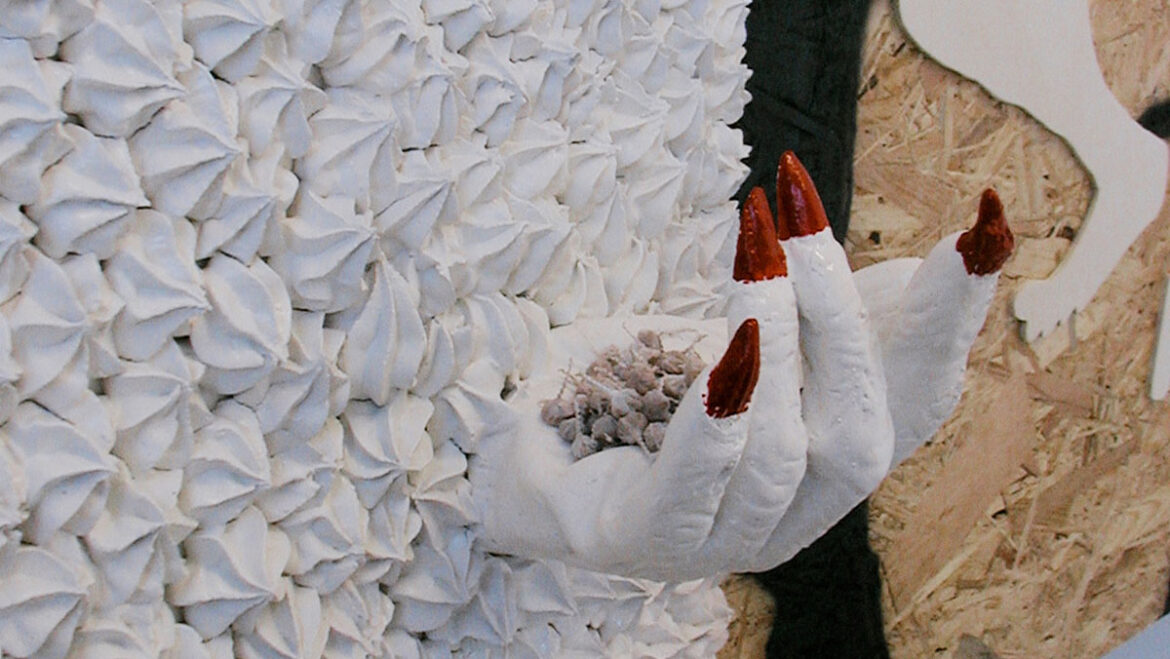
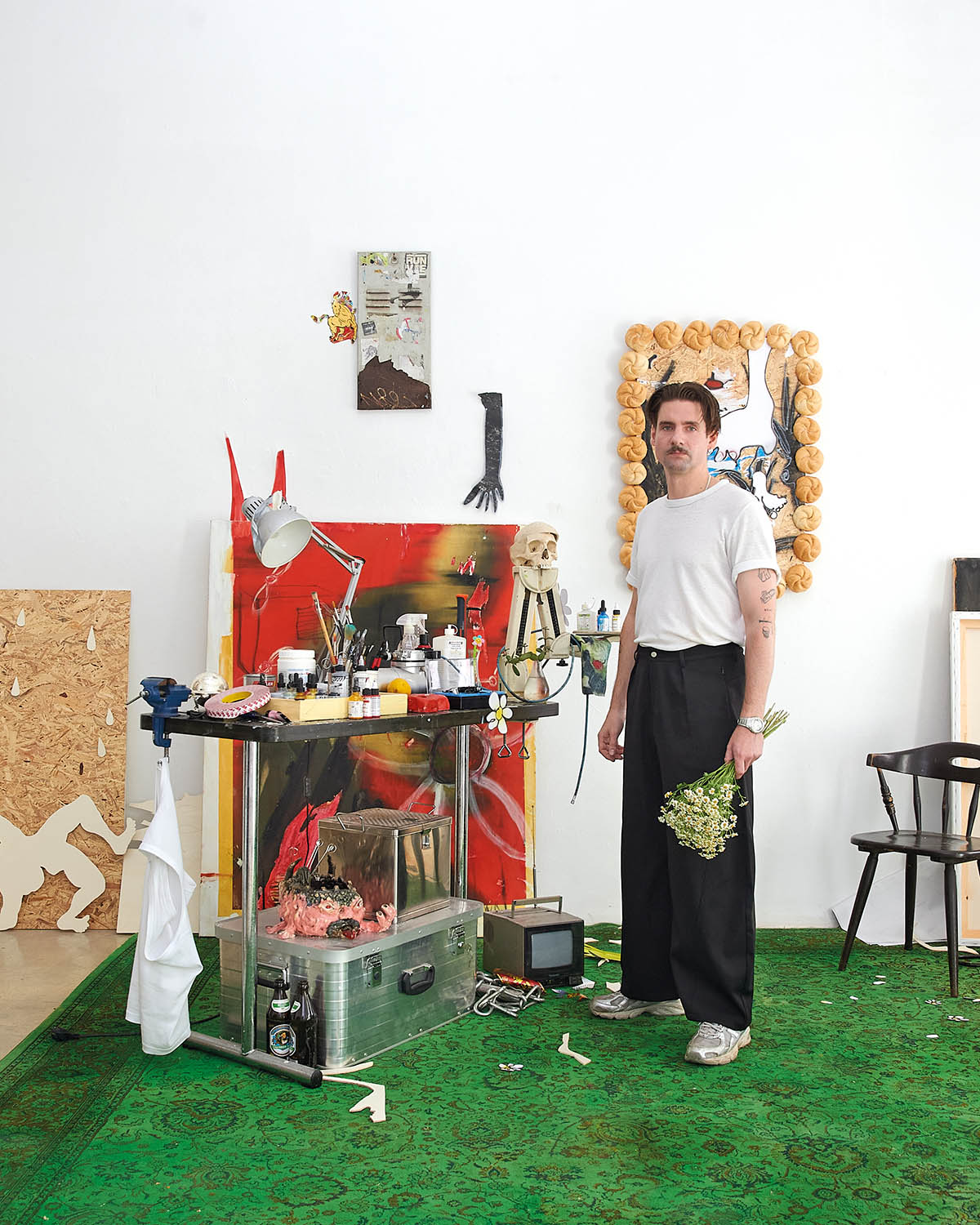
Ich arbeite mit Mixed-Media-Collagen, in denen Airbrush und Malerei aufeinandertreffen. Einzelne Elemente werden von Hand ausgeschnitten, neu zusammengesetzt und auf Holzplatten collagiert. Auch die Rahmungen entstehen aus unterschiedlichen Materialien und sind Teil der Arbeit. Dabei geht es mir nicht um eine direkte Darstellung der Tanzwut, sondern um den Zustand, der sich dahinter verbirgt: Ekstase, Kontrollverlust und das Gefühl, dass etwas die Kontrolle über den eigenen Körper oder die eigene Wahrnehmung übernimmt. Im Arbeitsprozess versuche ich, dafür einen möglichst direkten Zugang zu finden und Raum für Intuition und Gefühl zu lassen.
Welche Rolle übernimmt der Sound in diesem Kontext?
Sound spielt für mich eher eine begleitende Rolle. Er soll die Arbeiten nicht erklären oder ihnen eine zusätzliche Bedeutungsebene geben, sondern ihre Atmosphäre begleiten. Gerade bei der Tanzwut finde ich das wichtig: Sie begann ohne Musik. Die Bewegung entstand aus etwas anderem heraus, und genau diese Abwesenheit eines eindeutigen Auslösers fasziniert mich.
Die Tanzwut bewegt sich zwischen Fakt und Vermutung. Was bedeutet Realität für dich in diesem Zusammenhang?
Mich interessiert an der Realität, dass sie nicht so leicht definierbar ist. Mich reizt ein forschender Umgang mit ihr. In meinen Arbeiten frage ich mich: Was bedeutet Realität in einer Welt, die permanent von Erinnerungen und Hoffnungen durchsetzt ist? Lassen sich solche Geister überhaupt festhalten? Und was sind das für Bilder, die dabei entstehen? Mich interessiert dieser instabile Raum zwischen dem, was materiell da ist, und dem, was wir darauf projizieren. Dieses Dazwischen. Gerade weil sich die Dinge nicht eindeutig festhalten lassen, kann man mit ihnen spielen, sie verschieben, übertreiben und auch humoristisch brechen.
Philipp Pess – www.philipppess.com, www.instagram.com/philipppess/
Dieser Beitrag ist Teil der Sonderausgabe »FASHION«, die für die PARALLEL Vienna 2026 produziert wurde. Link zur Sonderausgabe